Well we’ve finally made it to the end of summer. The start of September had us finishing our 4th European country and getting ready to travel West into Poland. Before we get into the nitty gritty travel details I want to talk about something that was immediately striking in Poland. Their language is written with the Roman alphabet but a lot of words are almost unpronounceable to an English speaker.
Lets look at an example.
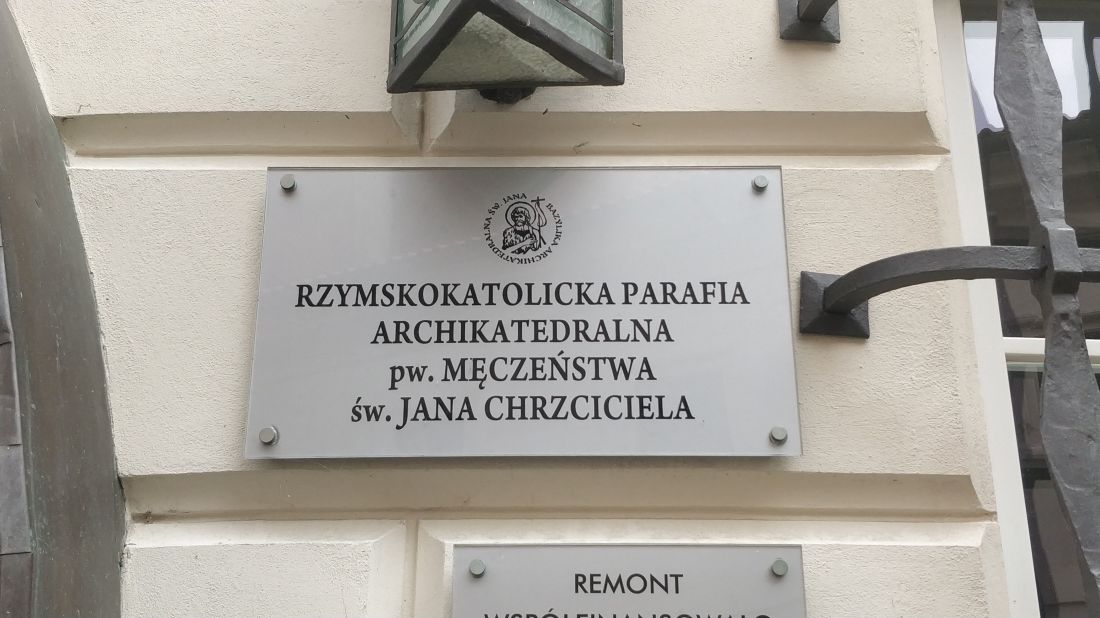
Now first those words are darn long! I can probably muddle through it, maybe, but that last one, CHRZCICIELA, I don’t have a clue how you would pronounce that. If you’re a language nerd and want to understand why the language is like this check out this guy’s video – LangFocus He does a lot of other really interesting videos on languages as well.
And some more fun words to pronounce.
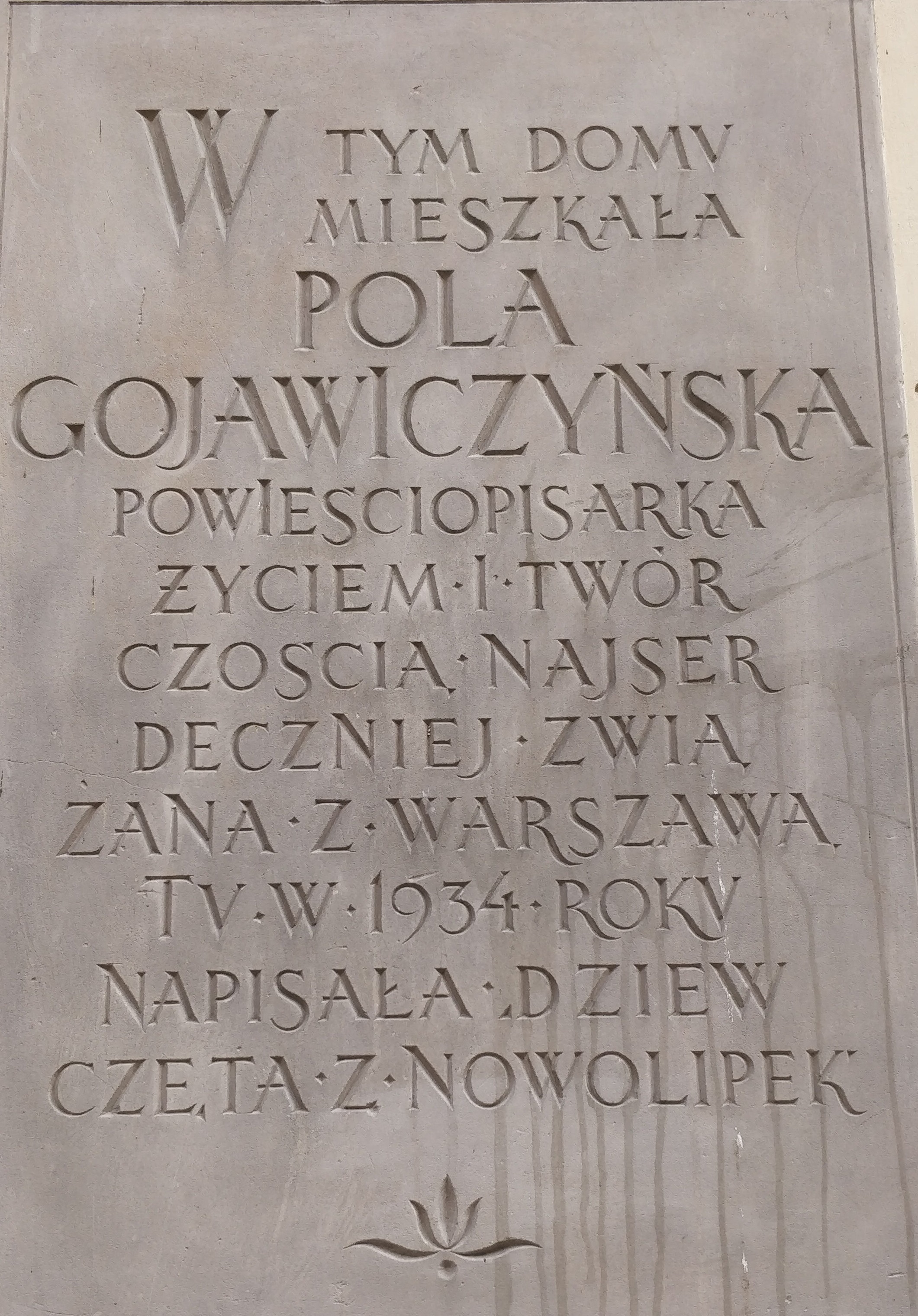
For Polish words that look easy to pronounce you’ve probably been doing it wrong. For example, Polish people will have no freaking idea what you’re saying when you say Warsaw because in Poland it’s spelt Warszawa and pronounced Vahr-Sha-Vah. This is because W is pronounced as a V – ugh try remembering that.
So that now means that Krakow is Krakov and Wroclaw (no it’s not Ra-Claw like everyone says), it’s Vruhts-wahf because of course, the c is pronounced like a ts sound and guess what, the l is actually a letter written as Ł and pronounced like a W (oh and that second w at the end is pronounced more like an f sound so there’s that). Take my advice and just accept you will butcher Polish words.
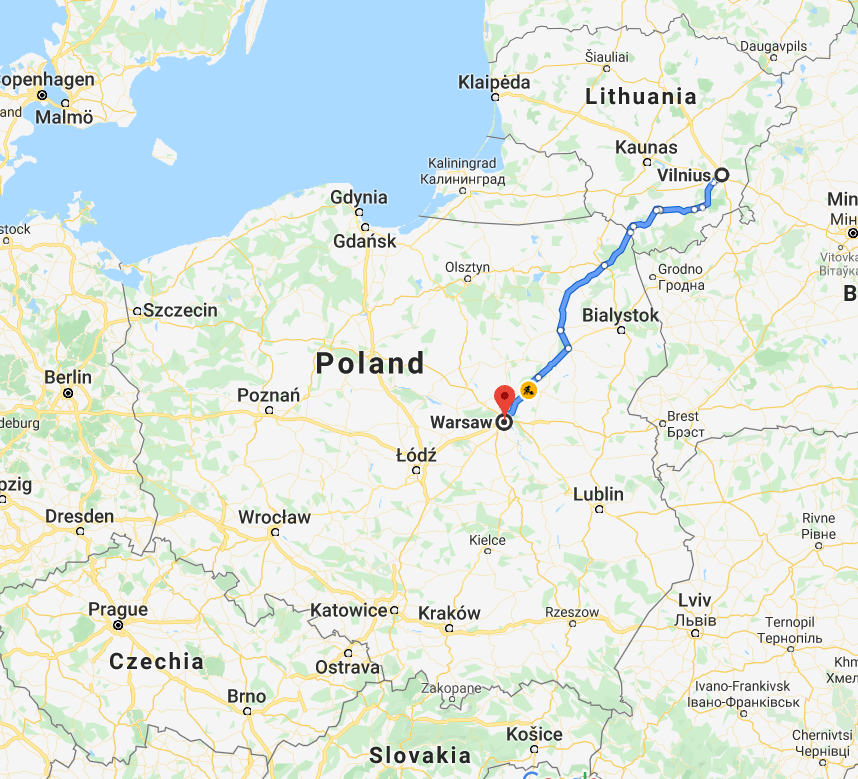
But I digress back to our trip. From Vilnius it made sense to start our time in Poland in Warsaw which ended up being a 9 hour bus ride.
The first thing that struck us with Warsaw was how big it is. At 3 million people it is the same size as Estonia (1.3 million) and Latvia (2 million) combined though I do know some of you will say that 3 million is not a big city.
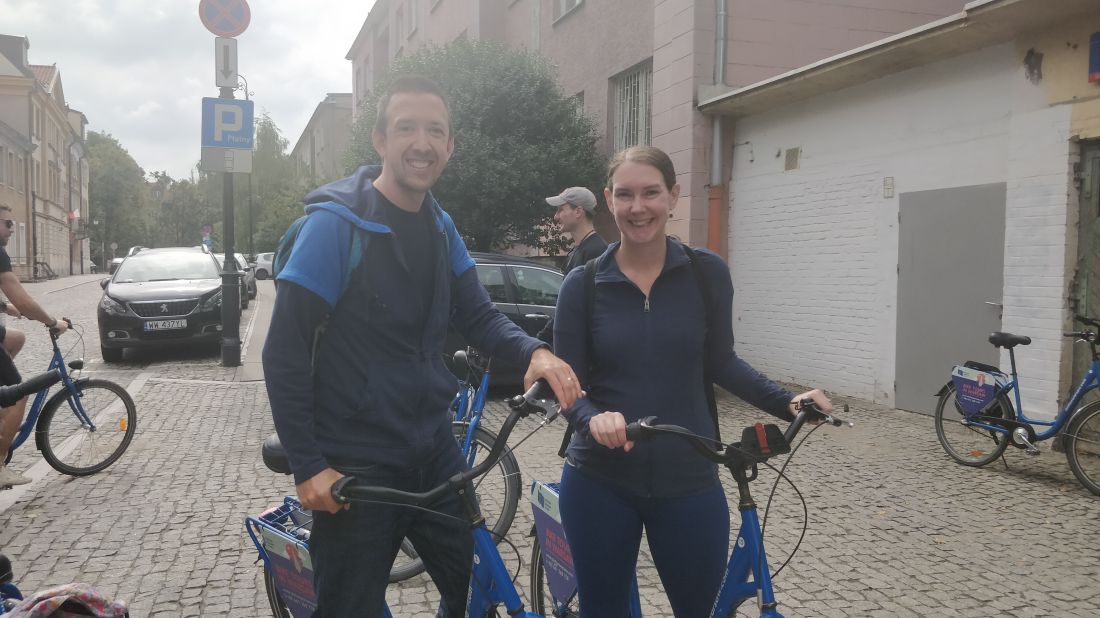
Warsaw is a city often skipped by tourists because from a historic perspective it is a relatively young city and doesn’t have the 1000+ years of history and touristy charm that places like Wroclaw, Krakow, Gdansk and most other Polish cities. Poland’s capital, however, has its own unique charm stemming from more recent history which we learned a lot about from a bicycle tour on our first day.
The most fascinating part of the history lesson comes from World War II. Warsaw (and Poland) was captured fairly quickly by the German army so it was left generally undamaged but towards the end of the war the Soviet army was pushing West and as the Red Army neared the city the civilians wanted to liberate the city so they wouldn’t be occupied by the Soviets.
This ended up being called the Warsaw Uprising and the civilian population managed to take large parts of the city and effectively wrested control from the Germans. The Soviets, however, didn’t intervene and instead stopped on the East side of the Vistula river and waited. For 8 weeks the Poles, calling themselves the Home Army, held key parts of the city from the Germans, and remember these were civilians not trained soldiers, but the Germans were desperate to crush the revolt and so they started destroying the city, building by building.
In the end 85% of the city was flattened, 16,000 Home Army soldiers were killed and almost 200,000 civilians were killed mostly in mass executions.
The city has been almost completely rebuilt and while the Warsaw Uprising was an awful event it became a city architect’s best dream being able to plan out an entire city with parks, bike lanes, and well laid out tram lines.
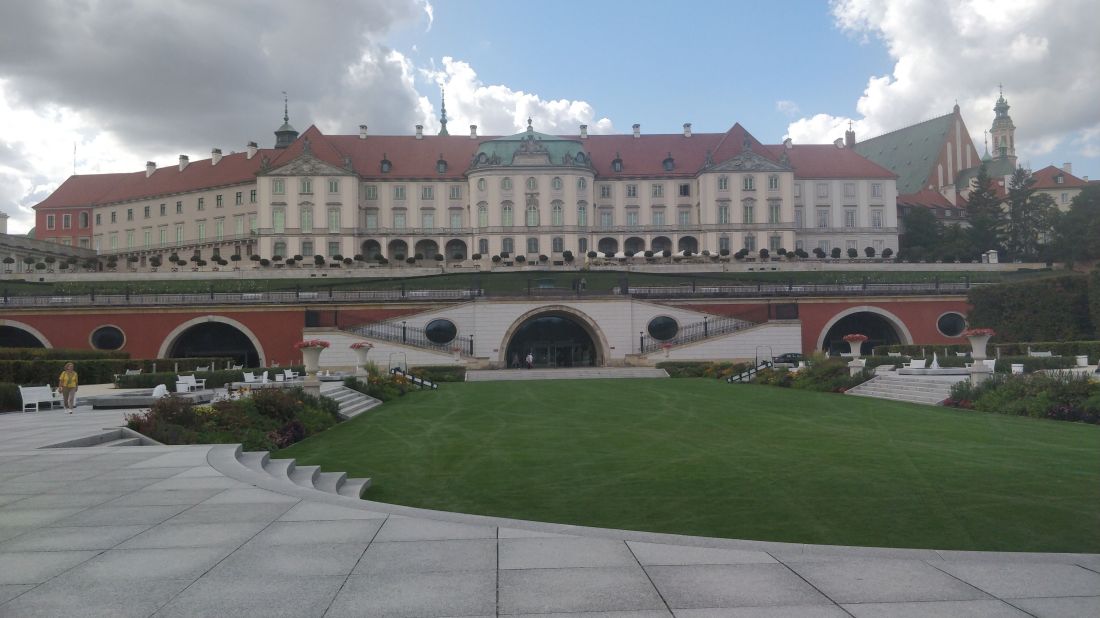
Because we were on a biking tour we didn’t get to take too many photos. We started on the outskirts of the Old Town which isn’t so old anymore.
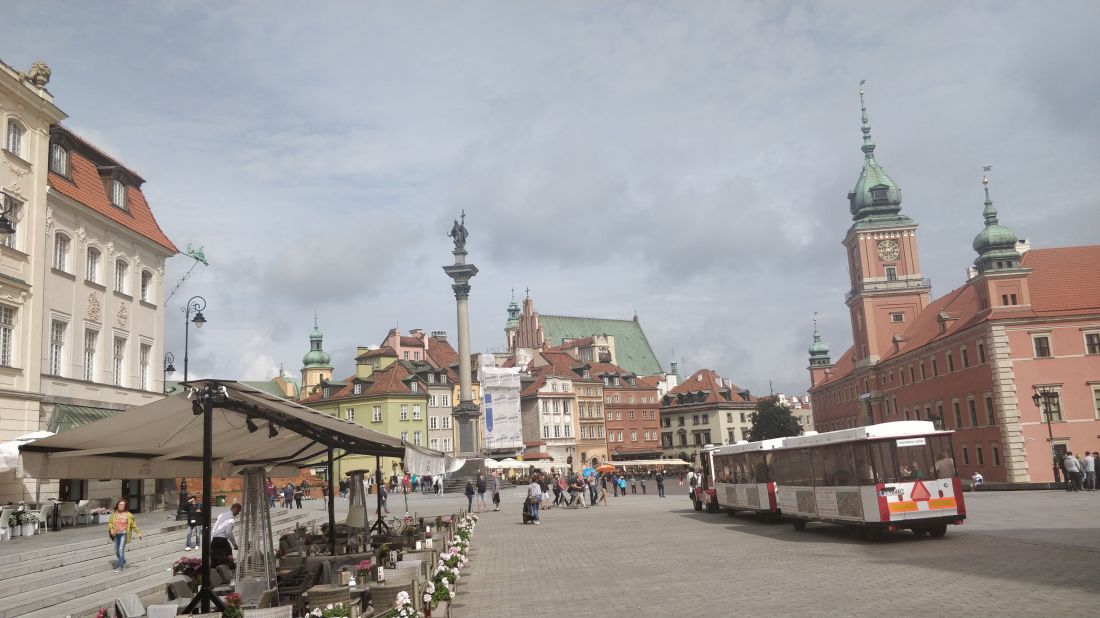
A picture of the Royal Castle, a former palace and now a museum of the City’s history.
We immediately recognized this building from Riga. A symbol of Soviet authority the similarly designed one in Riga was called Stalin’s Birthday Cake as it was built for Stalin’s birthday. This one in Warsaw does not have the same name but it is apparently the most hated building in all of Warsaw (maybe all of Poland).
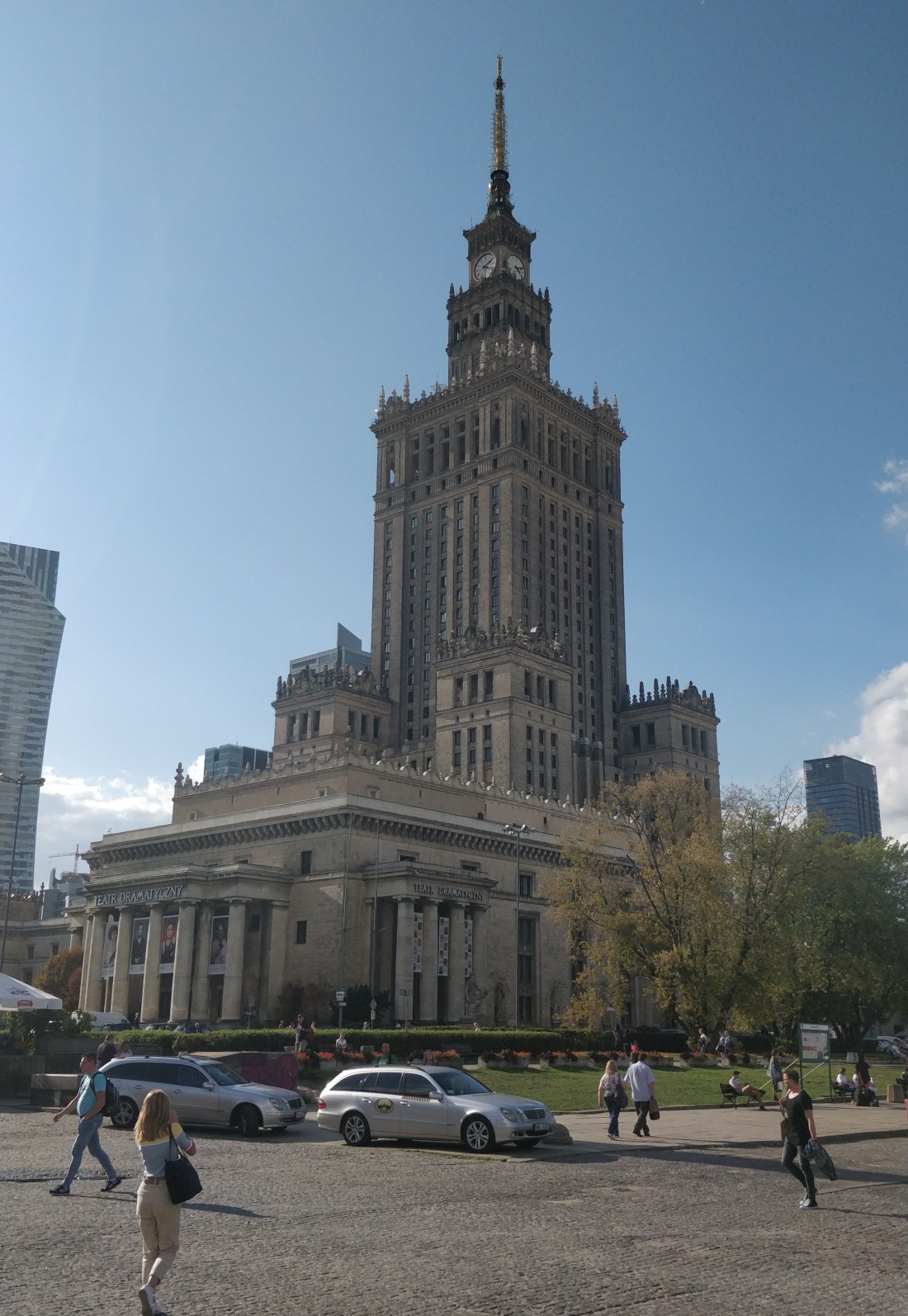
Our guide told us that after WWII the Soviets occupied Poland and they promised to the people of Warsaw to help rebuild the city. With 85% of the city destroyed the only thing that was “rebuilt” was this immense, sore thumb, reminder of Soviet occupation in the middle of rubble and destroyed buildings.
Today it is known as the Palace of Culture and Science. It has a multiplex cinema, 2 museums, a large swimming pool, commercial offices, some shopping, an auditorium hall for 3000 people, and an accredited University all inside.
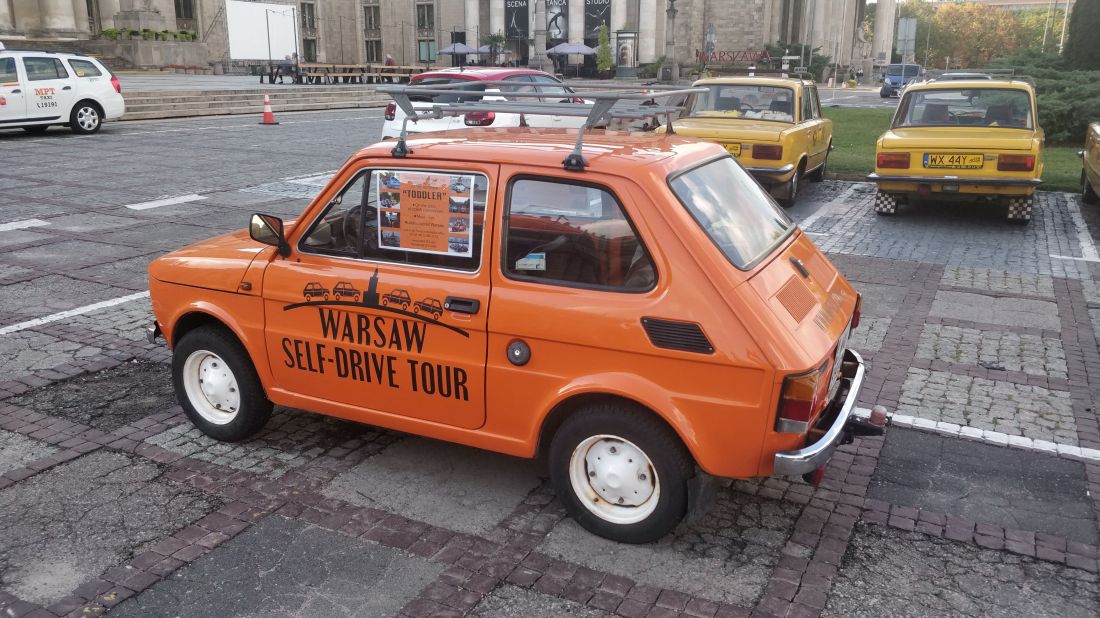
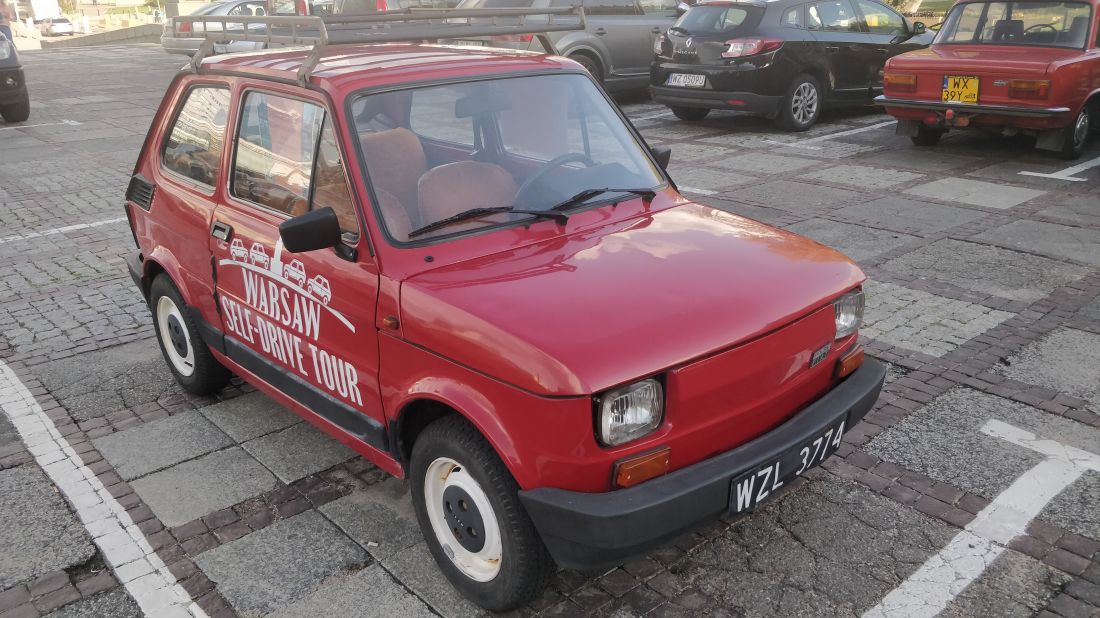
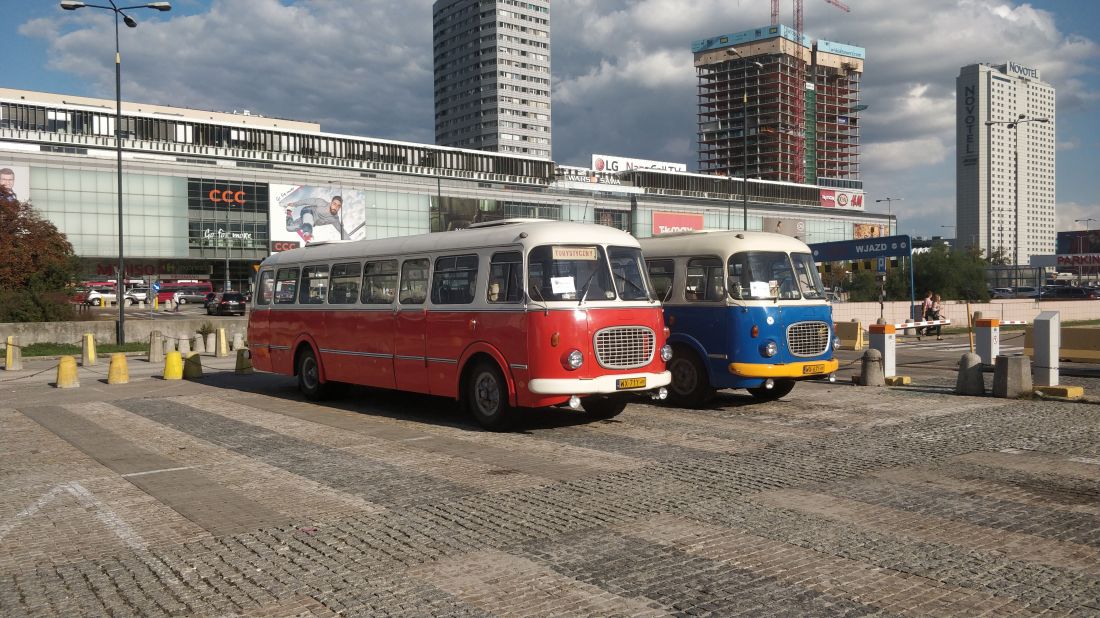
After our bike tour we decided to come back to the Palace of Culture and Science to check out the viewing platform. Outside were some cool vintage vehicles – no we did not rent.
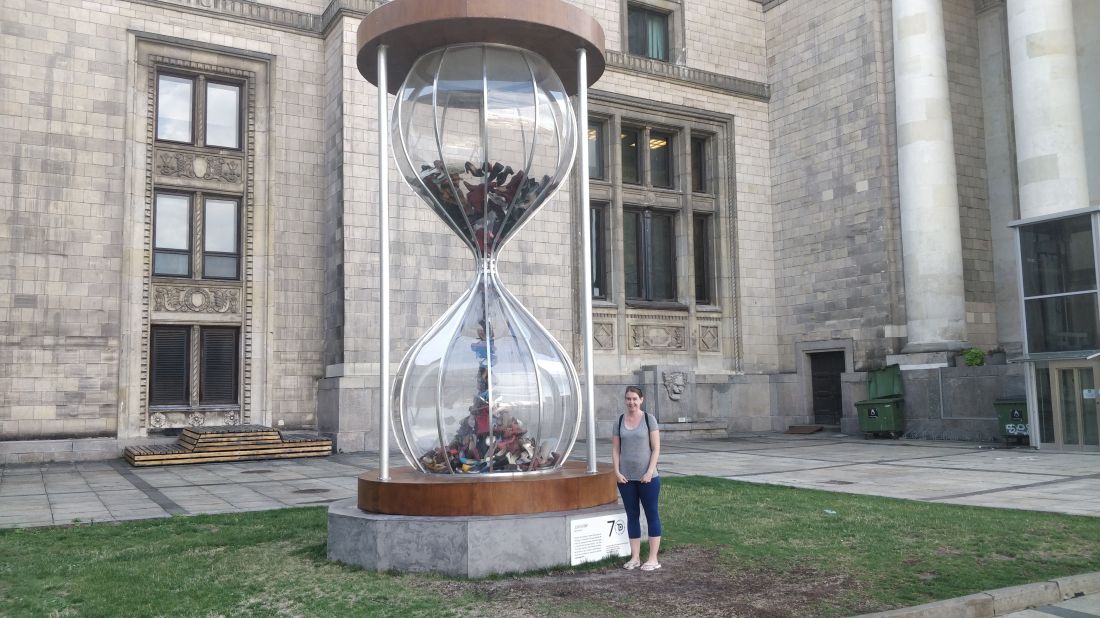
There was also an interesting art piece of an hour glass filled with shoes. No idea what it was supposed to symbolize.
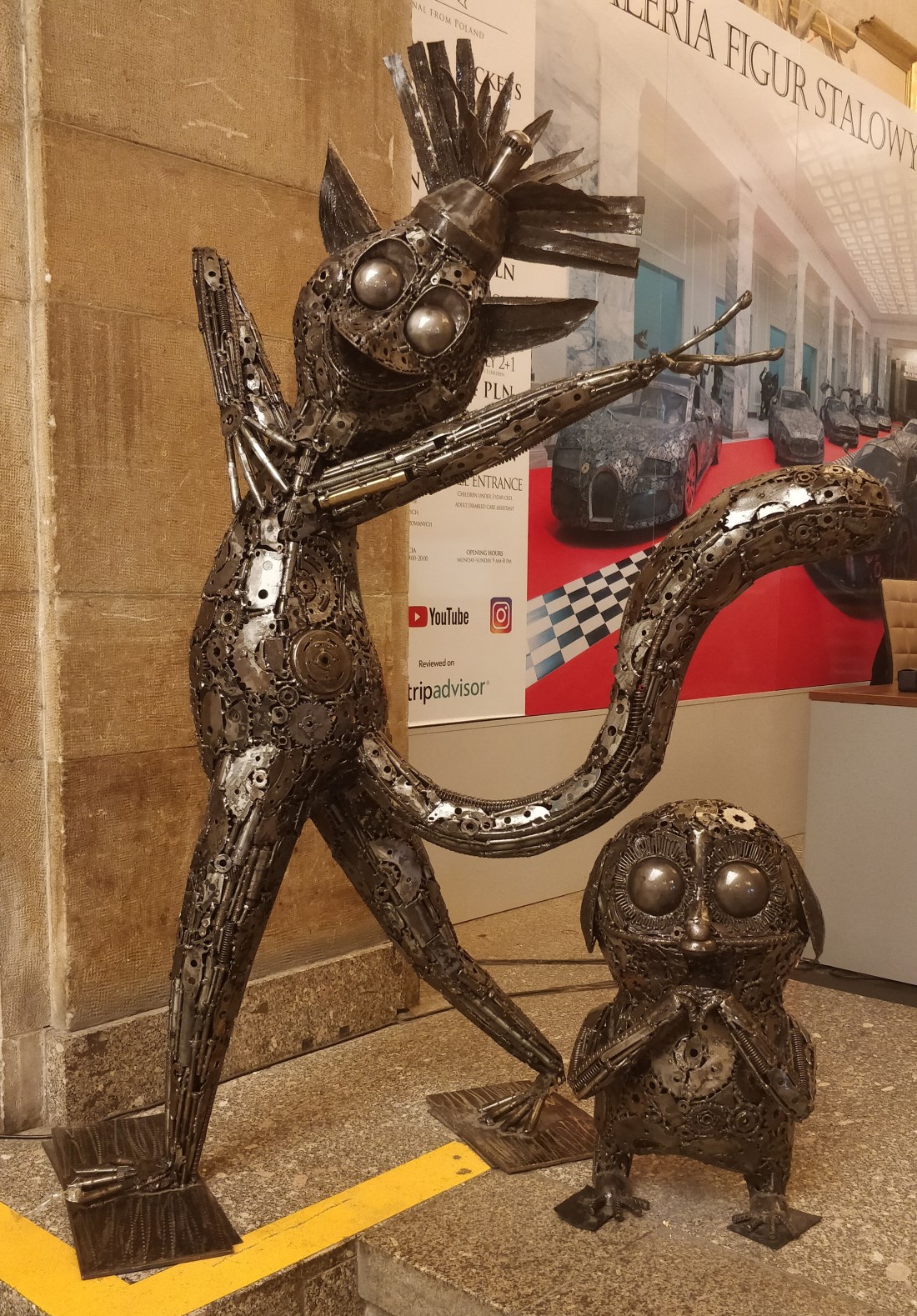
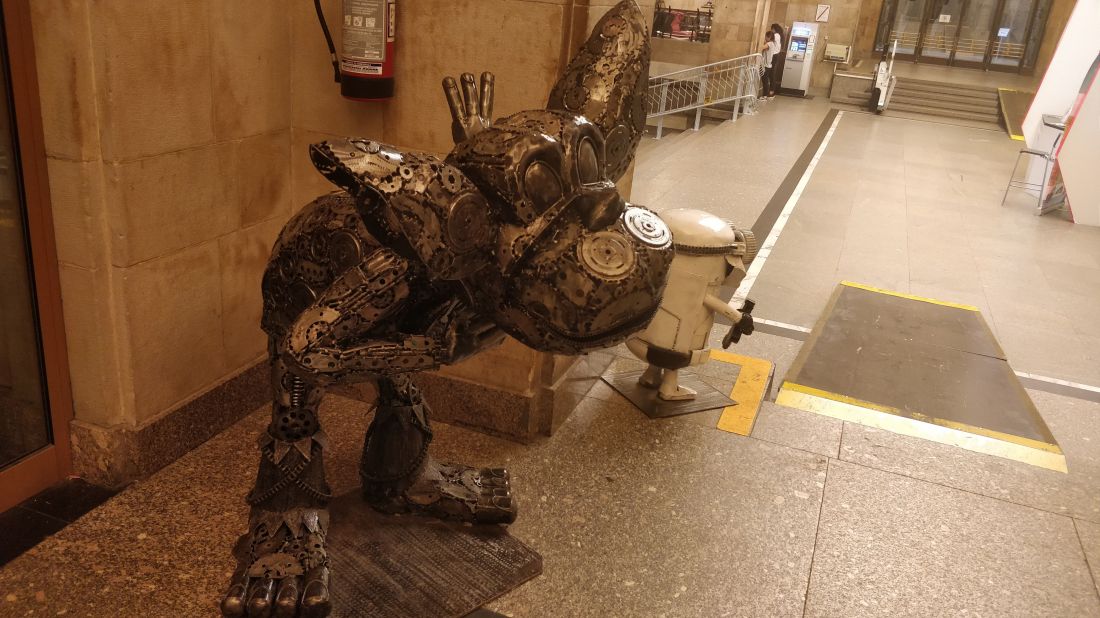
Inside we found one of the museums. We didn’t go inside but I had to take a picture of the 2 sculptures on the outside of the museum.
The building is the tallest in Poland so it gives you a great view of the city.
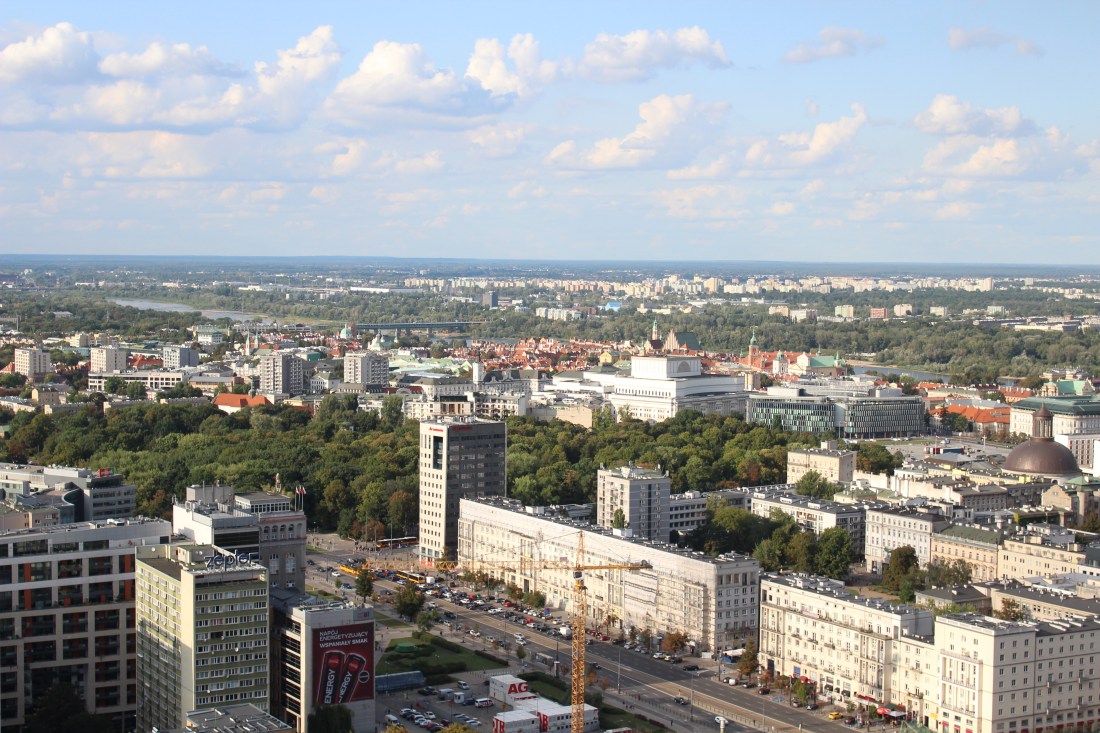
After the observation deck there wasn’t really too much more of the building to see and it was getting close to dinner time so we ended our day here.
The Old Town, Vodka, and Cycling
The Old Town of Warsaw is not so old anymore. After the Warsaw Uprising it was completely destroyed but the city has since rebuilt it as close to its original as possible using old photographs. Warsaw’s Old Town is one of the smallest in all of Europe because the city was a small, sleepy, unimportant, village for over a 1000 years and only in the 1500s did it start to become an important center for the Polish people.
Since it’s been completely rebuilt the Old Town buildings are pristine and well maintained. I mean they even renovating some of them while we were there.
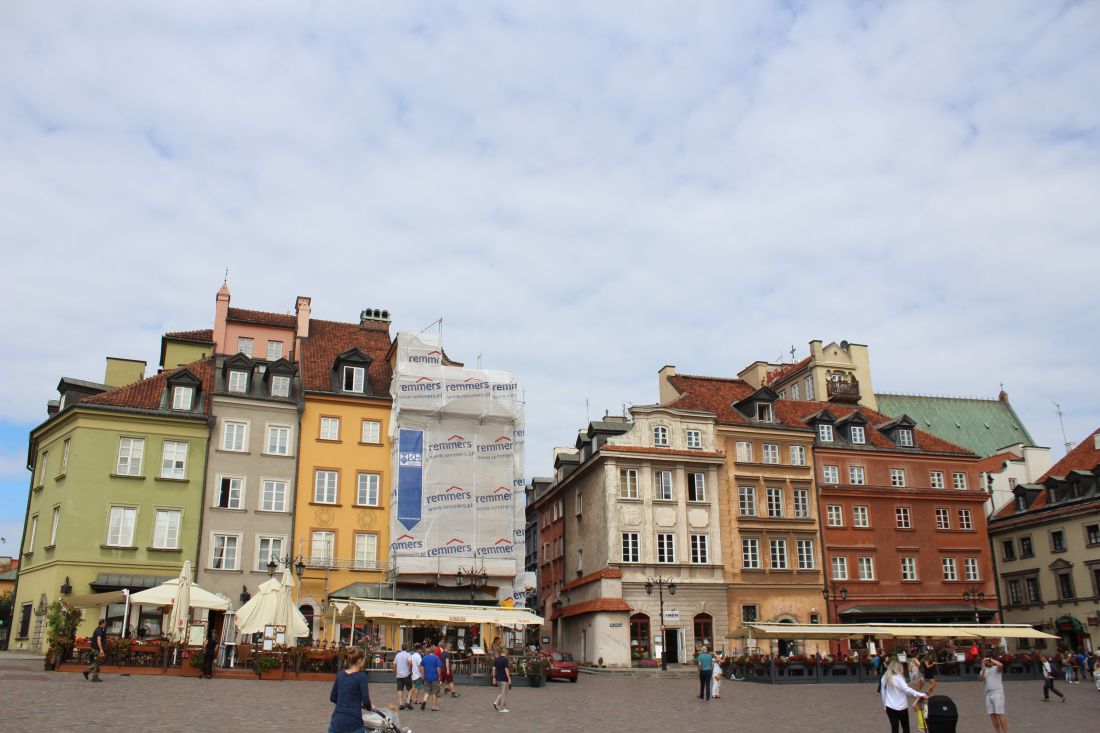
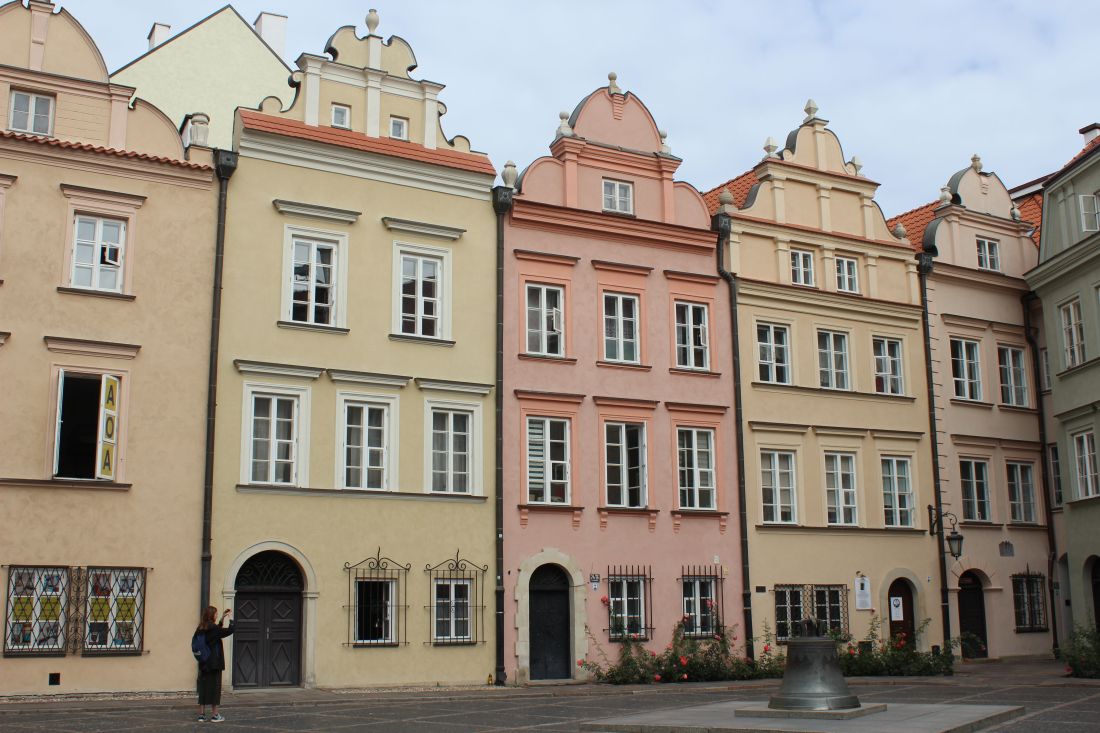
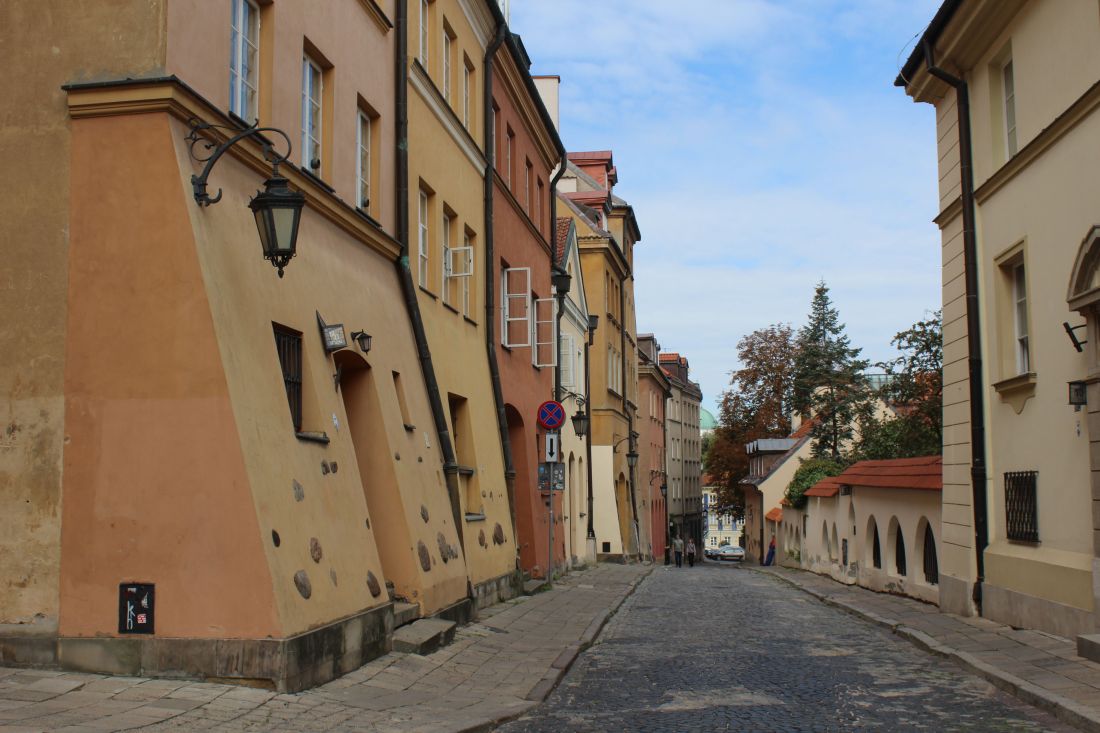
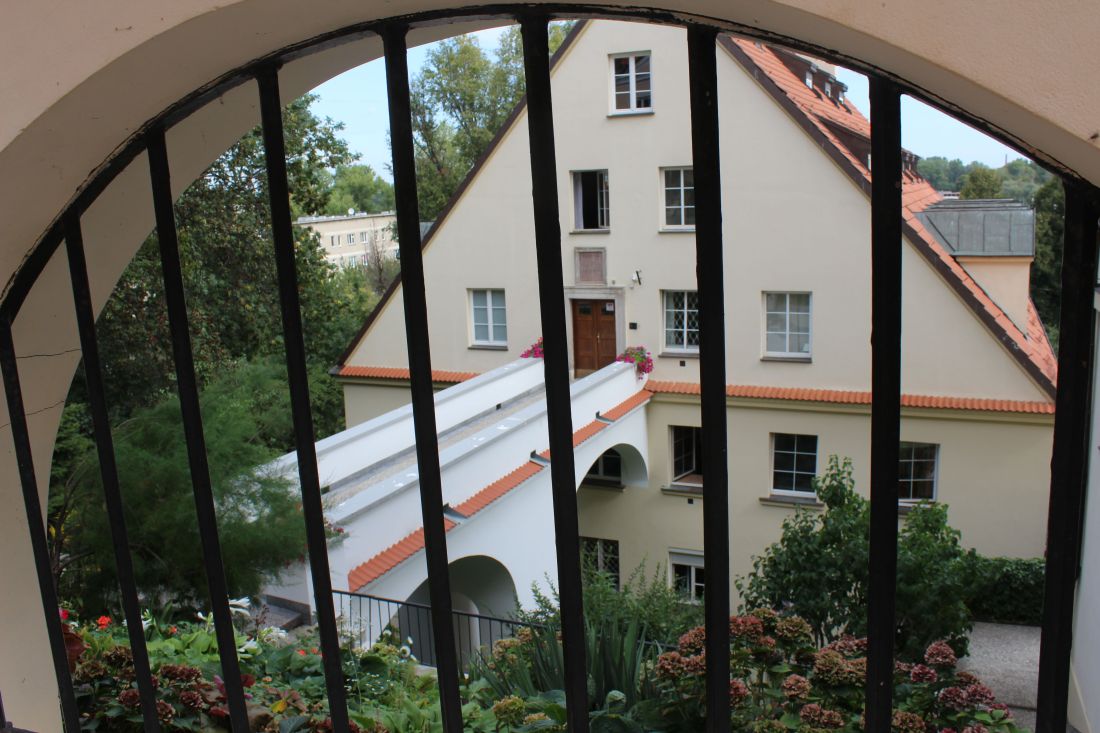
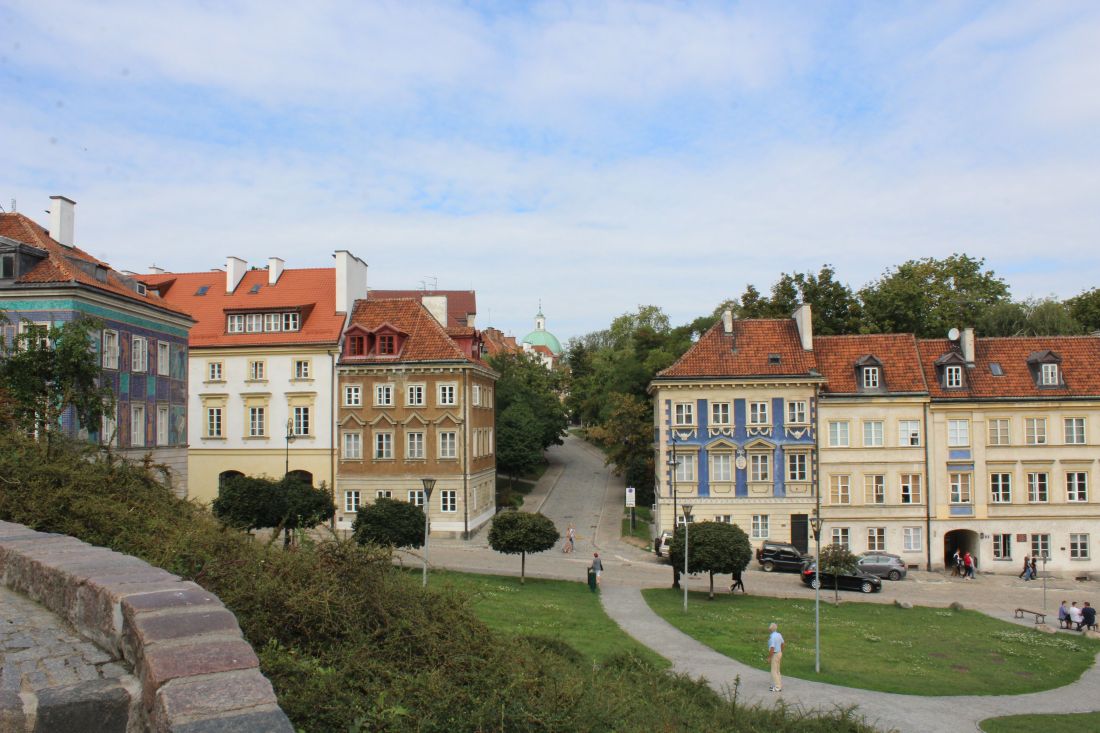
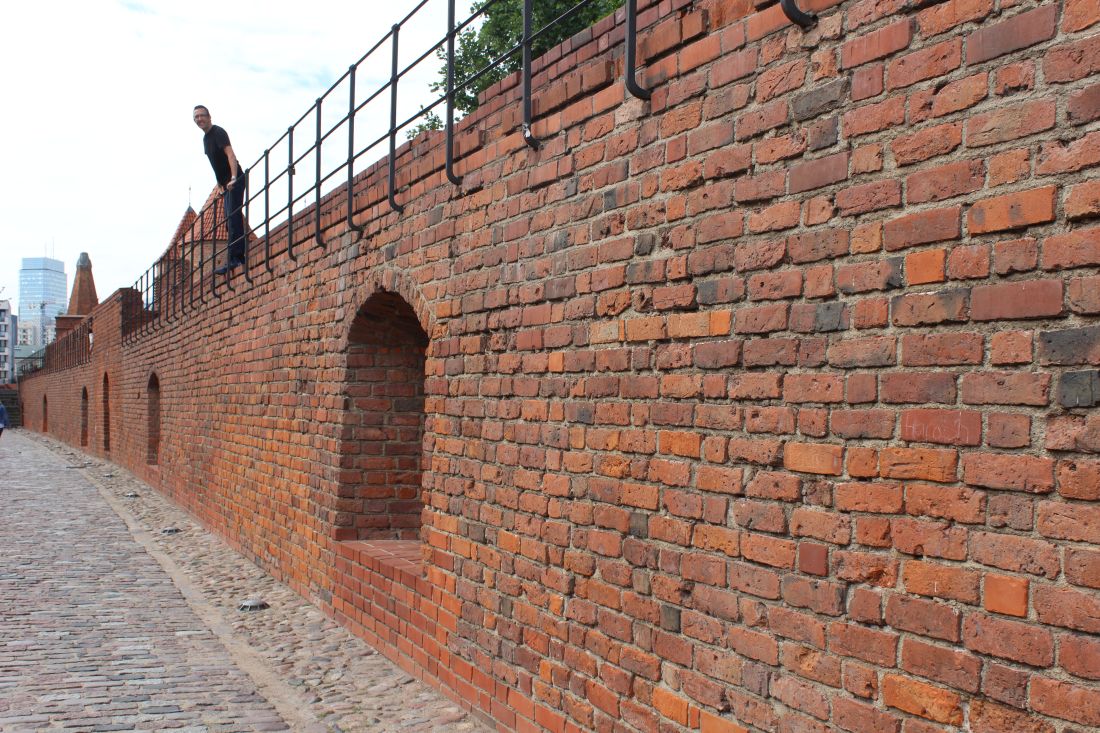
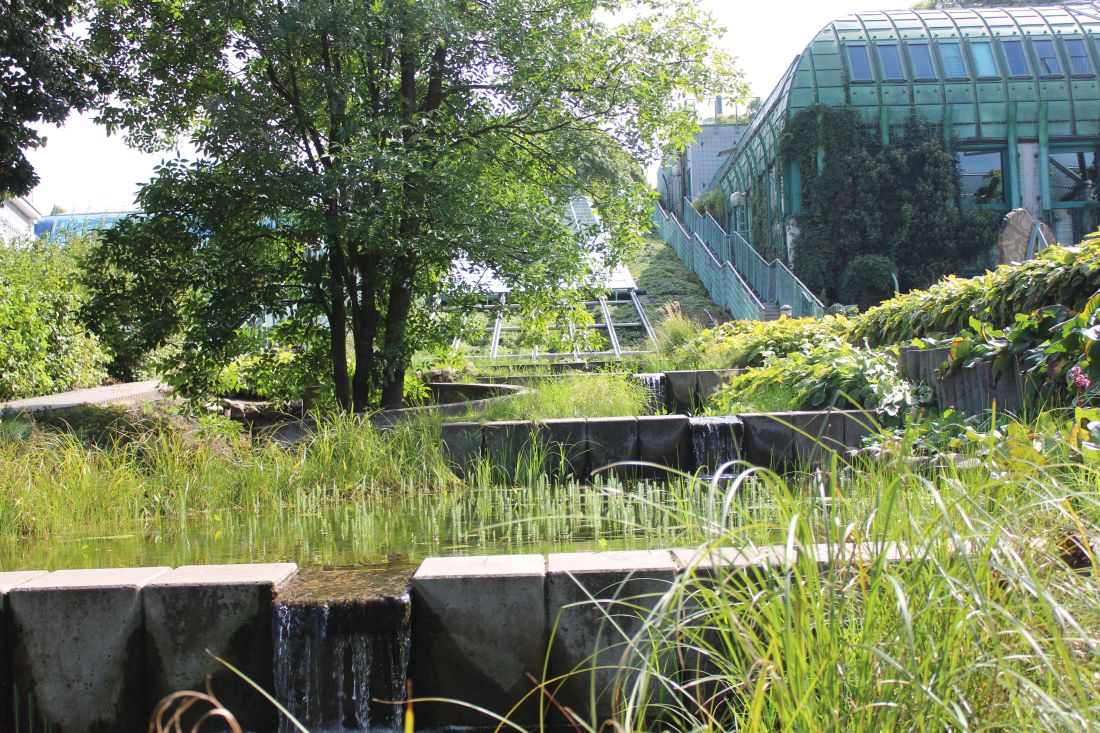
You will breeze through the Old Town in under an hour so make sure you have more things planned for your day. Our next stop was the Warsaw University Library where they have an entire garden built on top of the library.
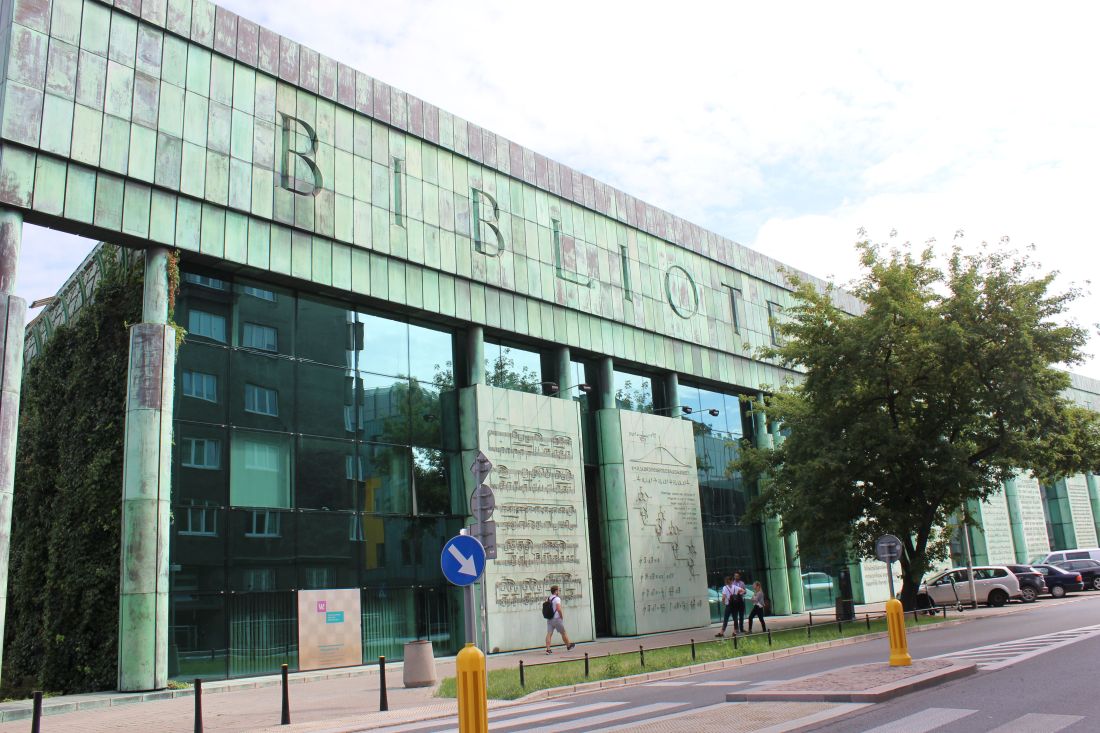
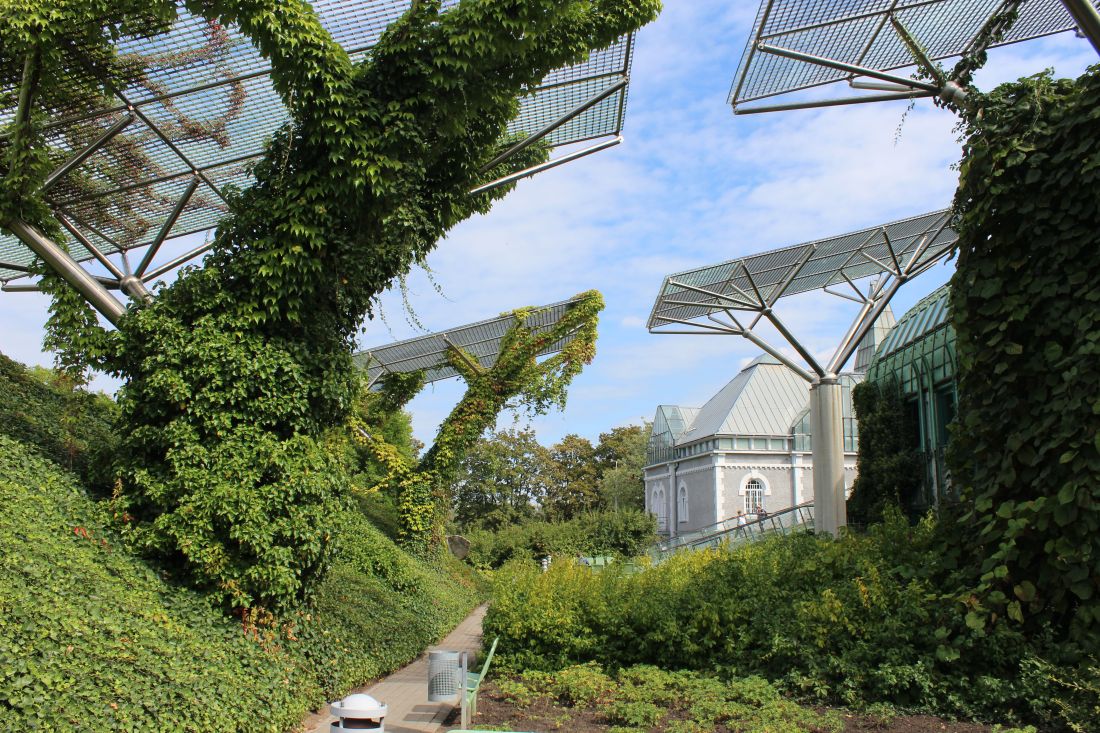
Stairs up to the rooftop garden.
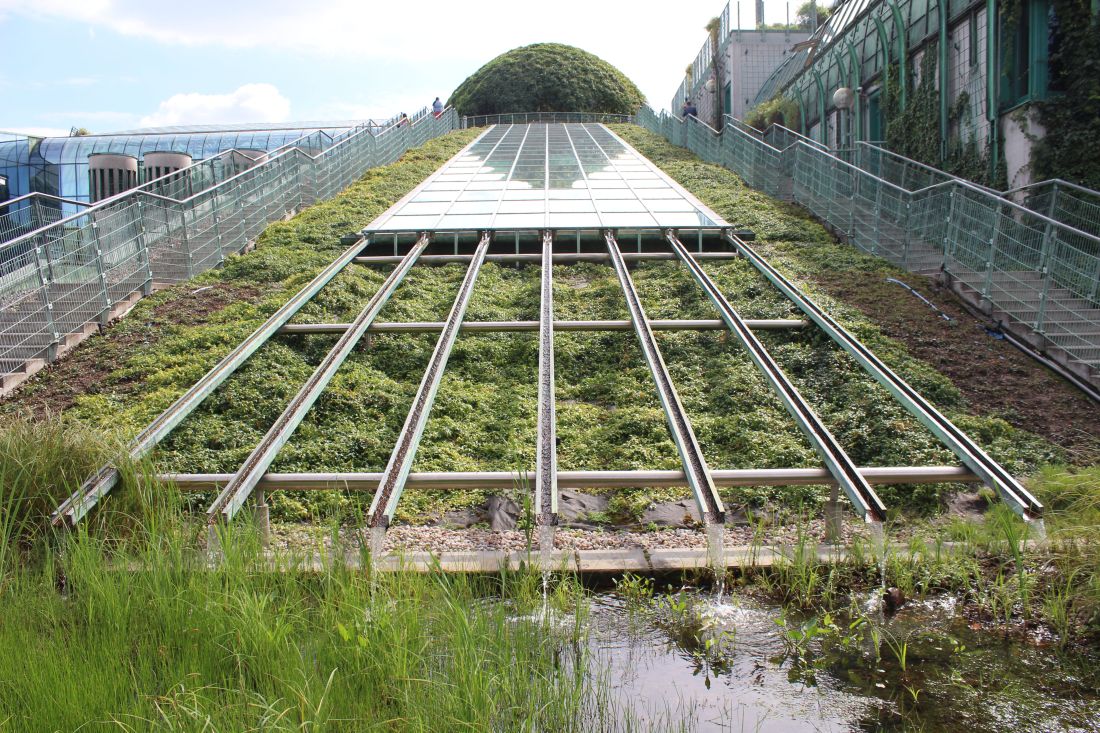
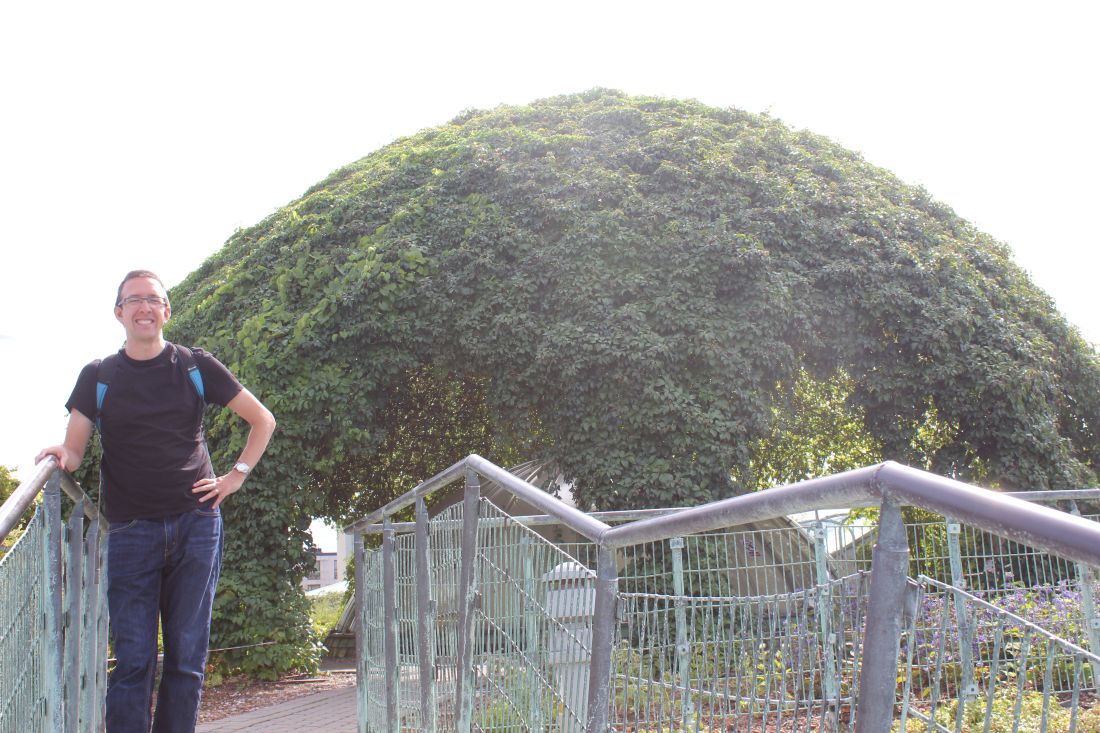
Looking into part of the library.
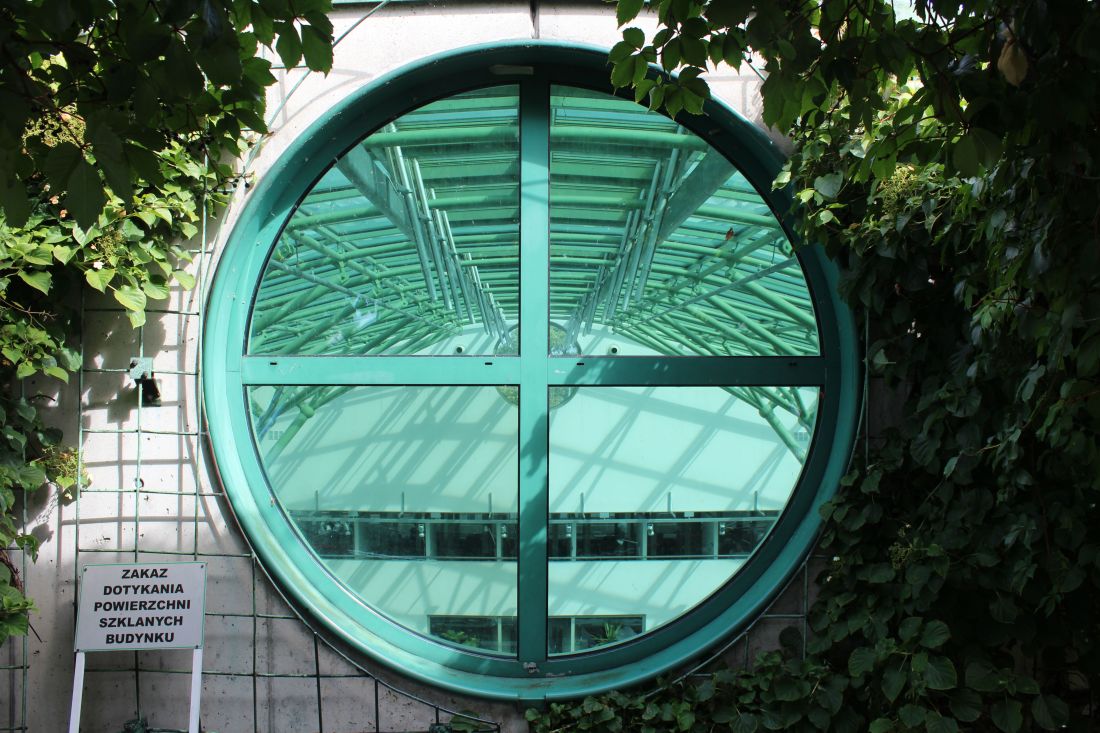
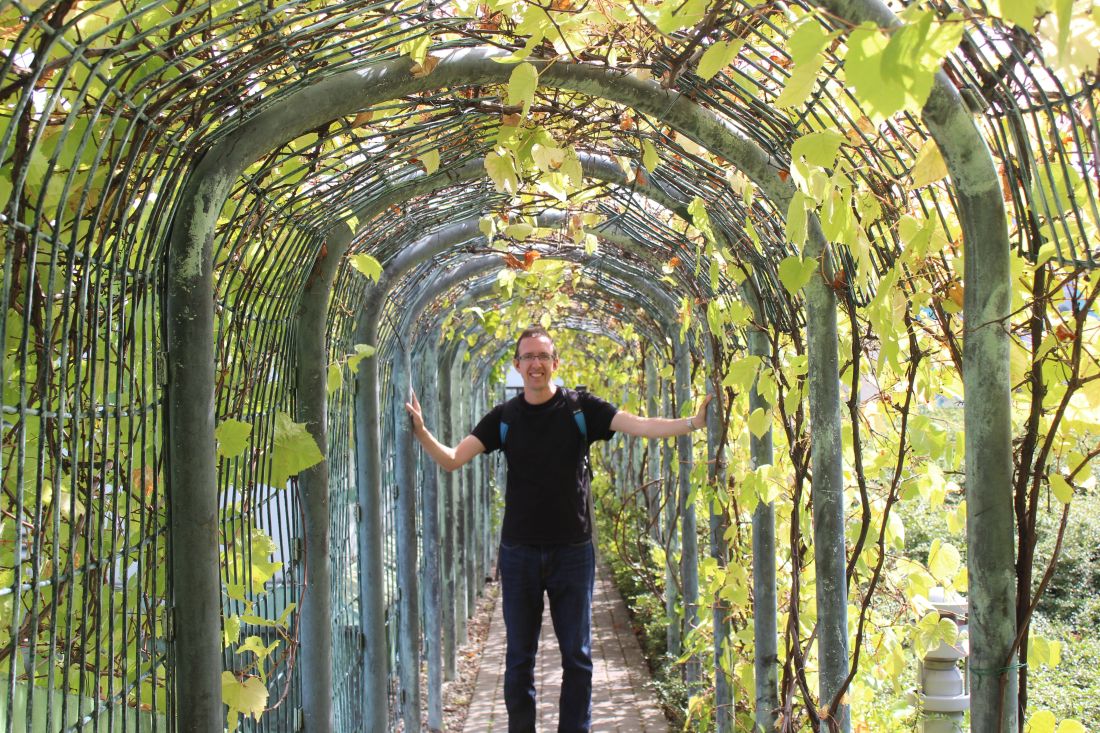
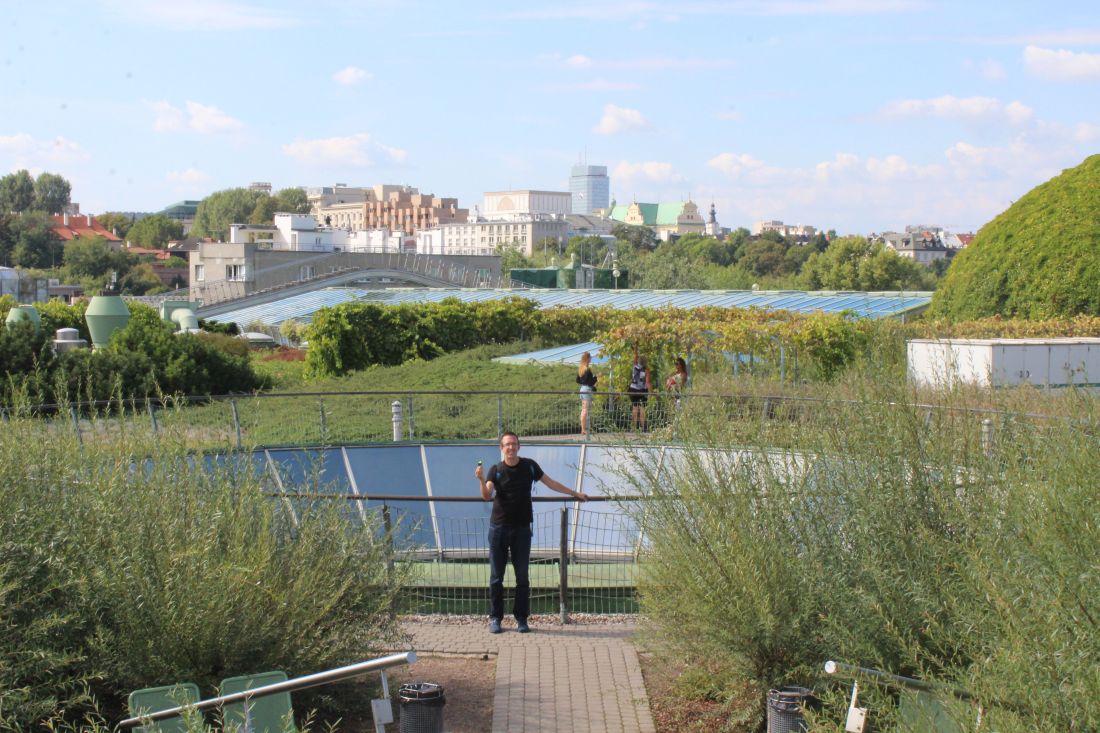
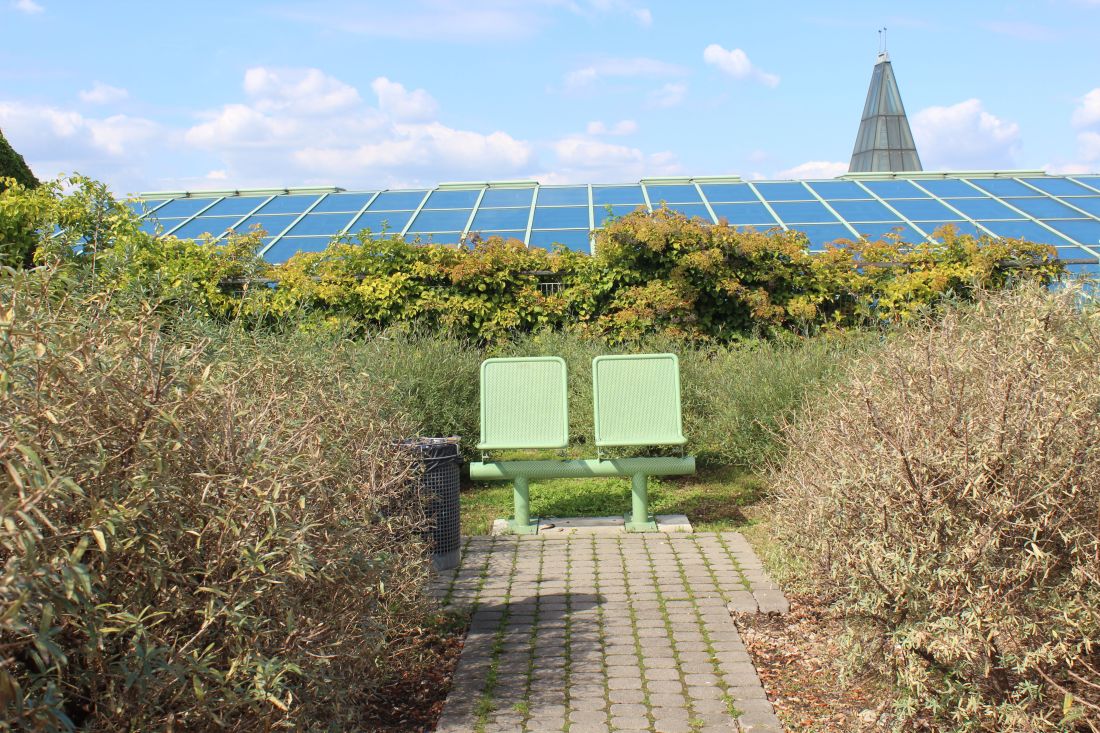
The views aren’t as good as from Stalin’s Birthday Cake but still pretty good.
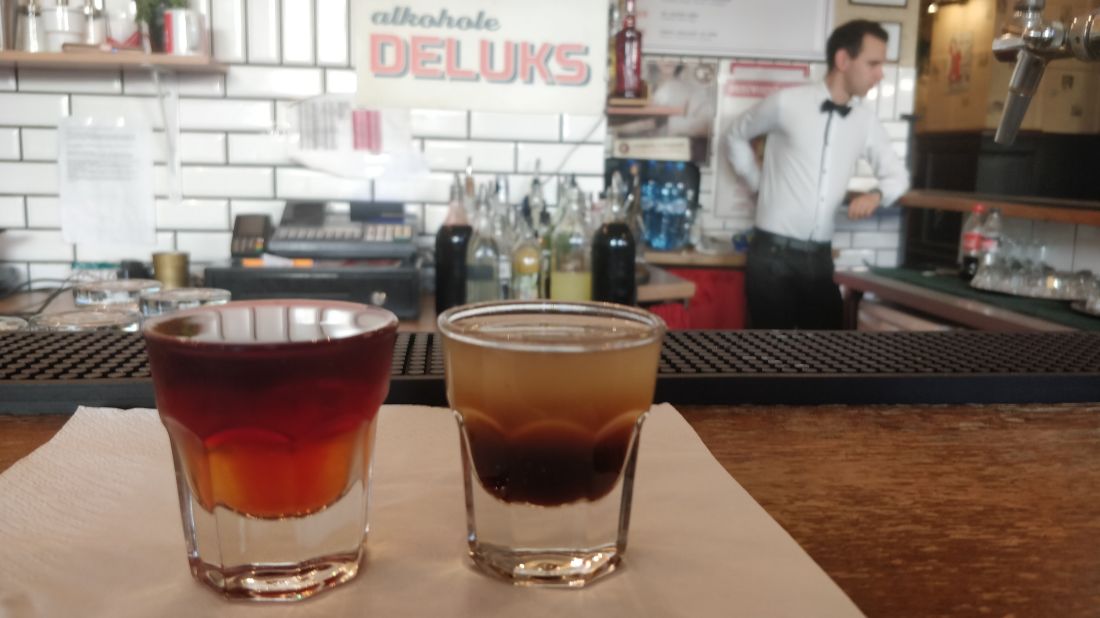
After a lot of hard work walking around I wanted to try some famous Polish vodkas. We found a place that distills their own and makes some interestingly delicious shots to try and for only 5 zlotys or about $1.60 CAD.
On the left is the Chupa Chups and the right is their best seller lemonade vodka. Yes both were delicious and easy to sip and enjoy.
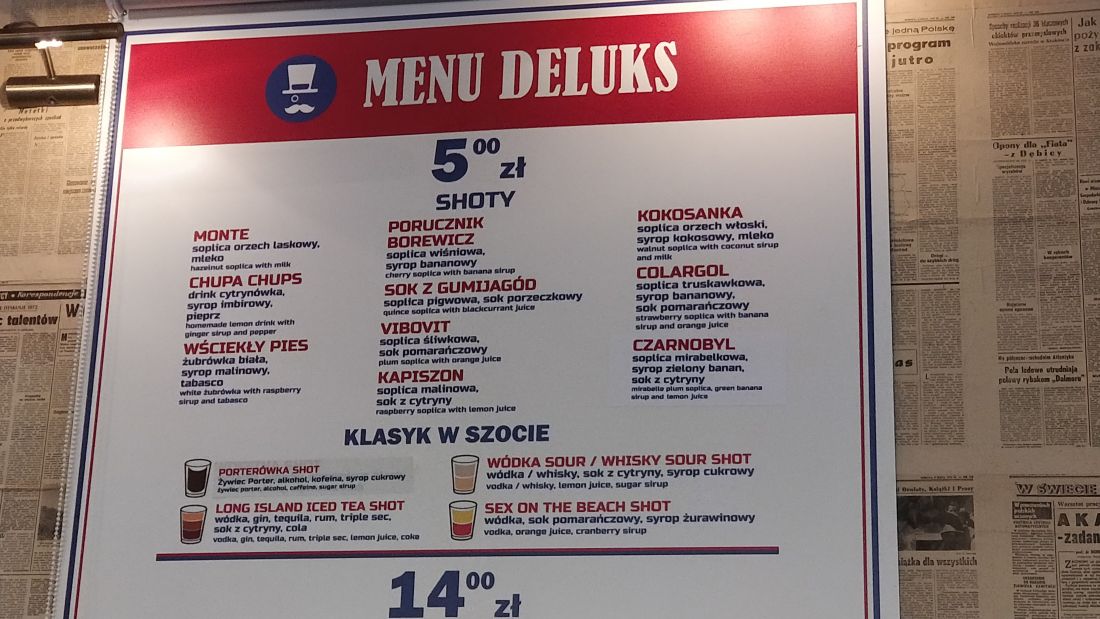
Walking and vodka was all we could manage for a 2nd day and on our 3rd day we signed up for the city bike share program. For the equivalent of $7 CAD we both rented a bike for 3 hours and rode around the riverfront area and that marked the end of our time in Warsaw.
The Countryside, Farming, and Locals
At this point in our trip, 6 weeks, we were getting tired of playing the tourist every day. There’s only so many Old Towns, markets, and hiking you can handle. We had signed up for a program called Work Away where you exchange your labour for free room and board. We were excited to do this because it gave us a chance to live with a family, do something a bit different and best of all save a bunch of money.
The work away we chose was a guy in his mid 20s that started a micro farm. A micro farm being a small scale farm where most of the work is done by hand and only using a few small machines. The farm was owned by his parents and him, his parents, and 3 of his younger siblings all lived there but he was the only one that worked on the farm so he is always in need of a few hands to help out.
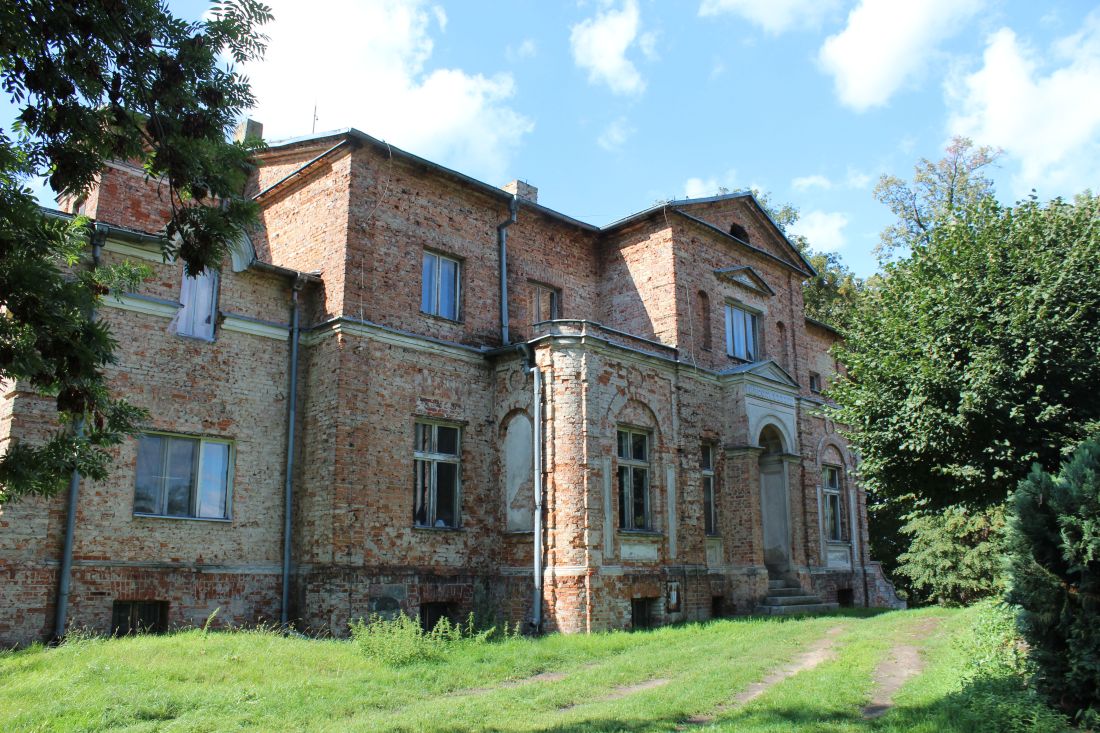
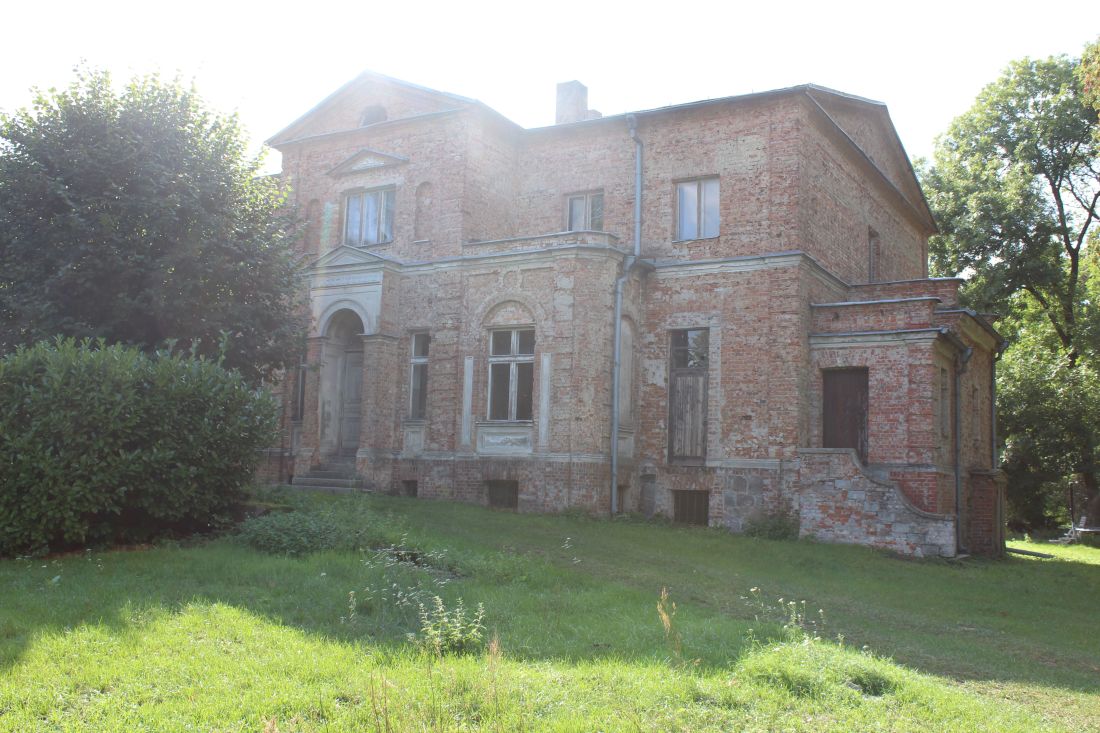
As you can see the old farm house is massive. The farm has been in their family for over a hundred years and before WWII they use to own a lot of the surrounding land so the big house was needed for all the hired help. But during the Soviet occupation they lost all but the small bit of land directly around the house so now it is far too big for a single family.
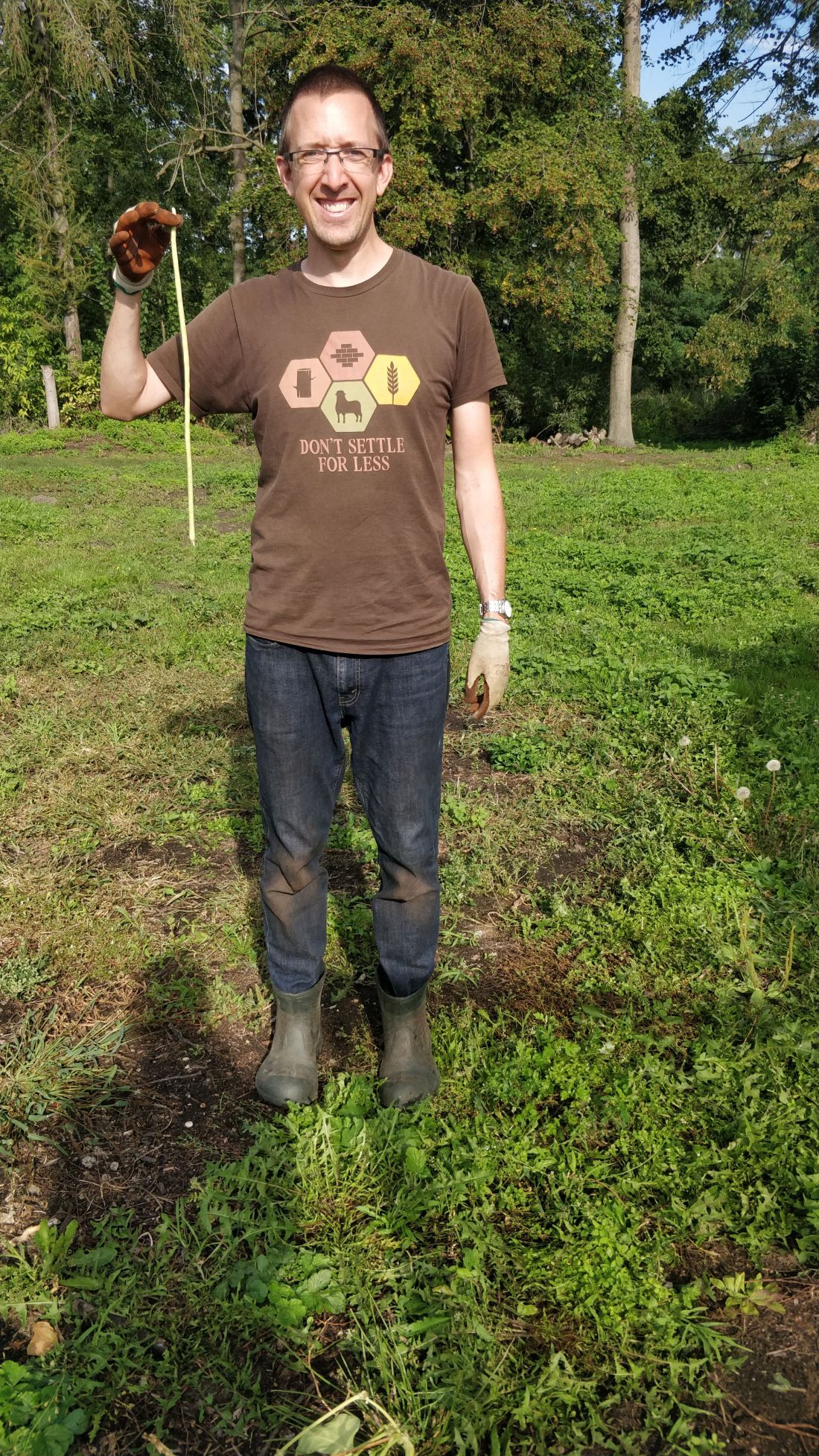
As part of the Work Away rules you only do about 5 hours a work a day, 5 days a week, this is to avoid exploitation. This time of year there was a lot of harvesting and food packing for deliveries to do. We helped harvest and pack French beans, Chinese long beans, kale, different kinds of parsley, tomatoes, radishes, squash, eggplant, spinach, arugula, and more. We also helped with weeding and cleaning of tools and equipment. Candice and I both love being outside and I love gardening so this didn’t even seem like work to me.
Candice harvesting parsley
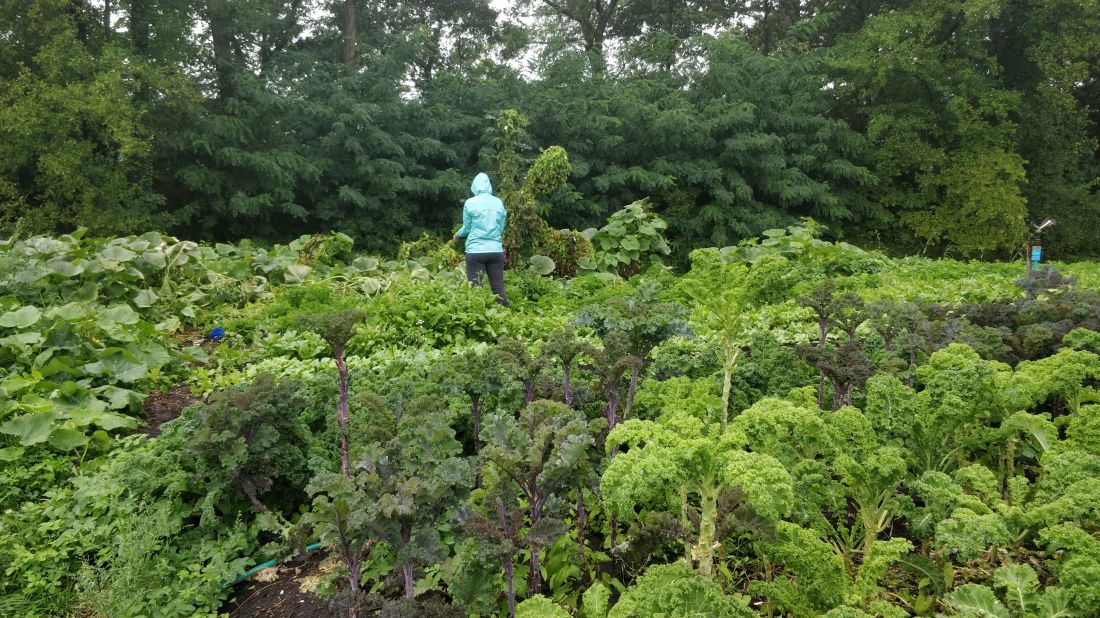
Kale plants

Small peppers not quite ready

Lettuce, green onion, parsley, French beans, radishes all in this garden
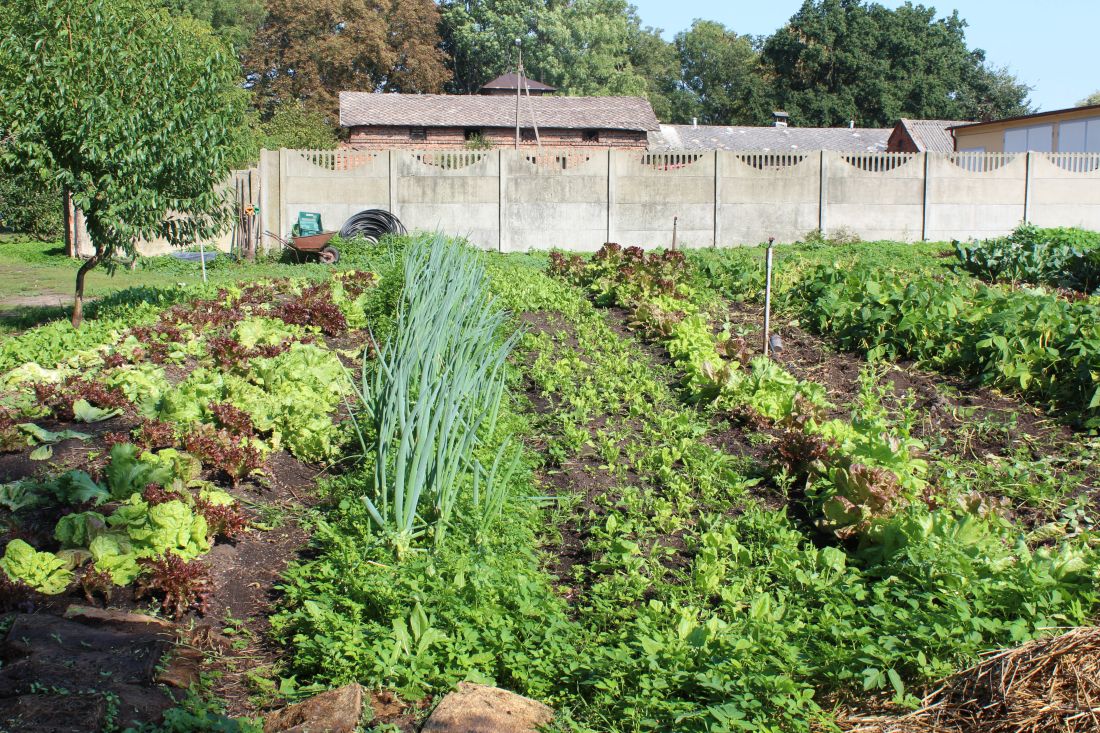
A few green houses
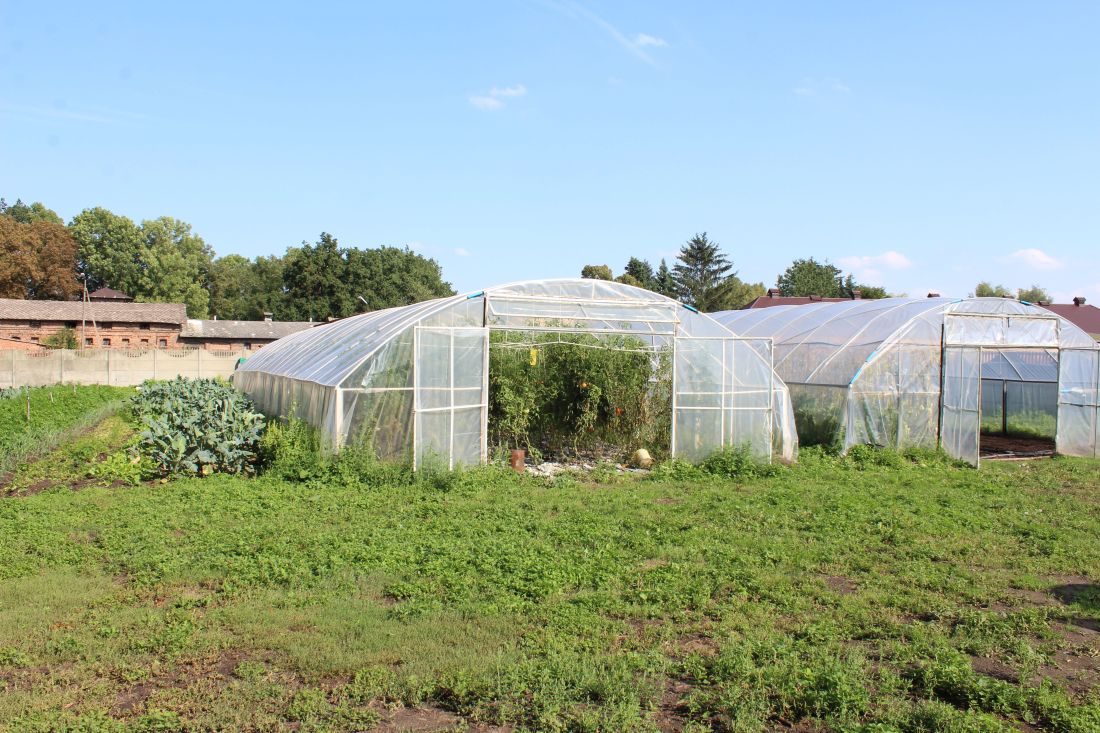
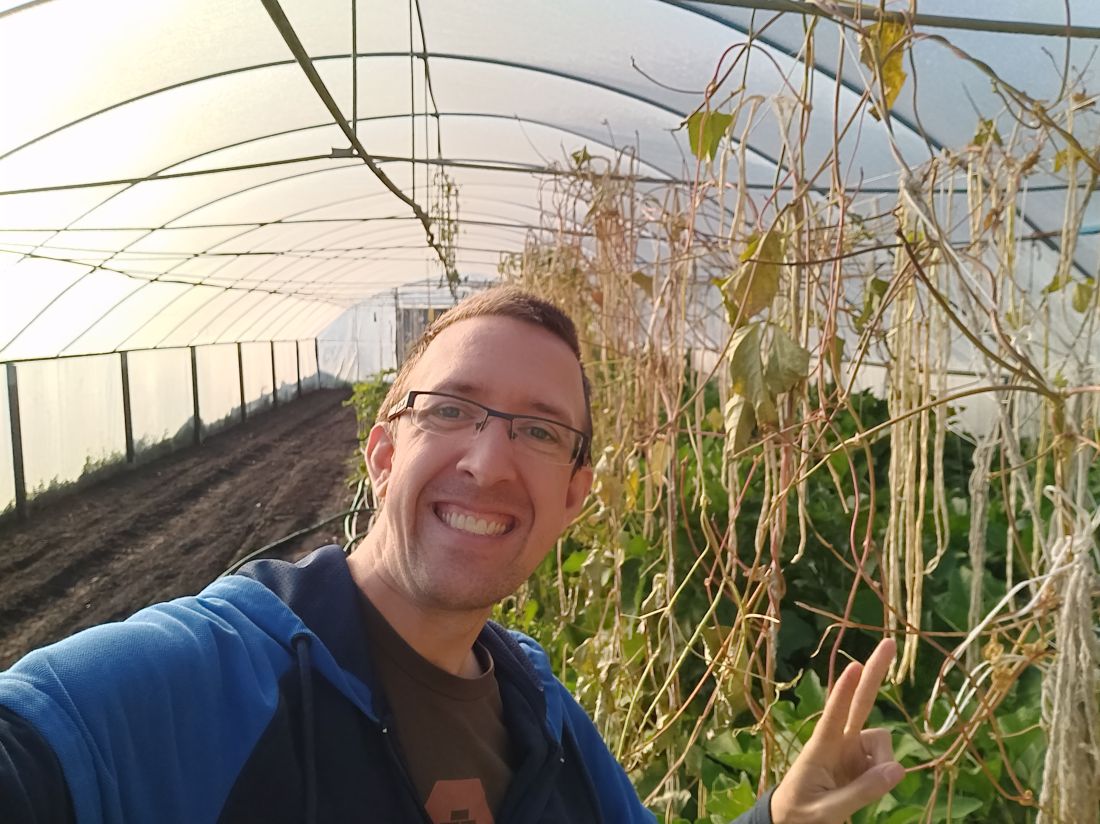
Harvesting Chinese long beans
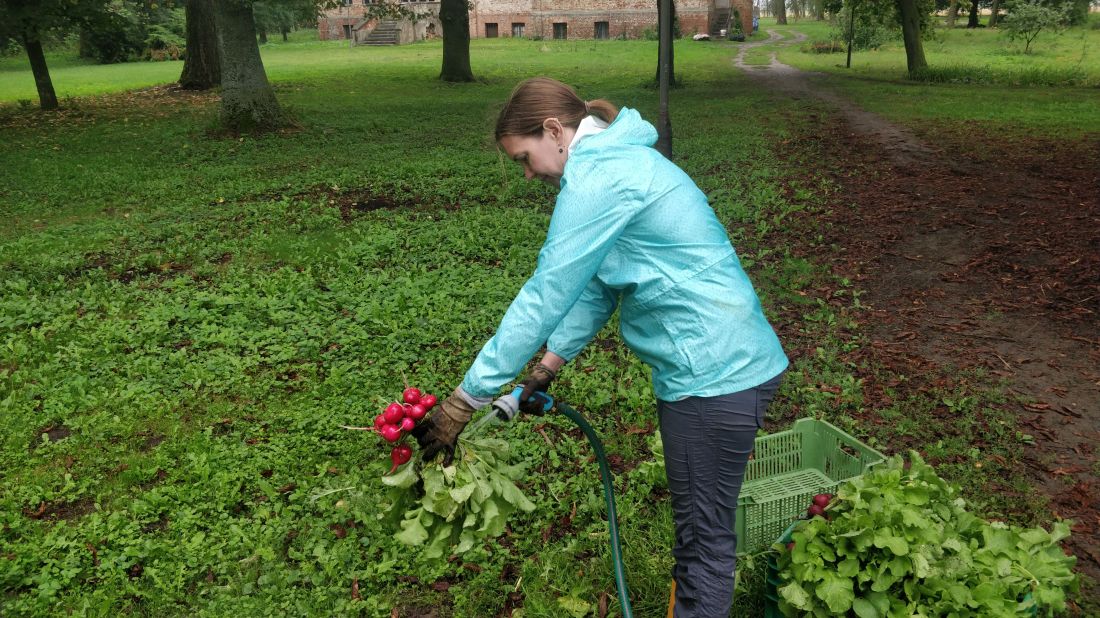
Cleaning radishes
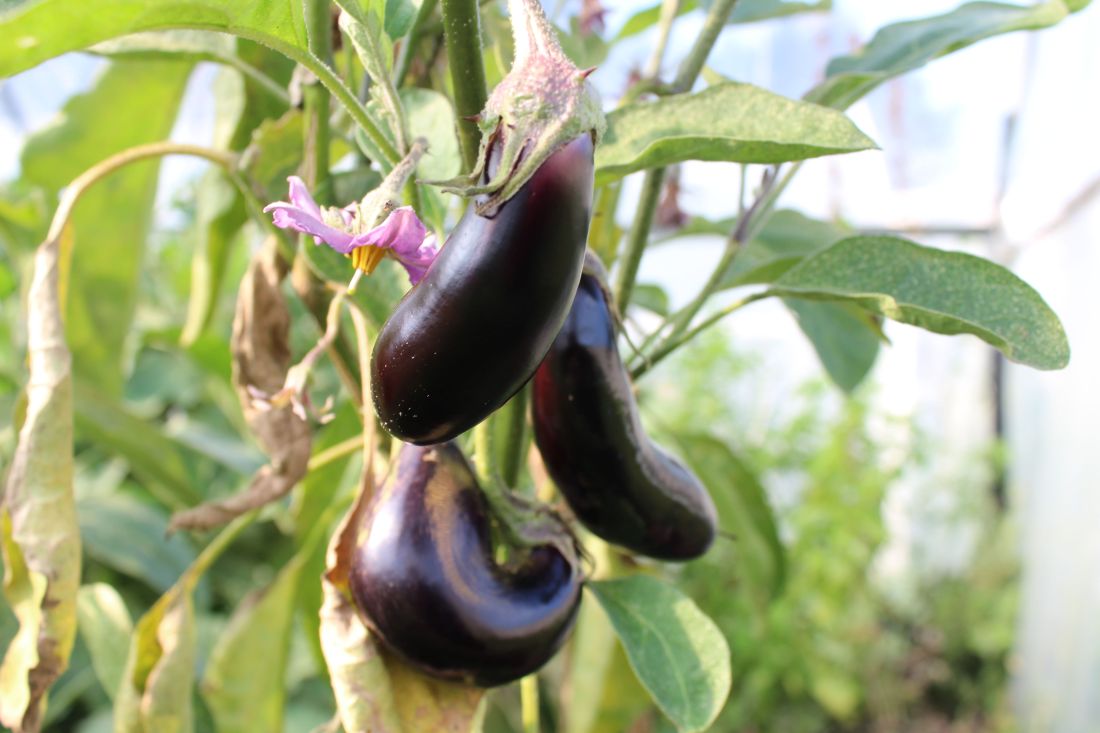
Egg plant or aubergine for you Aussies
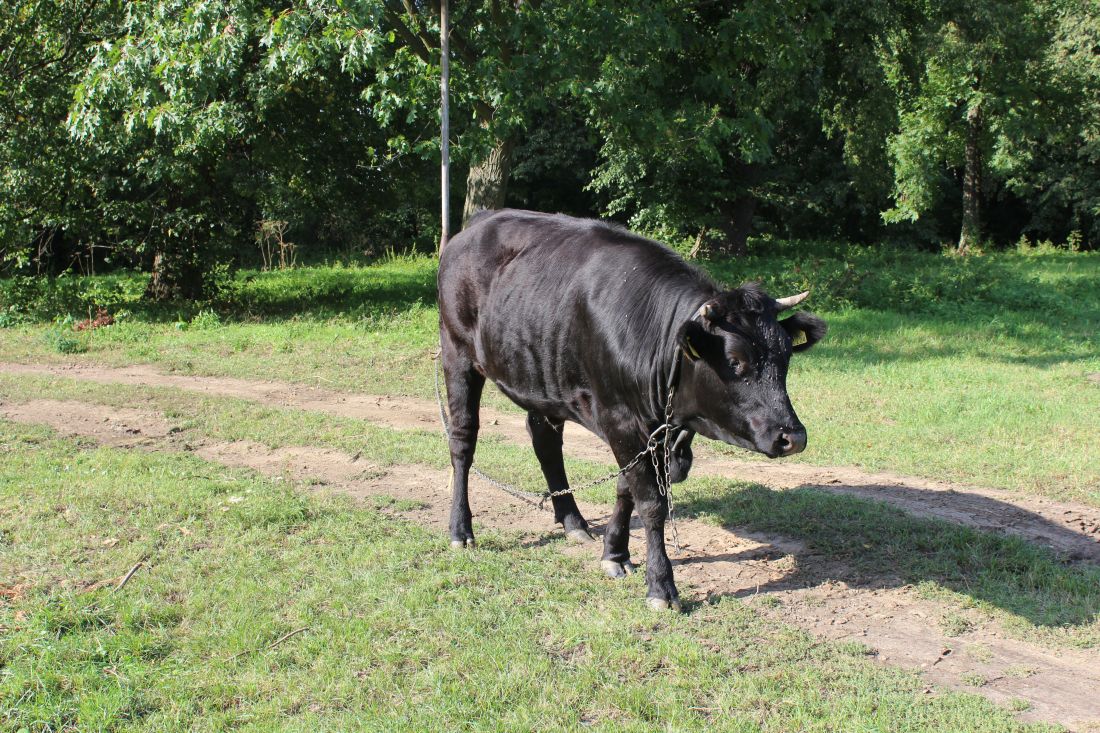
They had a cow as well
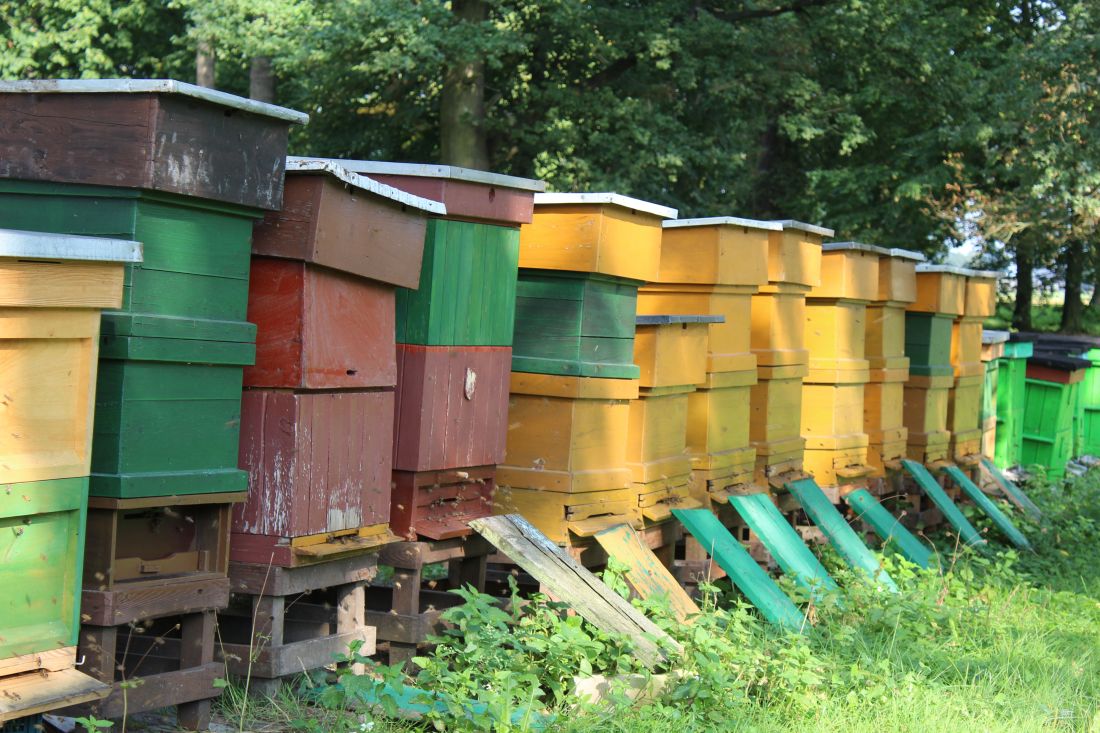
And some bees for honey
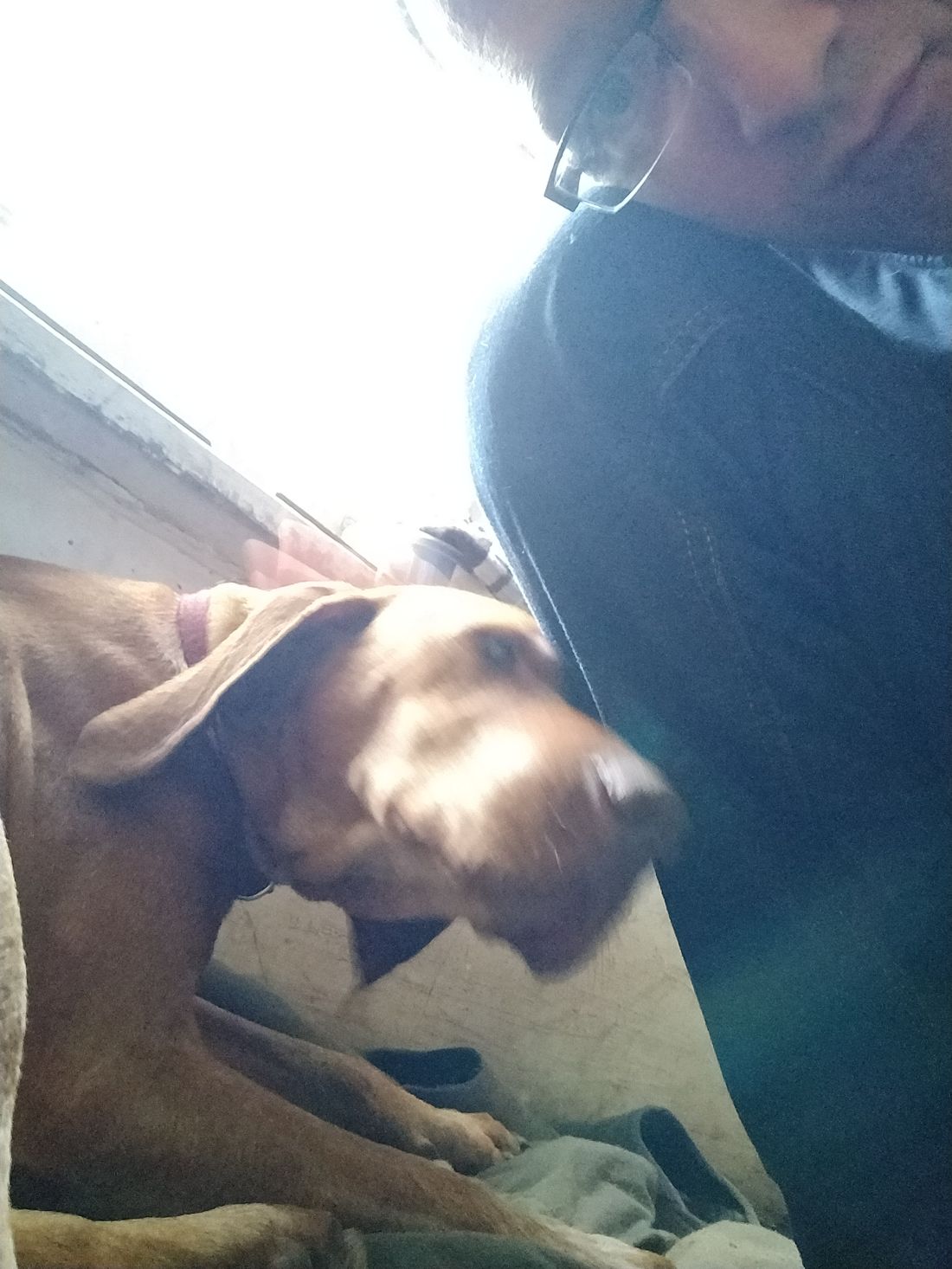
And Candice’s favourite part of staying here was Goody
The Mom also made her own cheese that she sold with the other farm products. We spent a total of 10 days on the farm and enjoyed the family’s company immensely and we played cards with the 2 youngest girls almost every night. We also enjoyed the amazing home cooking and ate fresh cheese and bread for every meal and it was soooo good.
It was sad to leave but after such a great experience we’re hoping to do some more Work Away jobs and hopefully have as great a time as we did here.
During our 10 days we had 2 days off so we took advantage of them and headed up to the big city, Poznan. It was much smaller then Warsaw at 1 million people but is still the 5th largest city in Poland.
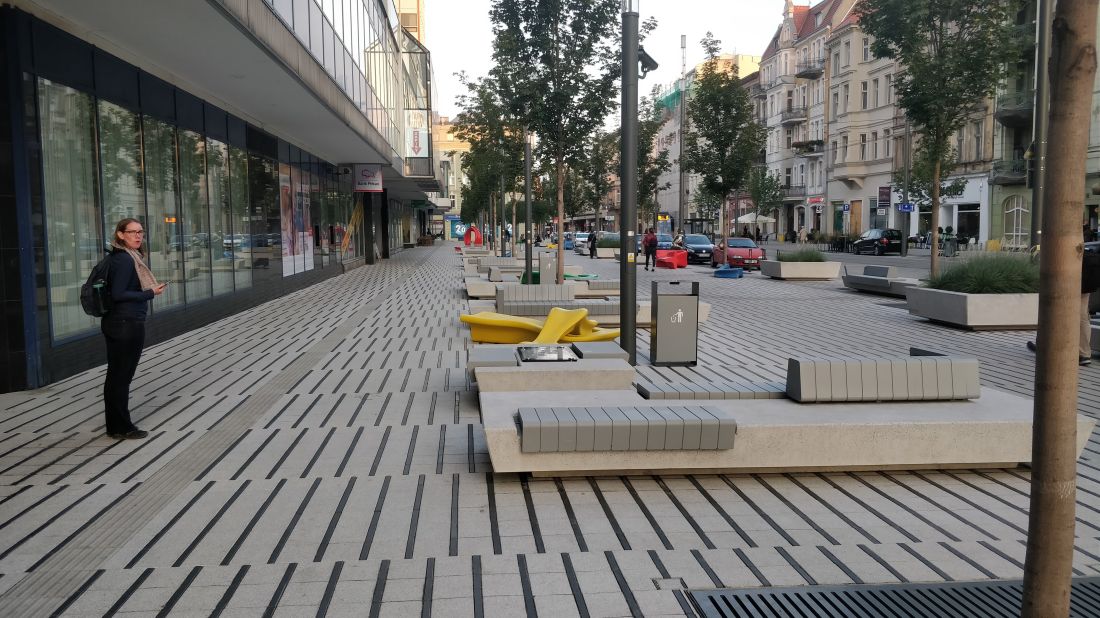
I have to be honest and say that Poznan doesn’t have a lot of big tourist items and you can see everything in a day but it’s a chill, cool, city to visit. This street in the main center district is a perfect representation of the city.
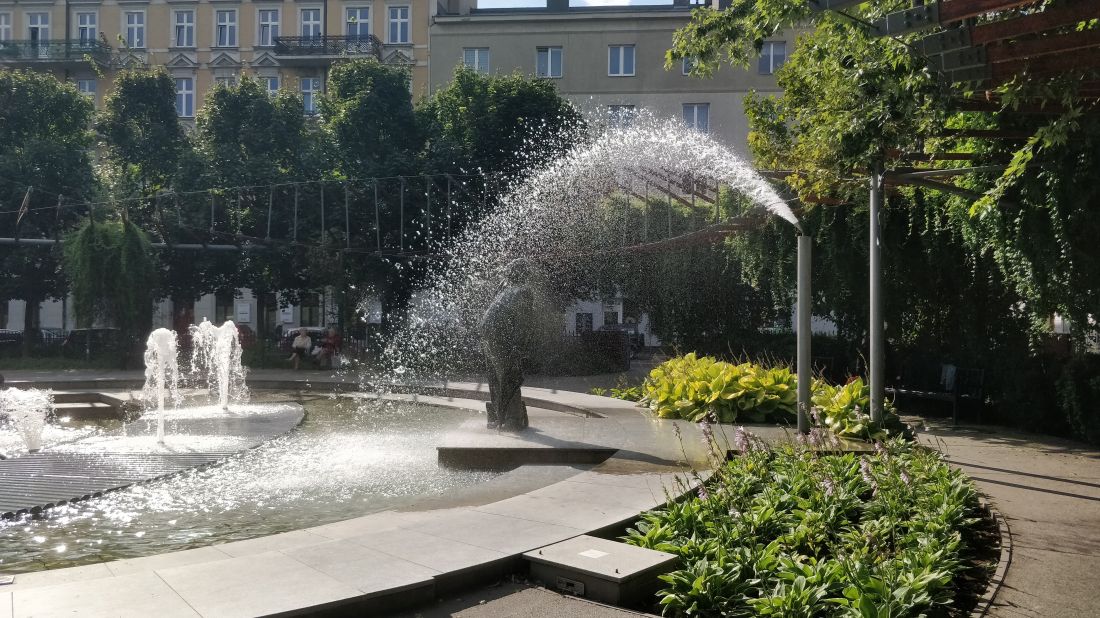
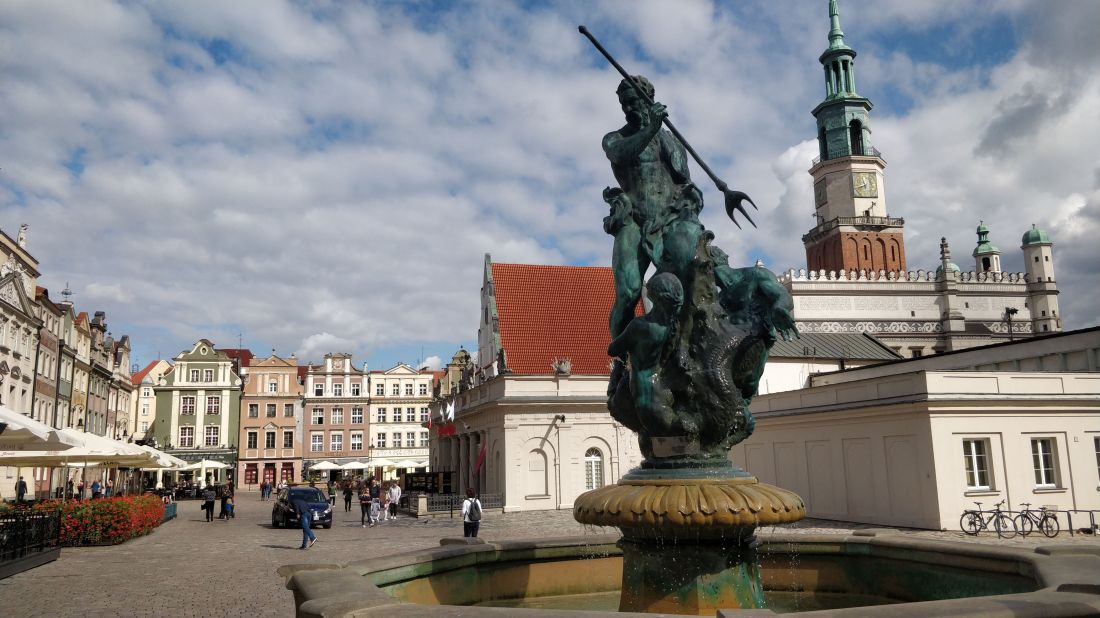
Like every other European city there are plenty of strange statues to hunt for as well.
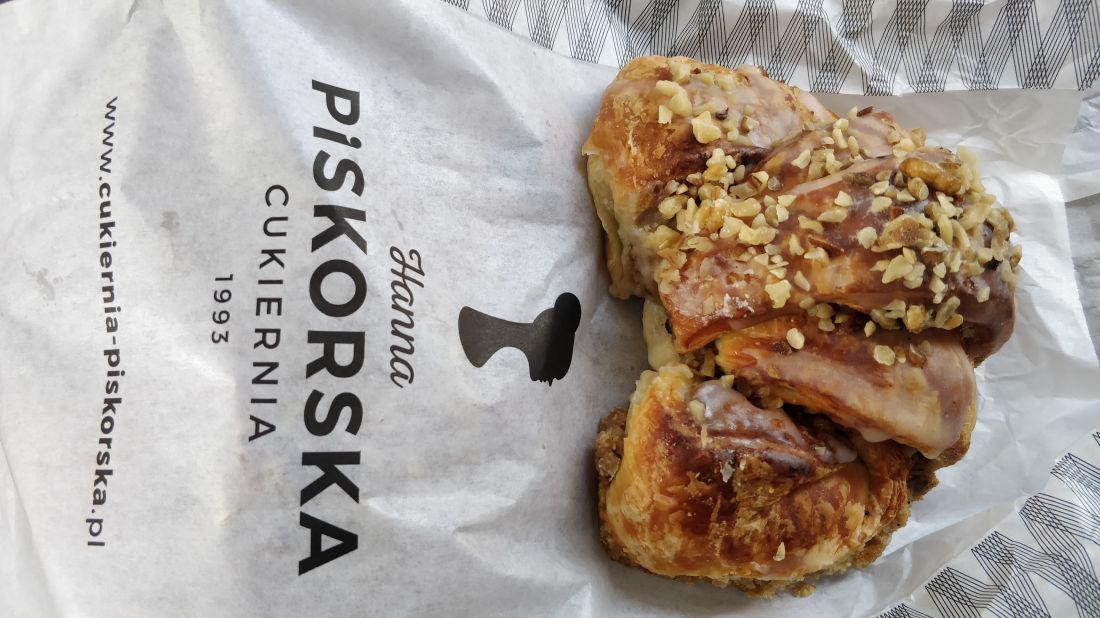
What Poznan does have going for it is it’s legally protected (seriously) pastry called the St. Martin Croissant. This beast of a croissant was invented in Poznan and while it’s a bit pricey it will easily count as half of your lunch if not your whole lunch.
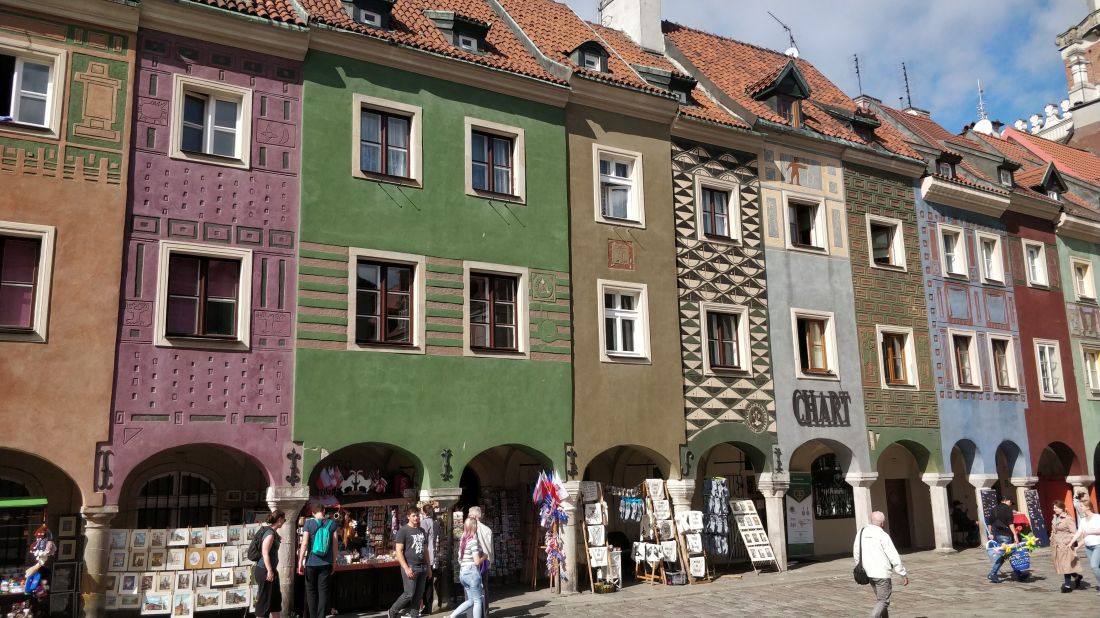
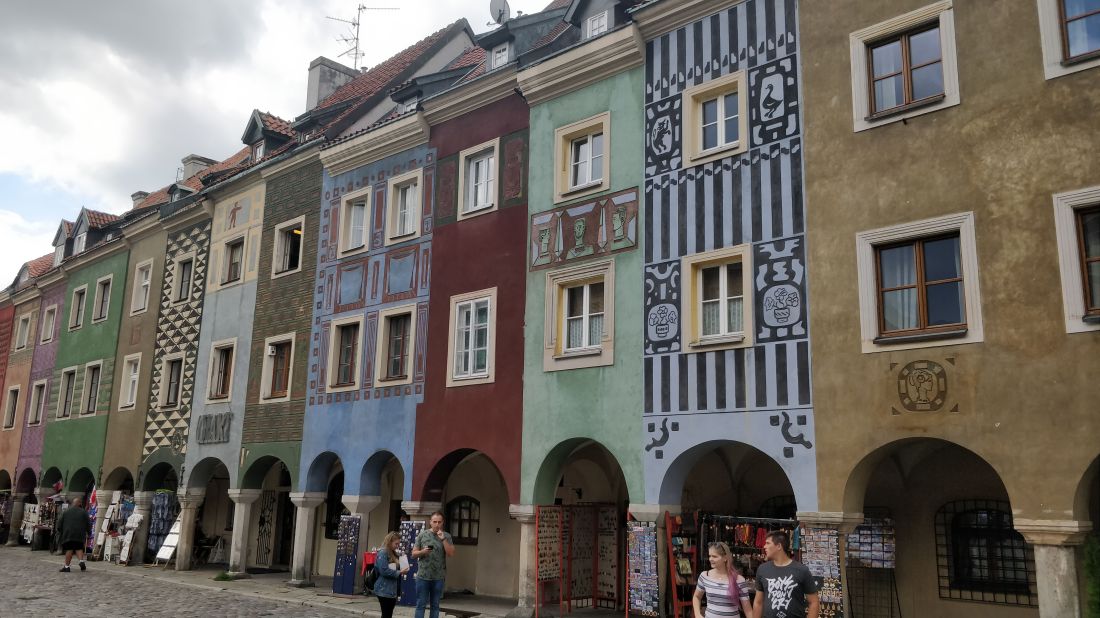
Also the Old Town here has a bit more colour and pizazz then other Old Towns we’ve seen. I just loved this row of houses for example.
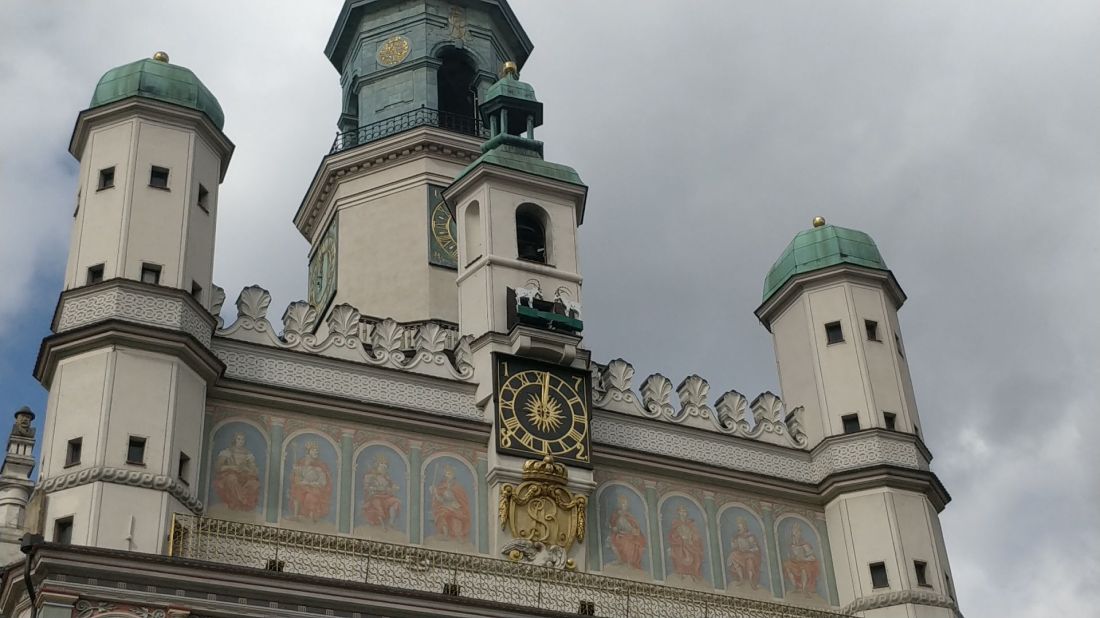
The biggest attraction in town is this clock in the center of the Old Town which has had 2 goats butt heads 12 times at Noon every single day. I read the clock has been doing this since 1551 so that’s a whopping 468 years and 170,820 times! The clock drew in a load of visitors including multiple tour groups so grab a Poznan croissant and come 10 minutes early to get the best spot.
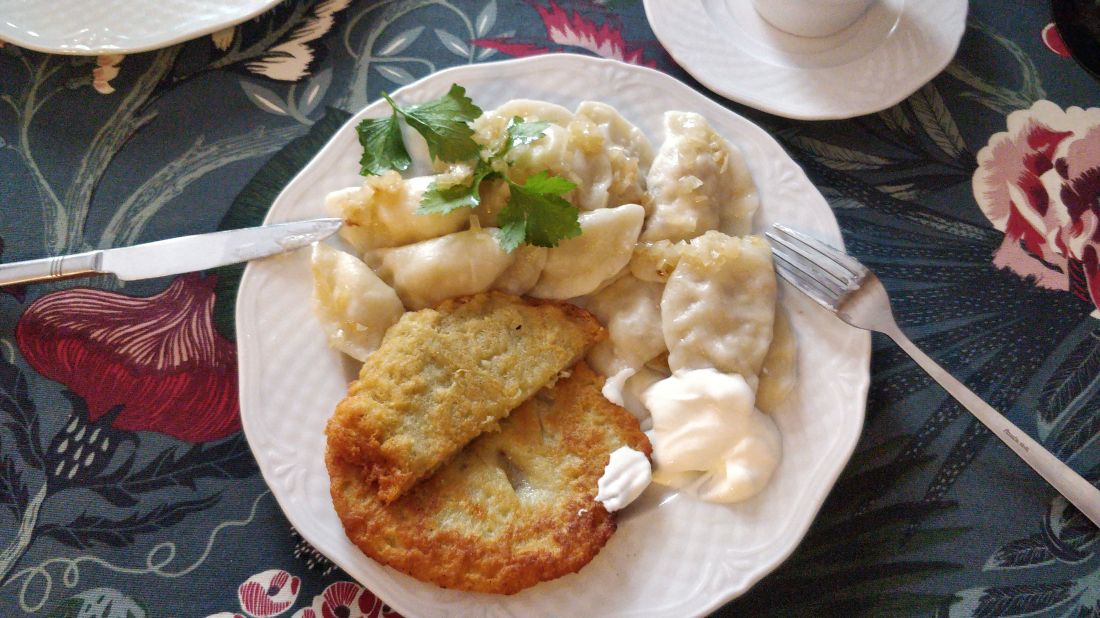
The next best tourist attraction is the food. As with all cities around Poland we found a cheap pierogi place to indulge. If I remember correctly this plate came in at $3 USD or $4 CAD.
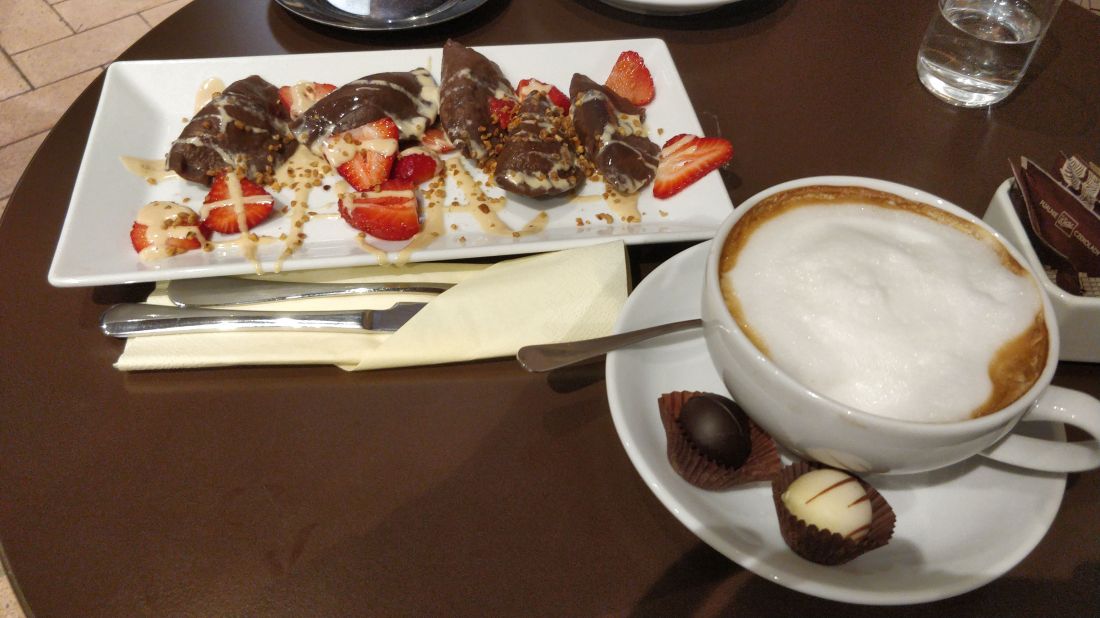
We then followed it up with a chocolate stop for desert where we had, ummmm, more pierogies but these were cream cheese filled and coated in chocolate. Add a coffee and chocolate pralines for a perfect desert.
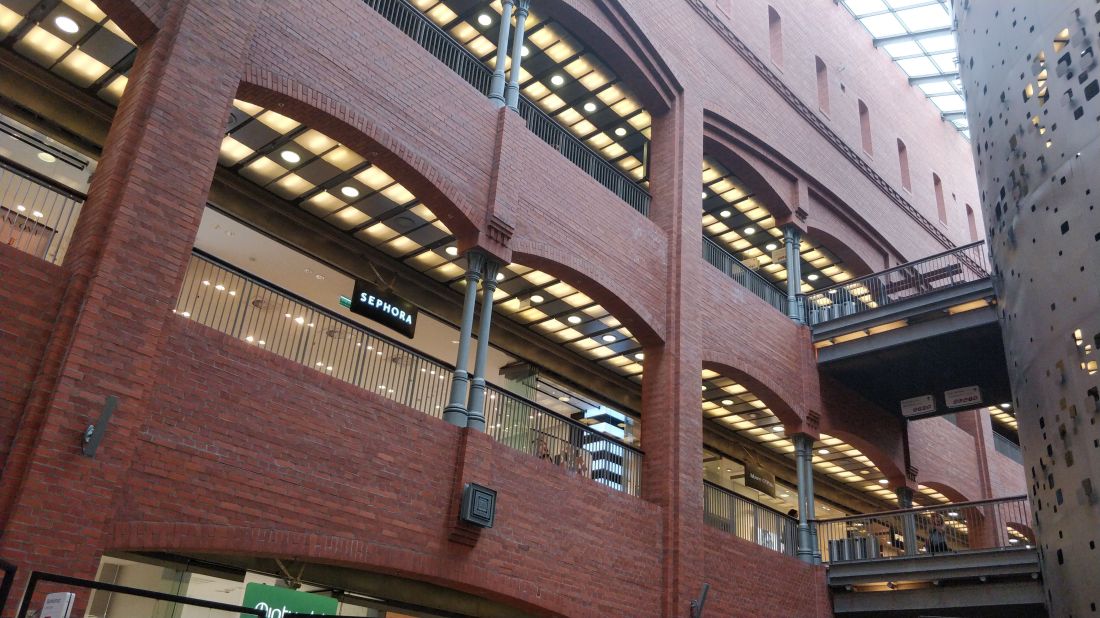
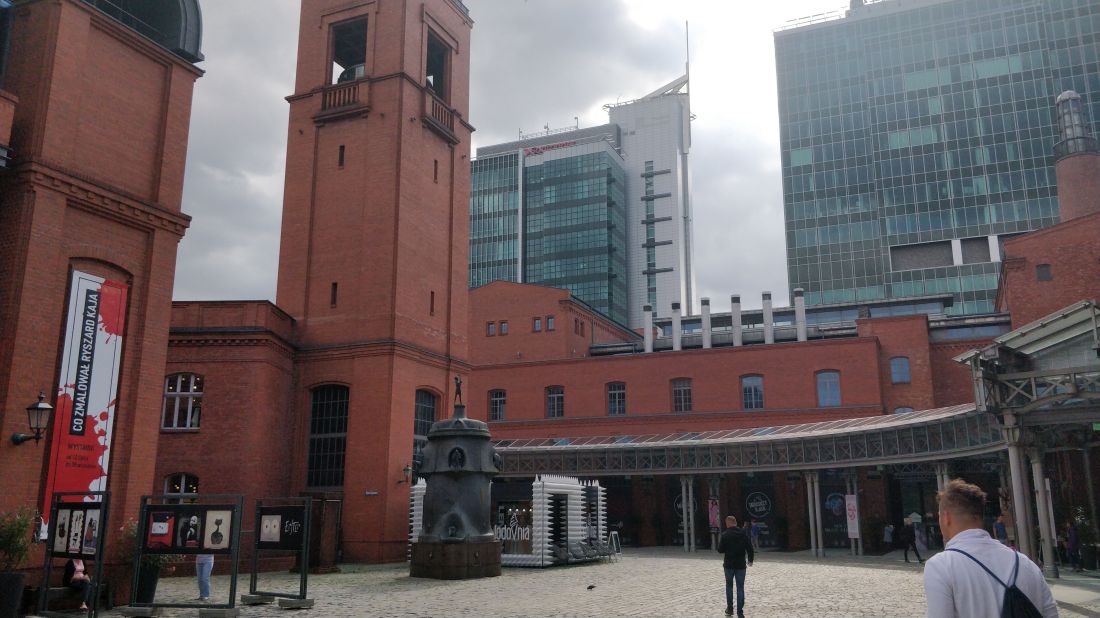
To walk off our amazing lunch we hit up the big shopping mall however this was no ordinary mall as it used to be an old brewery in the 1800s. I couldn’t find any information on the exact history like why the brewery closed or moved but today when you wander the mall you can easily see the old stone building and it’s very cool.
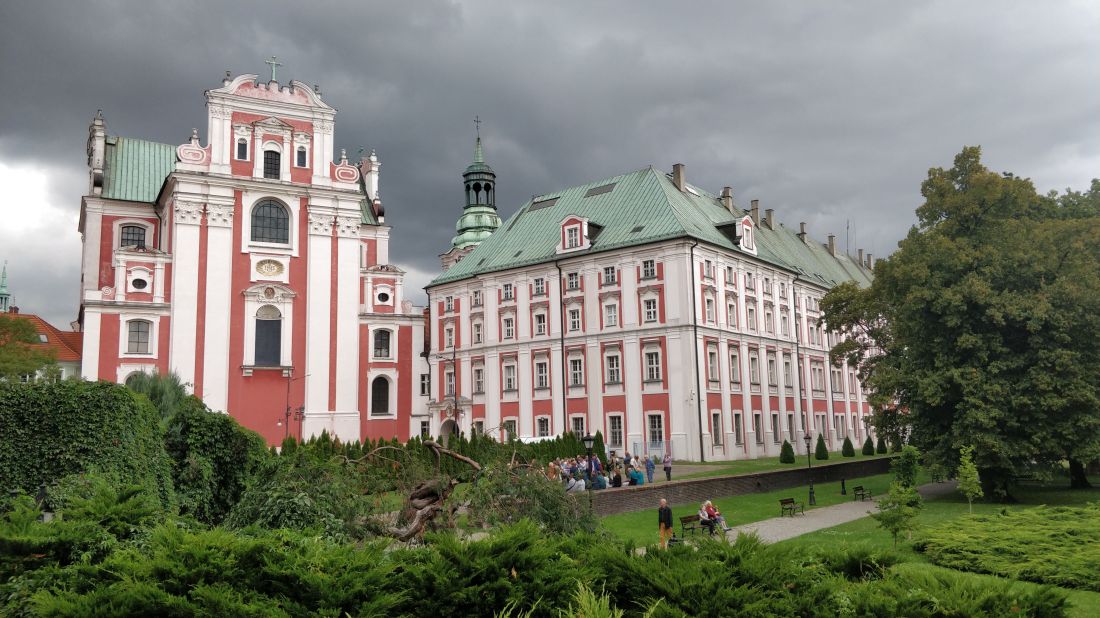
I’m going to end this Poznan part with this church. It’s very unique and worth the time to pop over and check it out.
The Good…
After our 10 days on the farm we were off to our last stop in Poland, Krakow. If you know your WWII holocaust history then you already know Krakow is the closest city to the Auschwitz extermination camp. Thankfully Krakow has a lot more to it then just being near a genocide horror story and so it is one of (if not the) most visited city in Poland.
As has become standard on our first day in Krakow we headed into the Old City. They always have something interesting to see and give you a good chance to get your bearings and find more interesting things to come back to later.
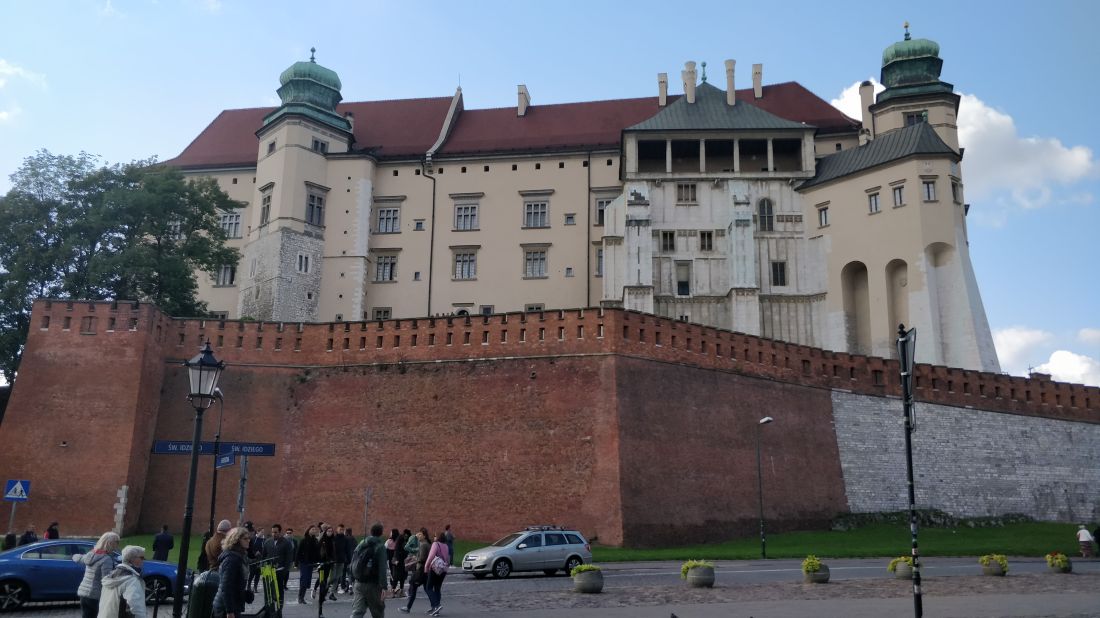
At one of the main entrances you’ll find the Krakow castle. We didn’t check it out so I can’t comment on the castle but it’s impossible to miss while walking into the Old Town.
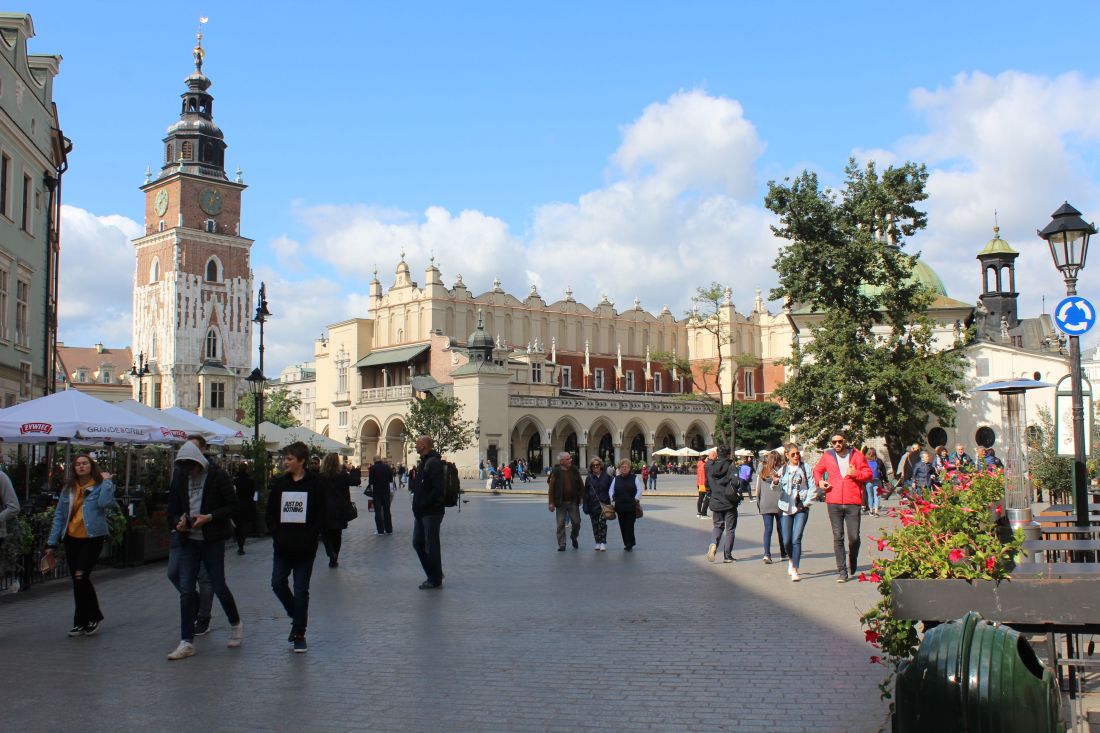
At the center of the Old Town is an old building turned into a small souvenir shopping street along with the old clock tower that was part of the town hall that has now been taken down.
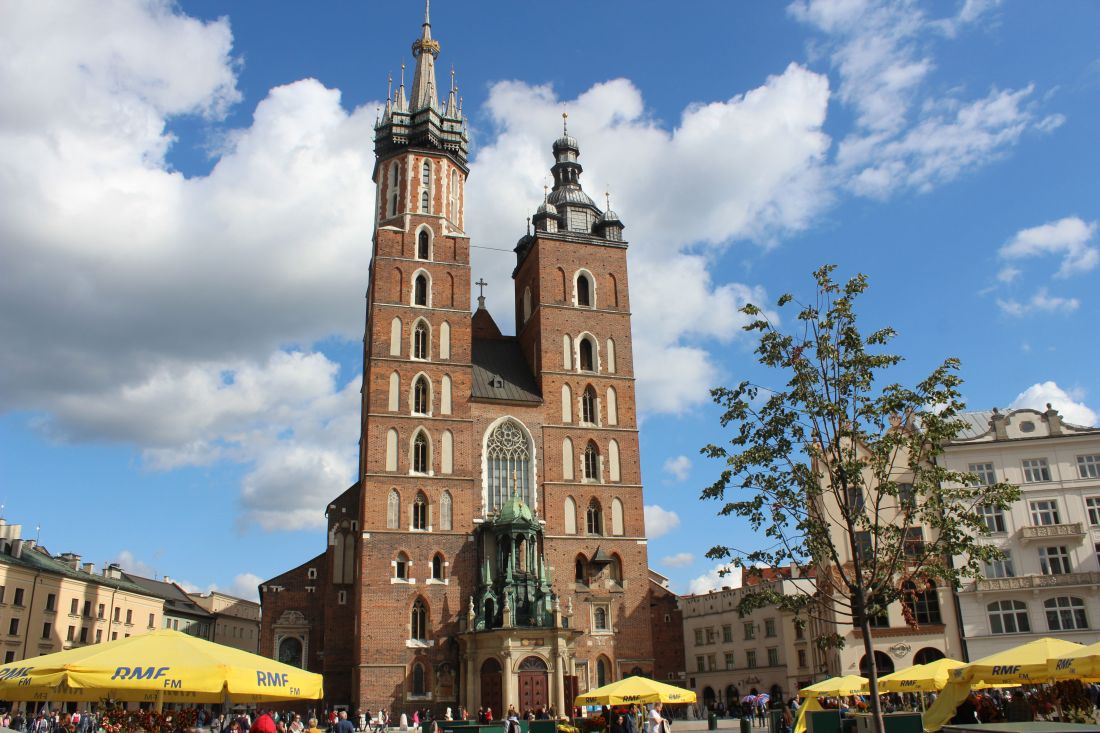
This church was built by 2 brothers who were competing with each other. In true sibling rivalry the brother that designed the left tower wanted to be more impressive then his brother’s on the right side. The rivalry left the city with a weirdly interesting church that draws tourists in.
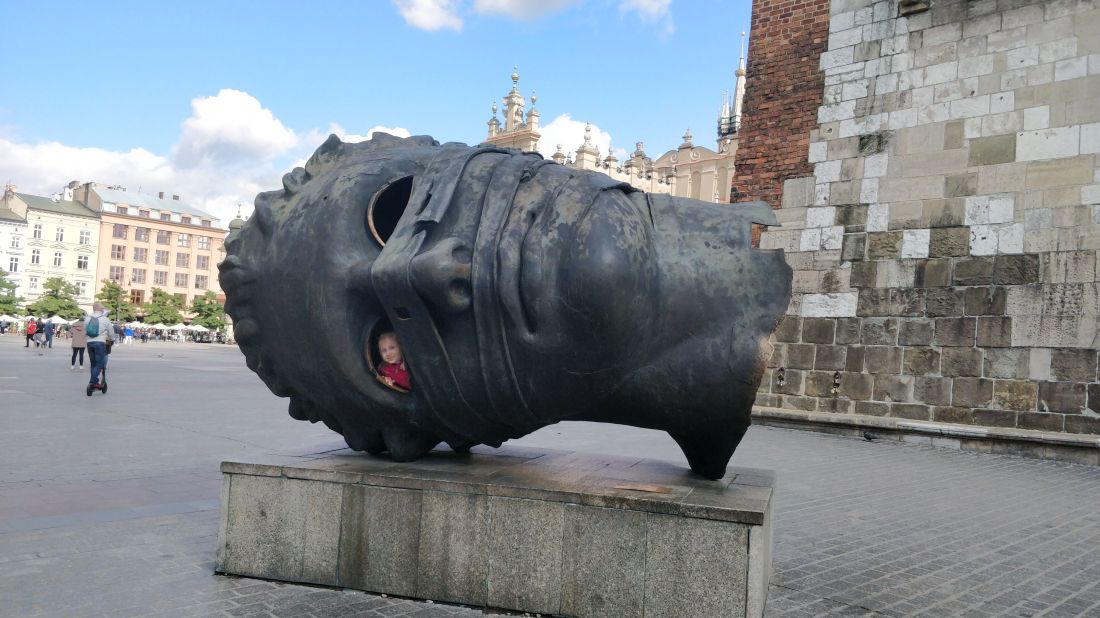
I have no idea on the story of this head. But hey a child looking through the right eye is cutely terrifying.
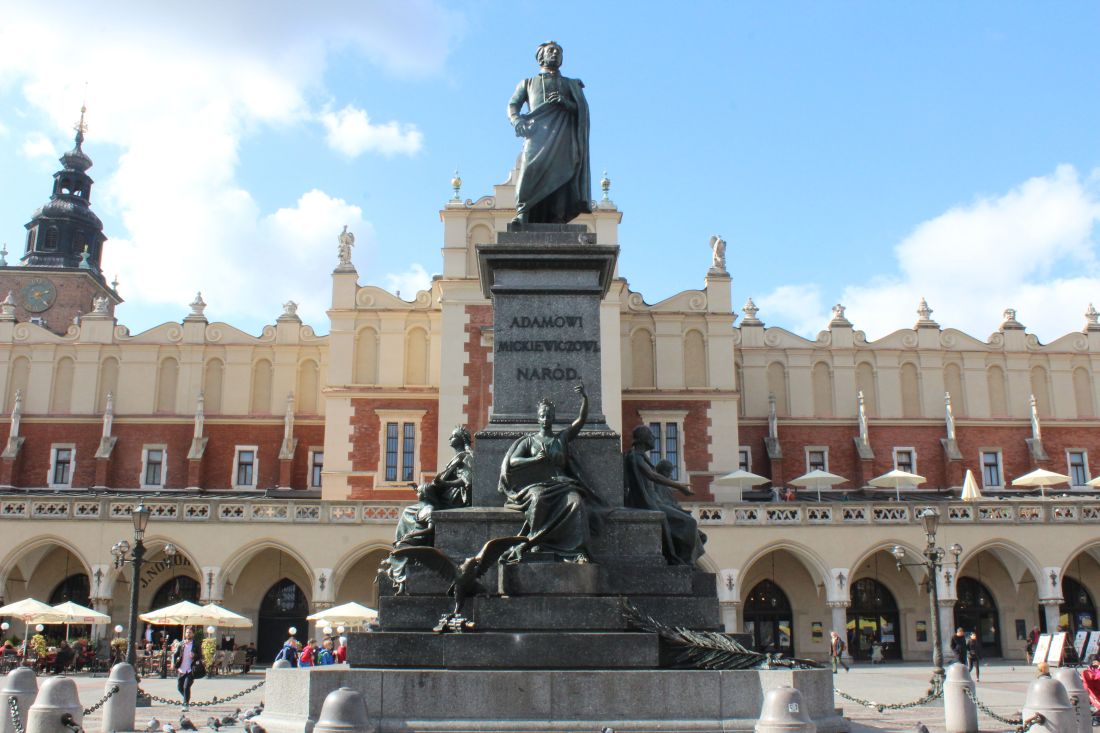
And yes another impressive statue dedicated to someone important.
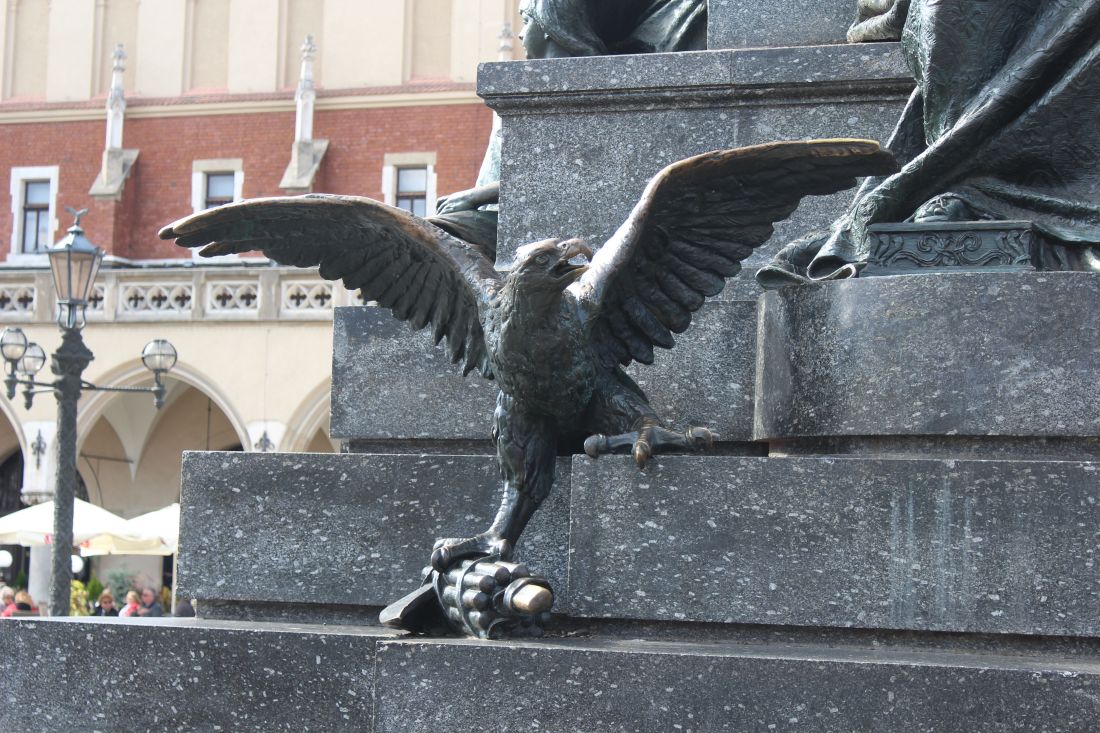
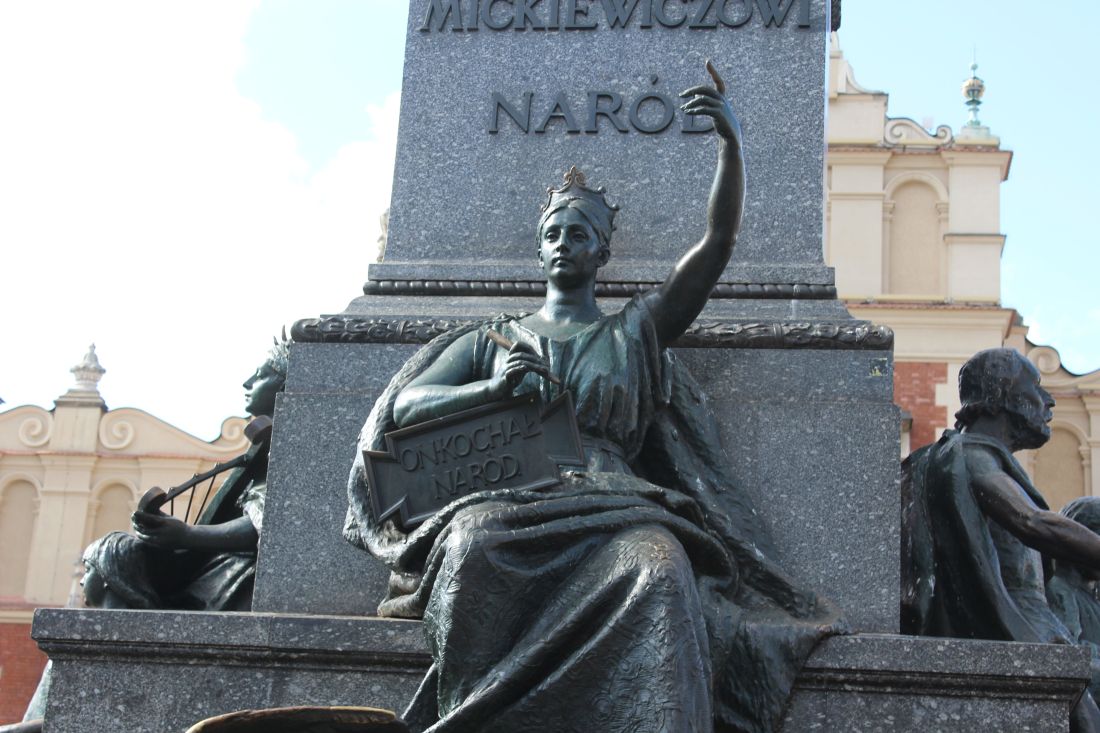
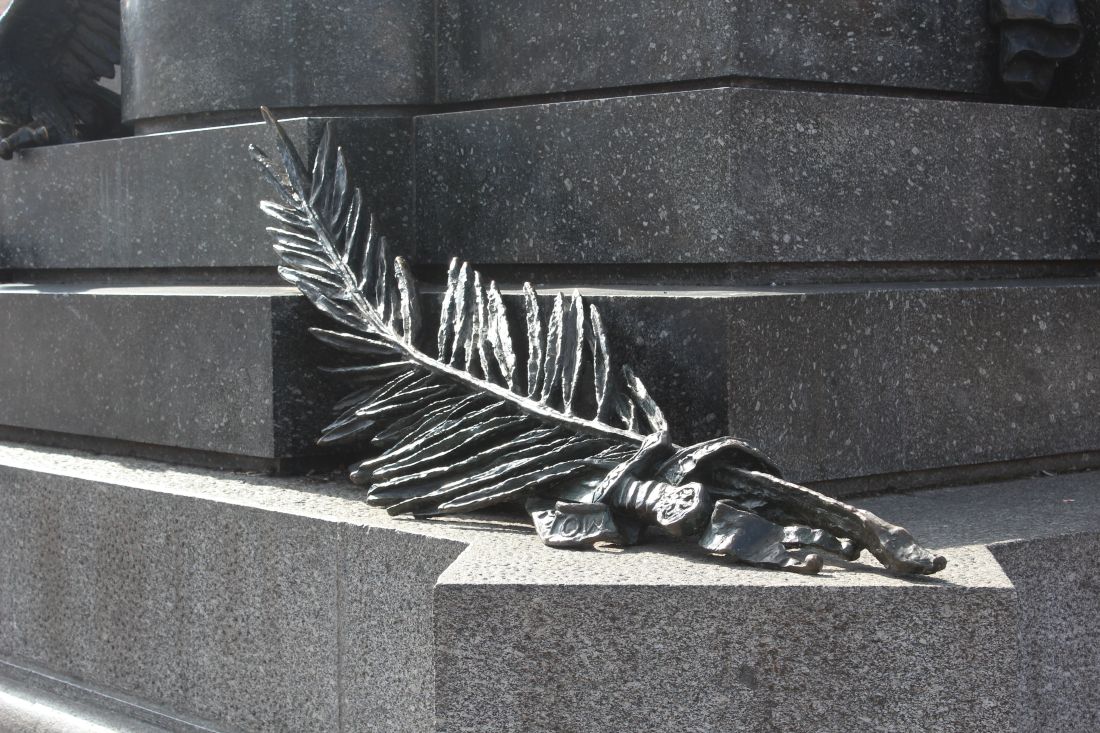
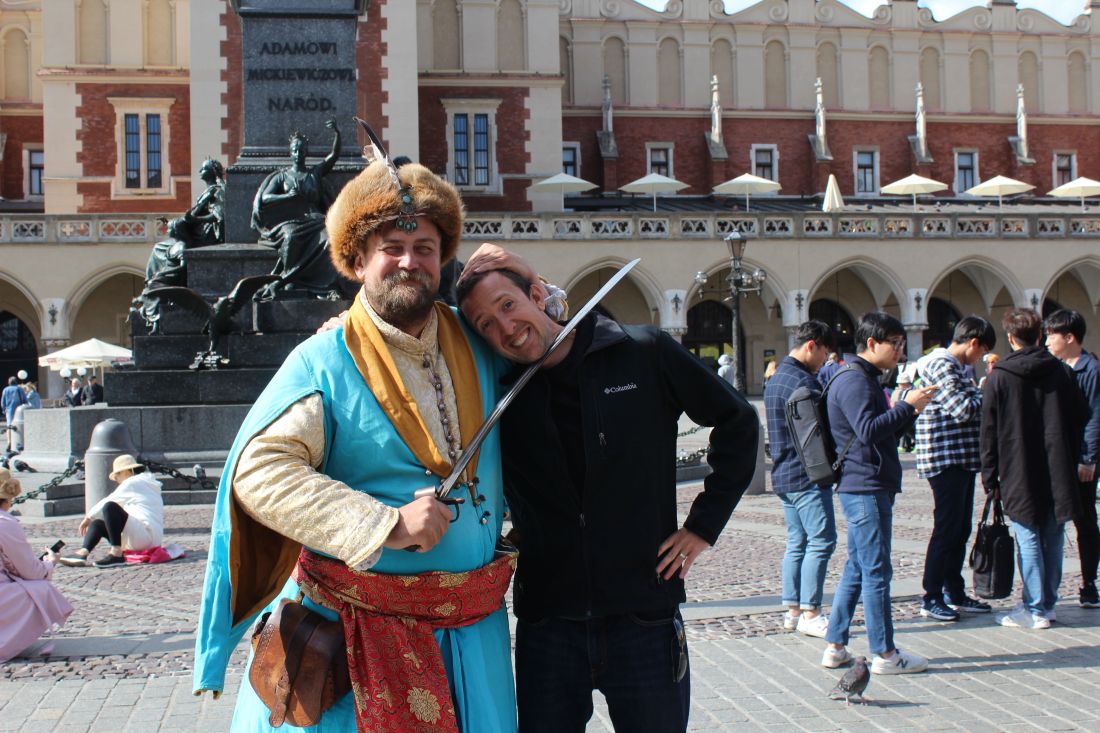
But the best part was this guy. Dressed as a hussar cavalry soldier he made my day with some photo opportunities.
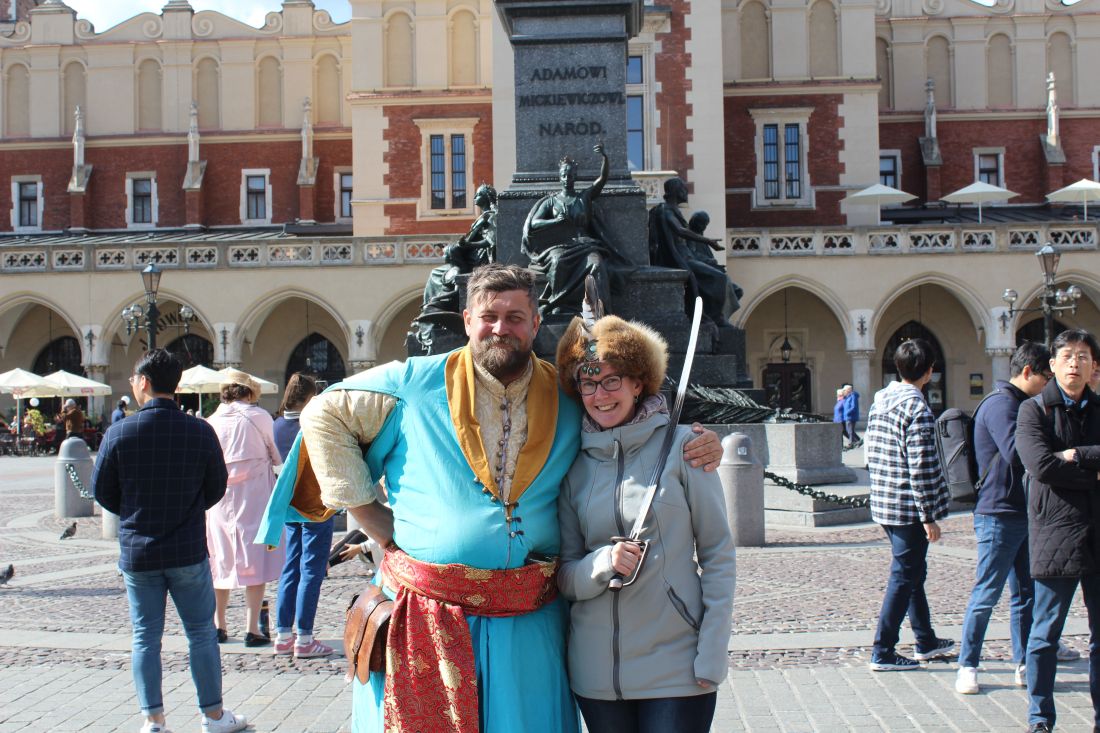
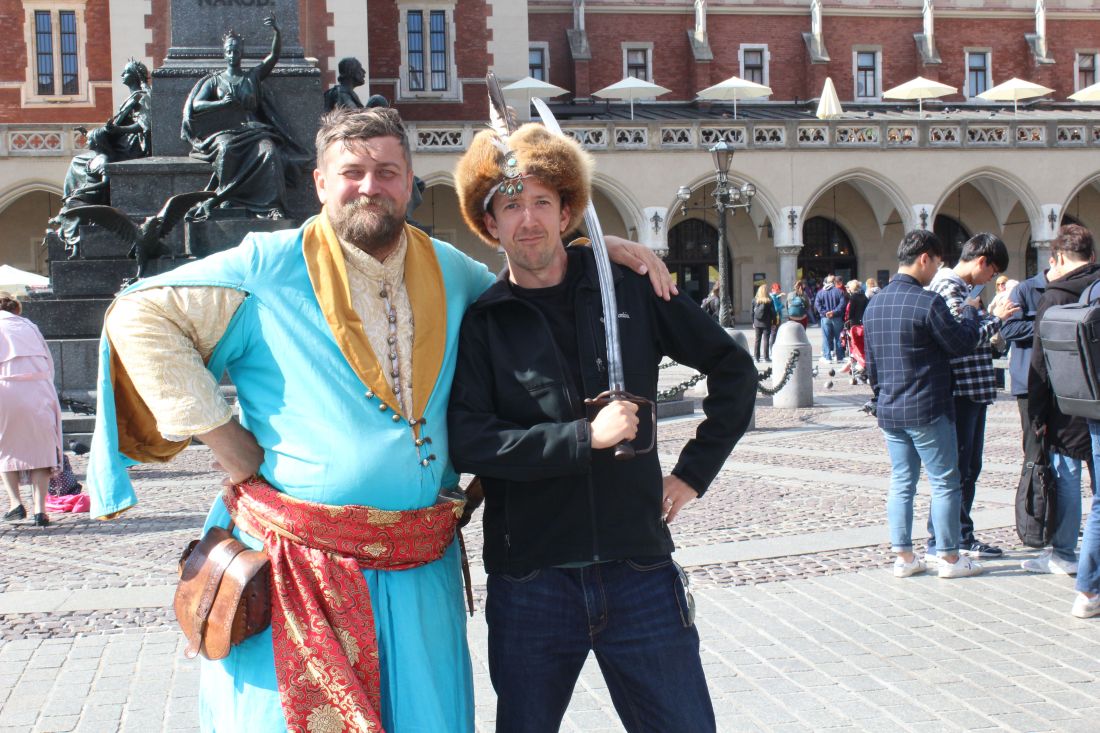
Then he, with absolutely no warning, pressed his sword tightly against my throat. There’s a slight look of amused terror in my face and it’s not faked. In my head I kept saying “it’s definitely not a real sword, it’s definitely not a real sword”
Pro tip for those foodies, or anyone that likes pizza, check out Pizzatopia. It’s a small chain in Poland but they ferment their pizza dough for 48 hours so you’re having sour dough pizza and it was so freaking good.
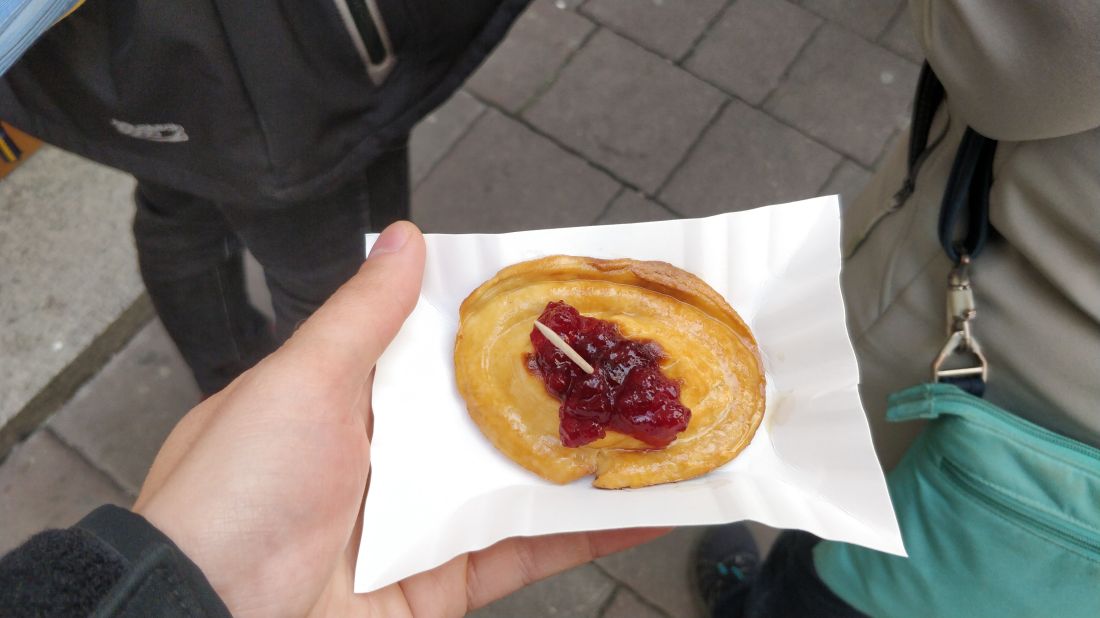
Now a 2nd pro foodie tip is to book a walking food tour in this city. There were plenty of reasonable options and take our word that there is a lot of good food to try. We started off our tour with fried cheese and cranberry sauce – a fantastic start to the tour.
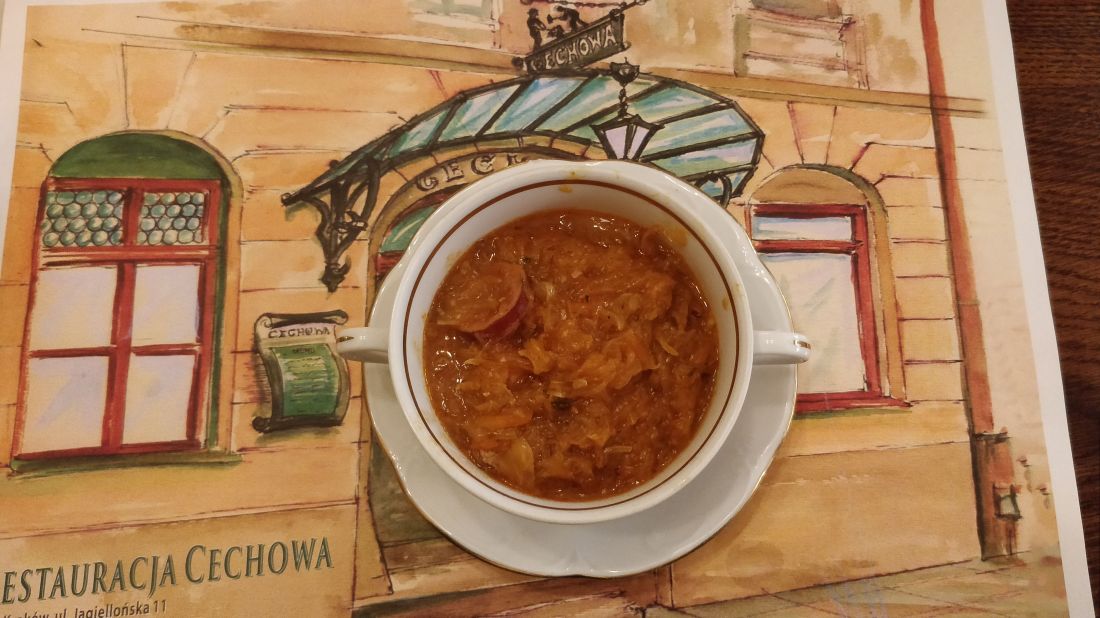
Polish goulash which tasted like sauerkraut soup with a bunch of meat in it and I loved it.
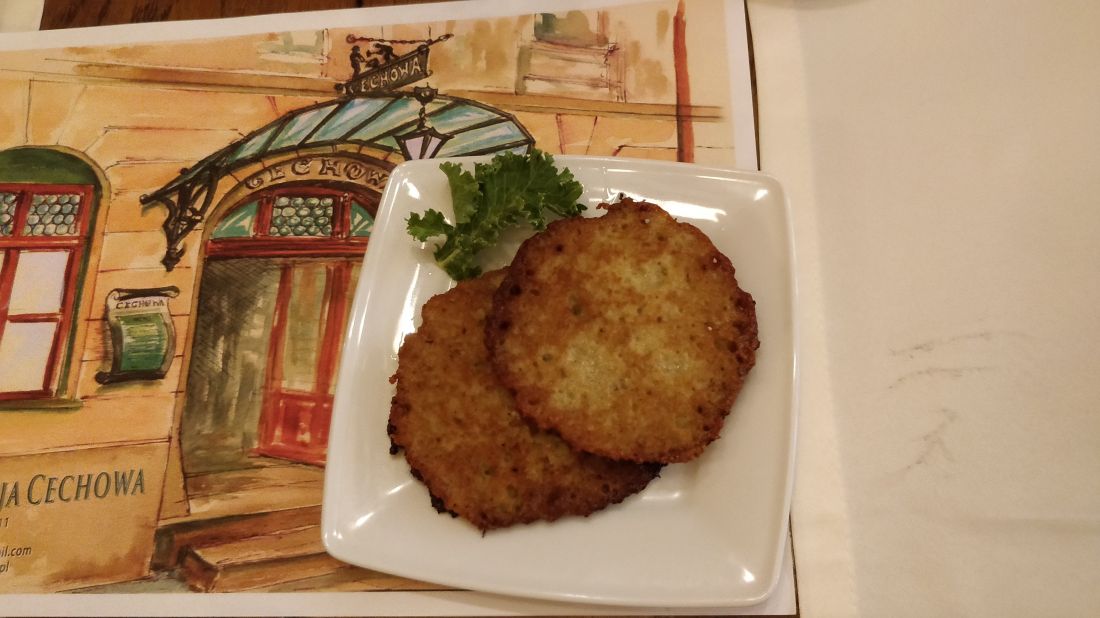
Latkes or fried potatoe pancakes.
Insert missing photo of pierogies. We ate those too fast and I forgot to take a photo but honestly I have a lot of pictures of pierogies already.
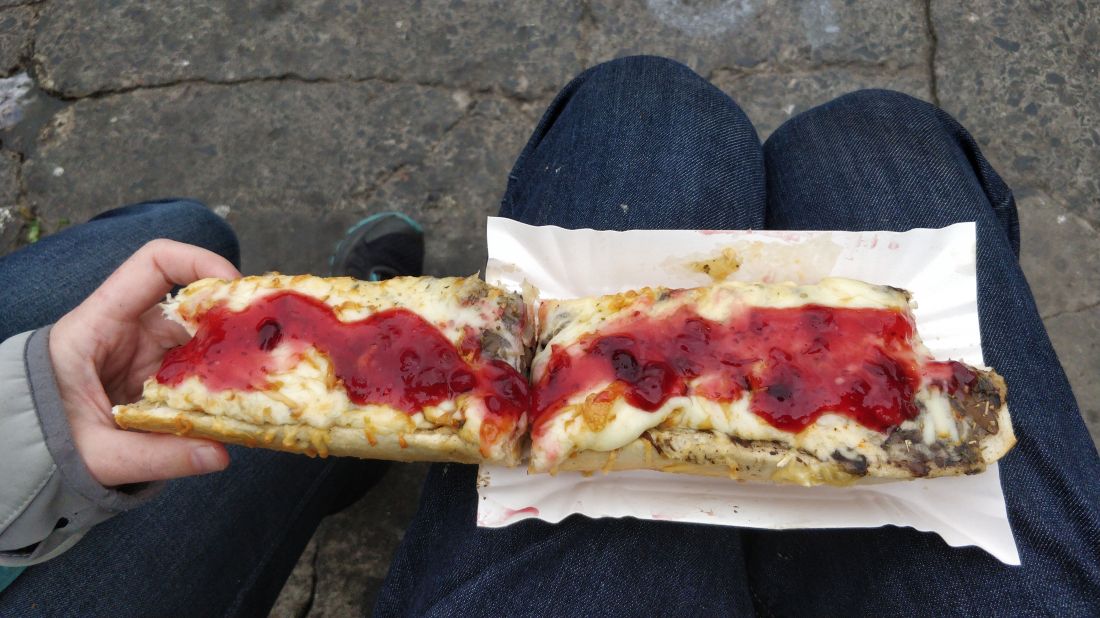
This wasn’t on our food tour but it’s on a lot of other ones I looked it. It’s pizza on a French baguette and very popular in Krakow.
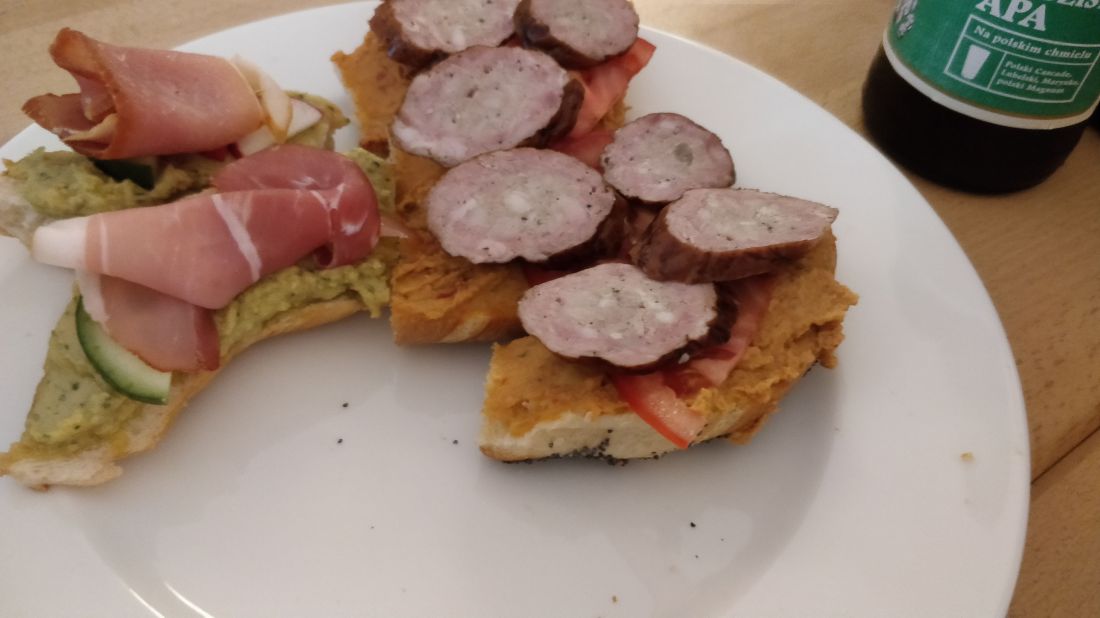
We ended the tour at local bar and got these appetizers
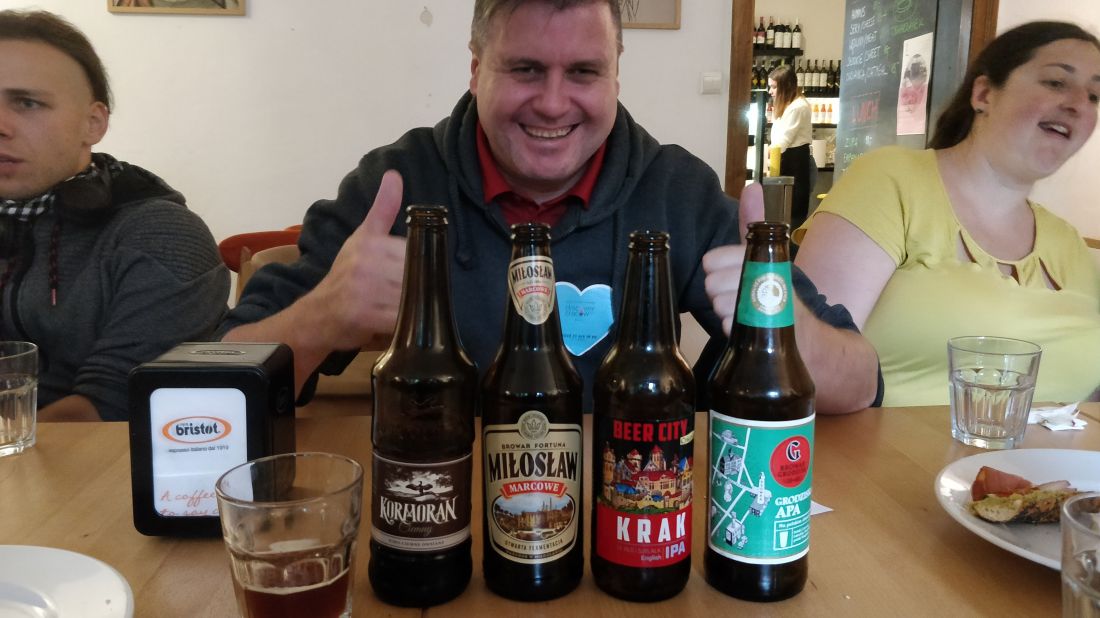
and for our last stop 4 local beers to try. We had a group of 6 Welsh people with us and between the 8 of us we had no consensus on the best beer. They were all great. I put my vote towards the red label, the Krak IPA.
Deep Underground It Was Salty
A top attraction in Krakow is one you probably haven’t heard about before, the Wieliczka Salt Mine – my poor Polish tells me you should pronounce it as “Vee-Lits-Skah”. The mine first started producing salt in the 1200s and operated all the way up until 2007 when the purest salt deposits were exhausted. Our guide said the salt quality went from 99% salt to a worthless 95% (or something like that) so it is no longer feasible to mine it.
Now we’ve been on 2 other mine tours before, a coal mine tour in Blairmore Alberta, and a silver mine tour in Kutna Hora in the Czech Republic and this salt mine was nothing like either one. For starters the mine is enormous and I don’t know how many kilometers of tunnels there are but we walked the mine for 2 hours and I’m sure we saw very little of it. By the way the next time you’re in Southern Alberta go to the Blairmore coal mine, it is an excellent tour.
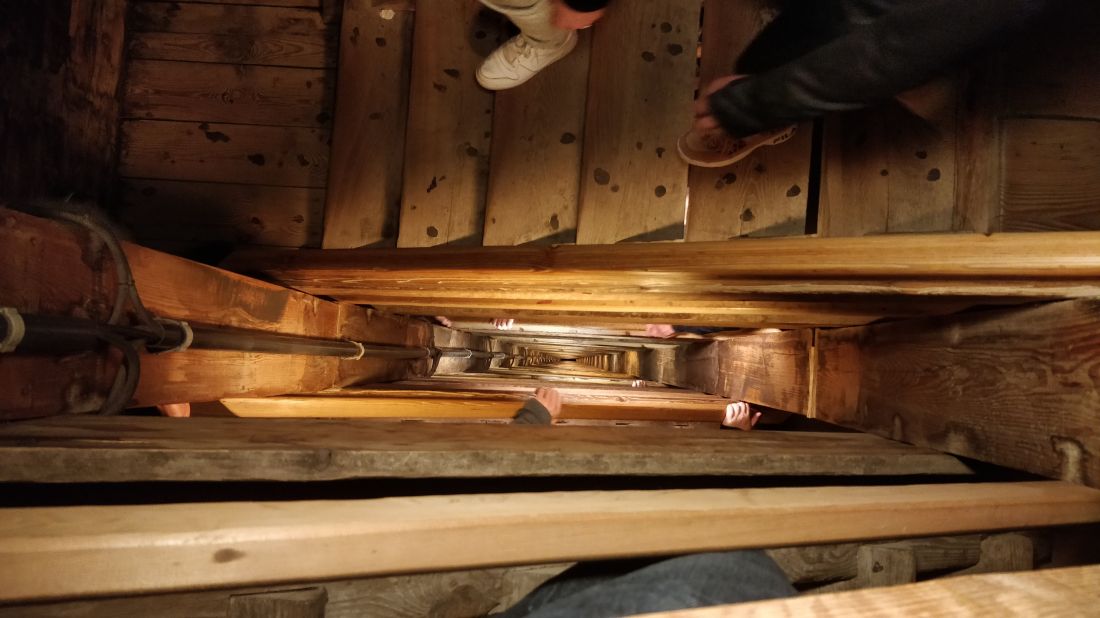
You start off your tour with a descend of 350 stairs to the tunnel entrance.
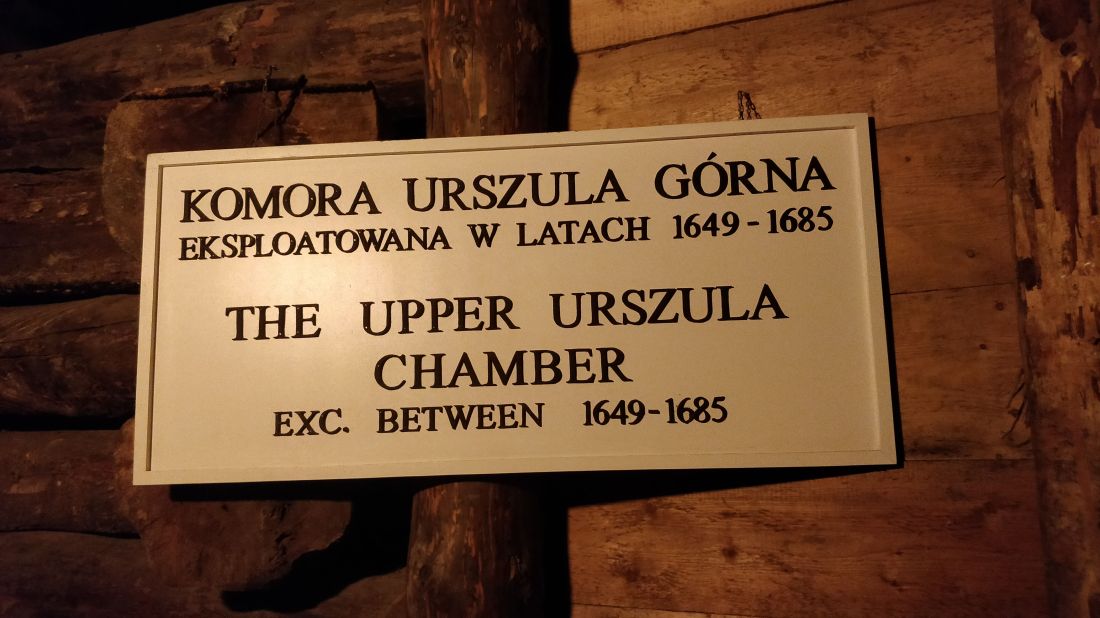
This plaque telling us we’re in tunnels that are 350 years old.
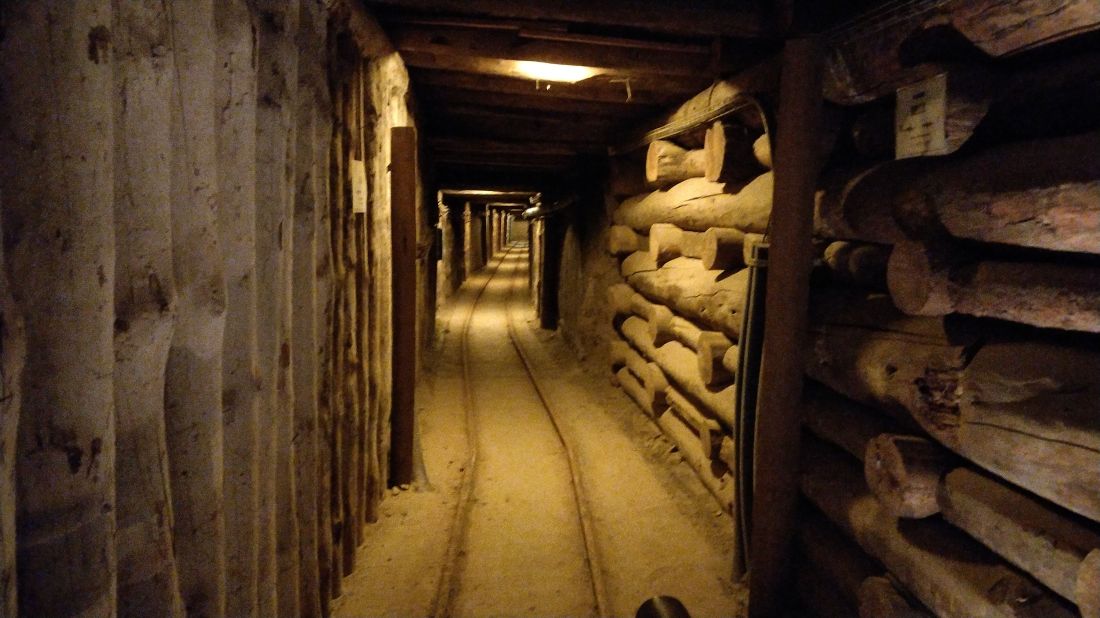
Much of the tunnels are reinforced with wooden beams
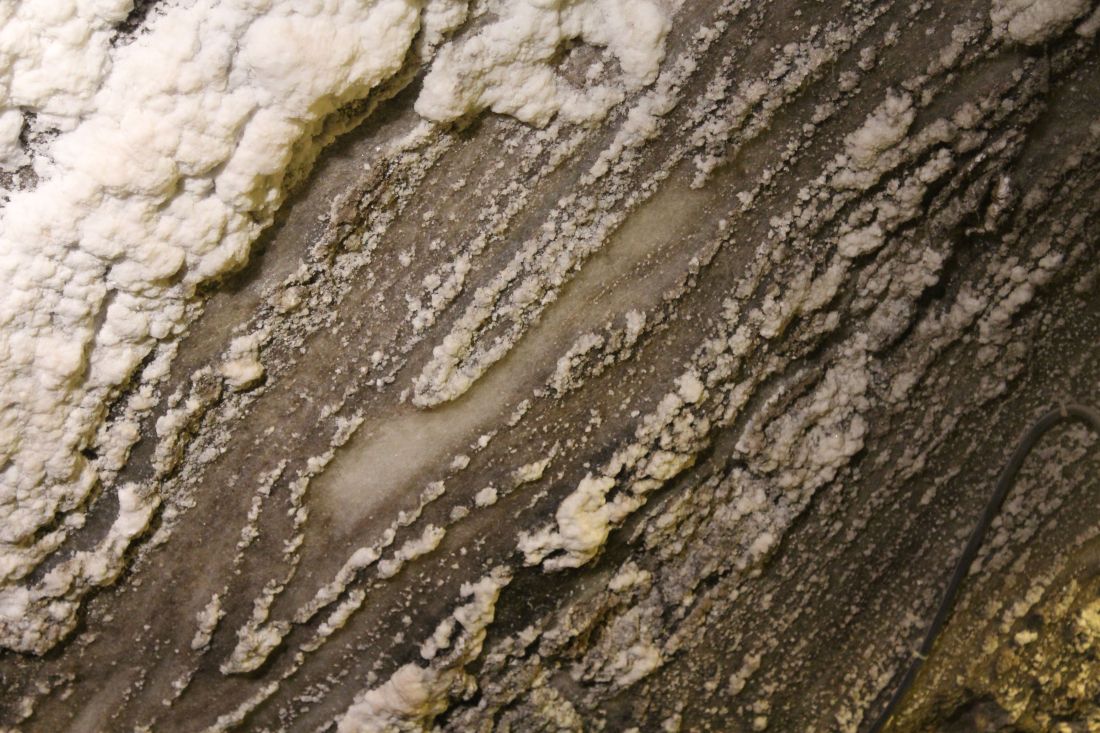
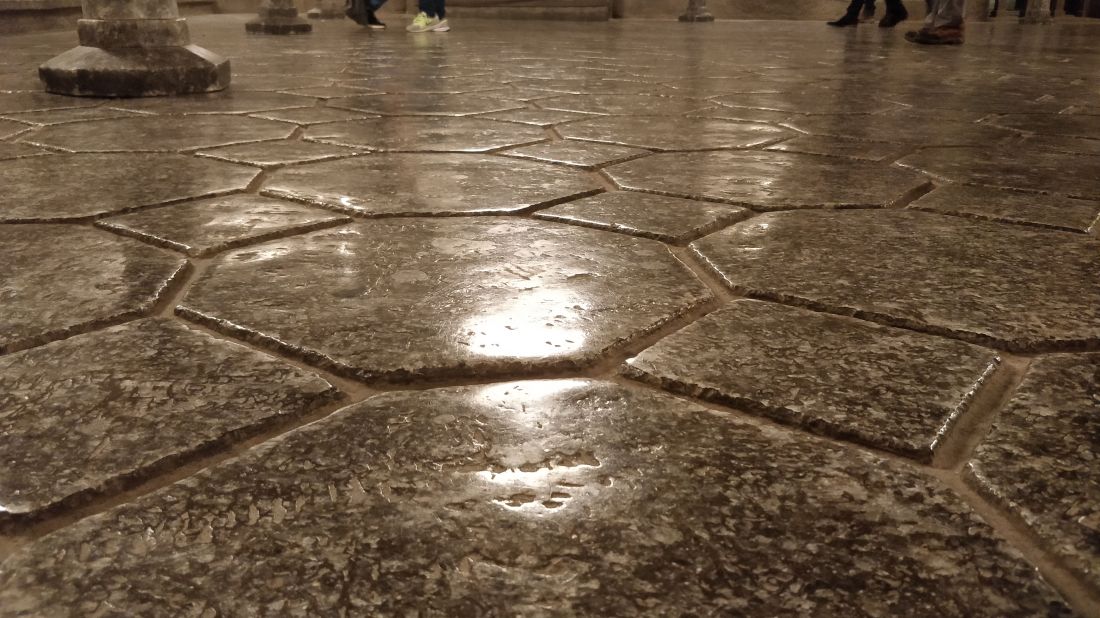
but any exposed rock wall is, almost, pure salt and that also means the floor – everything down there was salt. Our guide said we could lick the walls if we didn’t believe her but also reminded us that 1.5 million people visit the mine every year so someone has probably already licked the part you want to lick. I was brave enough to rub my fingers on the wall and then lick my fingers and sure enough it was really salty.
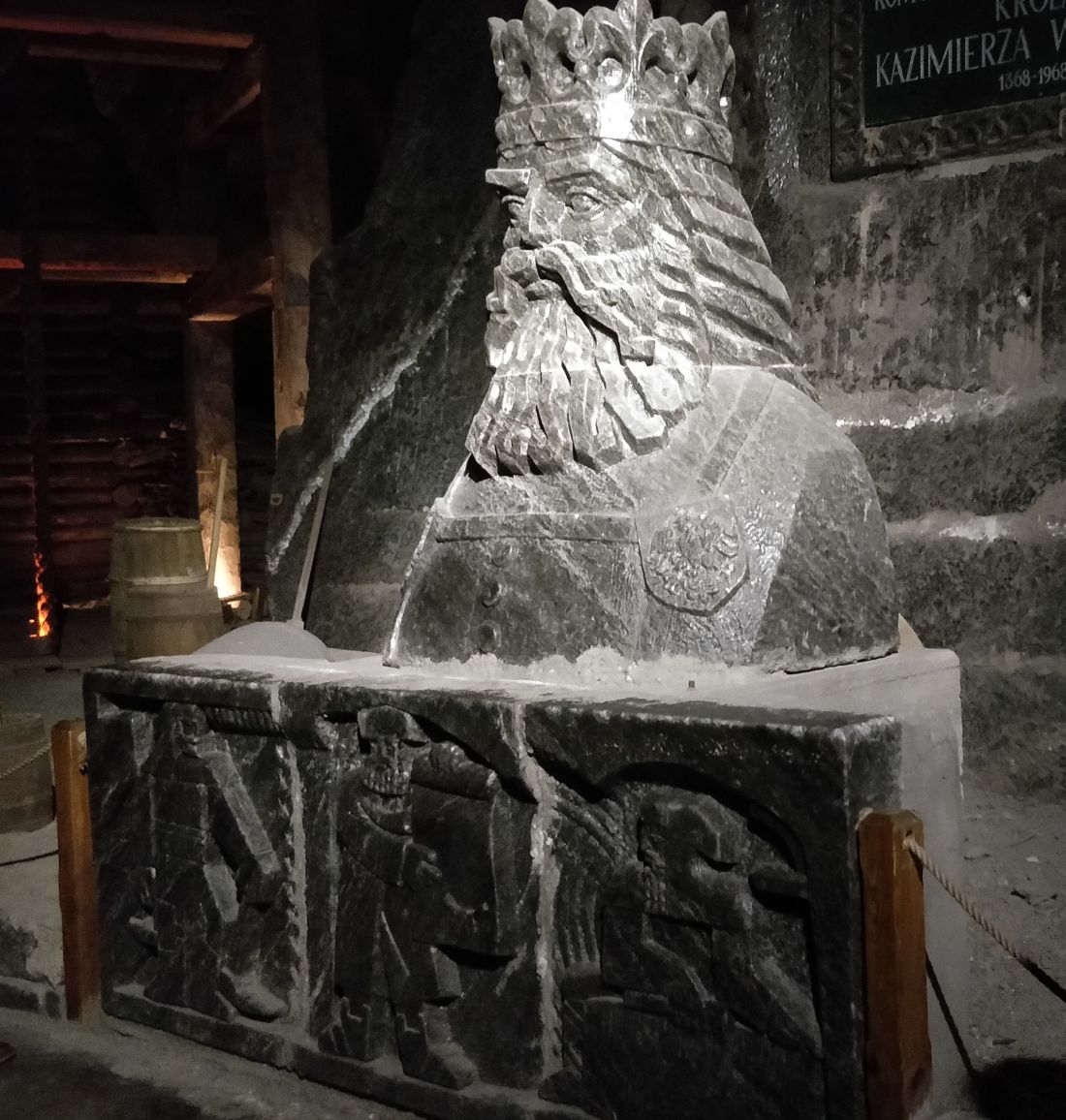
Now for the truly impressive part. The miners that worked here spent a lot of time underground, they were very religious (as everyone in Europe was in the past), and mining was very dangerous. So the miners started making carvings out of the salt for good luck and chapels to pray in.
Below a statue of a Polish King carved out of pure salt.
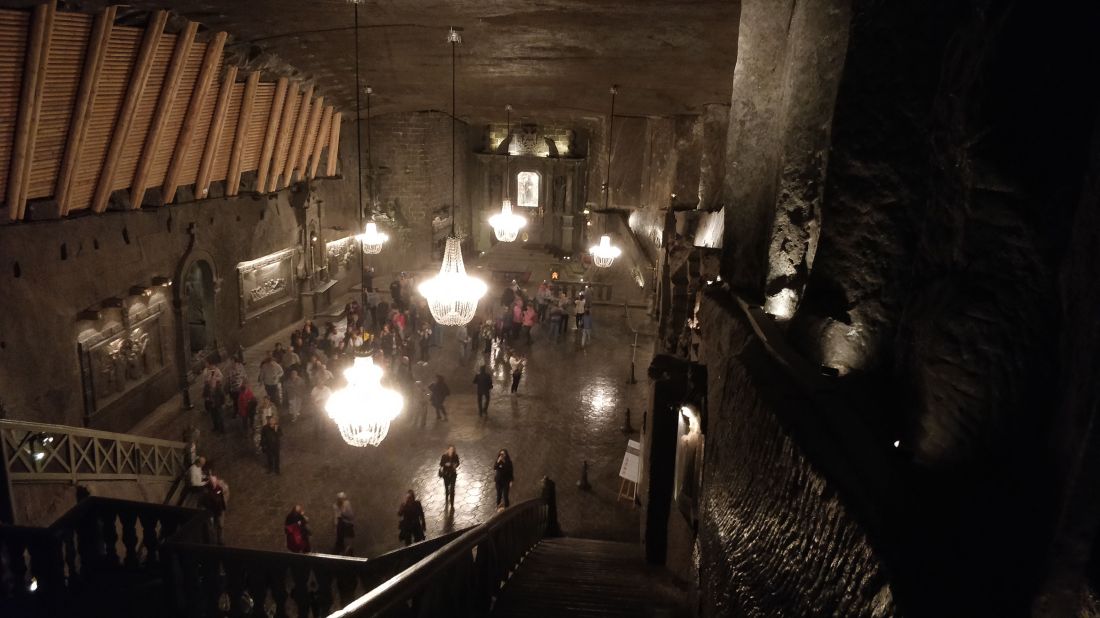
There are some 40 chapels carved into the mine and the largest is bigger then most above-ground churches I’ve been to.
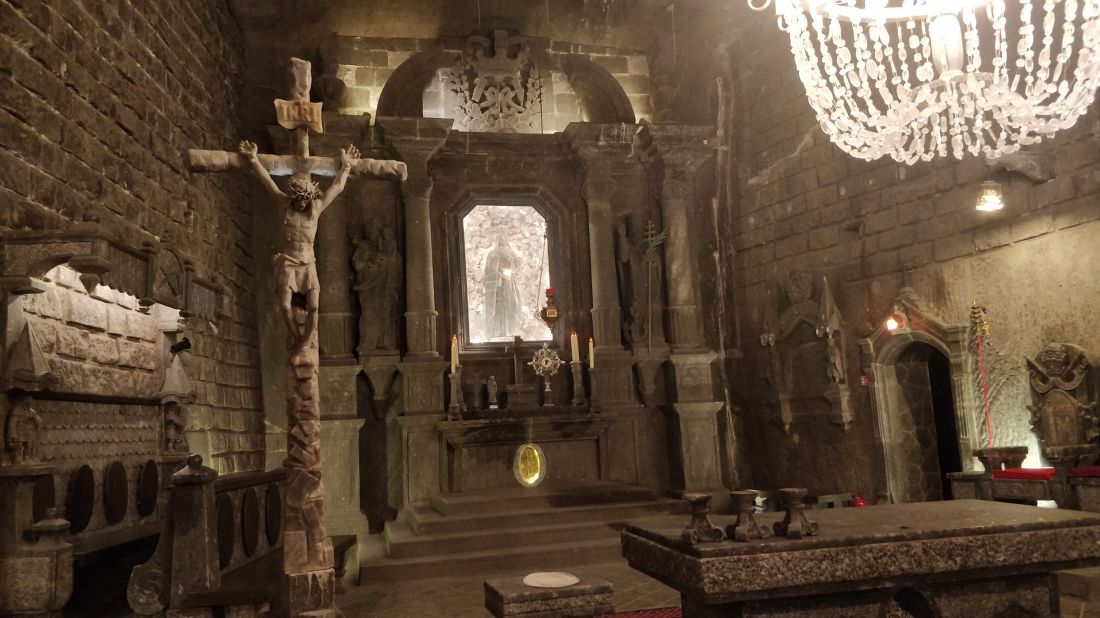
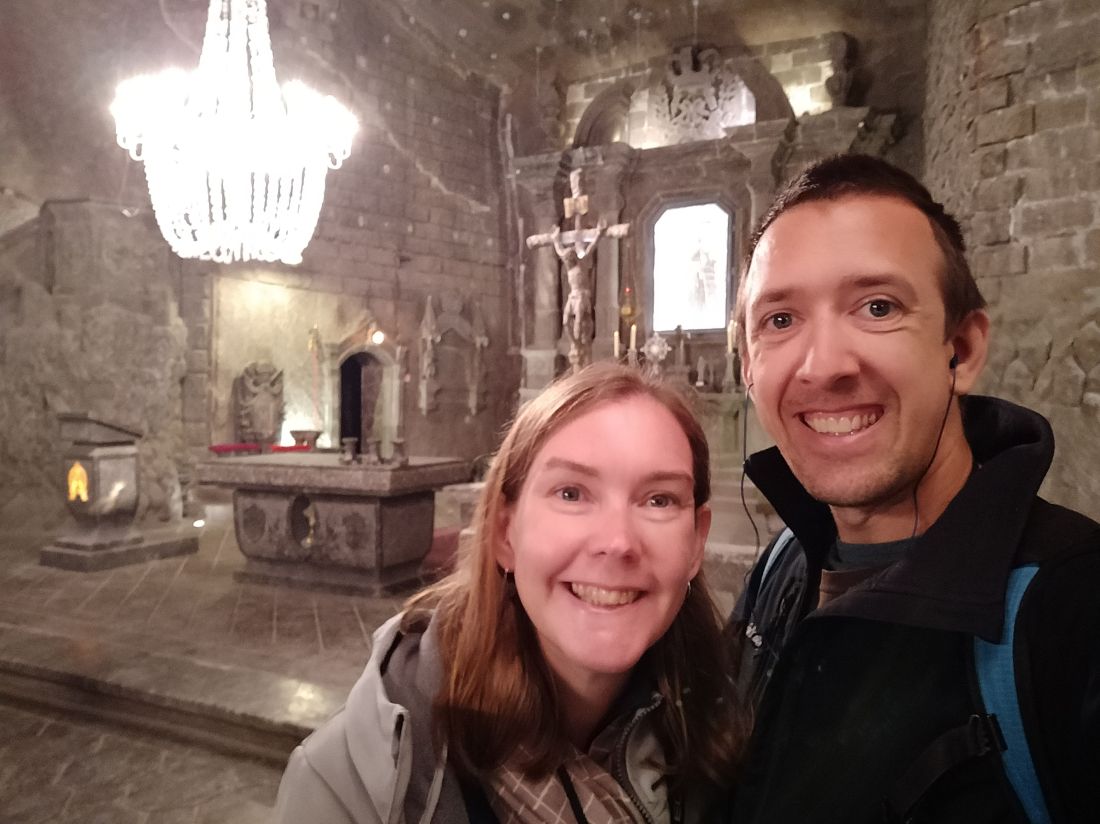
Everything in this picture below is carved out of salt and was done underground. The altar, the table, cups, Jesus on the cross, it’s all carved out of the salt in the mine. Just the chandelier with lights isn’t made of salt.
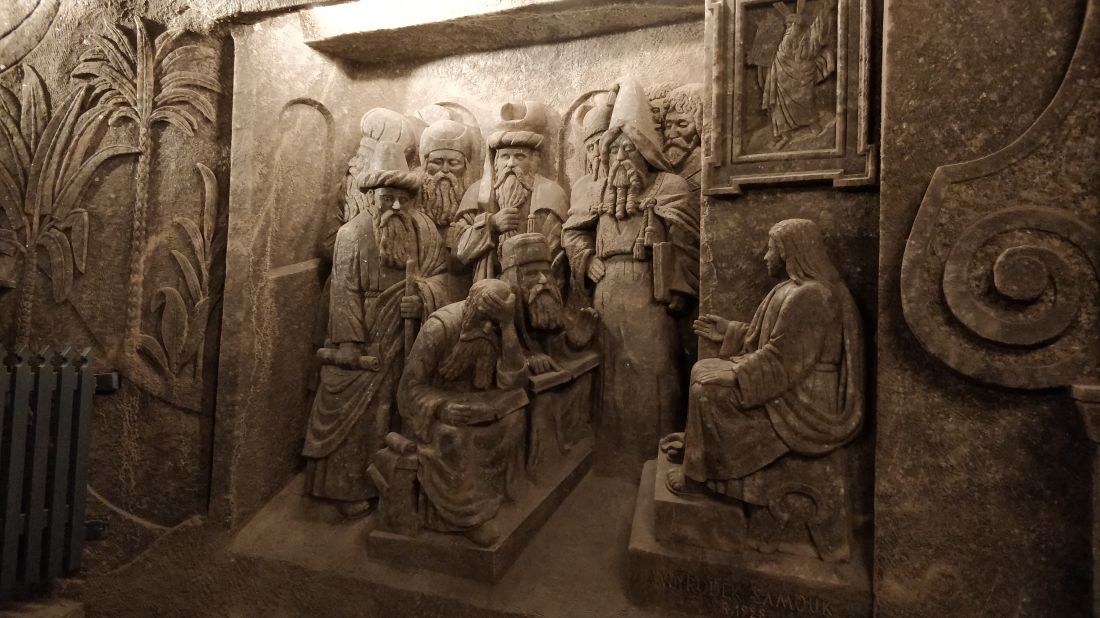
Again a painting carved into the salt wall. It’s 3 dimensional if that doesn’t come through in the picture.
Salt floors. The level of detail that went into the carving is amazing.
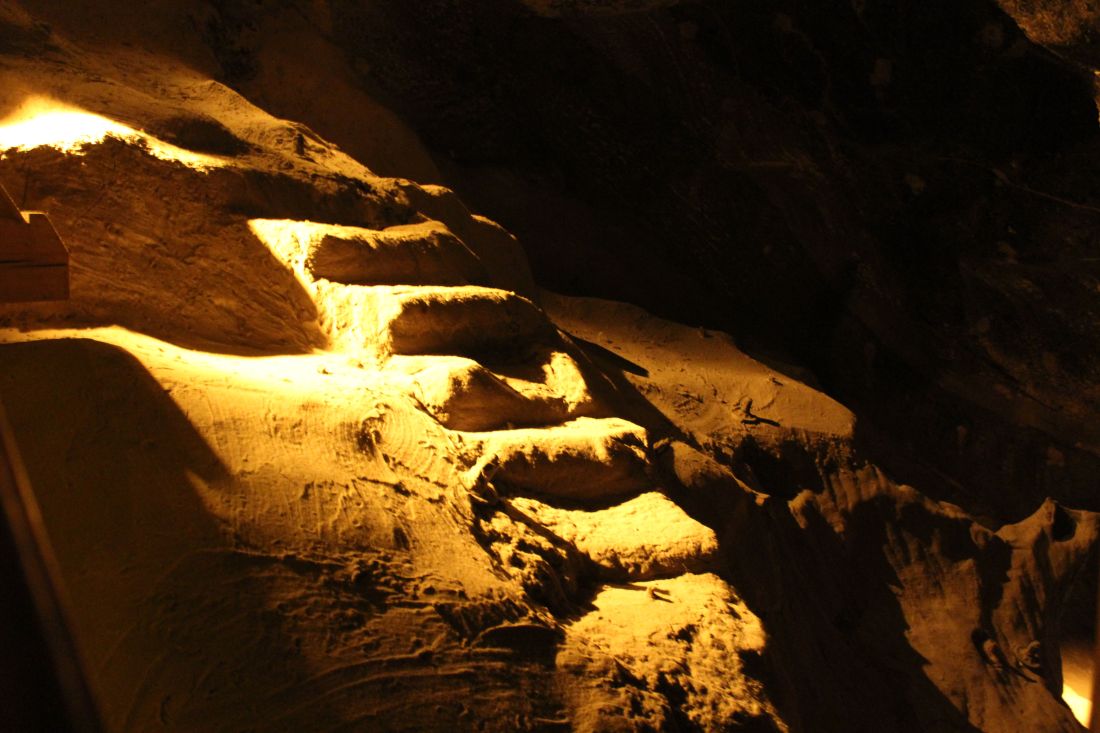
These stairs are the original stairs from the 1200s. No railings and very dangerous. Later on safer wooden stairs, that we were currently walking on, were constructed.
The organized tour is 2 hours and very interesting but once it’s done you’re welcome to stay below. There are restaurants, coffee shops, souvenir stores, a movie theater, and at least 1 museum to see – seriously all of it is underground in the mine. If you’re a salt mine buff you could be down here for 3 or 4 hours I’m sure. We were done after 2 hours so we headed up by the elevator, yes, don’t worry you don’t have to walk up the 350 stairs.
The Bad And The Ugly,
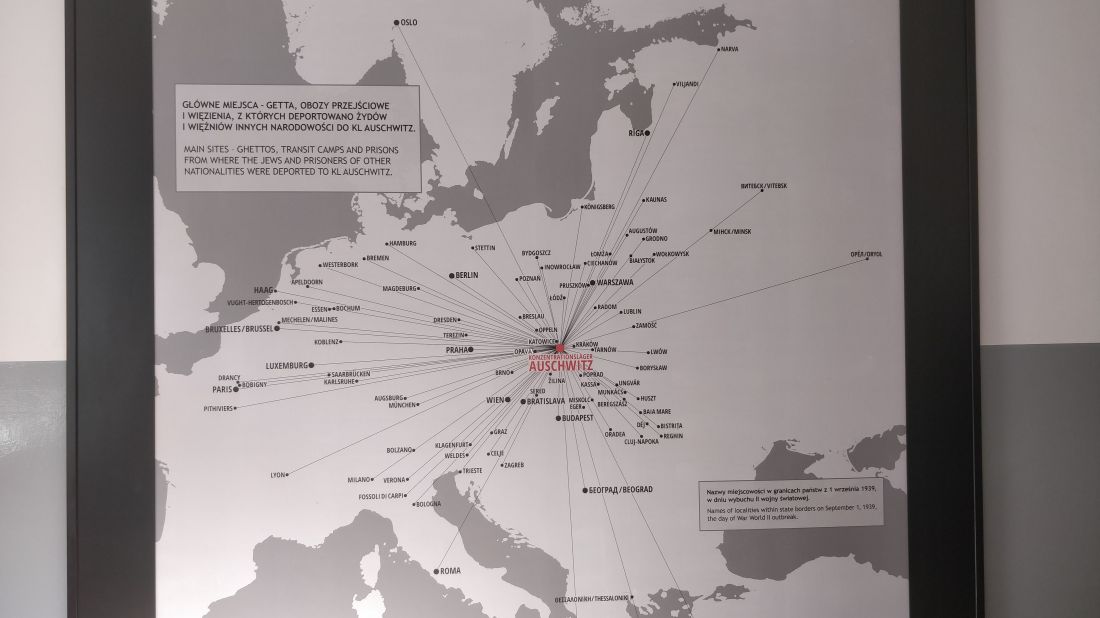
You saw the good so, unfortunately, it’s time for the bad and the ugly. Our last tour in Krakow was a visit to Auschwitz, camps I and II. If you’ve ever wondered why Auschwitz was chosen for the Nazis’ largest extermination camp this map below makes it really clear. It was a central location for Jews being deported all over Europe.
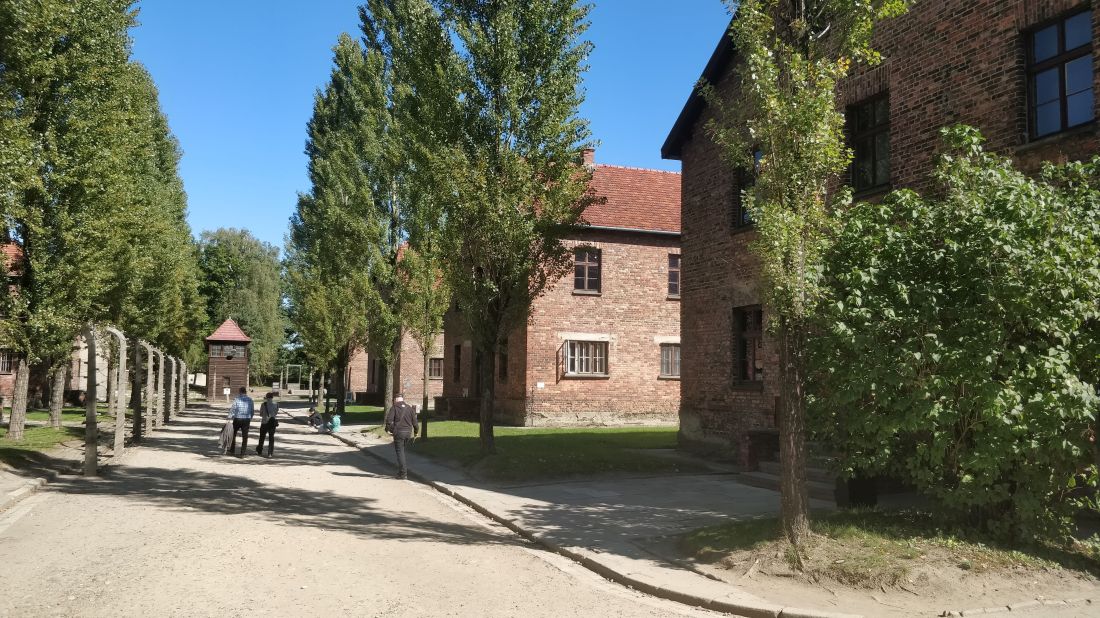
You start the tour in Auschwitz I. There was one small crematorium here but for the most part this was just a concentration camp and used to hold Jews and other people. Many of the buildings still remain intact and it feels like walking through a normal town for the most part.
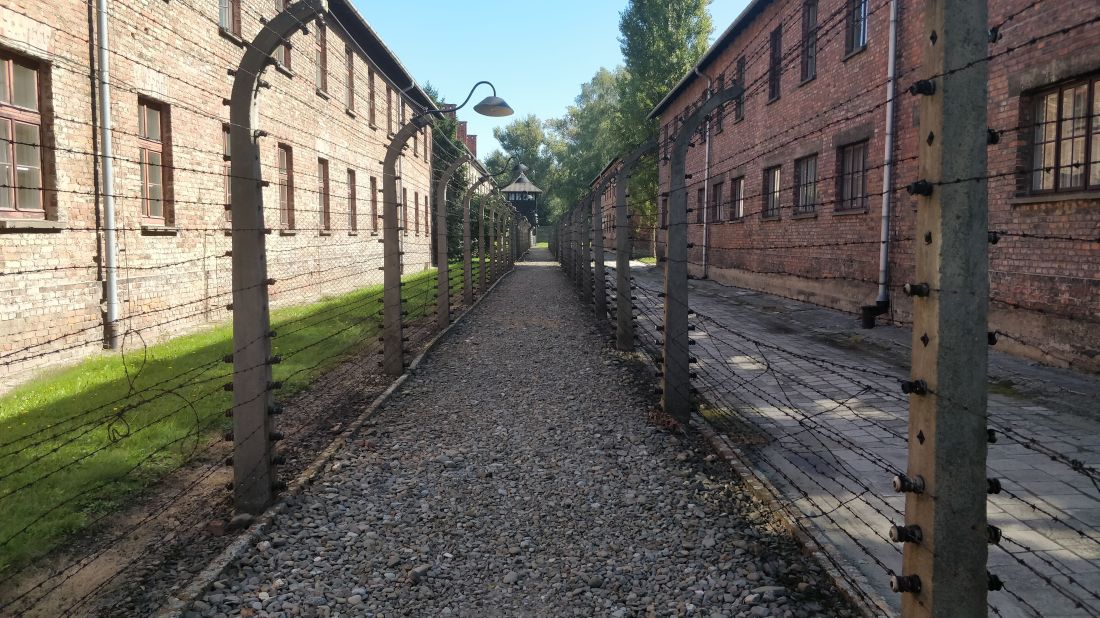
Here you can see the barbed wire used to trap people inside.
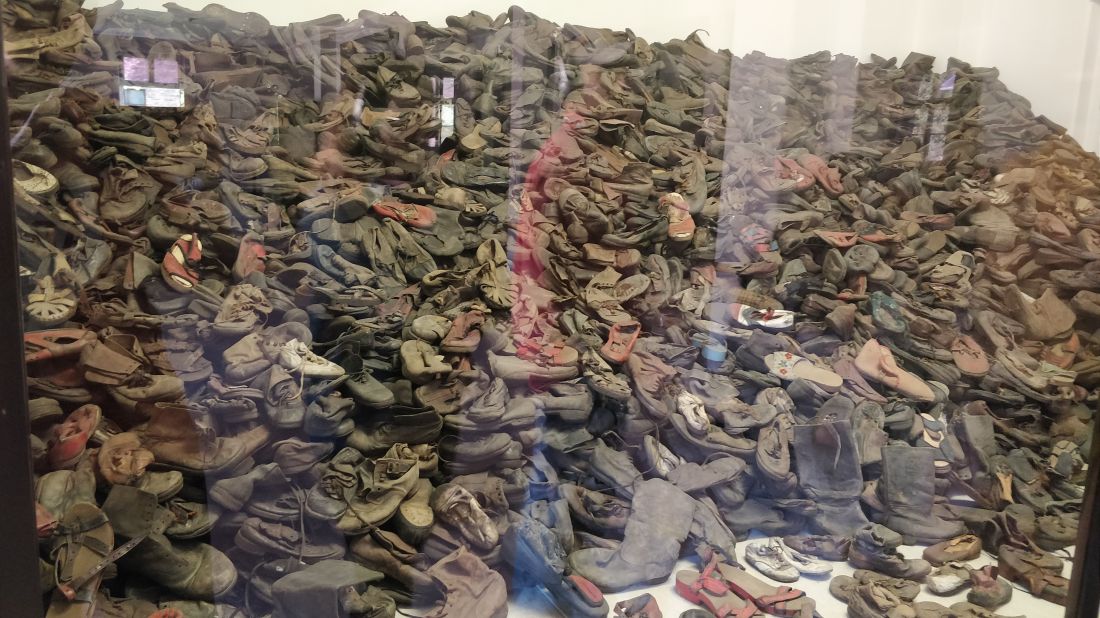
Many of the buildings are used for museum displays. They tell you the stories about what happened here and show you the things confiscated from the people like all these shoes.
We weren’t allowed to take photos in one room that showed more shocking items like rooms full of human hair. The Nazis would shave the hair of every person that came in and then use the hair like you would wool. So the shaved hair was made into jackets, socks, rope, anything required for the military war effort.
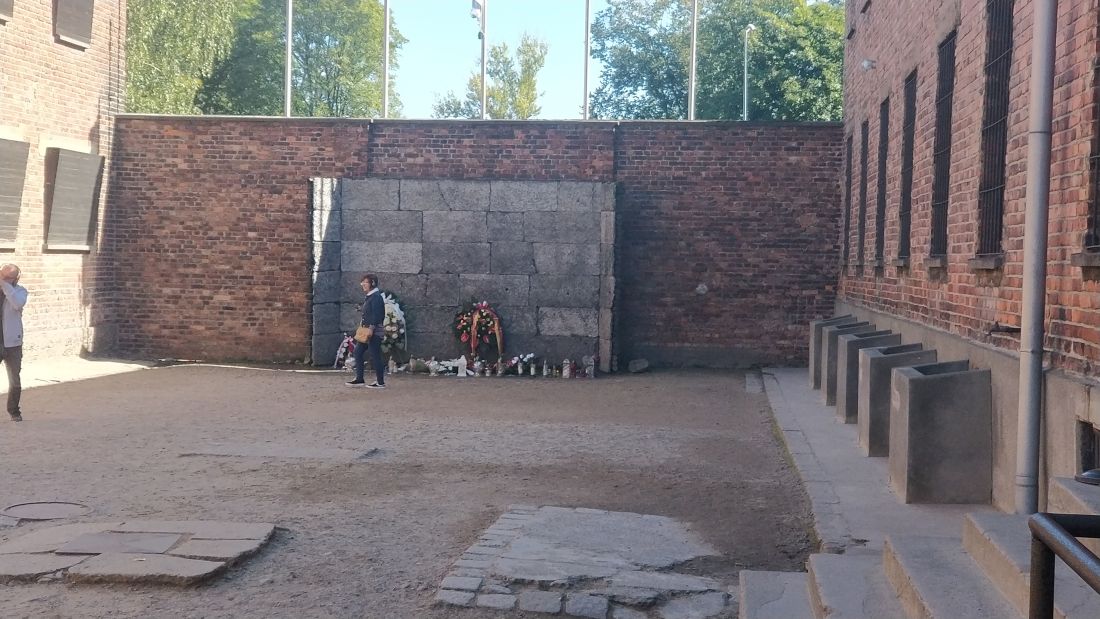
Here a memorial has been placed in front of the execution wall. Countless people have been shot right in this spot.
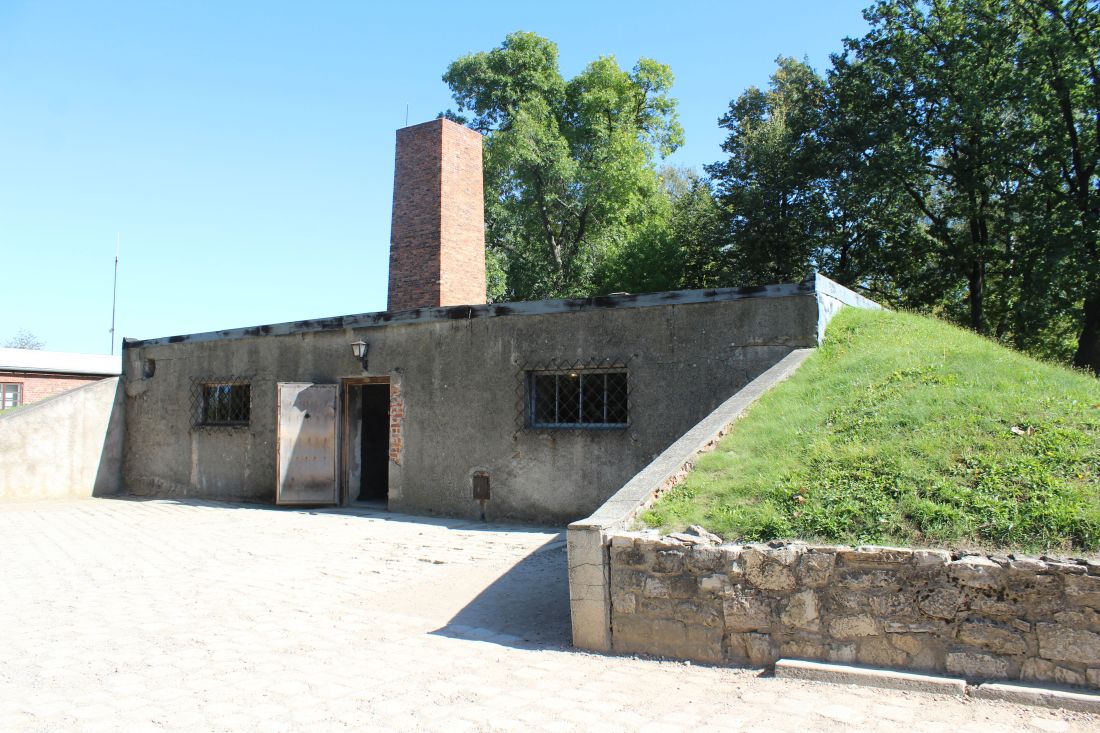
This is the only surviving crematorium in Auschwitz. When Auschwitz II was opened the crematorium here was no longer needed and was converted into an officer barracks. Because it wasn’t a crematorium anymore the Nazis didn’t destroy it when they tried to bury the evidence of what happened here but documents were uncovered that showed its original true purpose.
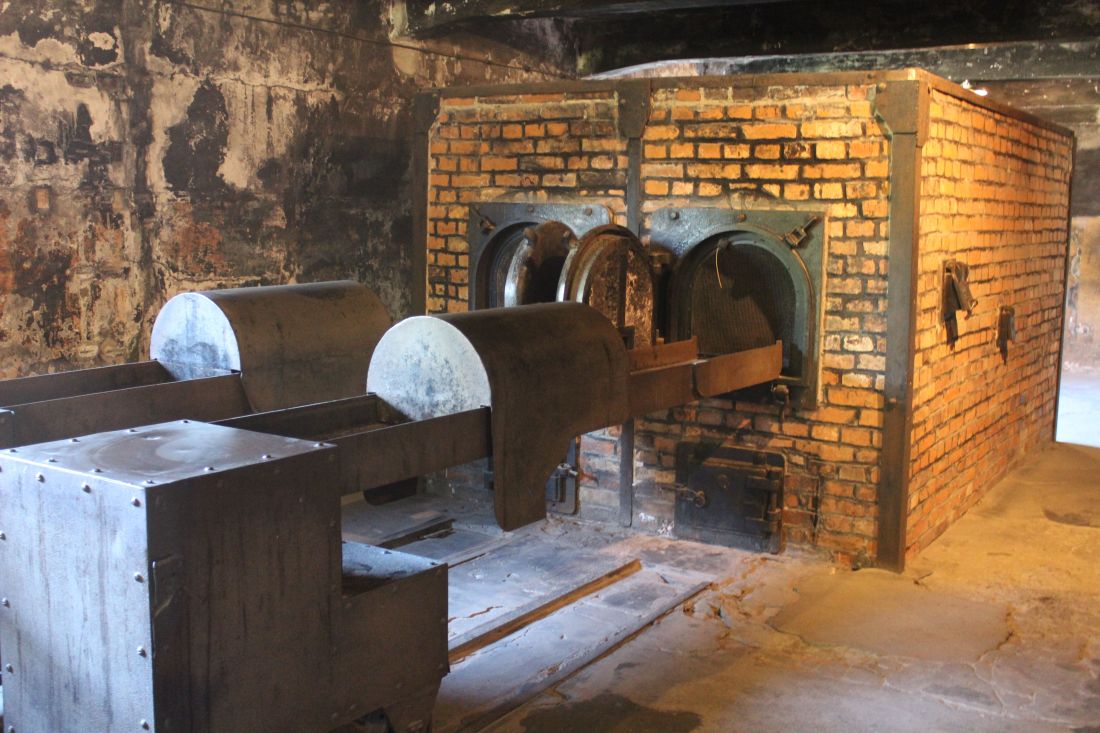
I can’t recall if the furnaces were found elsewhere and placed back here for display or if they are recreations but either way they are creepy as all Hell. Also the gas chamber was right next door to the furnaces and while we didn’t take any pictures of it, believe me that being in a real gas chamber makes you feel ill.
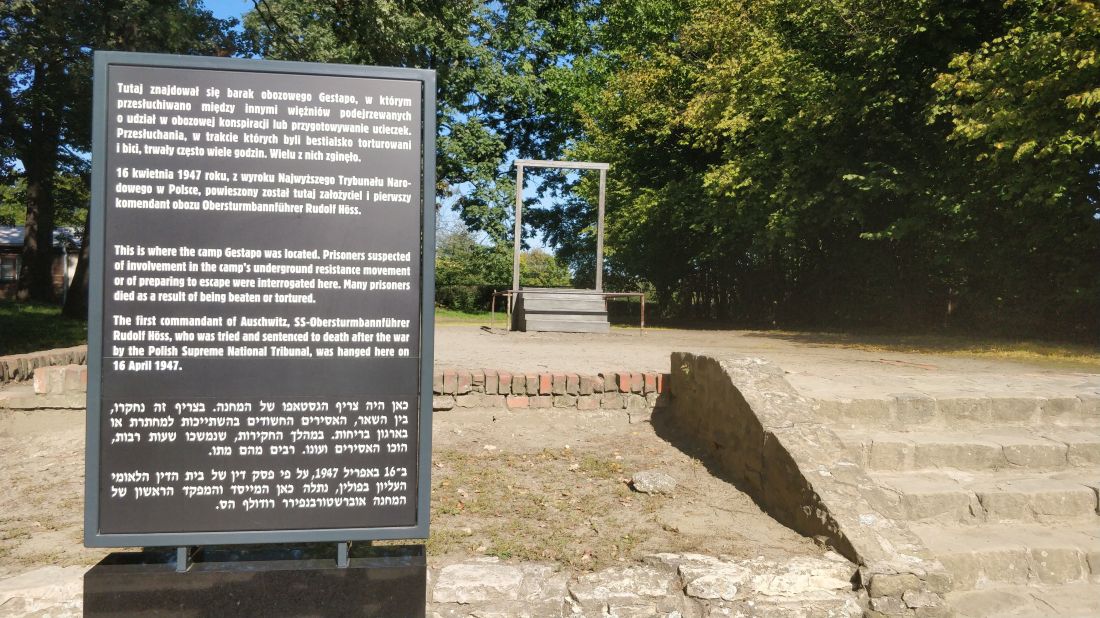
When the camp was liberated the Gestapo (camp leader) was hung here for his crimes.
After finishing this part of the tour you can jump on a free bus that takes you over to Auschwitz II-Birkenau. This part of the camp is where the most famous (infamous?) photos are taken such as the main entry gate.
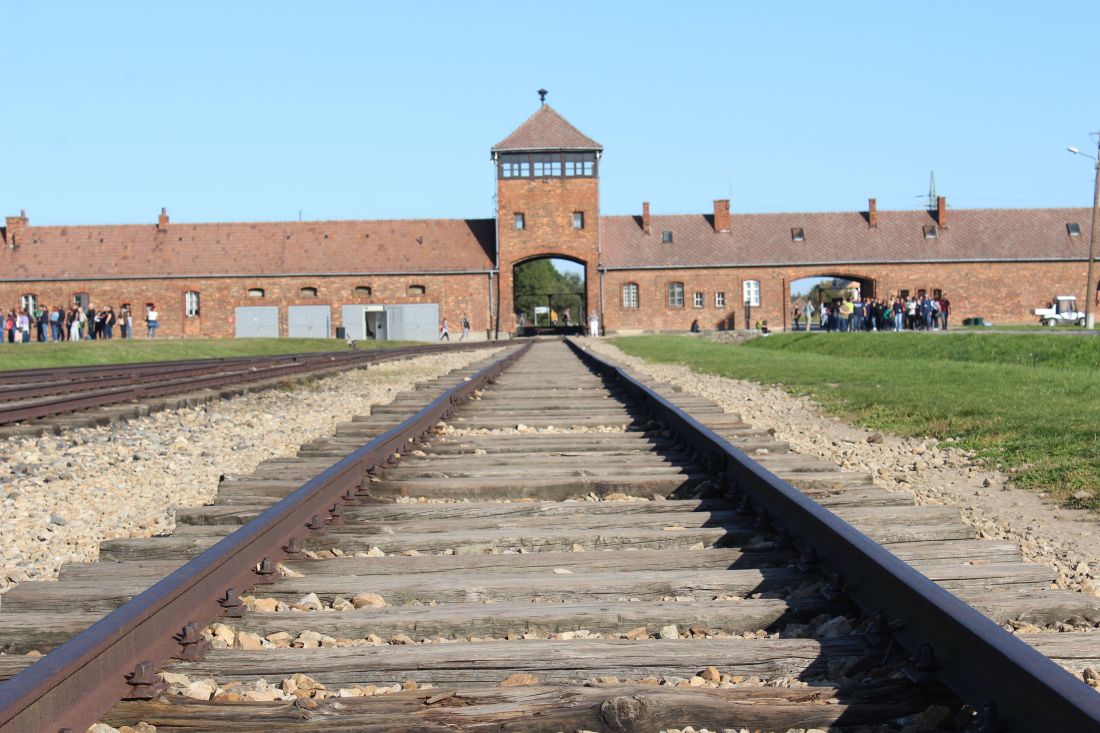
This is the place were the large gas chambers and crematoriums were built and where most of the people killed. Very few of the buildings are still intact because the Nazis tried to destroy as much evidence as they could when the Soviet Army was approaching from the East.
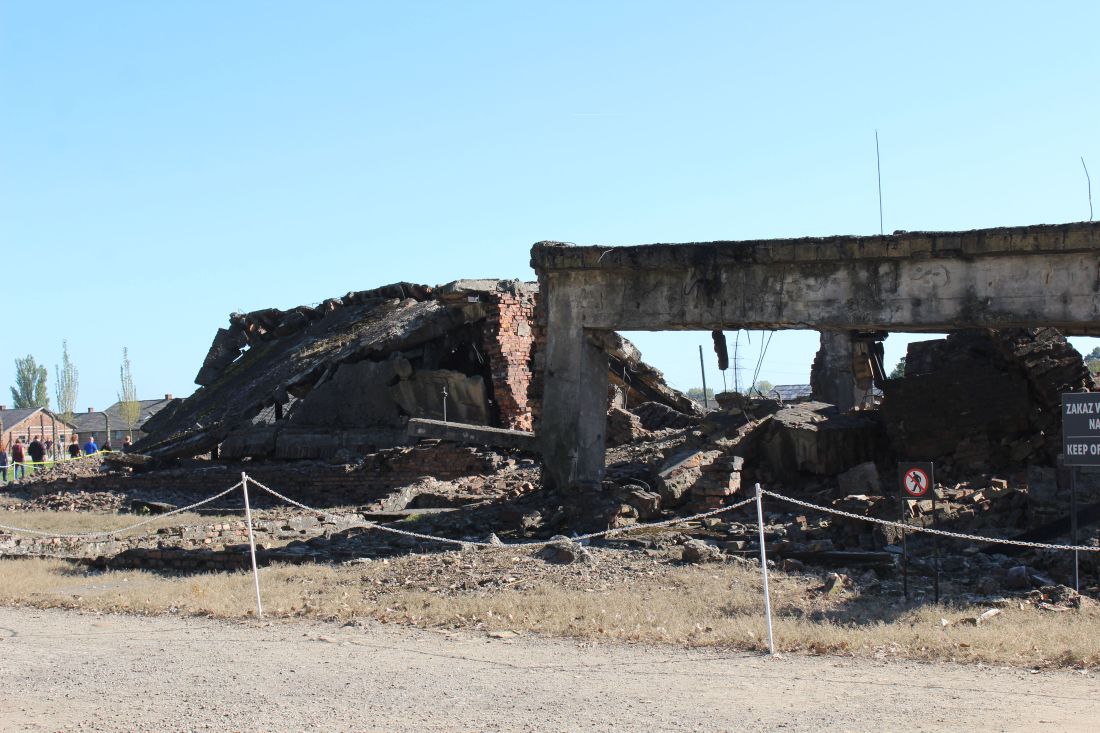
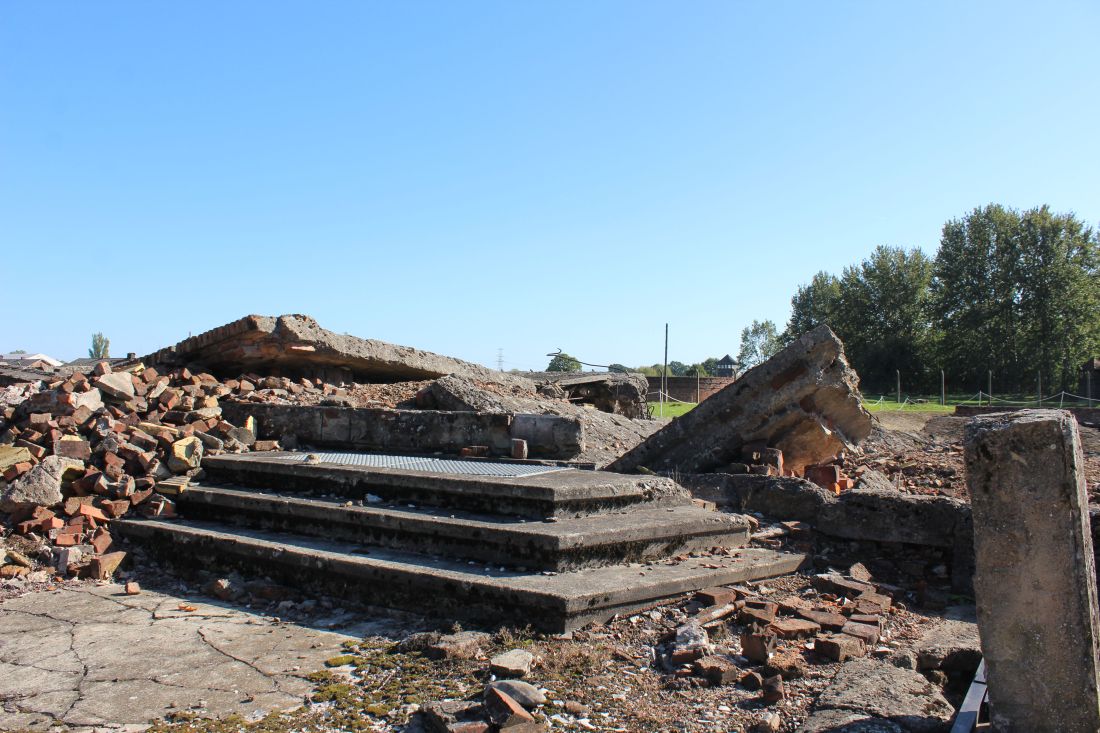
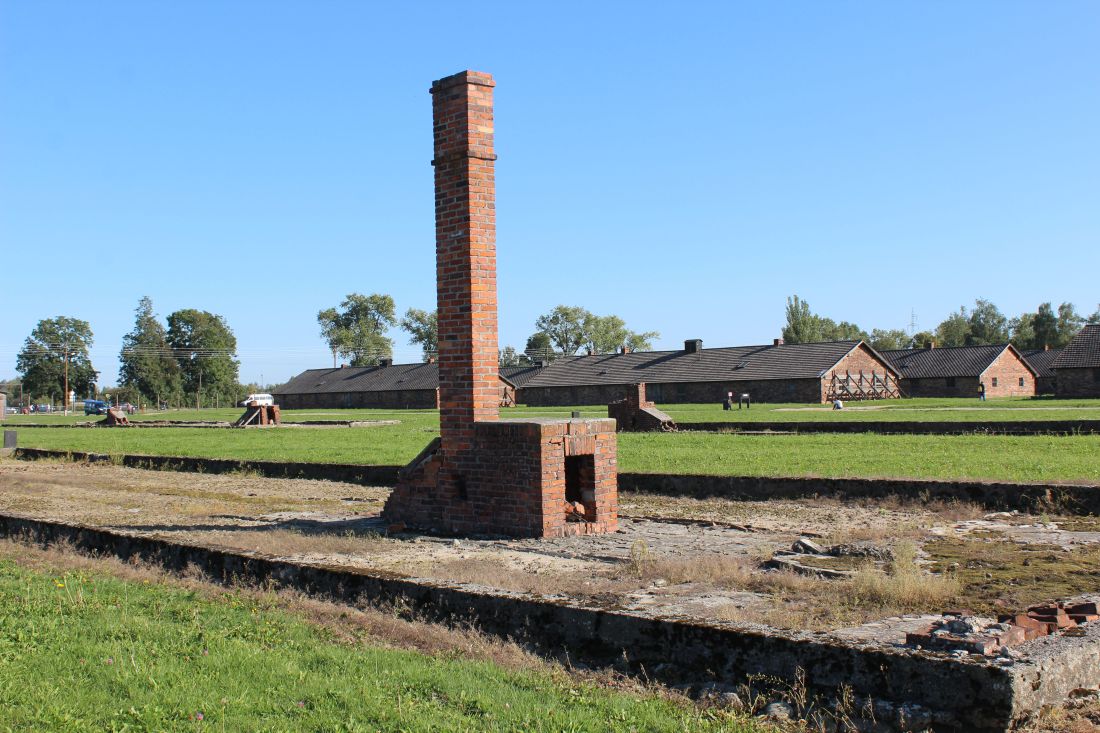
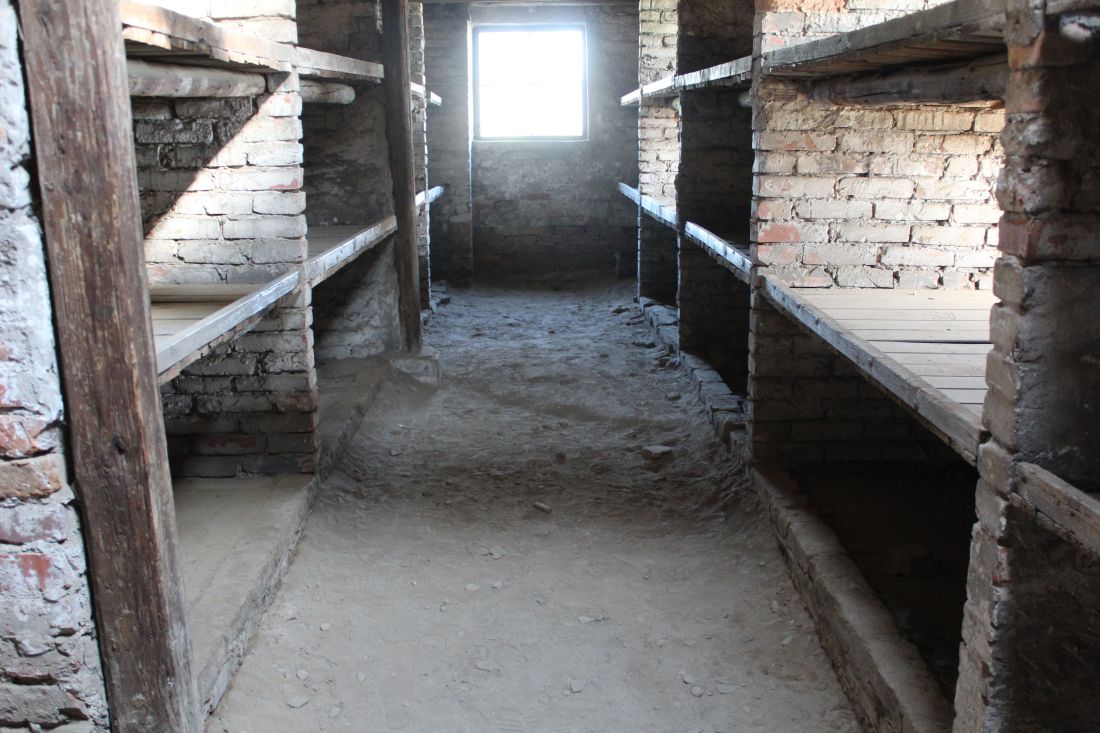
The only buildings you will find intact are the housing for prisoners.
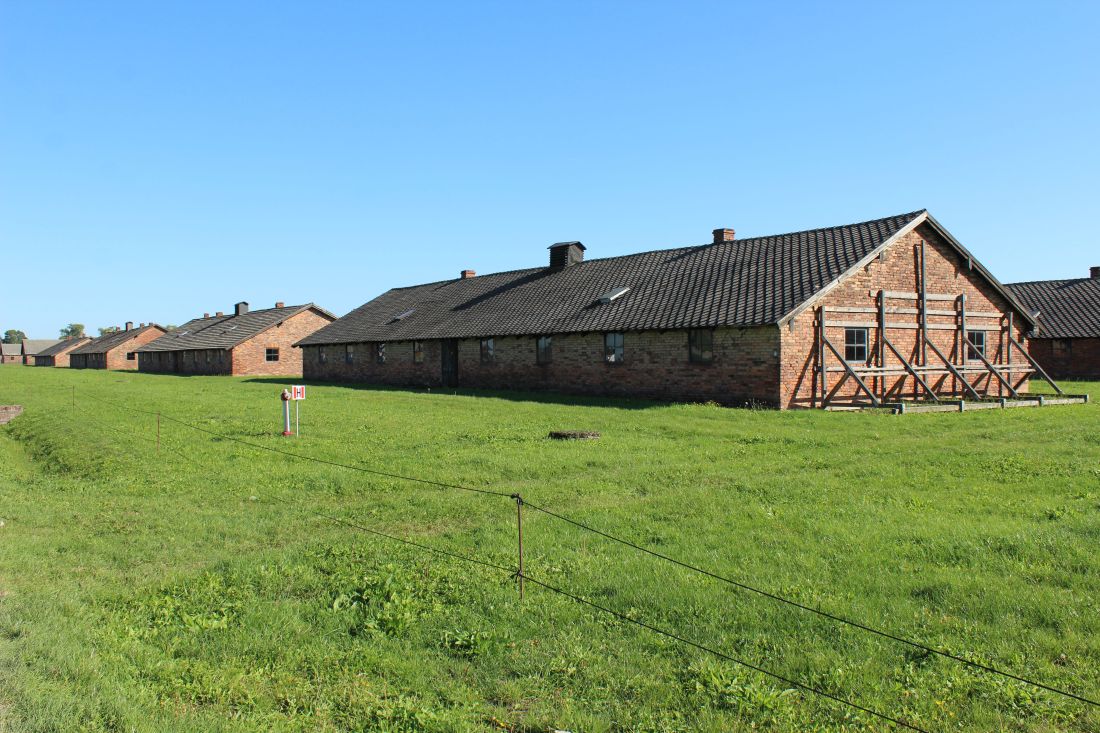
and they definitely don’t look very comfortable.
Because there’s so much material on Auschwitz already written I’m not going into any details on the camp but being there in person is an experience you can’t get from reading a book or watching a movie. It’s not a fun experience but one, I believe, that people should still have.
I suppose I’m leaving this post on a sad note but after visiting Poland you can really see how even after so much suffering (genocide, Soviet occupation) people can adapt and build a prosperous and vibrant place. Candice and I had to go back and re-watch Schindler’s List, I didn’t realize that Liam Neeson was Schindler, and we also watched the Pianist which tells the story of a Jew surviving the Warsaw Uprising.
If after reading this you are planning a visit please do yourself a favour and spend at least 3 weeks or more. There were a lot of places we had to pass on because we didn’t have time and if this wasn’t clear in the post, the prices were great, the food was delicious, and there were a lot of cool things to see.
With that we were packing up and getting ourselves to Munich for some beer drinking at Oktoberfest.
 A Romping European Time