Before any people from the Czech Republic get offended I was drawing a blank on a catchy title for this post and so you’re left with this terrible joke – I really do love the Czech Republic.
Our next stop after Oktoberfest was to the lesser known partner of the Czechoslovakia break up. Candice and I had previously been to the Czech Republic – insert shameless self promotion here We Love The Czech Republic – and comparing it to Slovakia is like comparing apples to oranges so you really can’t say one is better than the other.
Slovakia exists almost in the dead center of Europe and was one of the 2 countries that made up the former country of Czechoslovakia.
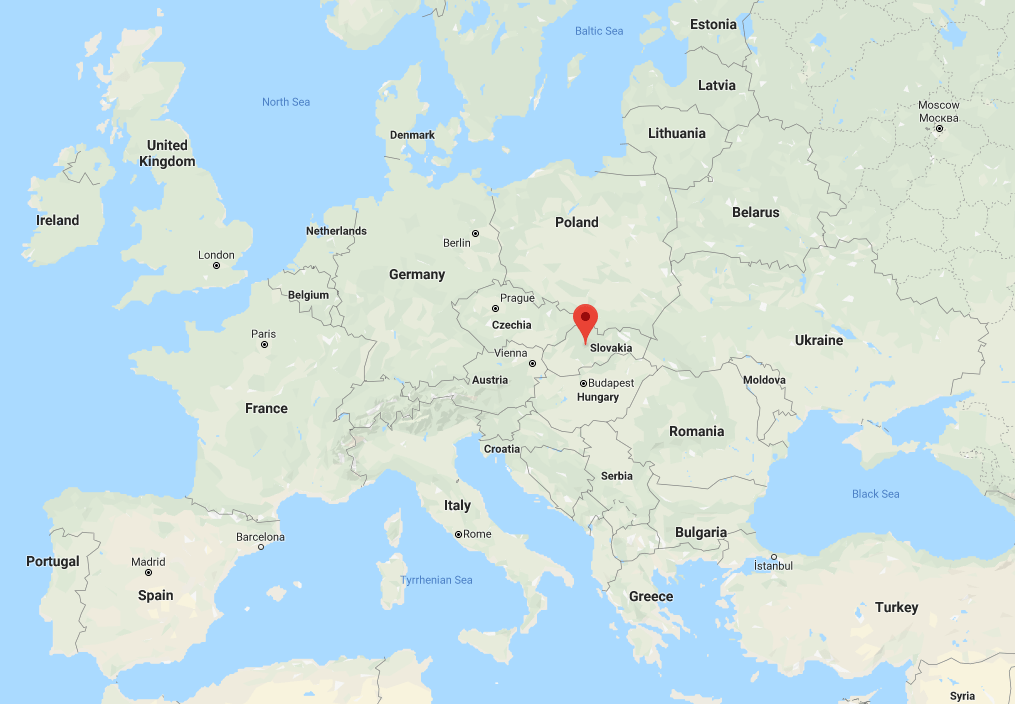
Czechoslovakia was a Soviet satellite state and regained its independence in 1990 after the collapse of the Soviet Union. It existed for 3 more years and in 1993 it peacefully separated into the Czech Republic and Slovakia. Culturally, both countries are very similar as they were both part of the Austro-Hungarian empire before WWI and after the war formed Czechoslovakia so they’ve been more then just neighbours for hundreds of years.
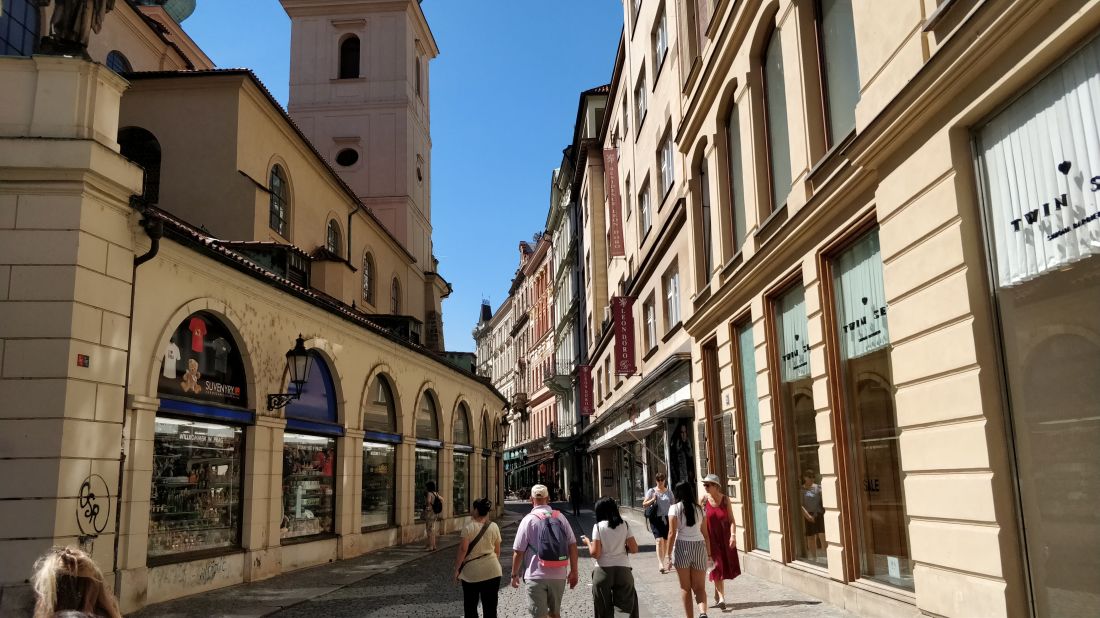
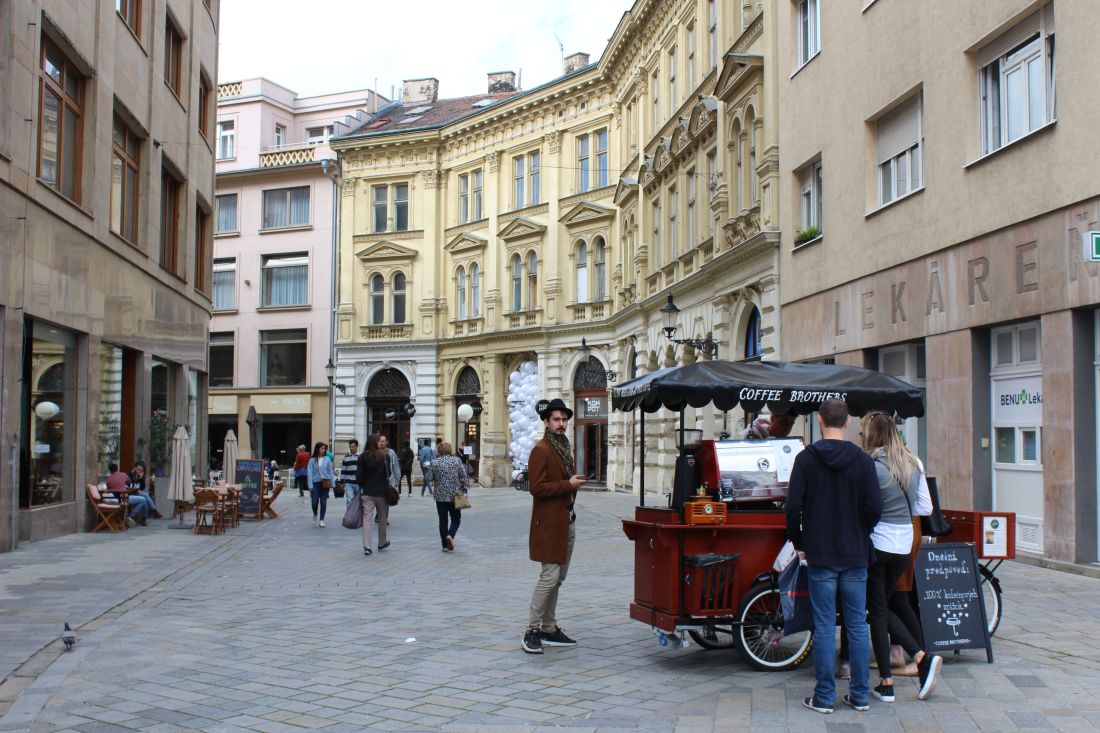
However, don’t start thinking that both countries are the same. They have different languages, though we were told that a Czech person and Slovak person can mostly understand each other, and they are strongly nationalistic however as an outsider I immediately noticed the similarities between Bratislava (the capital of Slovakia)and Prague.
This first picture was taken in Prague in August of 2018
while this second picture was taken in Bratislava in October 2019.
Enough about Prague and the Czech Republic. Slovakia is a small country of 5.5 million people and its capital Bratislava has fewer then 500,000 residents. The city is positioned very close to both the Austrian and Hungarian borders and makes for either an easy day trip from either country.
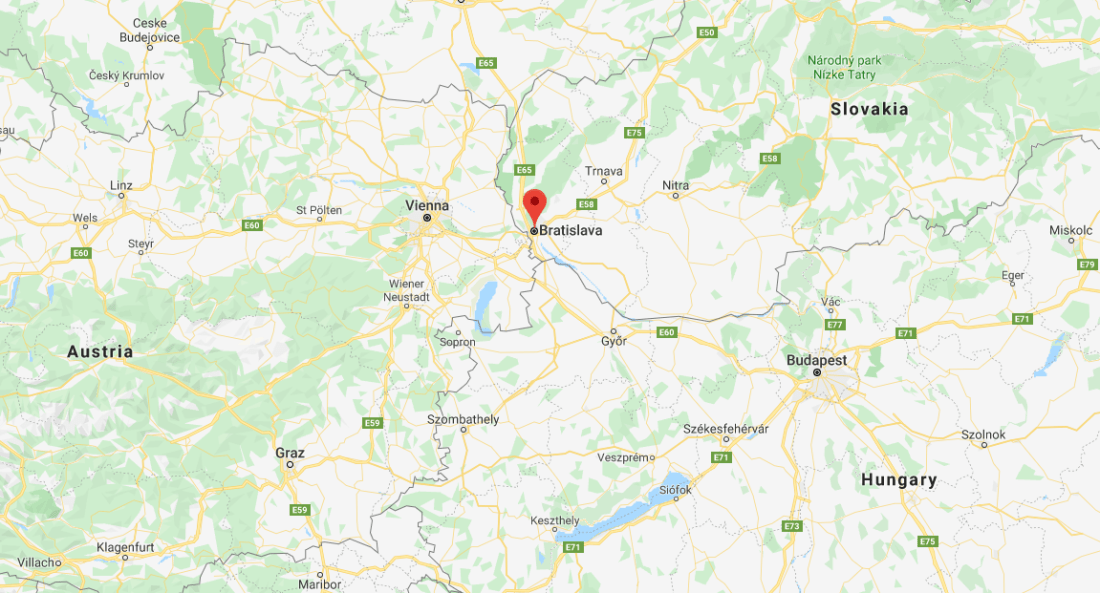
We only had 10 days to visit all three countries (Slovakia, Austria, and Hungary) so we choose 6 days in Bratislava and 4 days in Budapest. I would have loved to stay in Vienna but I quickly realized that Austria, and especially Vienna, is very expensive. Hotel prices were much cheaper in Bratislava and buses to central Vienna were cheap and frequent.
Lets talk about the city. Bratislava is your typical European city it seems; the central area has a well preserved old town full of hostels, restaurants, and cafes and the outer parts are a mix of old and modern buildings. It has an extensive bus and tram system like other European cities and overall has a clean and organized feel to it.
The old town is really gorgeous and gives Prague a good run for its money.
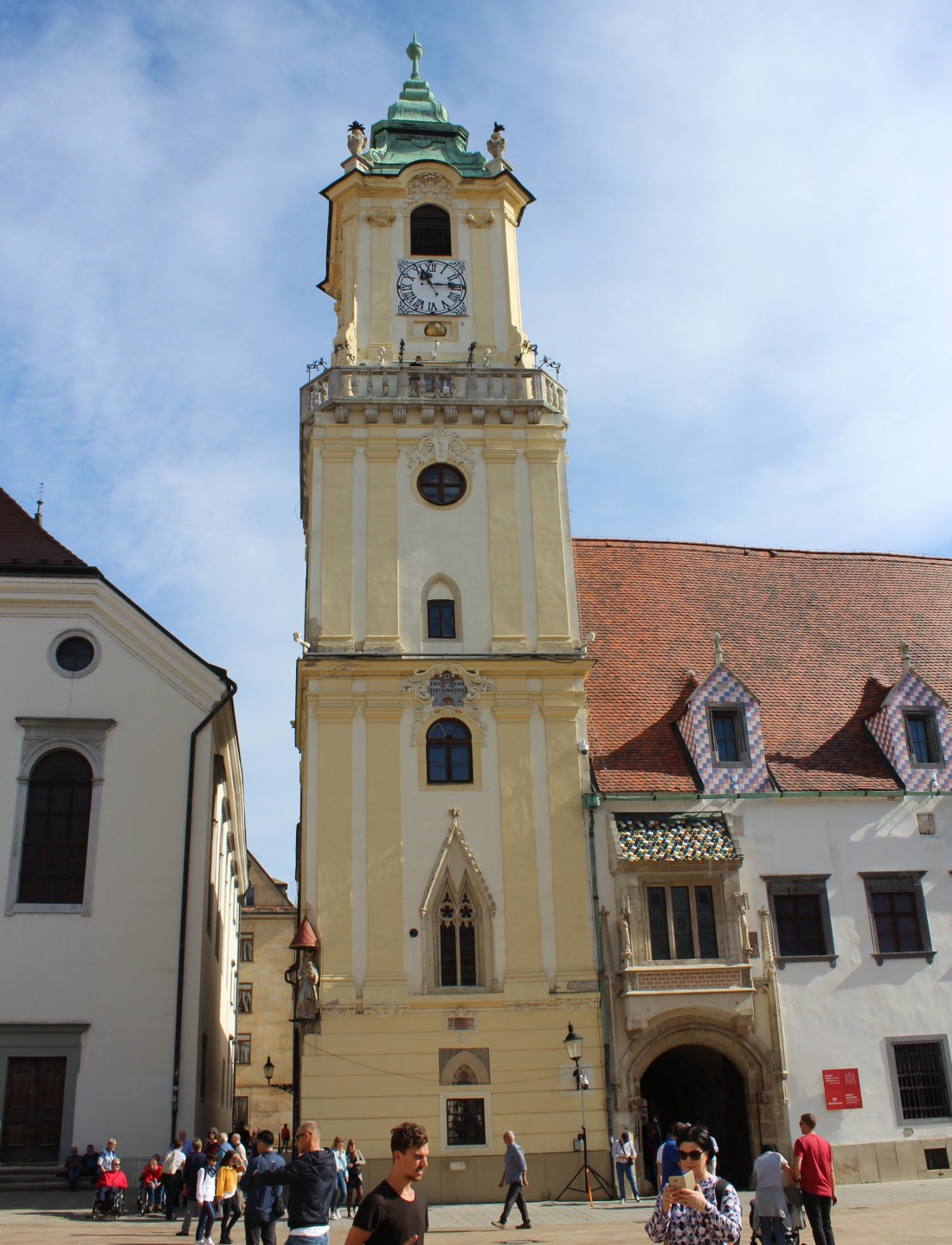
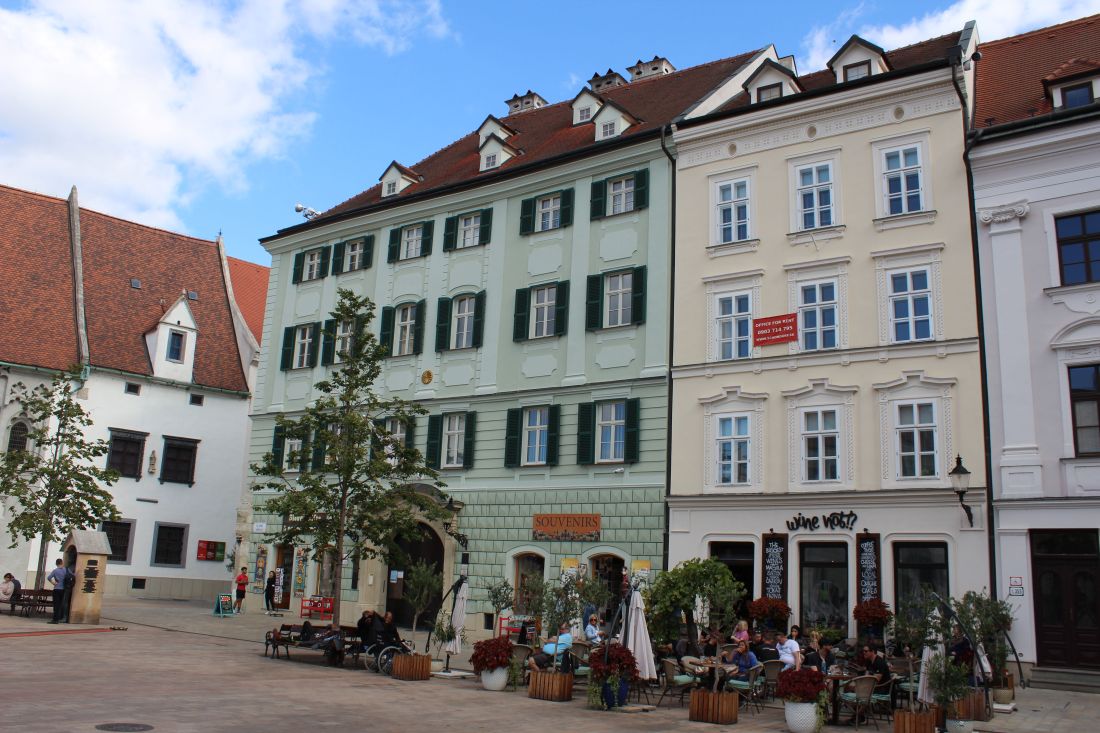
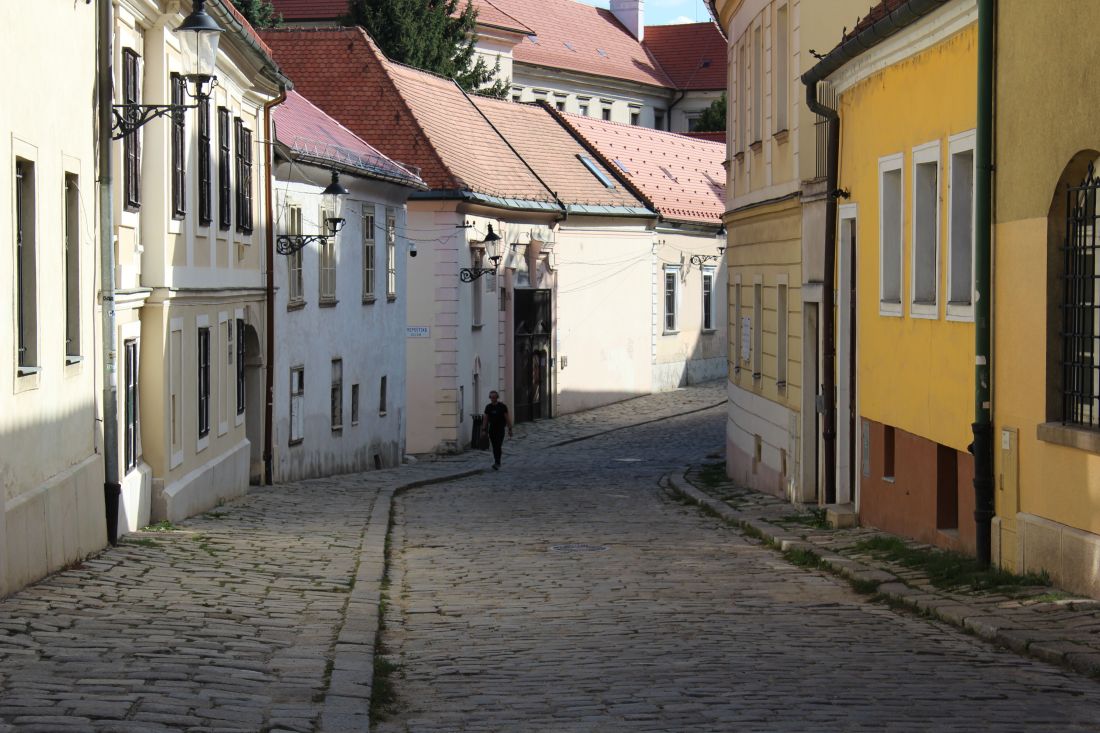
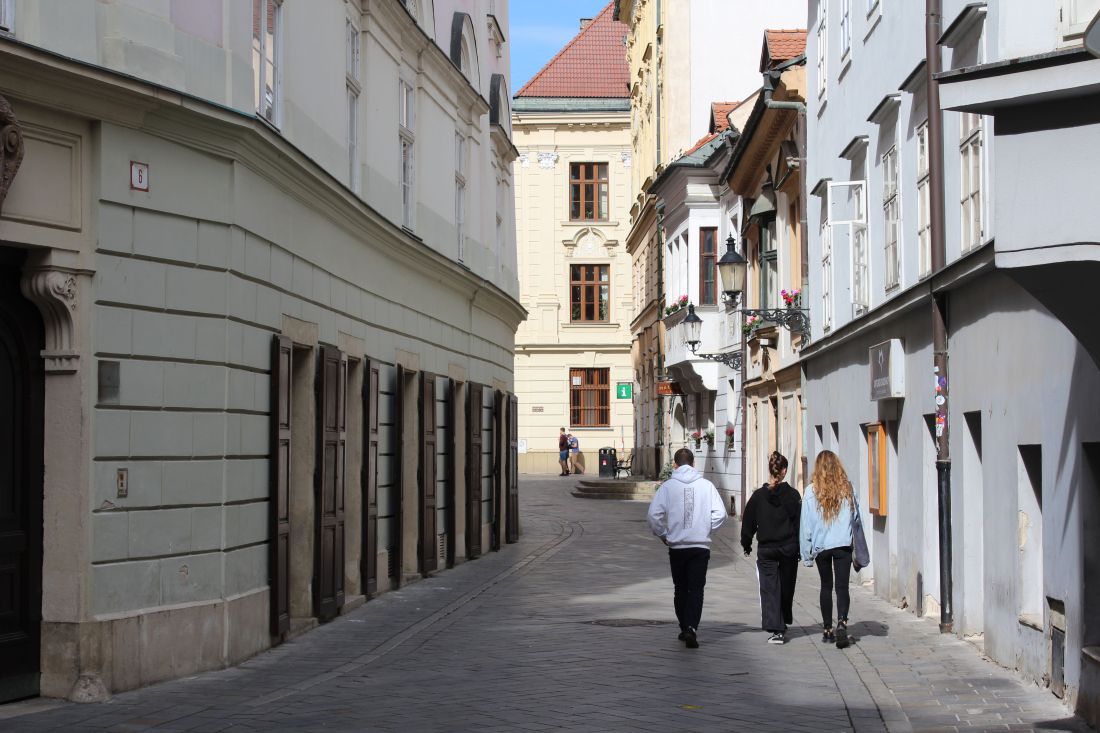
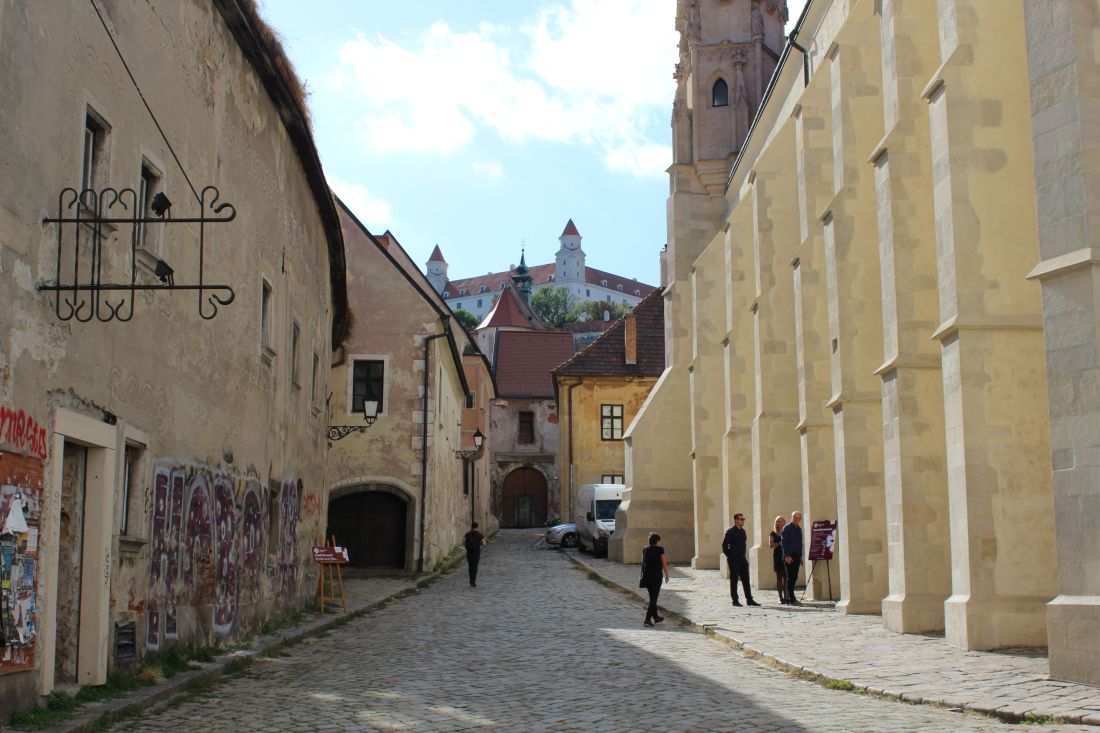
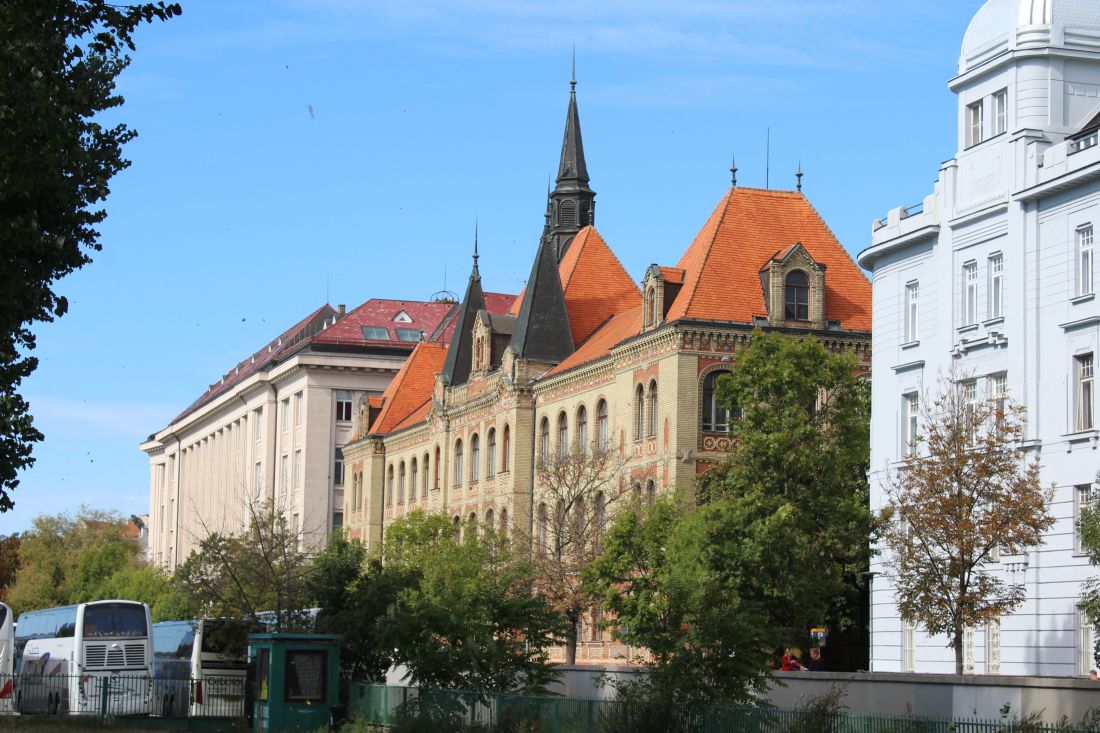
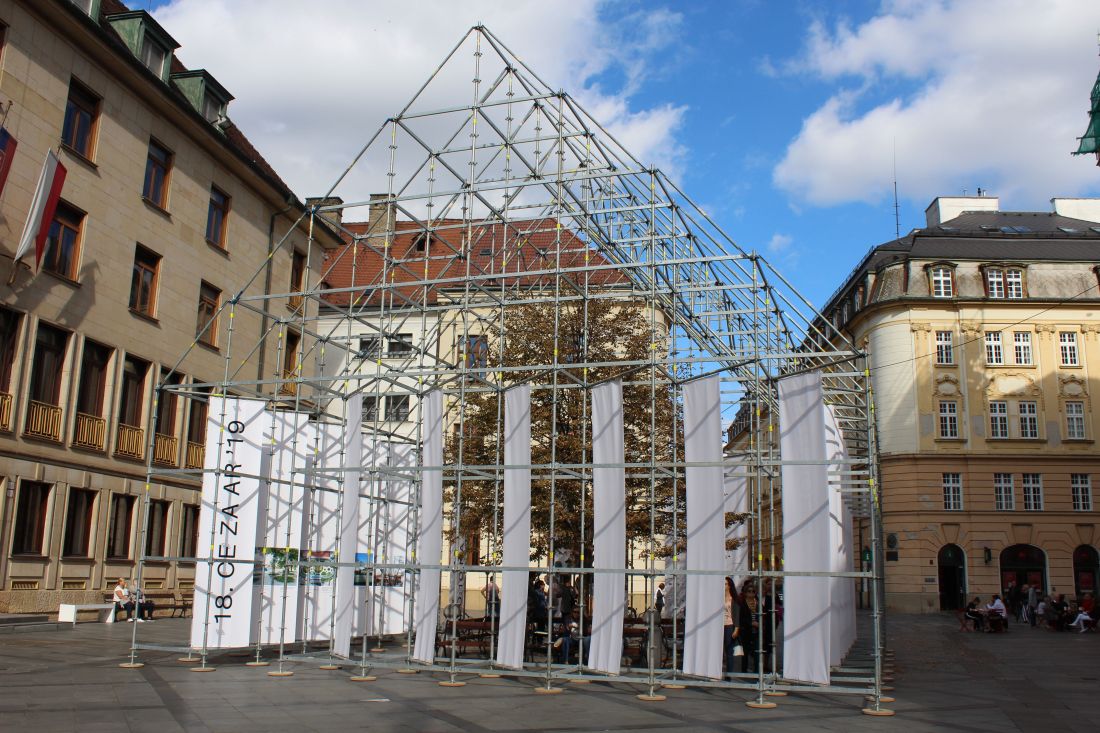
There’s also a modern side to Bratislava.
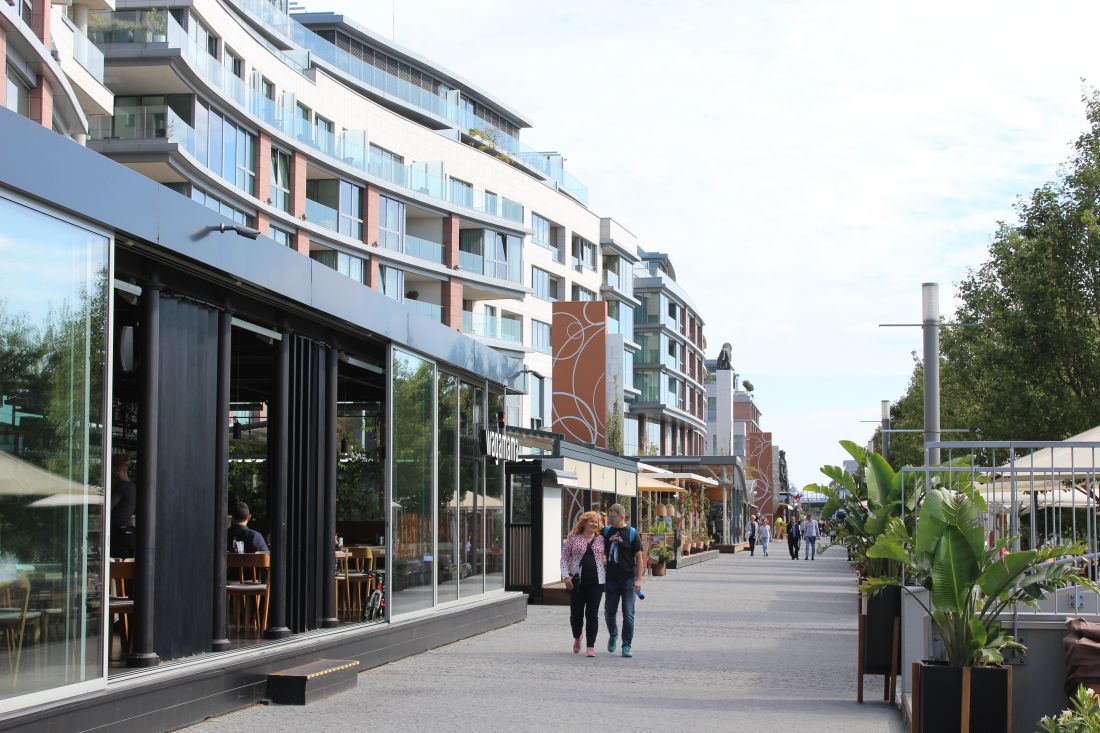
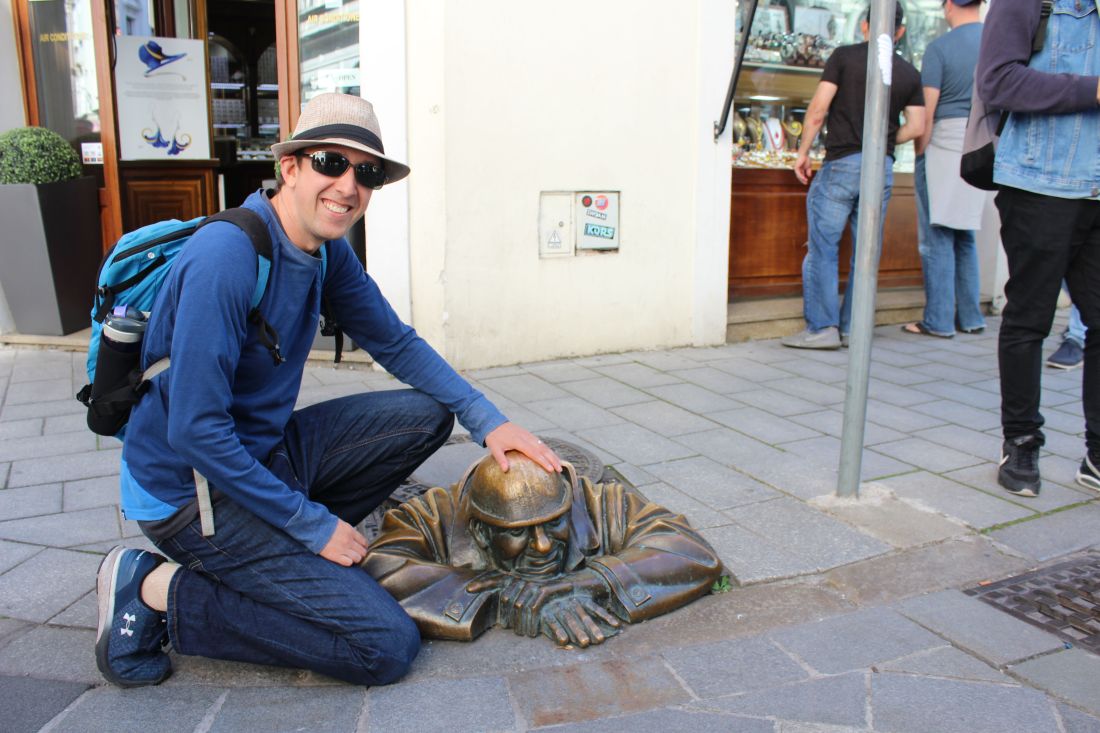
All over the old town are plenty of small interests to find. I’m of course speaking of statues, something I’ve grown fond of looking for in Europe.
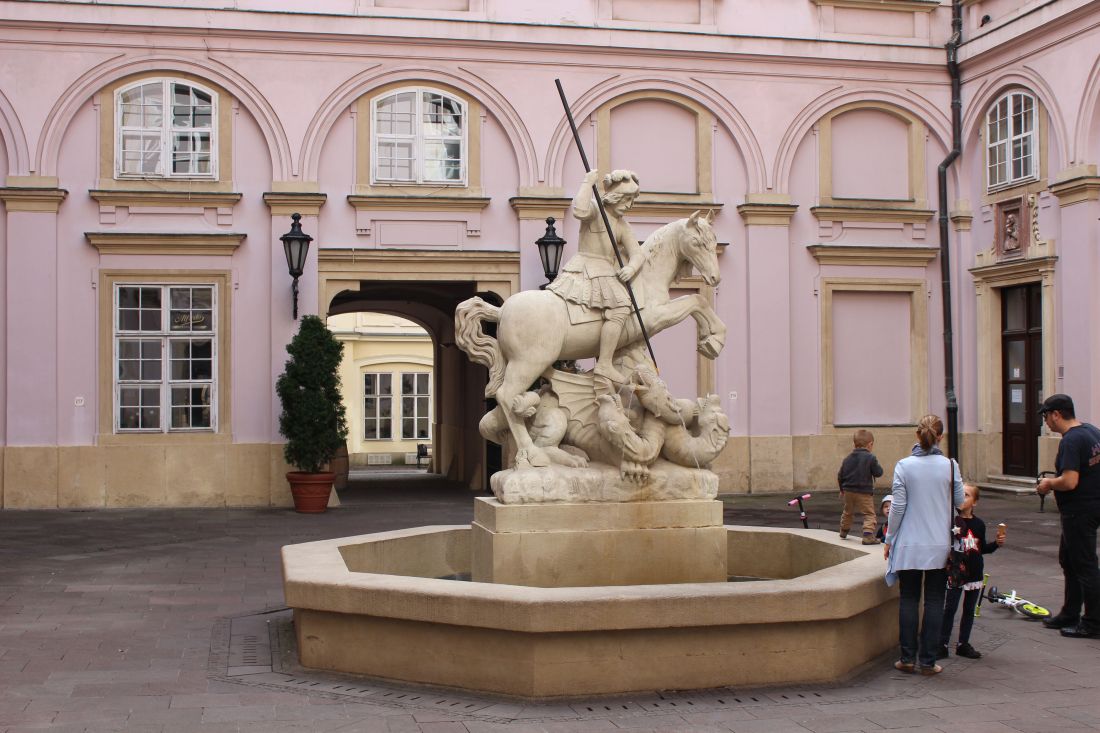
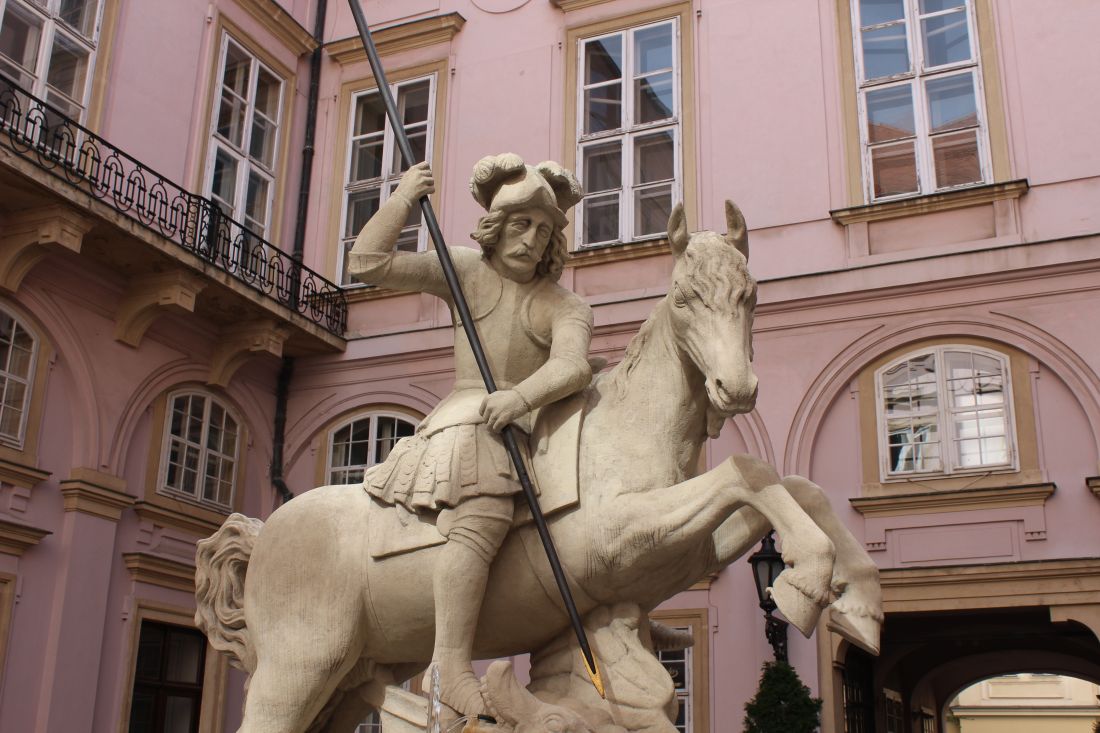
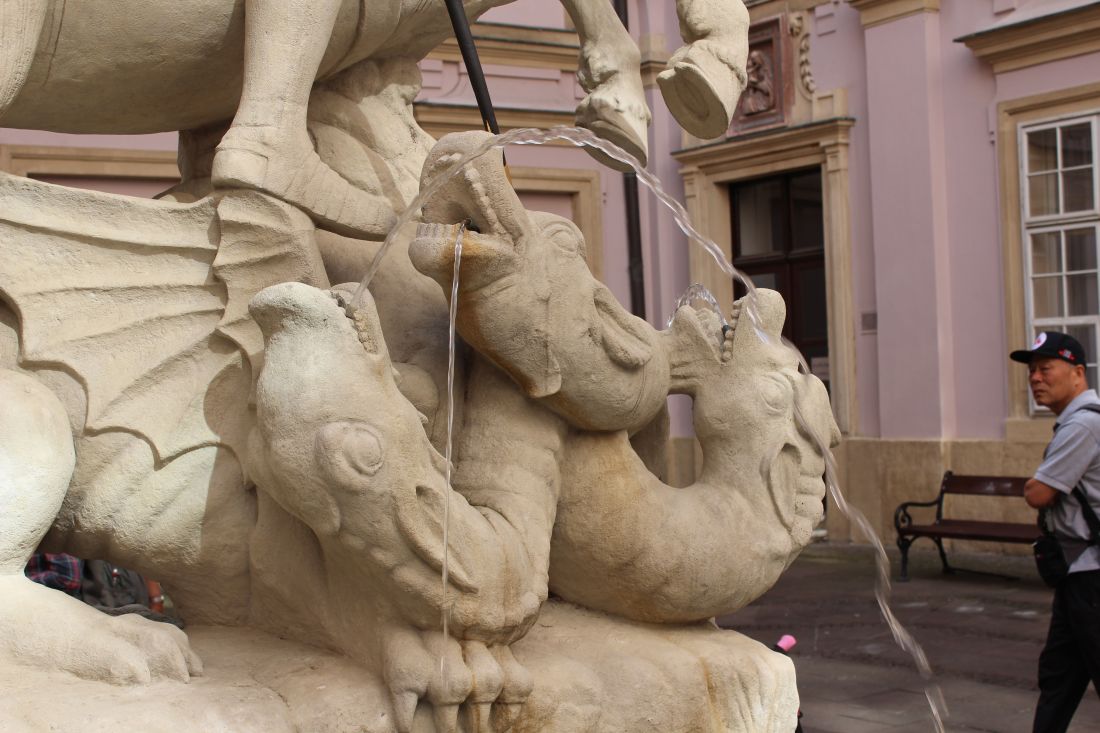
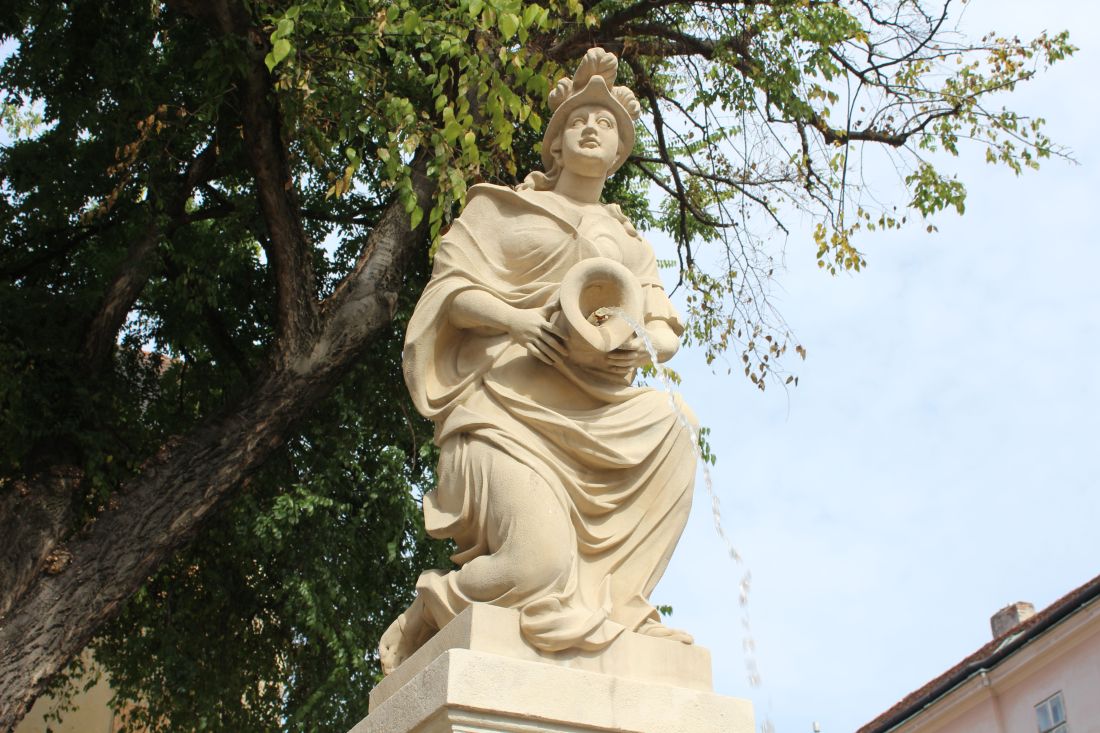
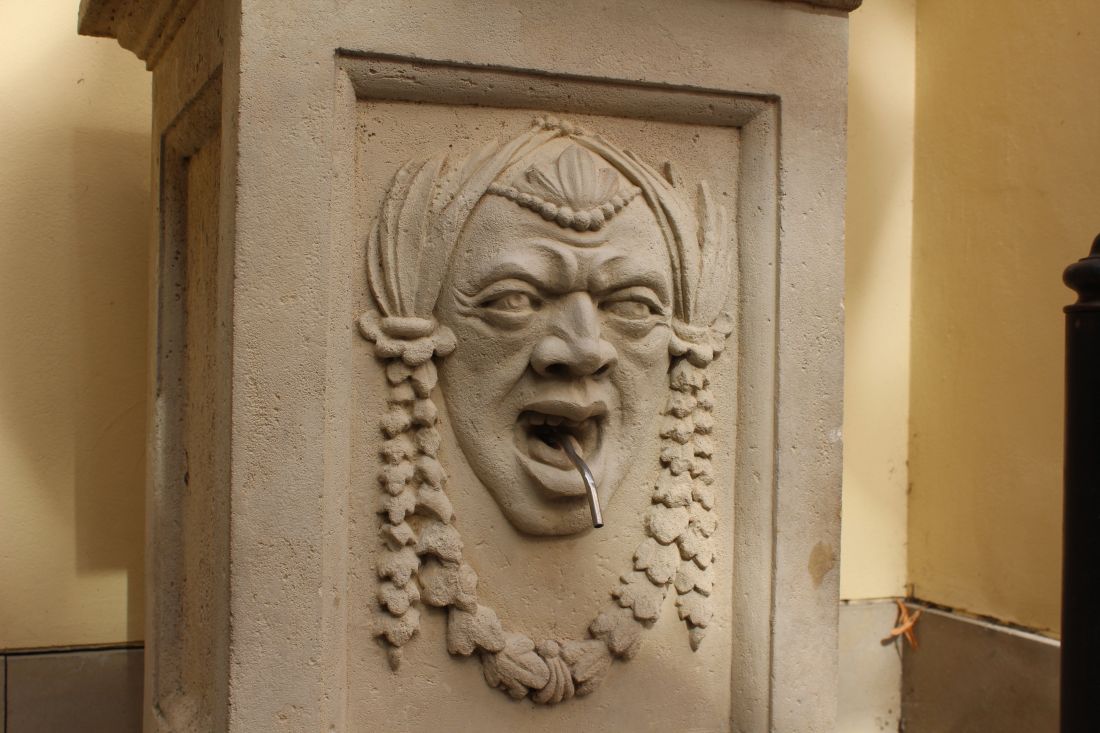
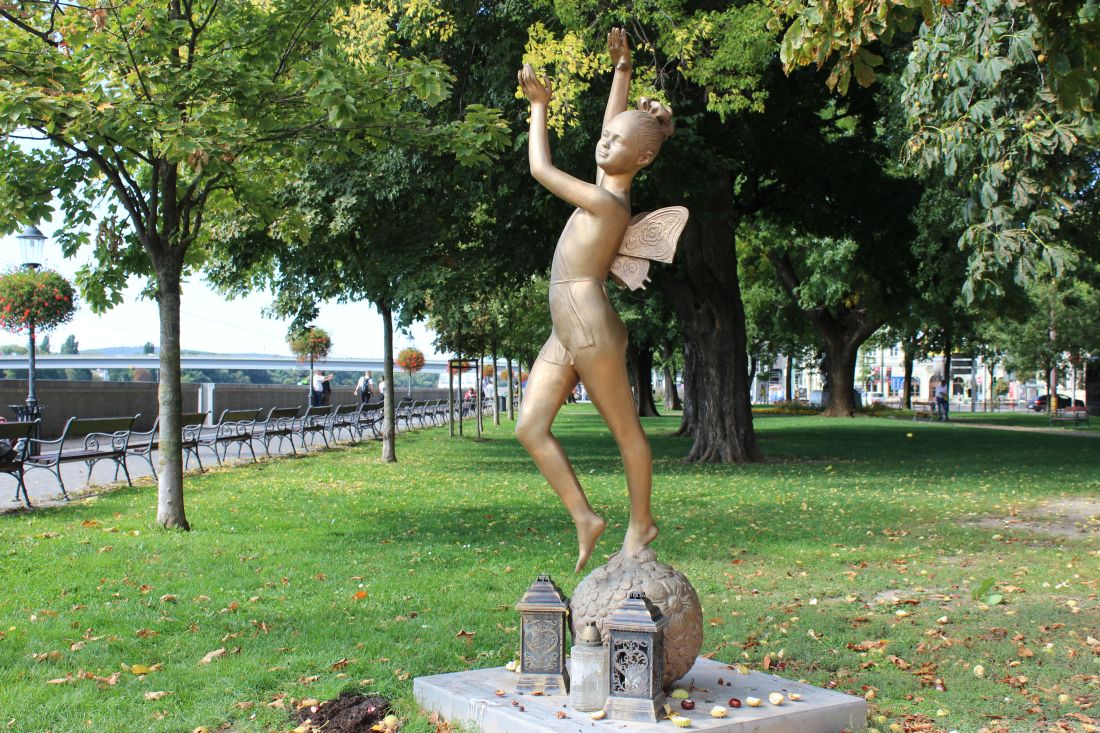
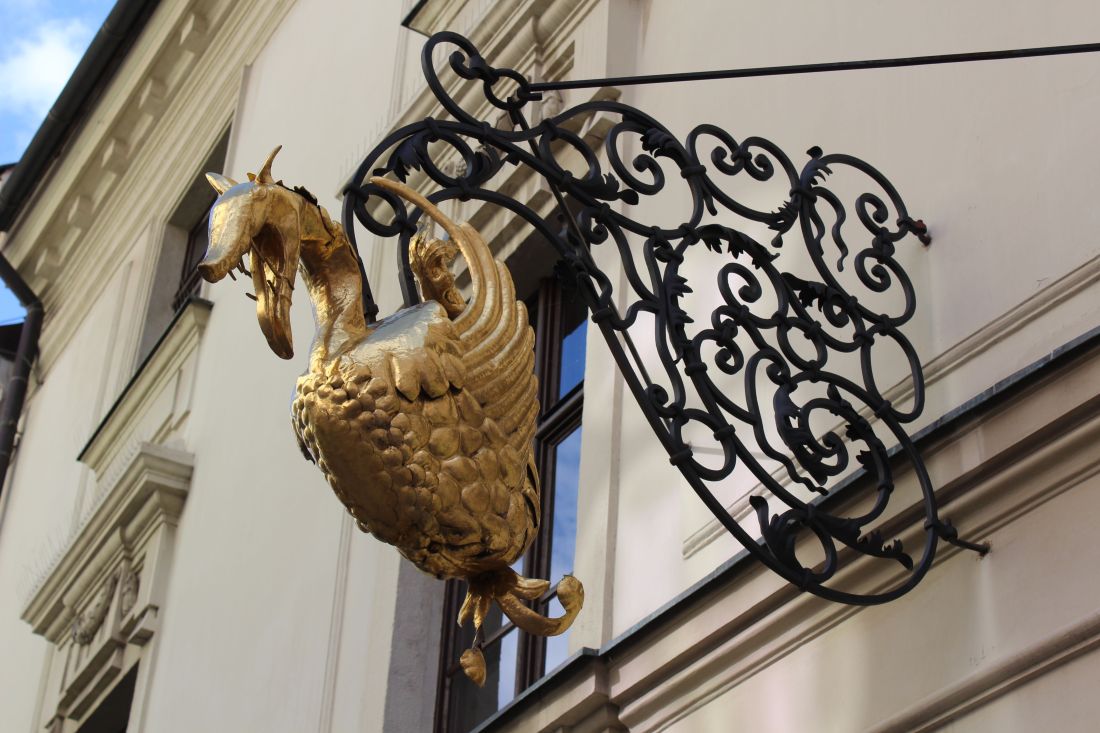
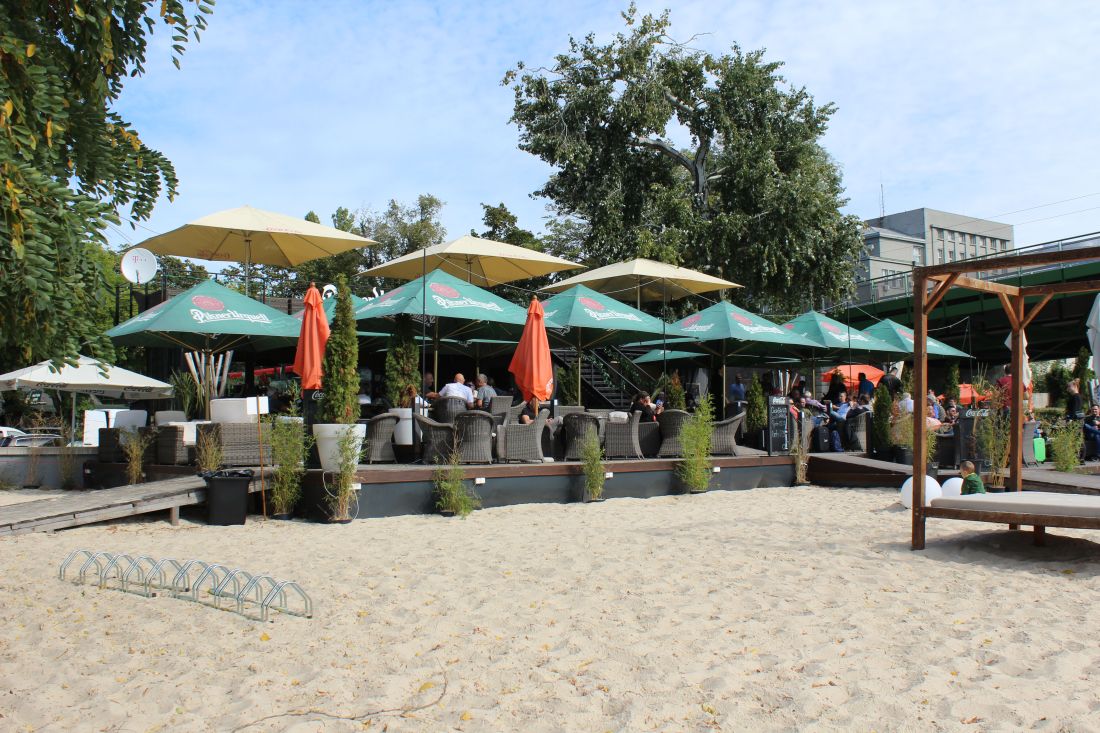
I did however stumble across something I did not expect to find. A beach bar on the river.
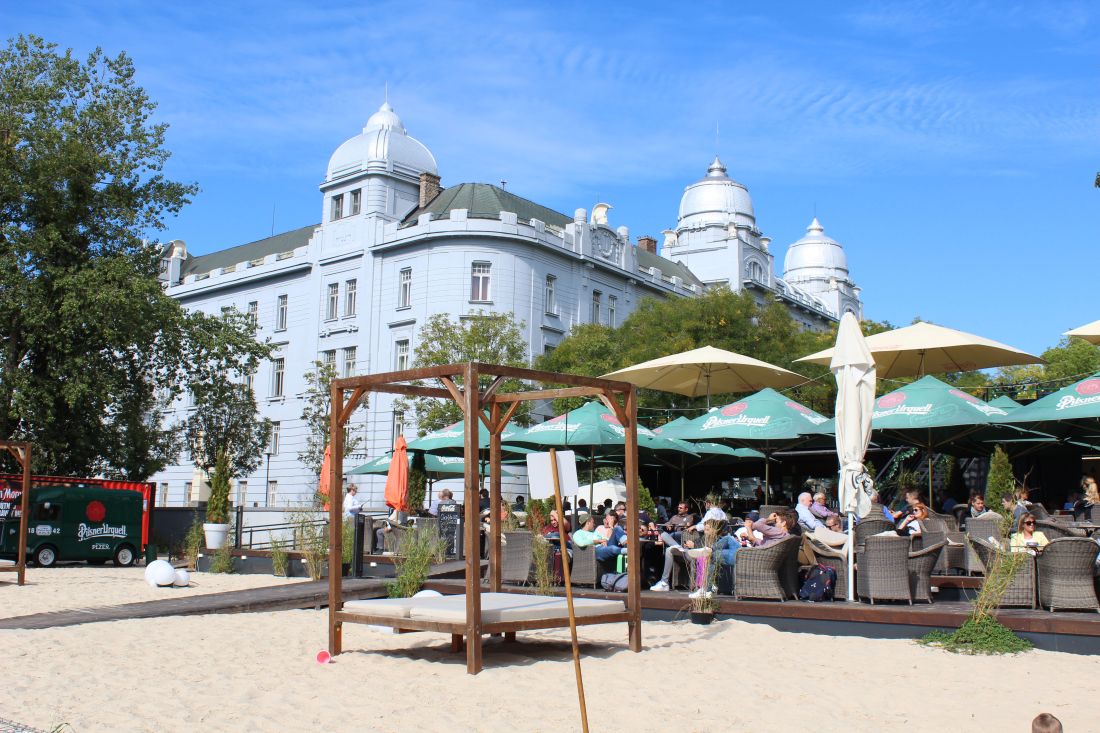
and I also found a really cool umbrella display down one of the streets.
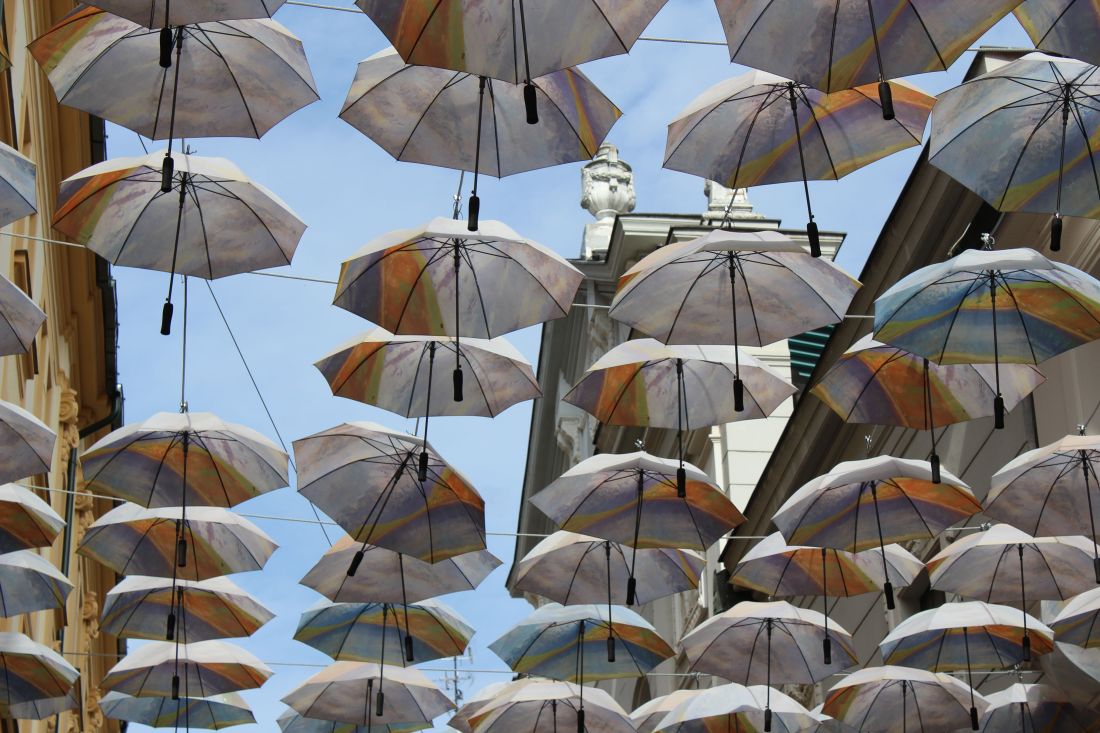
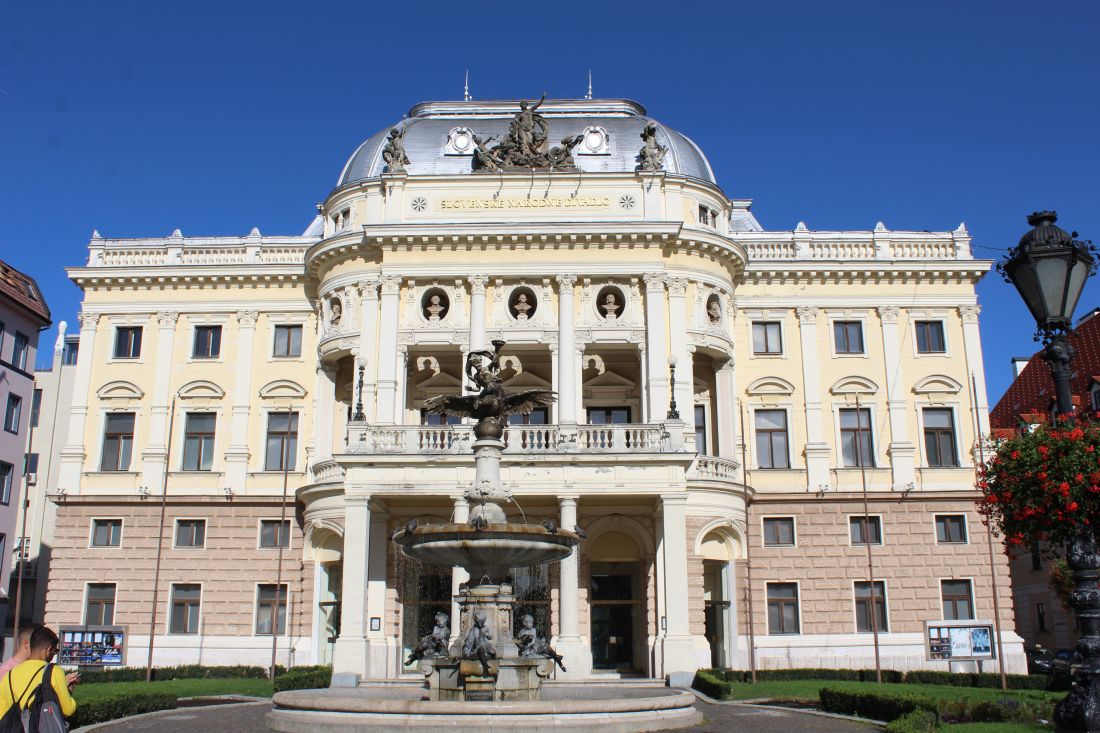
To find all the best spots of the city make sure you sign up for the free walking tour. The first stop was this impressive building though I really can’t remember what it is used for, I want to say a music hall or a music academy.
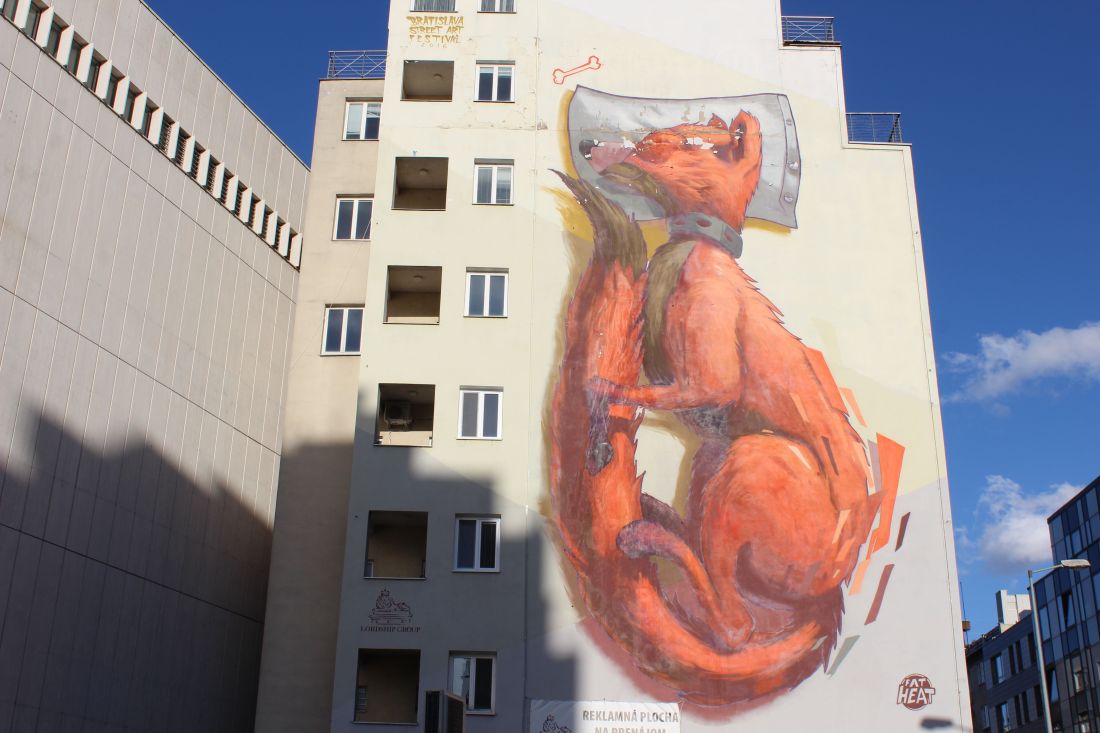
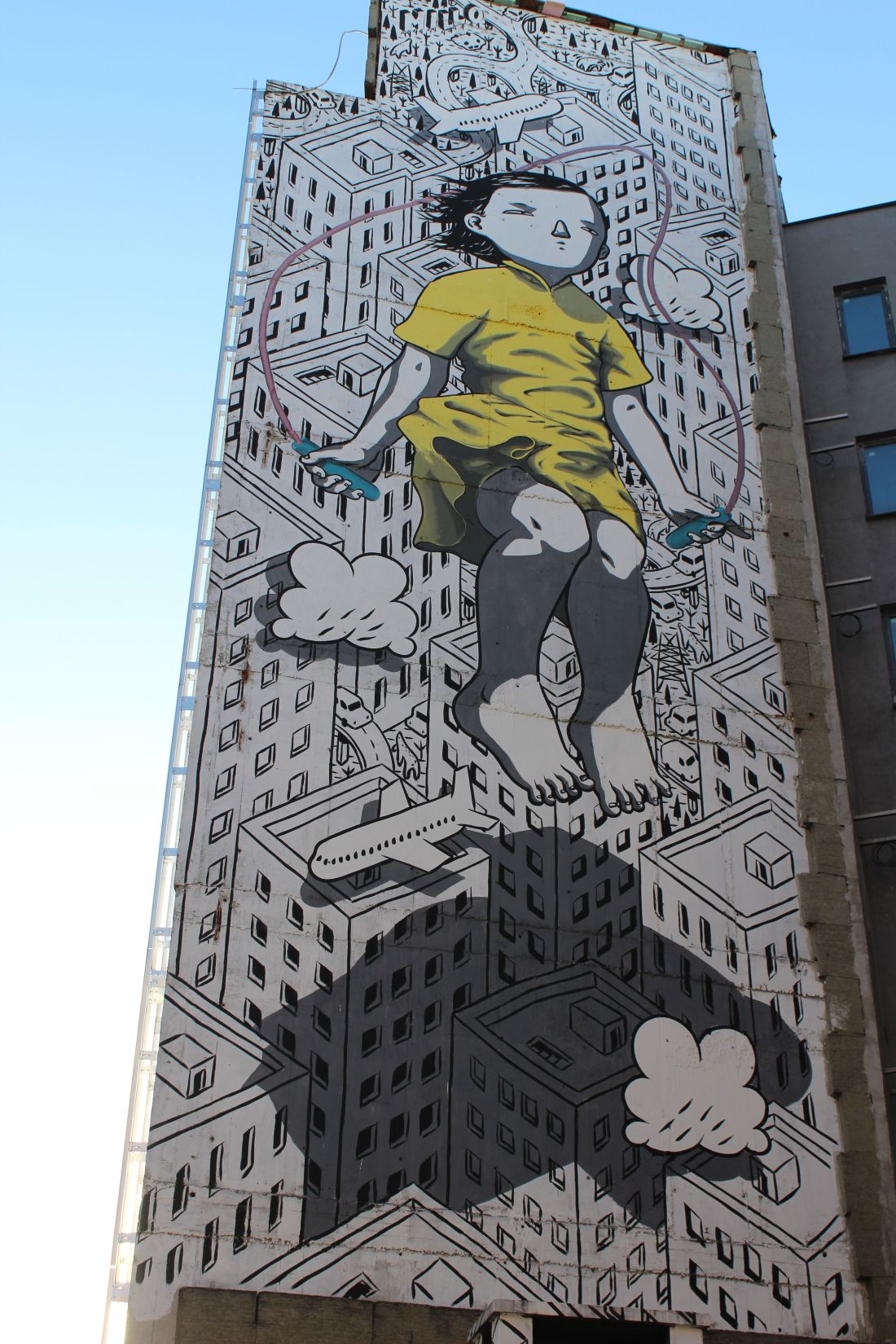
When Slovakia gained its independence from the Soviet Union the the government wanted to give the city a facelift to improve its image. A lot of art displays and statues were erected in the ’90s and 2000s and one of them isthis one called “Man At Work” depicting Cumil the sewer worker. Apparently he’s been a hazard to pedestrians and cars a like and has been driven over more than once.
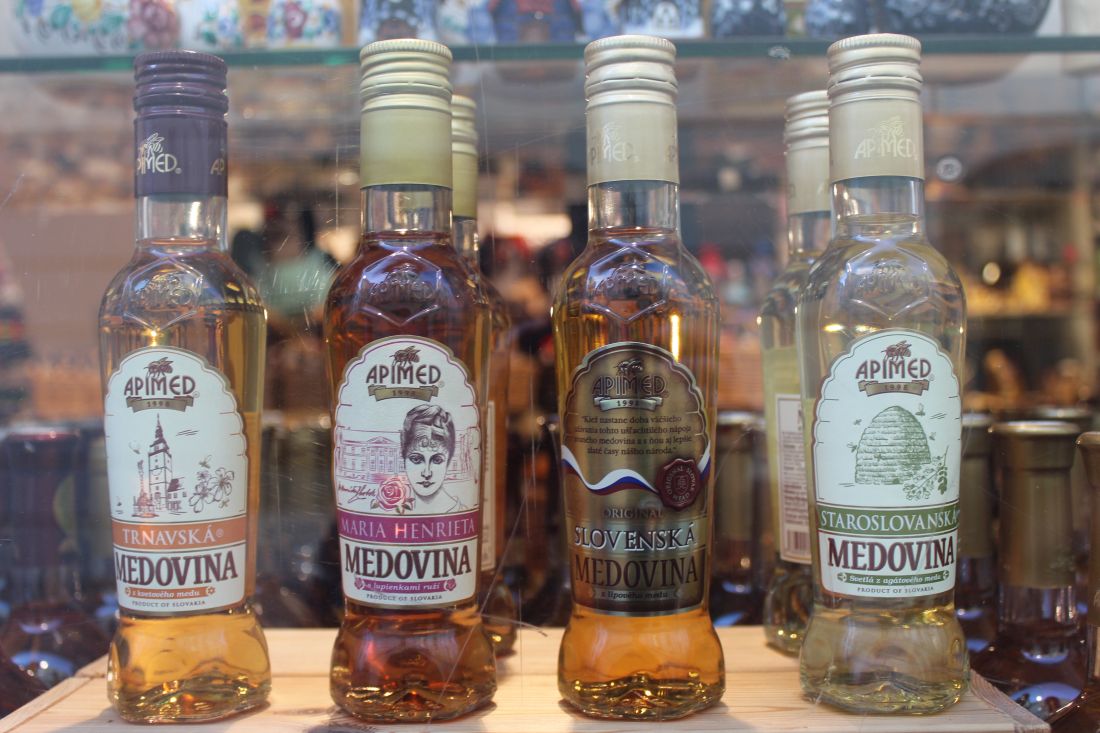
And of course you’re shown some of the local food and drink items to try. We unfortunately didn’t get a chance to try some Medovina, a world renowned Slovakian mead (thus made from honey) and is supposed to be sweet and tasty. Hopefully when we’re back in Canada we can figure out how to get a bottle to finally try it.
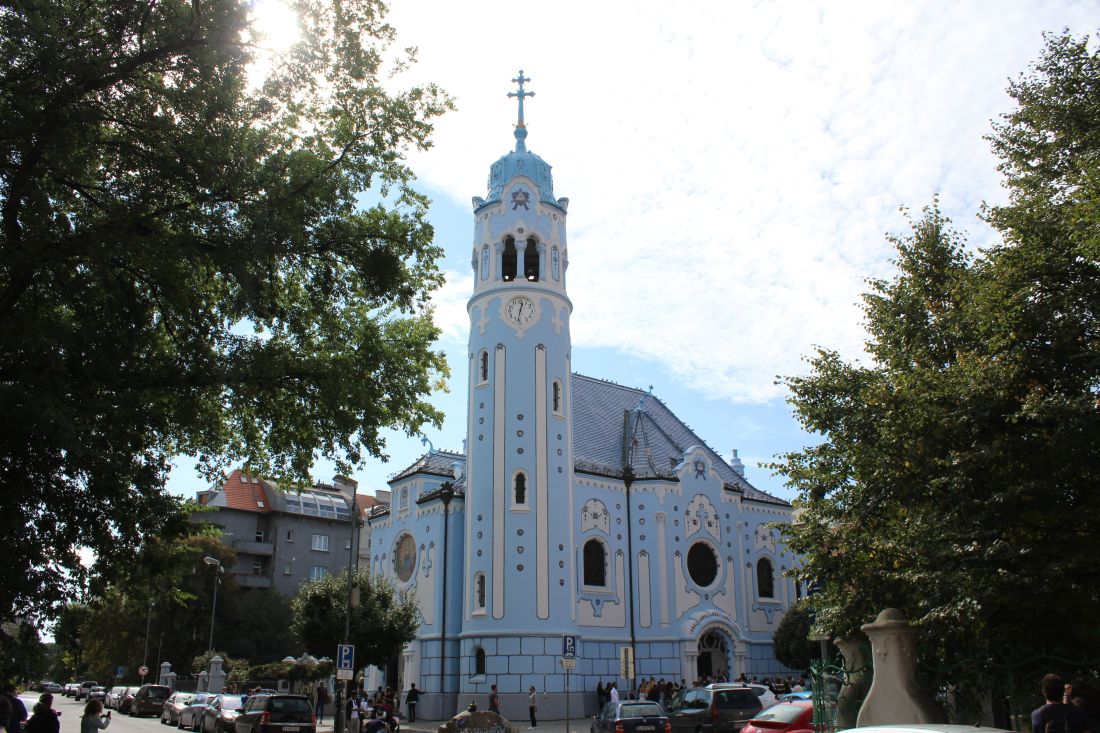
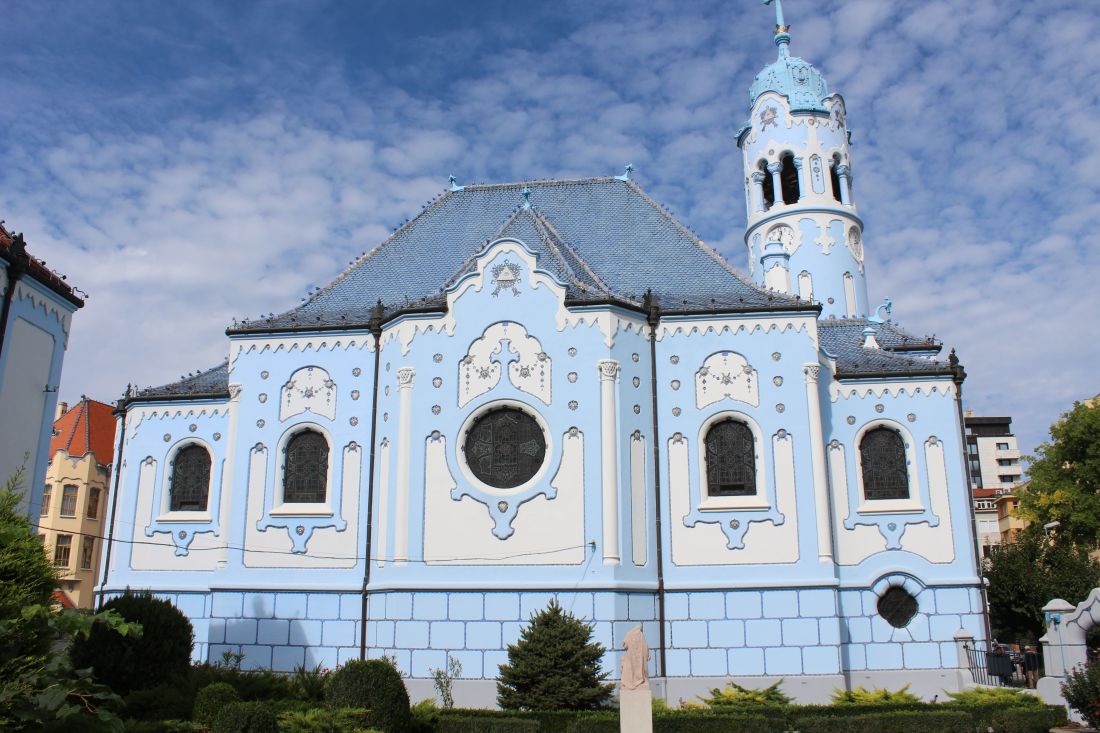
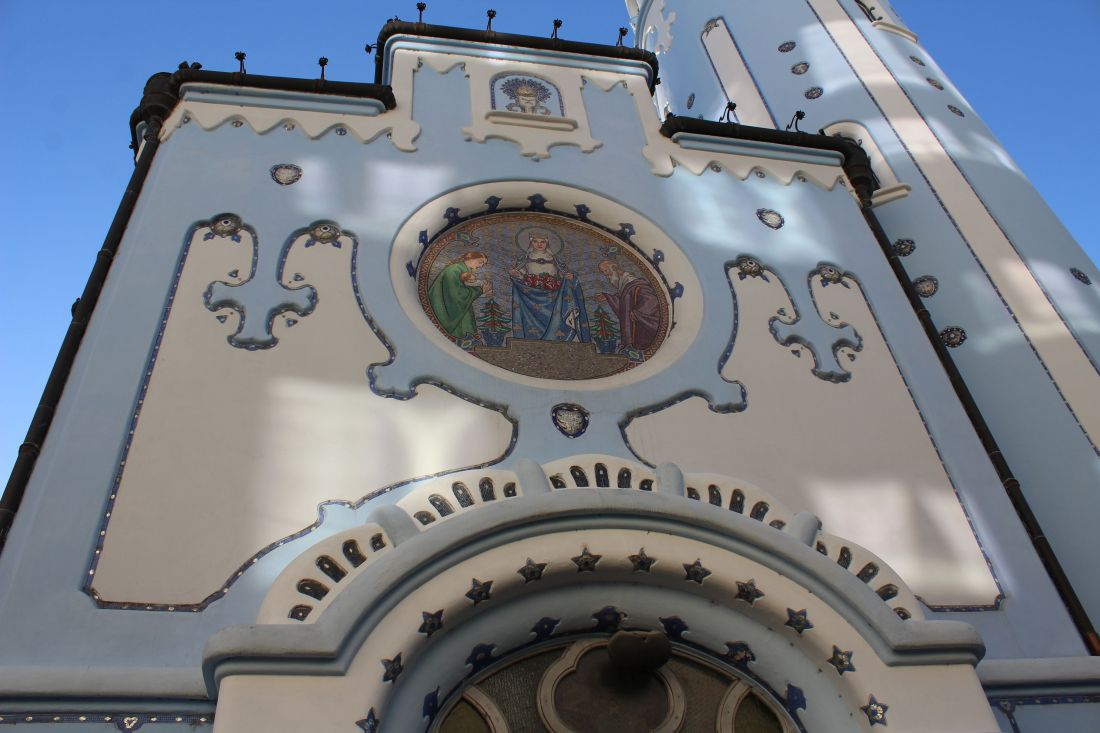
The final stop of the walking tour was the Blue Church. Finished in 1913 it’s a really young church by European standards but its blue facade and mosaics draw in plenty of crowds.
The last big thing to see in Bratislava is the castle. Situated on a hill near the old town it’s fairly easy to spot.
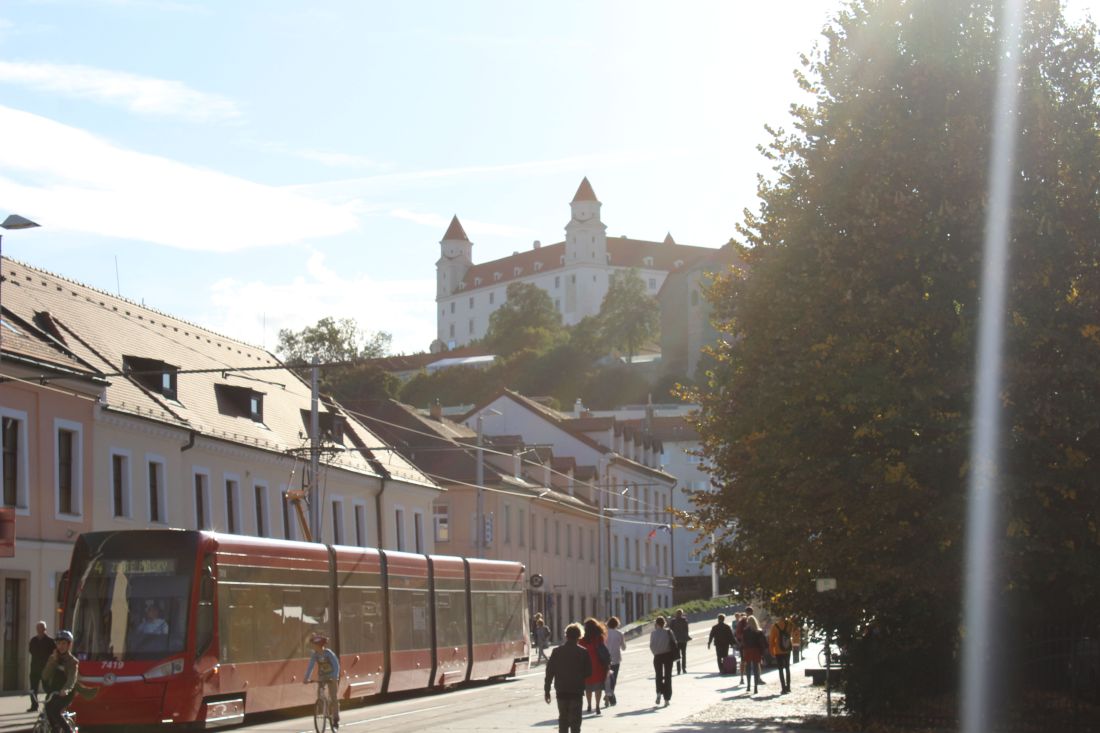
The hill it was built on has been occupied and used by people as a fortification for well over 2000 years but the modern castle was built in the 1300s. It helped protect the region from several different invaders over the centuries but stopped being used in the 1800s and by 1949 was almost completely destroyed and ruined.
Restoration work started in 1957 but some parts were finished as late as 2000. I believe that none of the current castle is original and the oldest parts are only 50-60 years old.
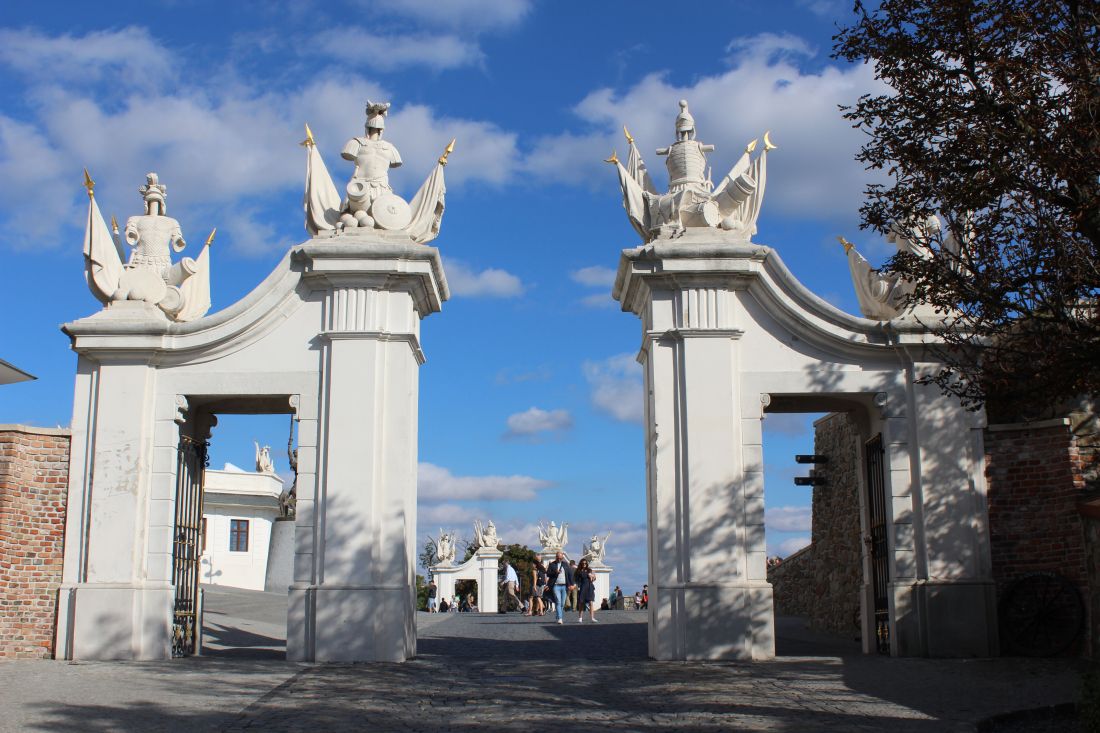
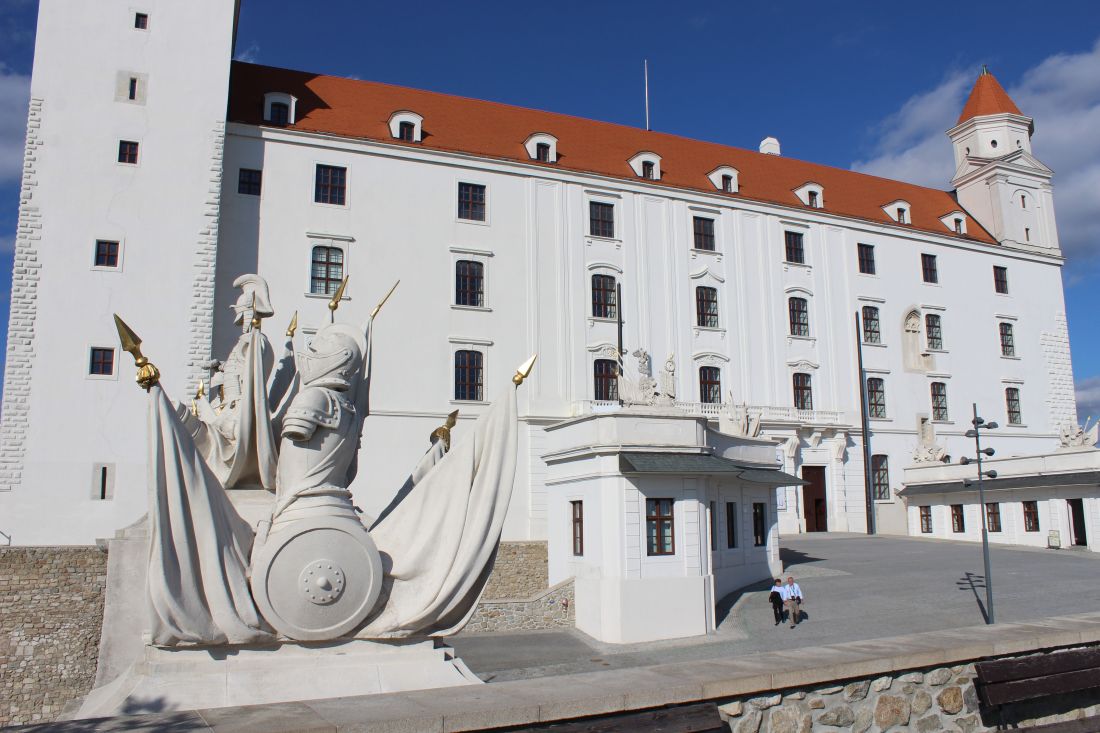
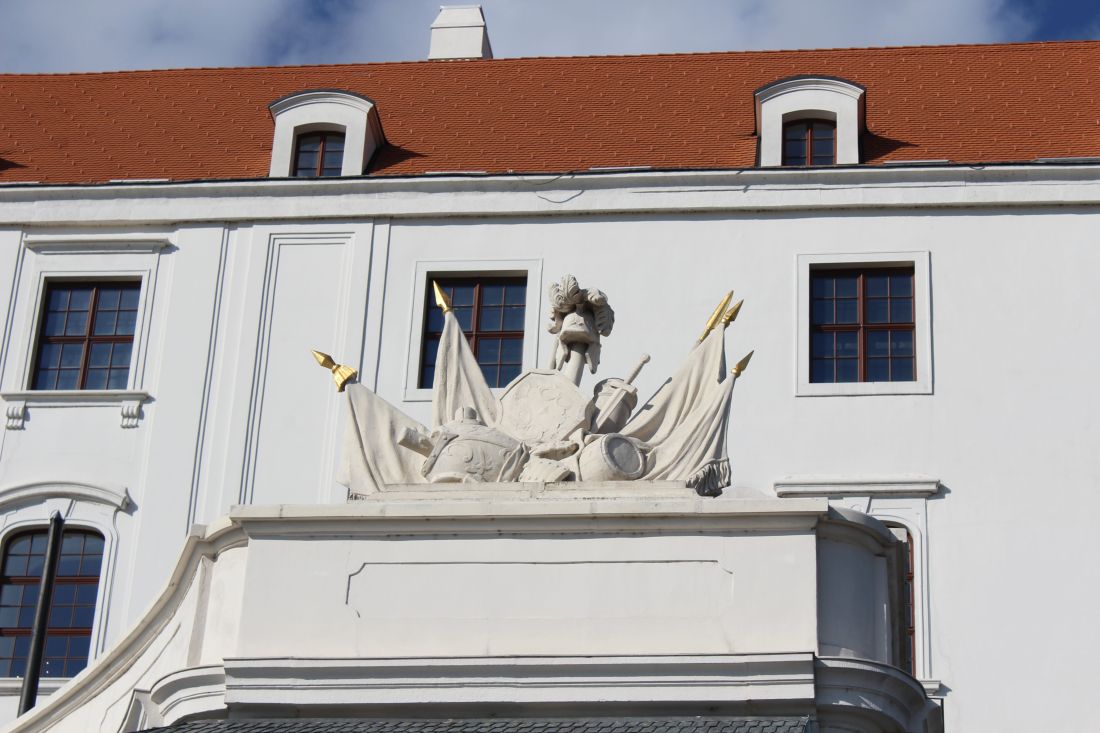
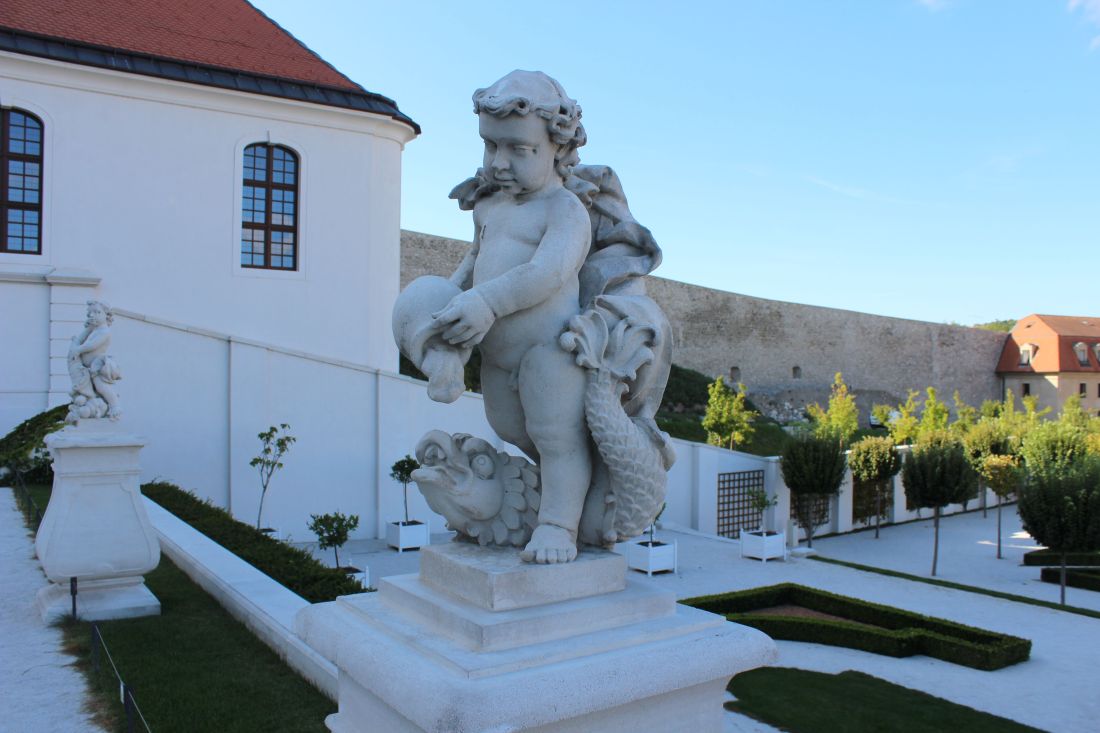
That being said the castle is really beautiful and worth the walk up the hill. Inside is a museum and will cost you some money to get in (we didn’t bother) but the outside grounds and garden are free.
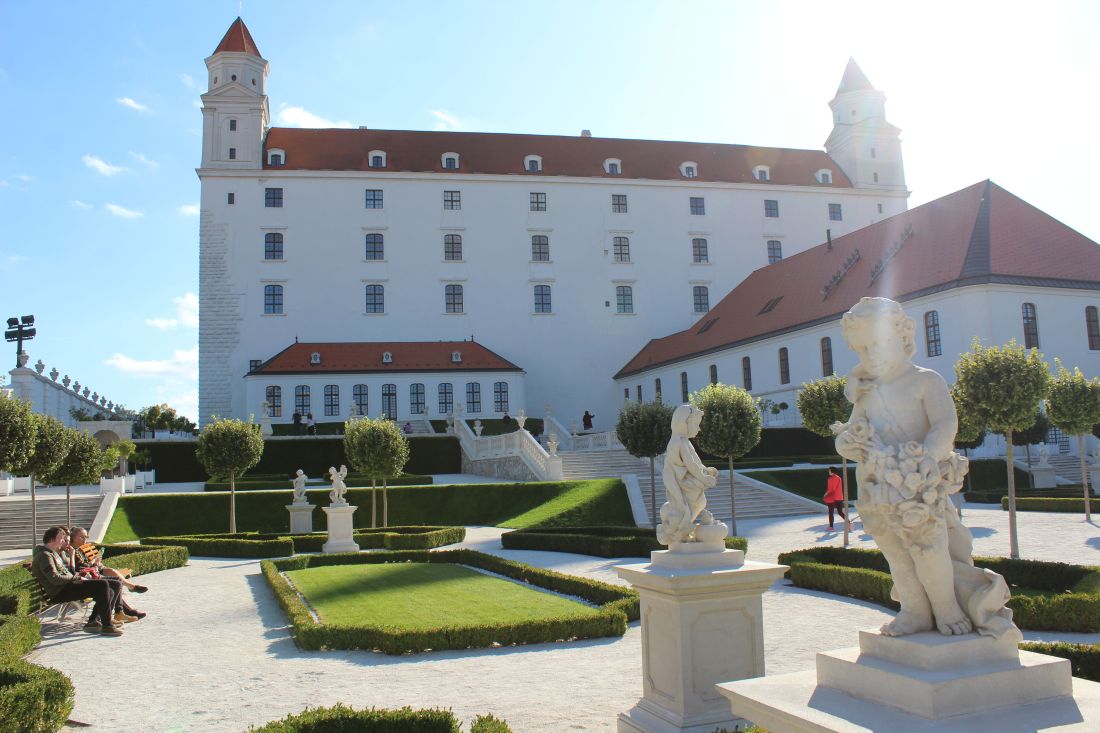
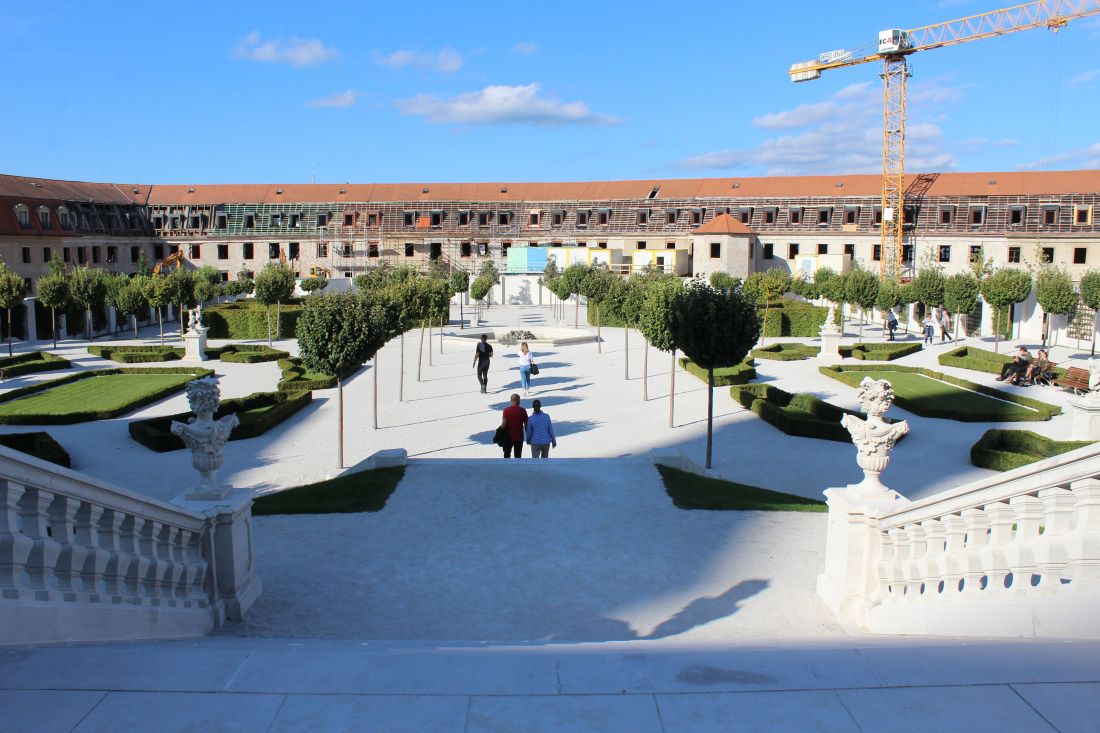
The back side of the garden was under construction so we couldn’t see what it was about but I believe this may be the amphitheater. The amphitheater was used in the 50s to show films but I couldn’t find anything on whether it is still used today.
And of course the best views of the city are from the hill.
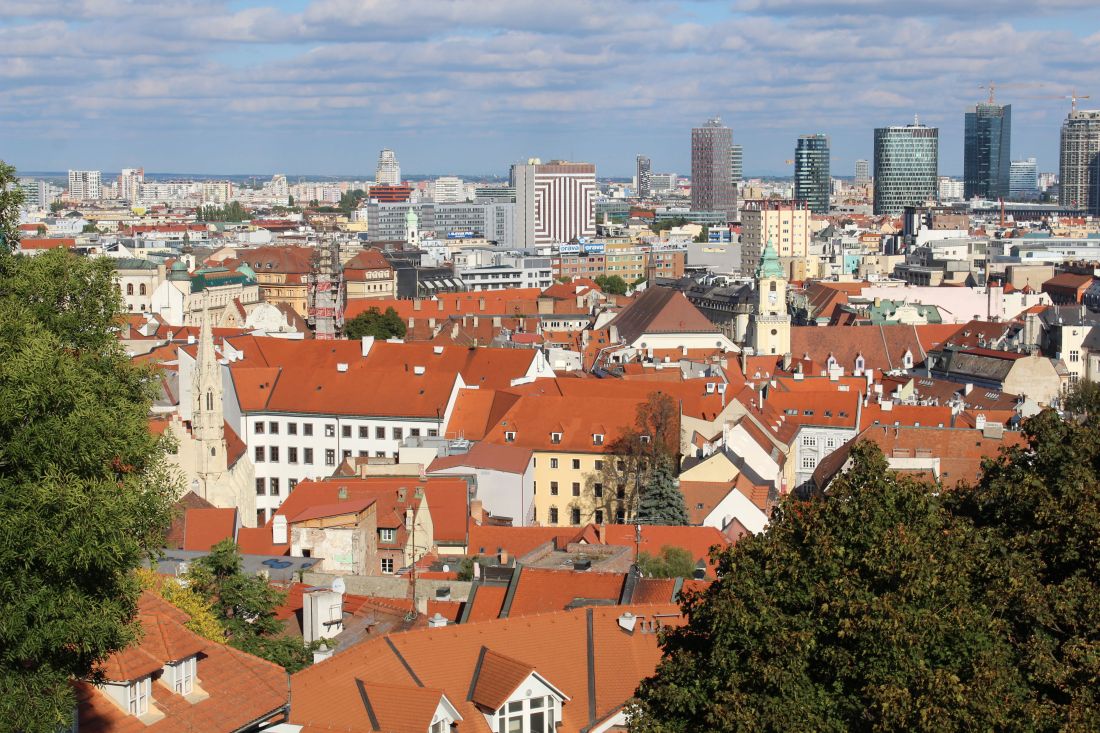
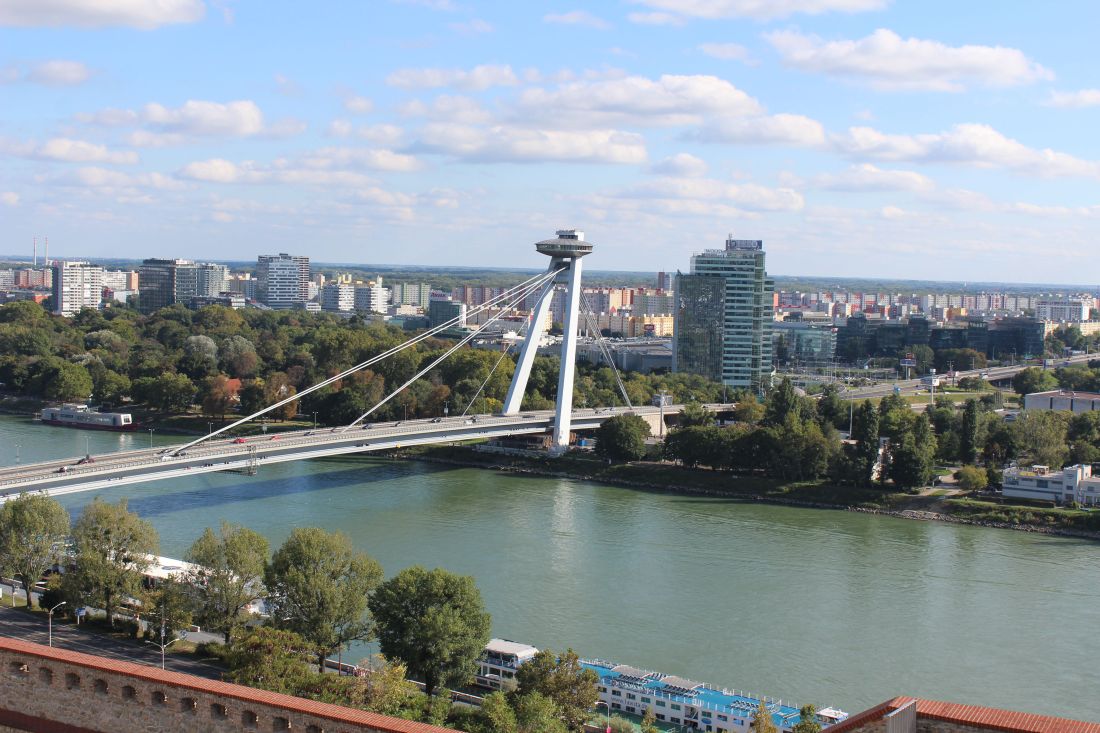
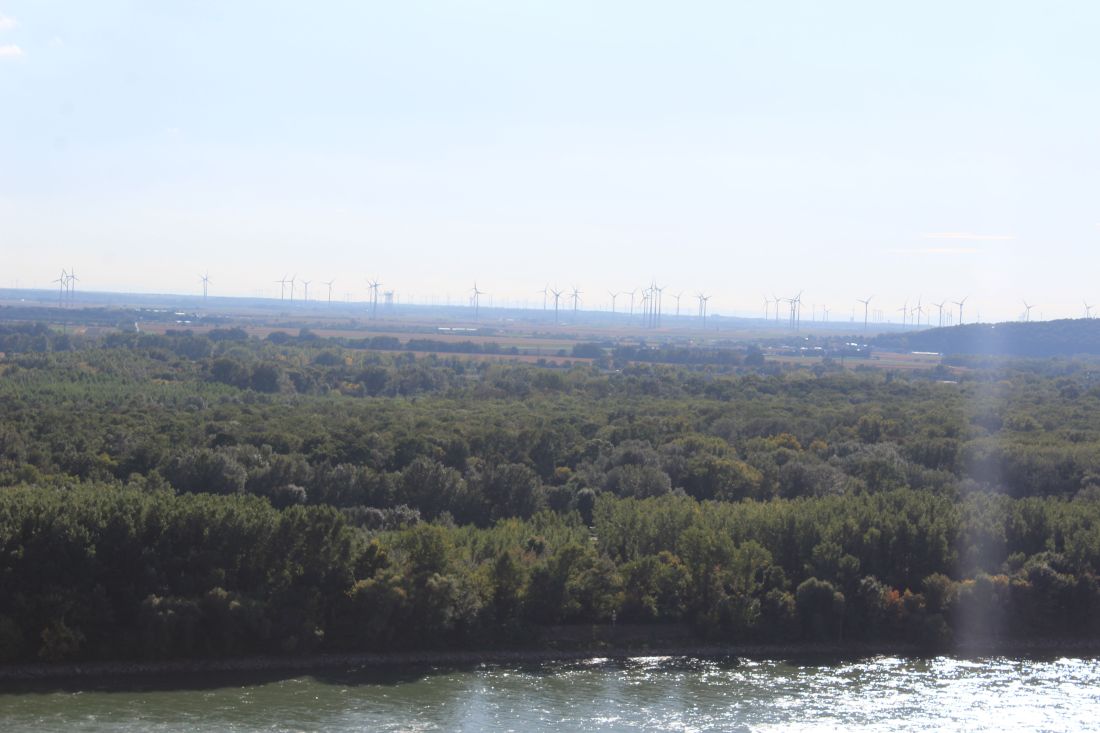
You can also see into Austria and Hungary from here as well.
Exploring Slovakia
Slovakia has quite a few nice places to visit outside of Bratislava but unfortunately for us Bratislava’s location in the far South West corner of the country makes it nearly impossible to explore the rest of the country without a car.
If you’re a castle buff there are more then a dozen to explore. We chose Bojnice Castle because it was relatively easy to get to by train, though it was a 3 hour journey each way making for a long day.
The train will drop you off in the center of Bojnice, pronounced “B’oh Niece”, but it’s only a 2 Euro and 10 minute taxi ride up to the castle. Just say you’re going to the castle, even if the driver doesn’t speak English he’ll understand where you want to go as there’s no other reason a tourist would come here. You can also do the 30 minute walk of course.
The outside of the castle is spectacular. Make sure to do the full walk around to see all the angles. This place is almost as awe striking as Karljsten castle in the Czech Republic but you can get way better pictures of it.
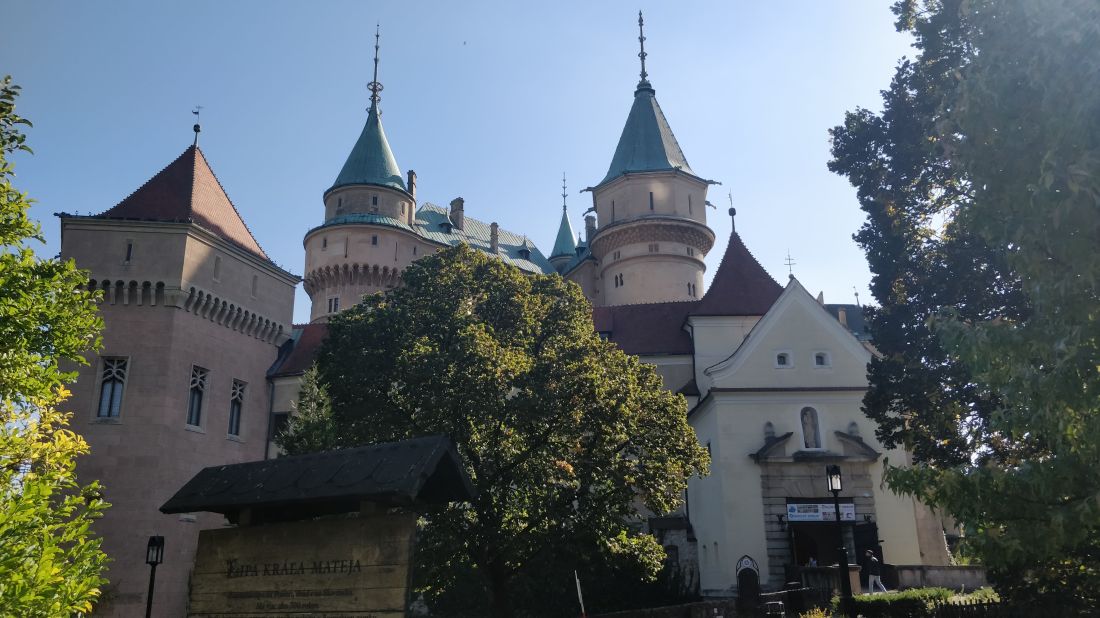
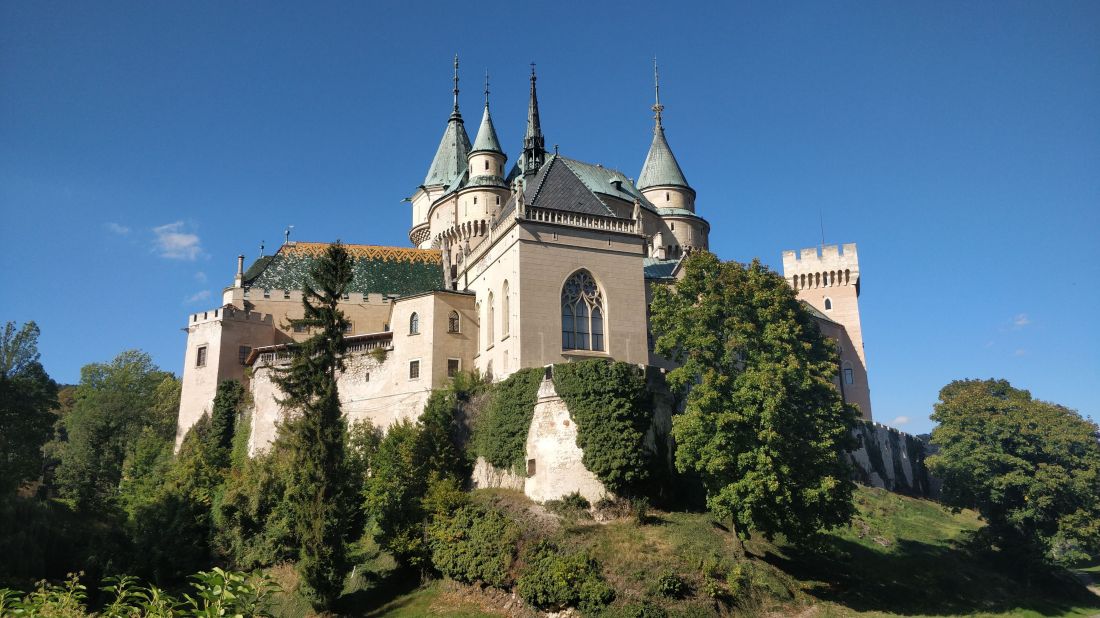
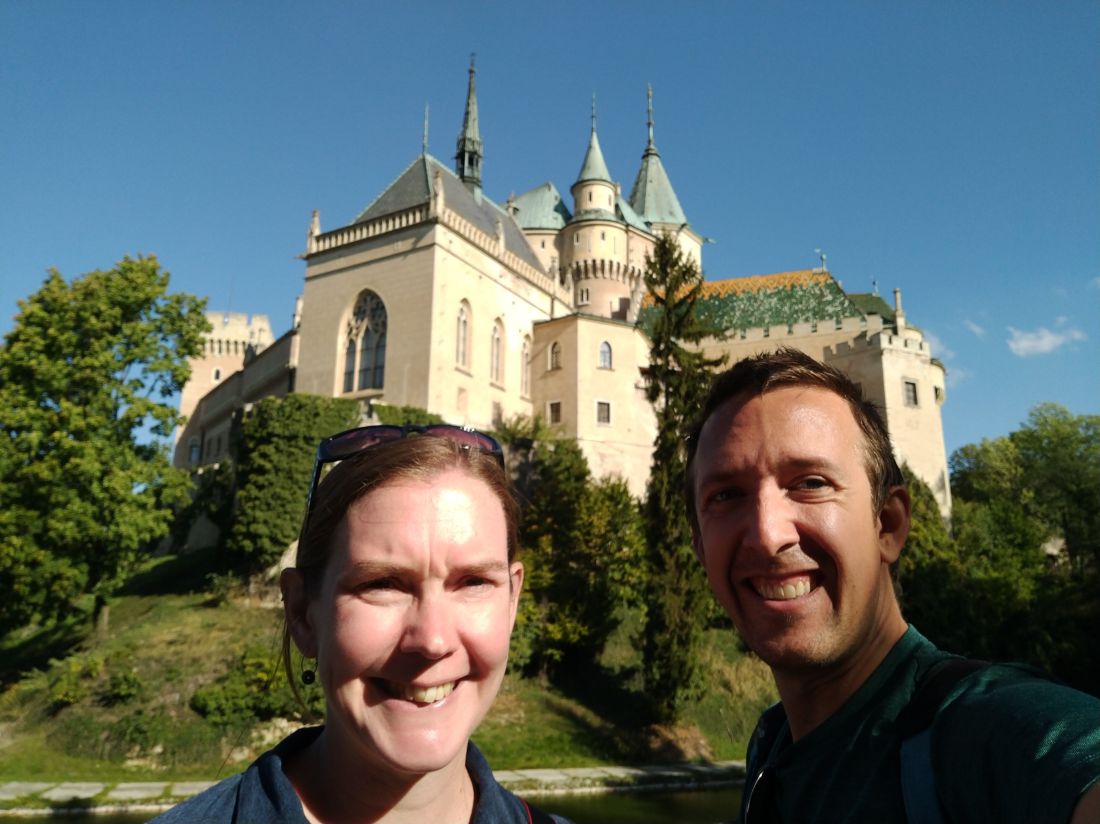
You can only enter the castle with a guided tour. In the summer months you may want to reserve ahead of time but in October there’s almost no chance the tours will be full. We arrived at 4 pm just in time for the last tour but in the off season they only offer 1 English tour at 11 am so we had to join the Slovakian tour and were given an English pamphlet to read.
The castle is mentioned in written records as far back as 1113 but its current look was achieved after massive renovations were done from 1888 to 1910 by its owner at the current time. It was confiscated by the Czechoslovakian government in 1945 and has been a government owned building ever since.
Heading inside you see it is as elaborately decorated inside as it appears to be from the outside.
This room was called the winter garden room.
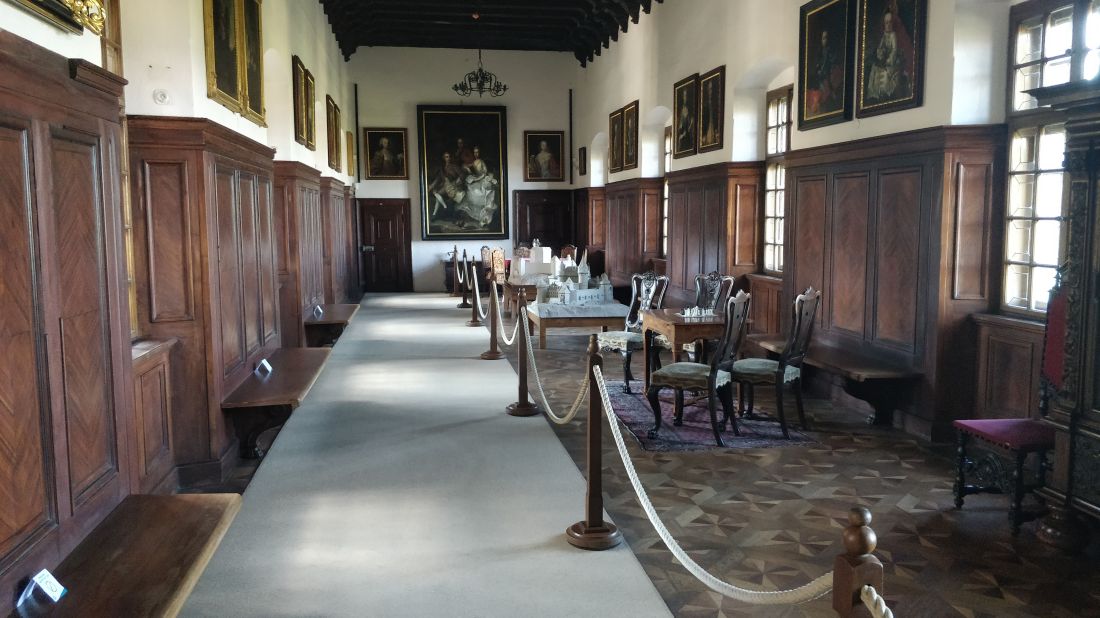
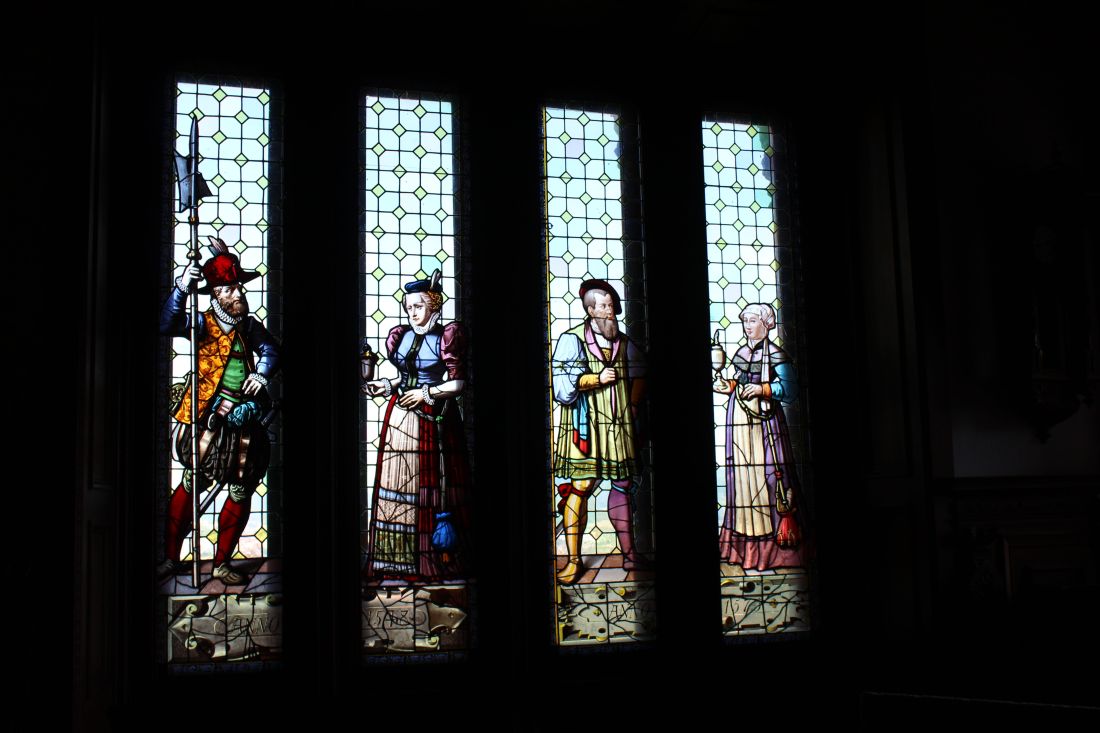
Some really impressive stained glass paintings.
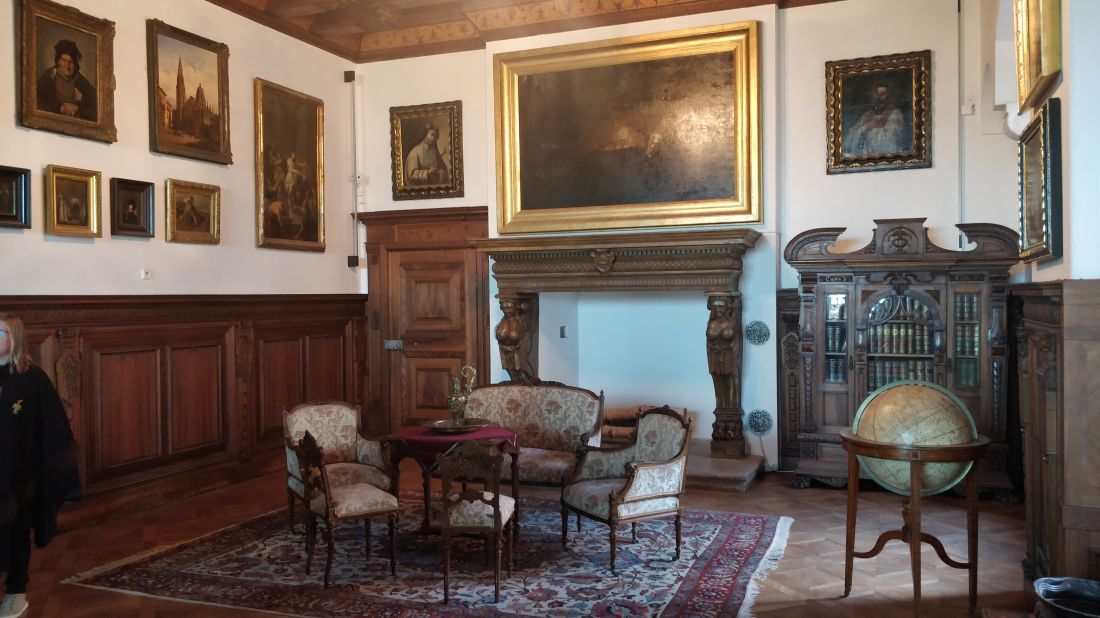
The study
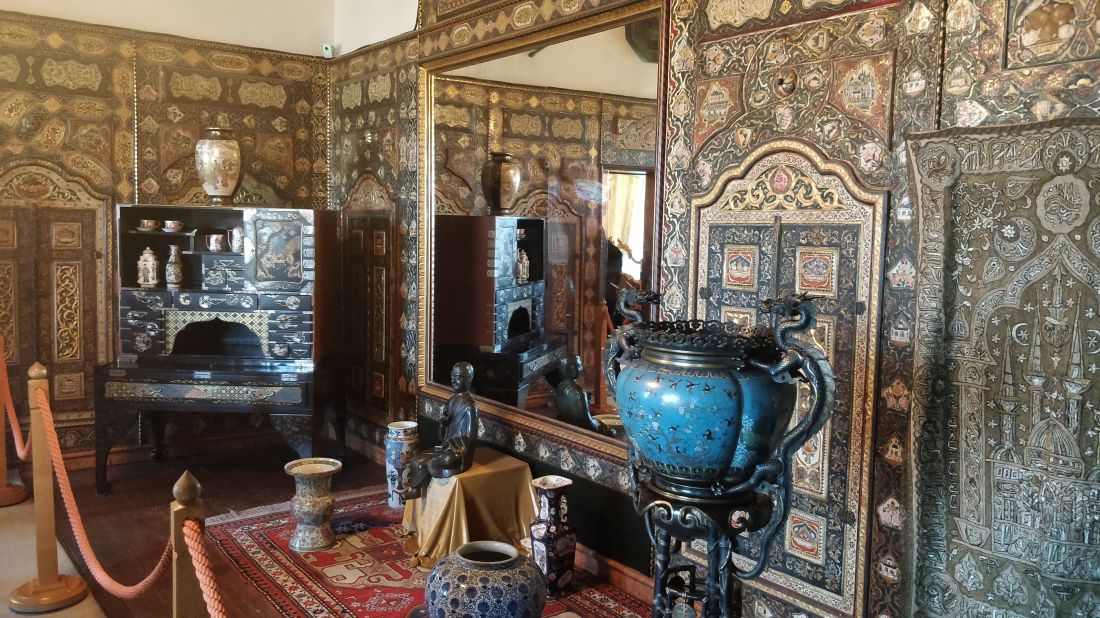
Art pieces collected from around the World
Not sure how comfortable these beds would be.
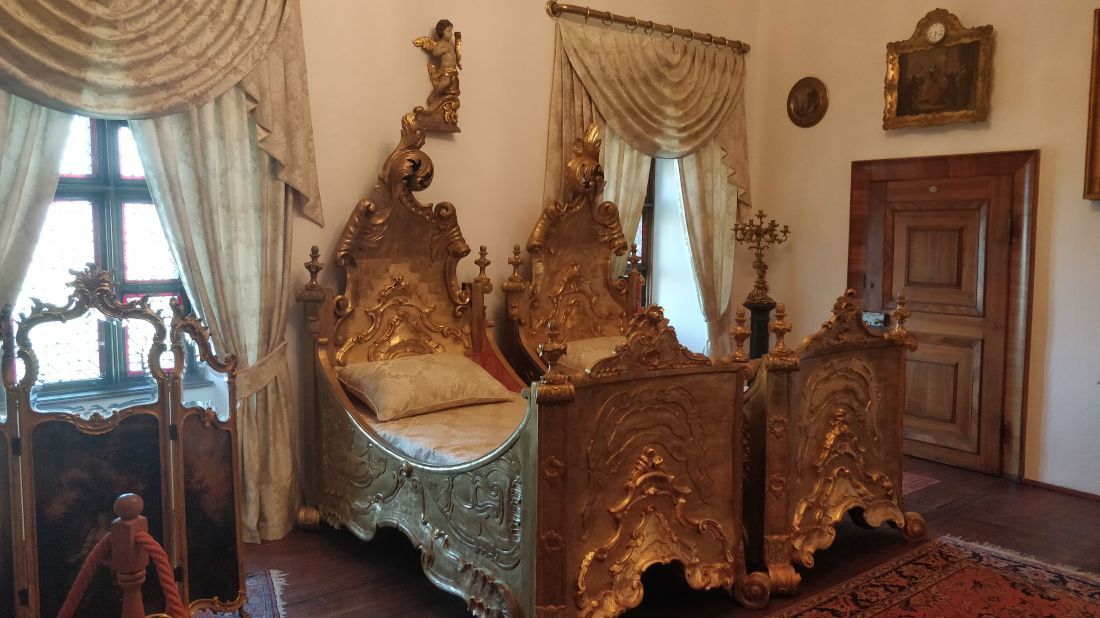
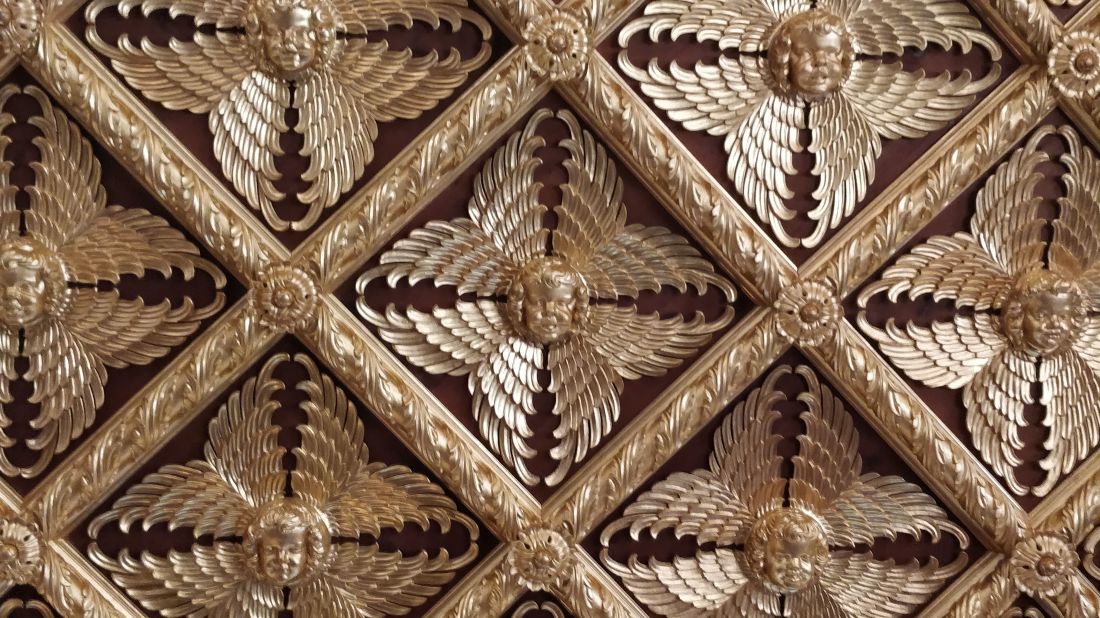
One of the rooms had these golden angel babies on the entire ceiling. It was really cool and really creepy all at the same time.
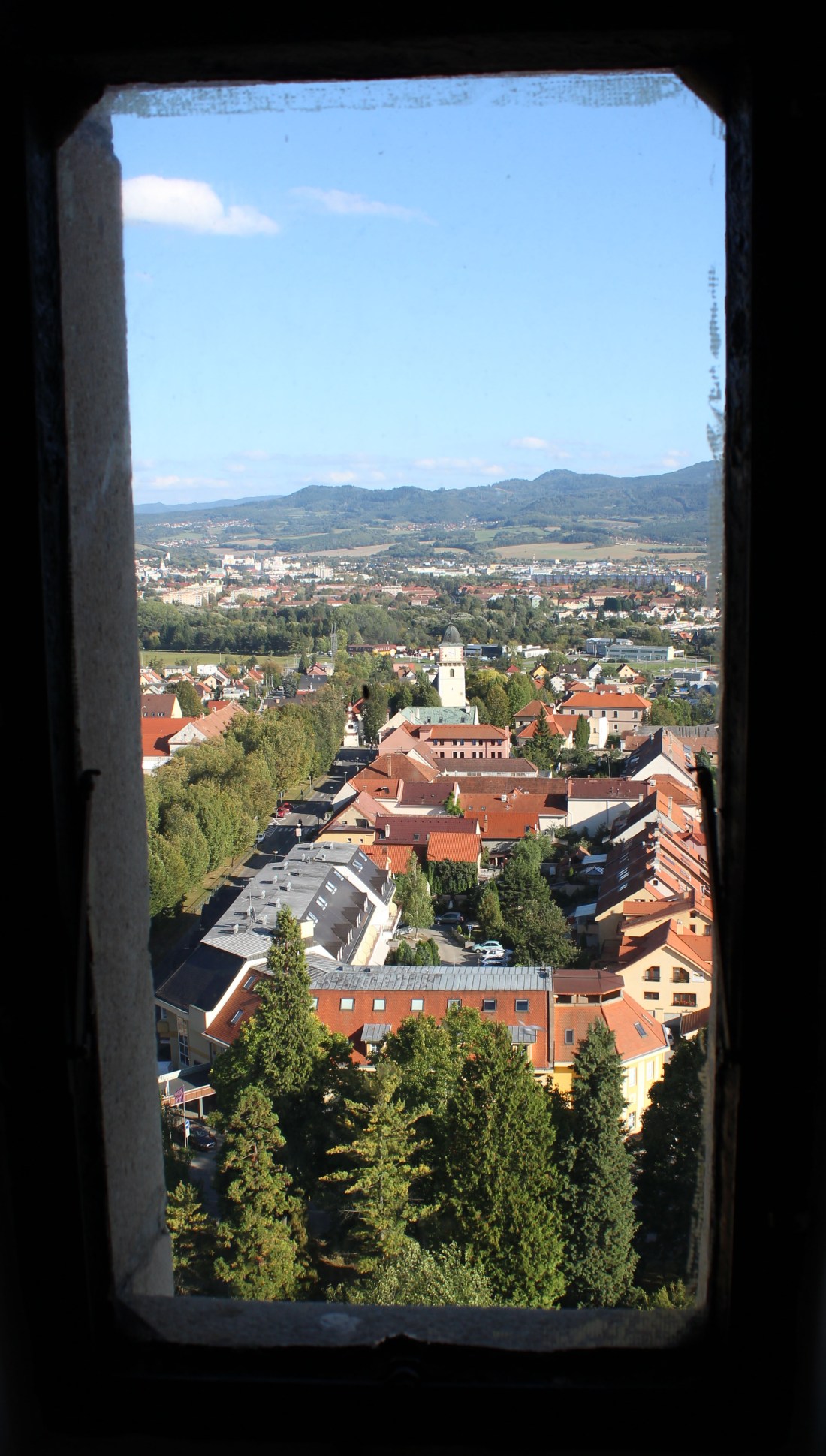
The view outside one of the windows in the upper levels.
Moving into an inner courtyard you enter a part of the castle that looks much older.
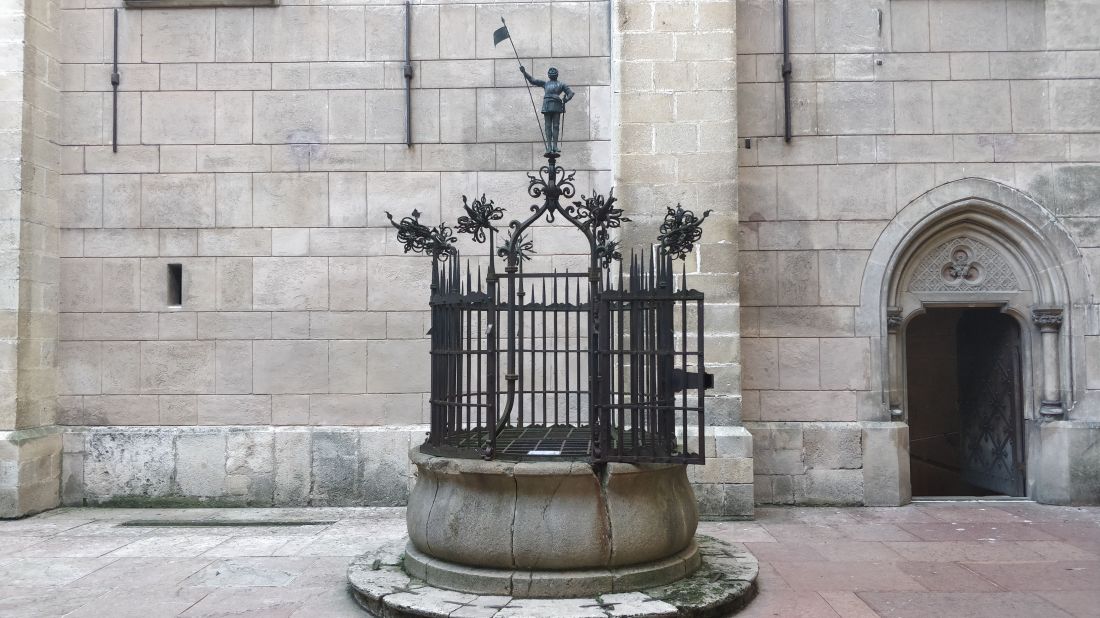
Whether it was only built to look old or really was old I don’t know but this was my favourite part of the castle.
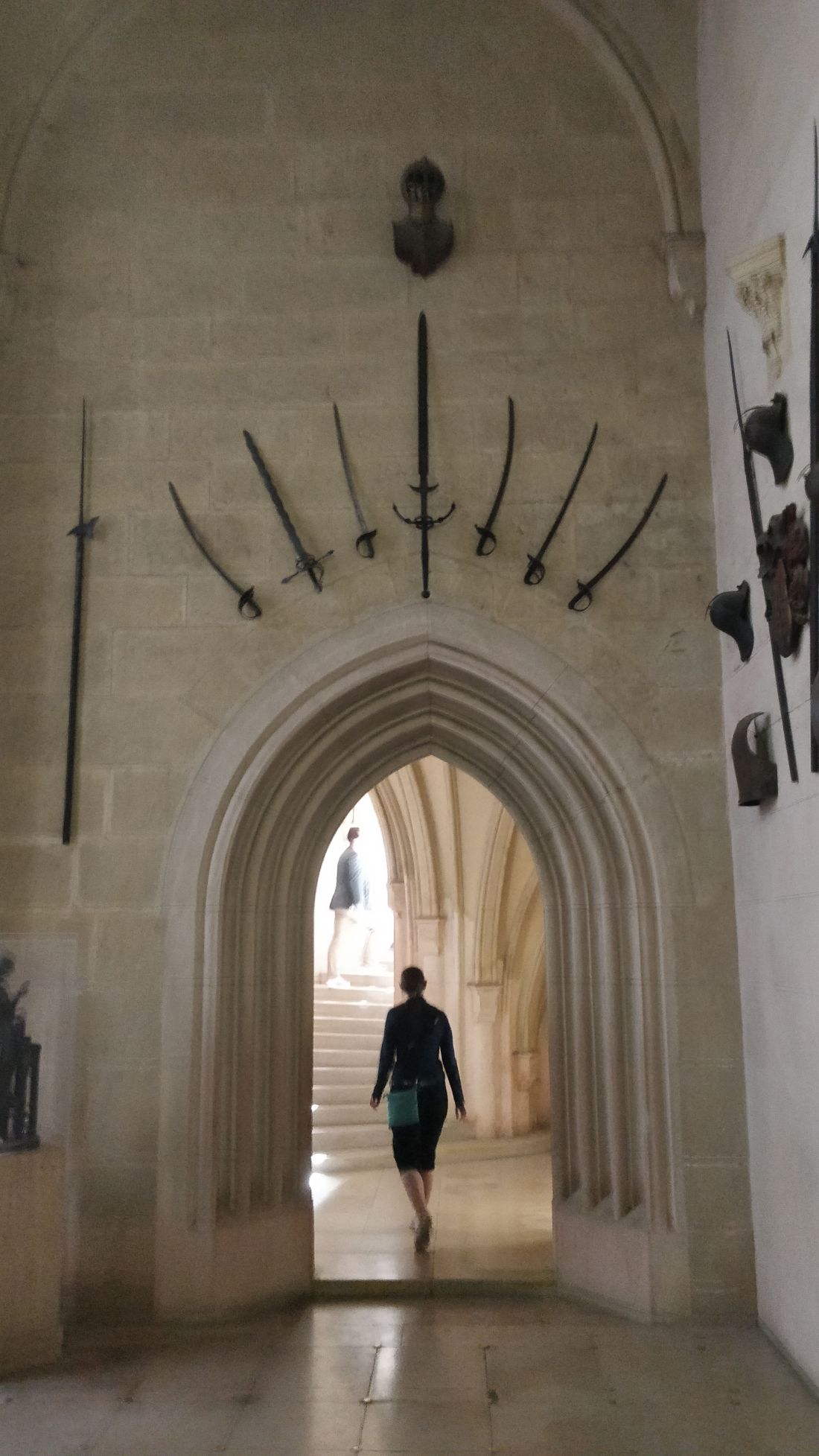
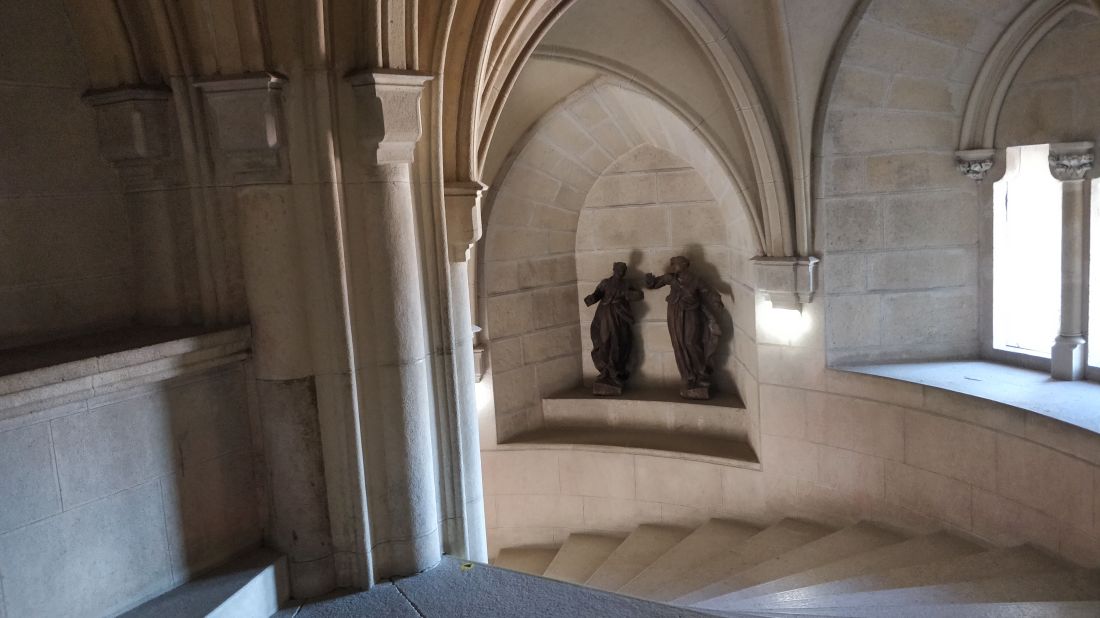
I loved these stairs
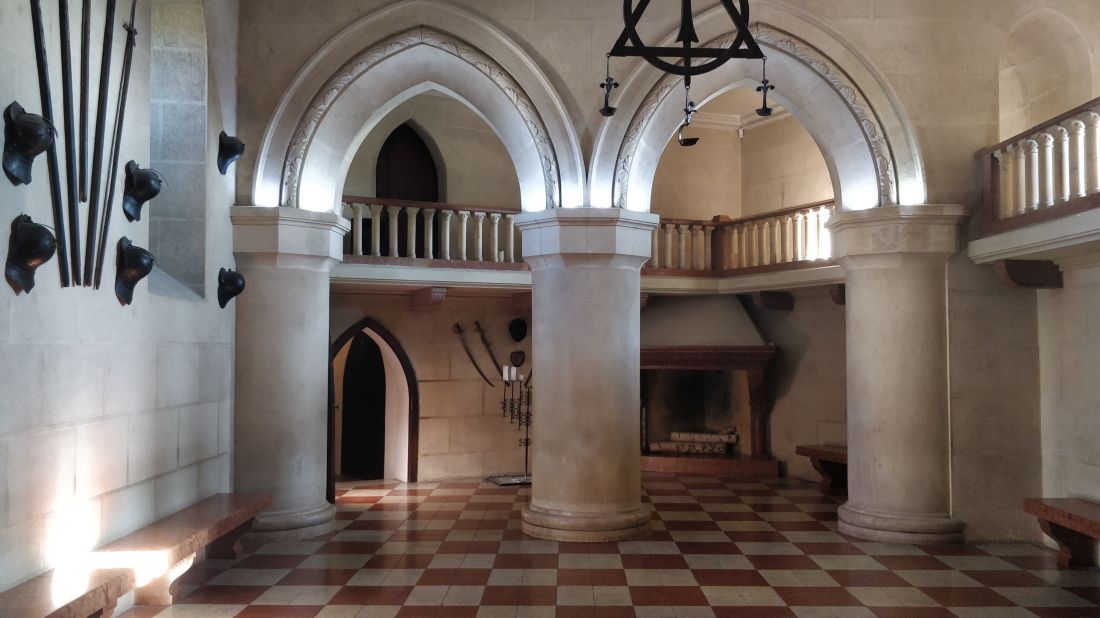
and I really really loved this room with its checkerboard floor.
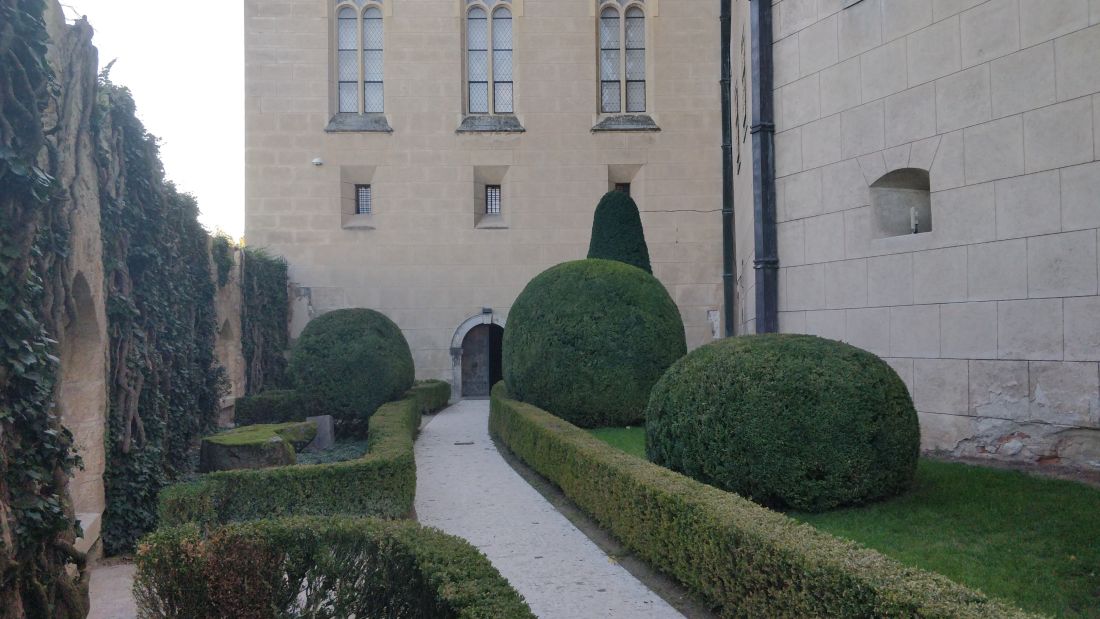
You’ll take a short walk through one of the outdoor gardens near the end of the tour
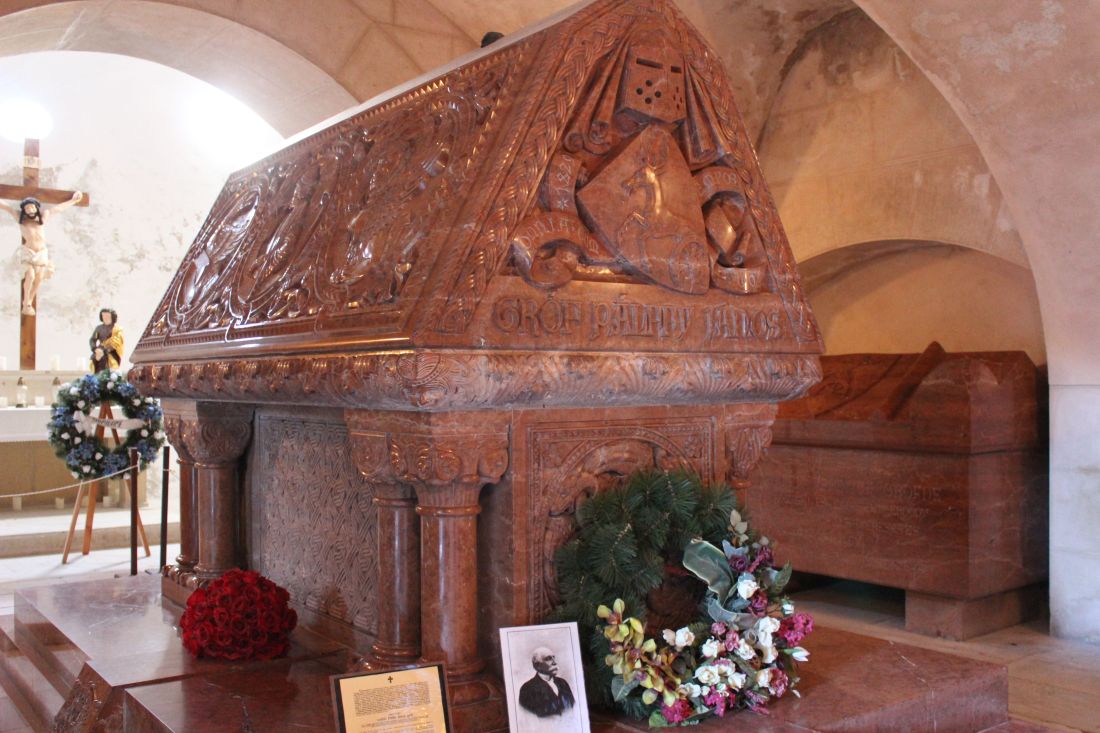
before descending down into the basement where the crypt is.
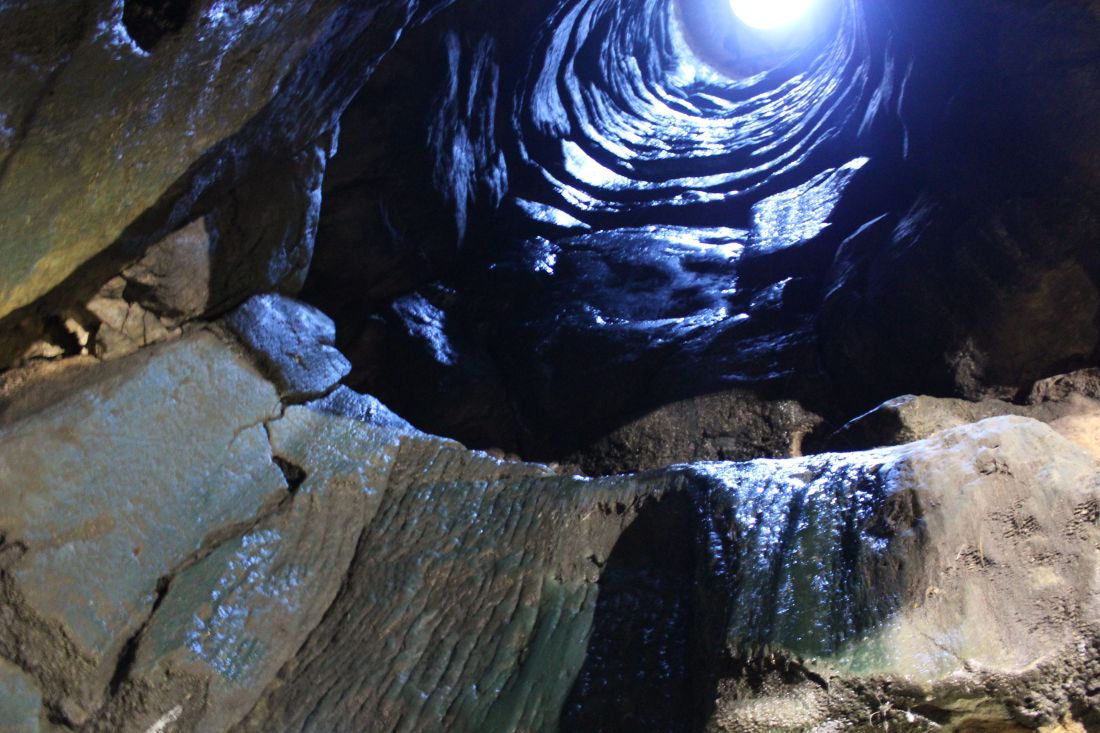
You head even further down to the bottom of the well to explore the underground cave where the castle got its fresh water.
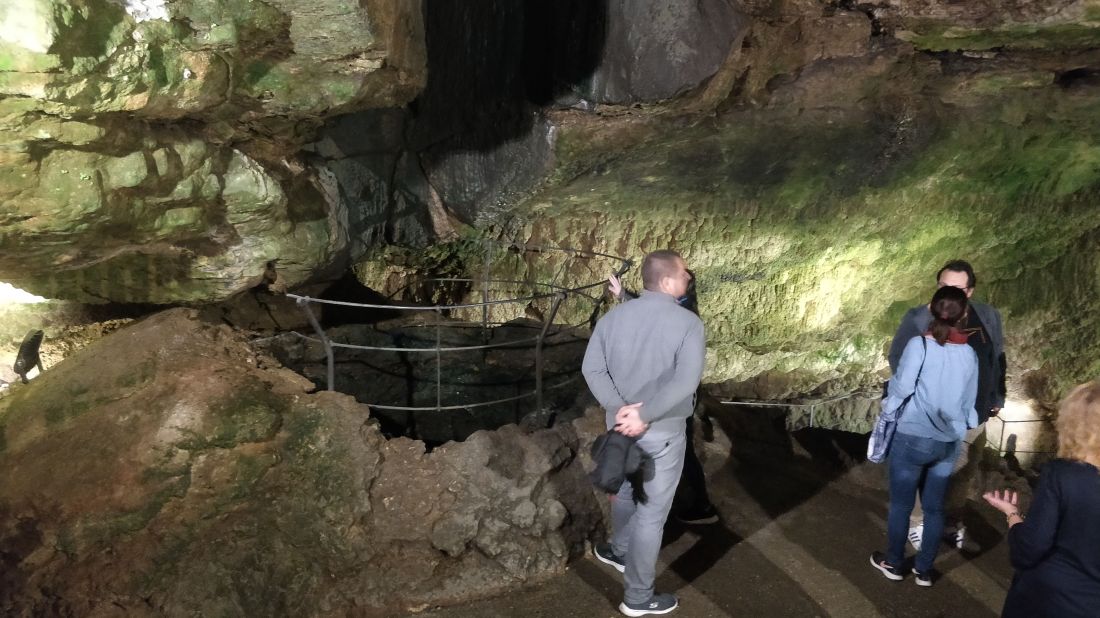
This is a perspective you don’t get to experience often – Looking up the well.
Slovakia was another one of those little known countries that really delivered. I think to maximize a trip here you should plan for 10 days and rent a car to explore more of the countryside and smaller towns then we did. A lot of the castles I found on Google looked really cool and I’m pretty sad we were only able to visit one of them.
One thing I didn’t mention yet is that during one of our days in Bratislava we took the bus out to Vienna for a day trip, I’ll be writing up that short excursion next, and once we were done visiting Slovakia we had Budapest has our next destination.
 A Romping European Time
Thank you for sharing your exciting journey!
LikeLike
Wonderful pictures..Thank you for taking me on your journey. SAFE TRAVELS.
LikeLike