After a down week relaxing in Montenegro we were now heading off to our next stop. Candice’s Mom, Joan, had been itching to join us on our trip in Europe and Romania and Bulgaria were the countries we decided on.
Looking on a map it seems like it would be straightforward, if a bit long, to get from Podgorica to Bucharest over land.
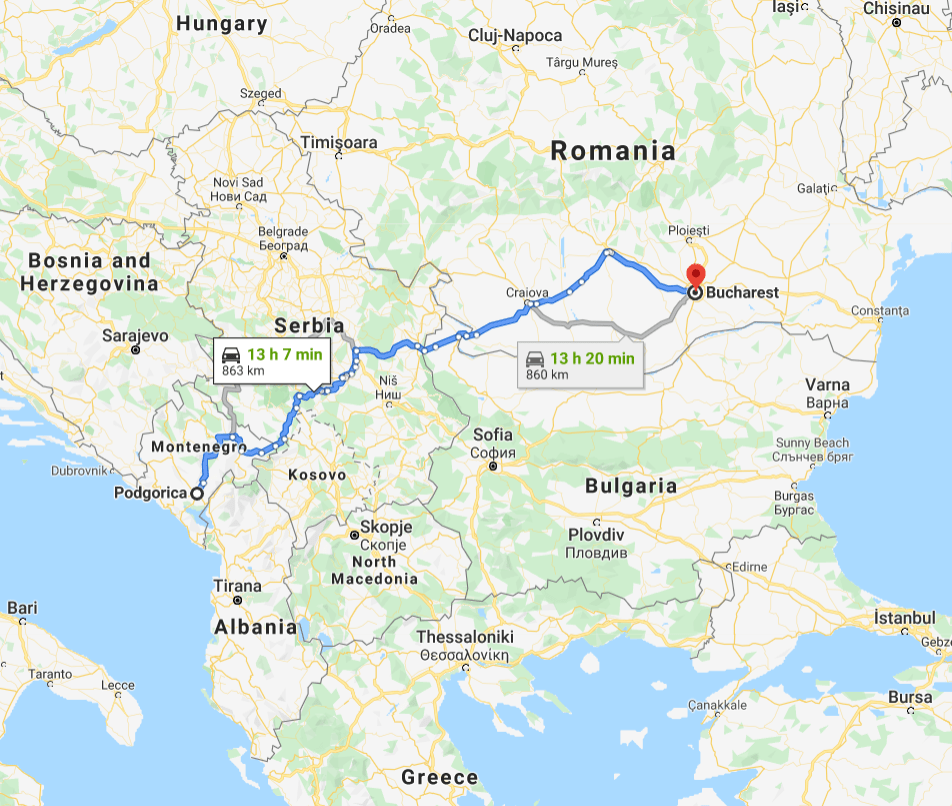
But in reality it was a real pain in the butt. The only option I could find was to take a bus from Podgorica to Belgrade in Serbia, then get a private van transfer to Timisoara in the far north-west of Romania, and finally take a train to Bucharest. Total travel time was over 37 hours and it would cost almost $100 CAD for each of us.
That didn’t seem very appealing so we instead took a flight which cost about $150 CAD each, well worth the extra price.
We picked up Joan at the Bucharest airport and understandably she was a bit jet lagged after the long flight from Canada.
Talking with people it seems like Romania does not have a good rap. People often asked us why we would want to go there and they would say it’s poor, dirty, and not very nice.
I suppose I can understand where people are coming from when looking at Romania’s history but after visiting for 10 days I can wholeheartedly say I disagree with those people. We had a lovely time in Romania and it’s a place I definitely want to go back and see more of.
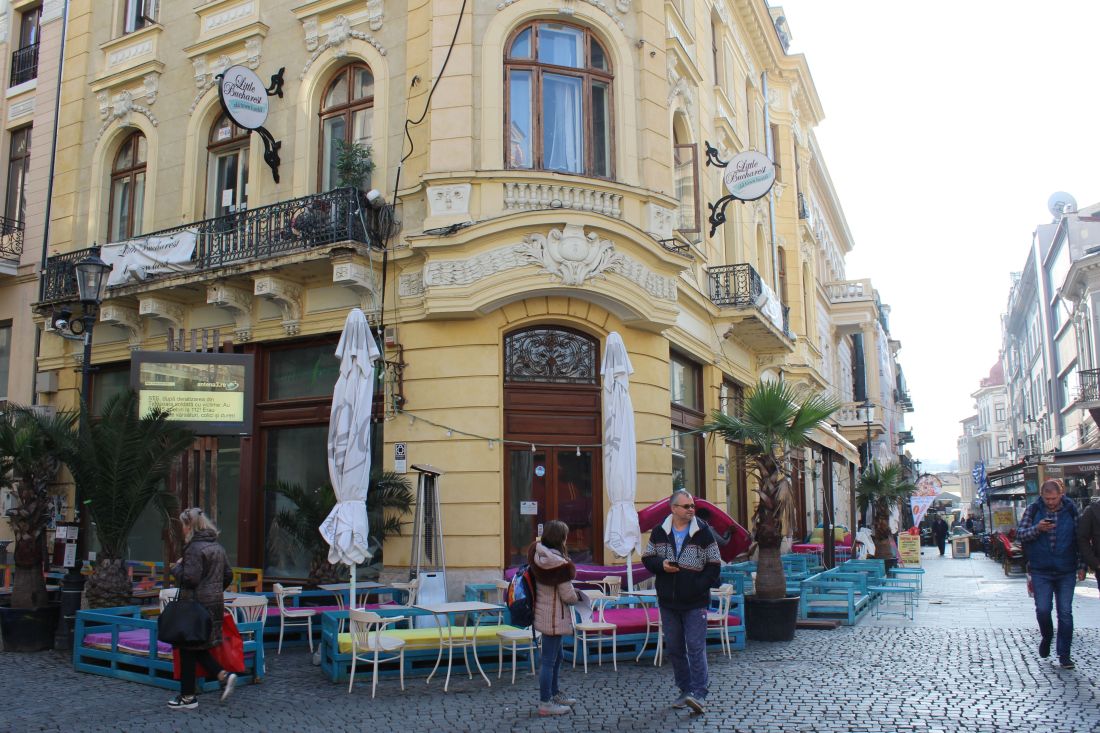
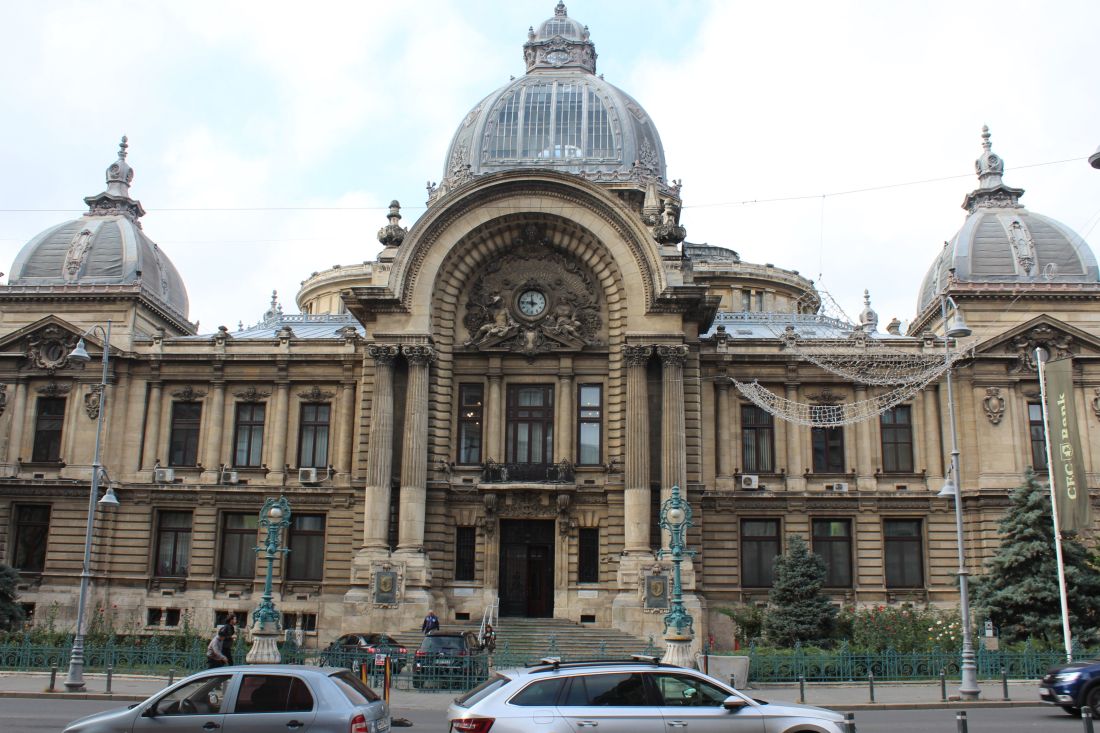
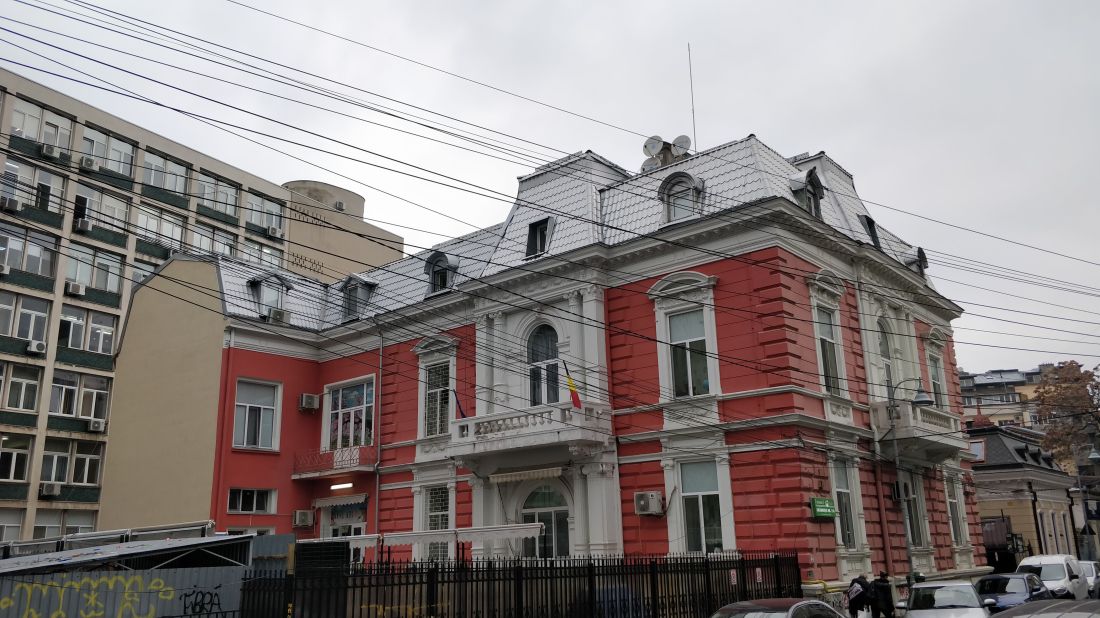
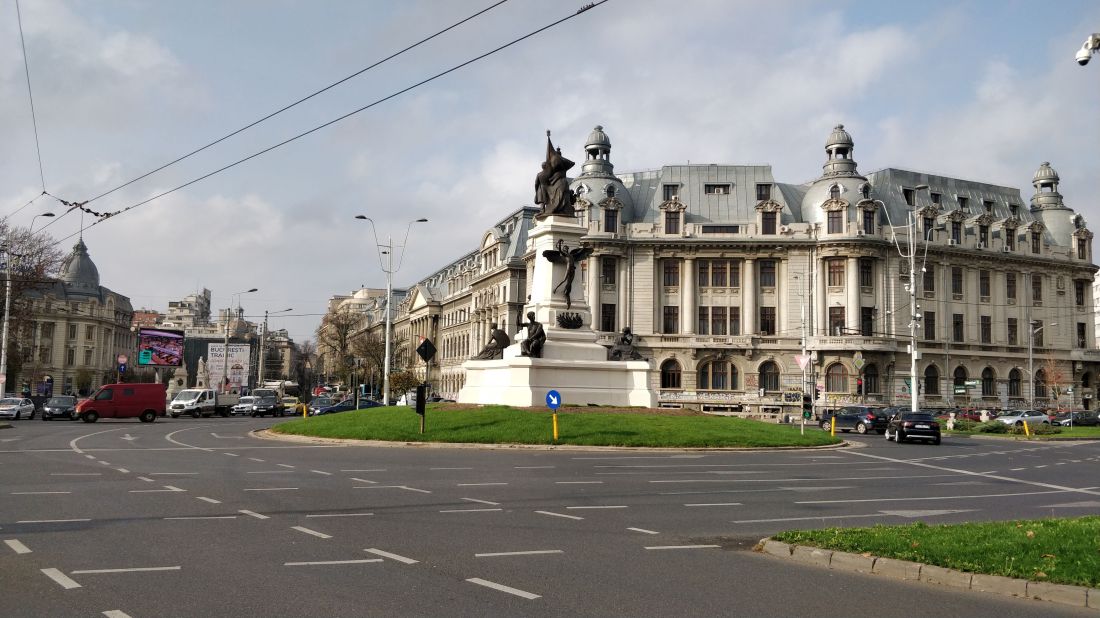
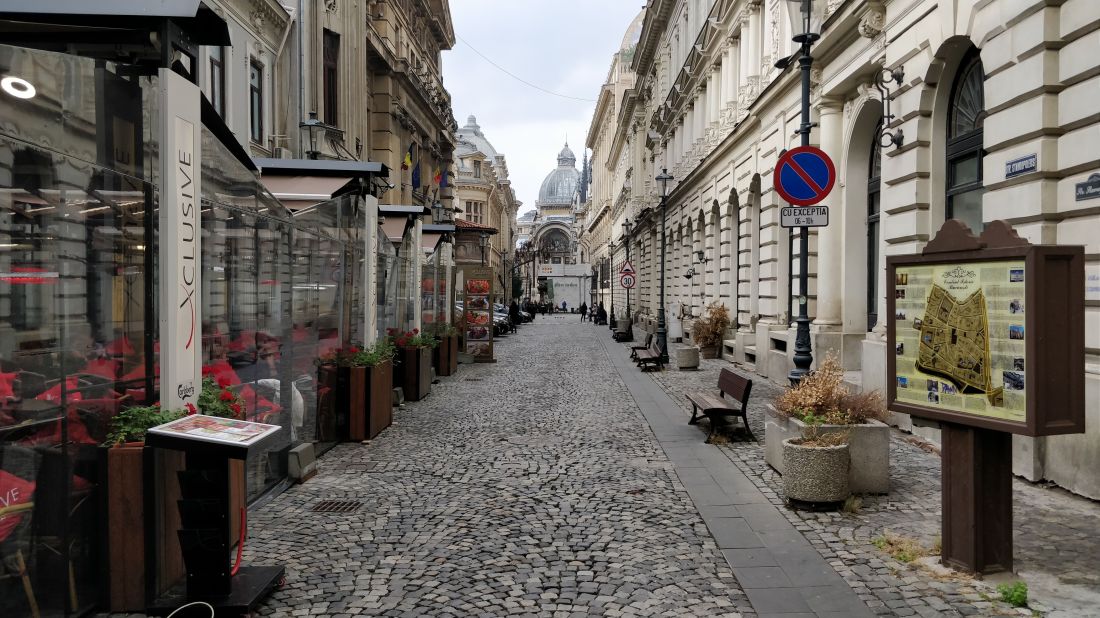
In the 1800s people living in Bucharest had a fascination with Western European culture, especially, French culture. Large 4-5 story buildings reminiscent of Paris still remain in the center of the city and although they haven’t been well maintained I found it extremely fascinating. Apparently at one point Bucharest was nicknamed Little Paris of the East.
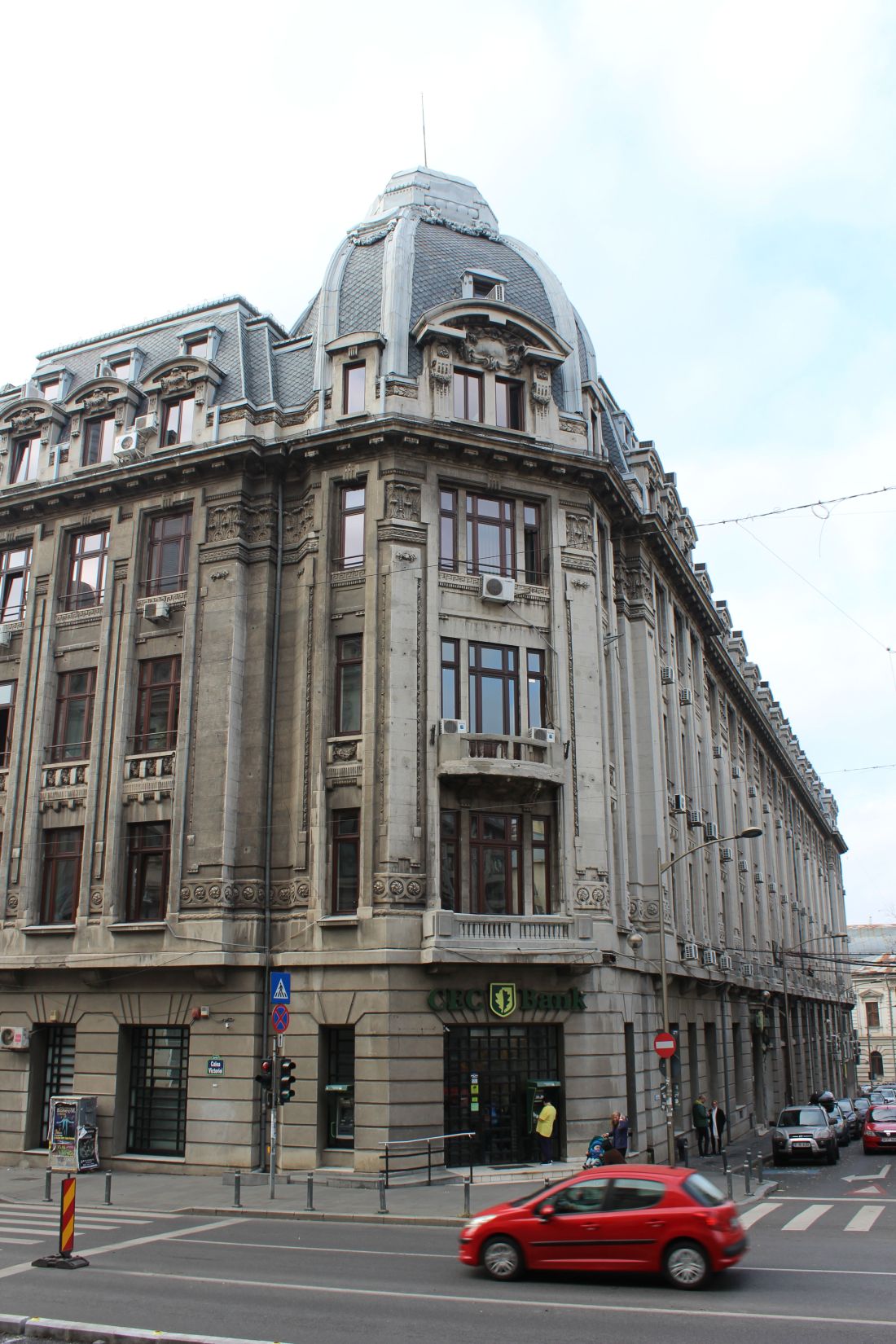
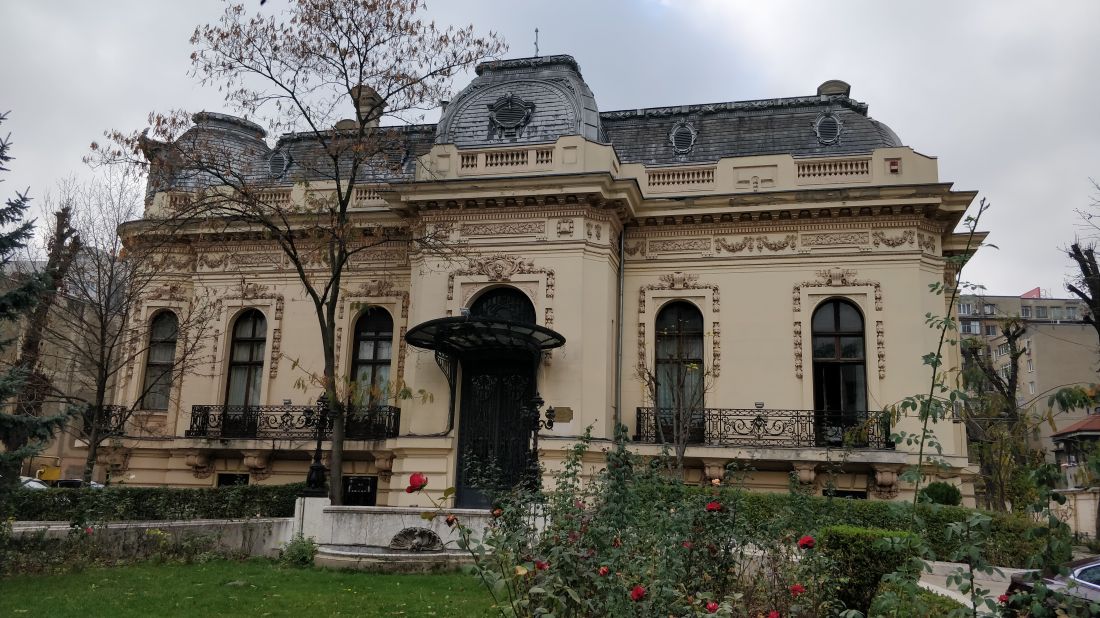
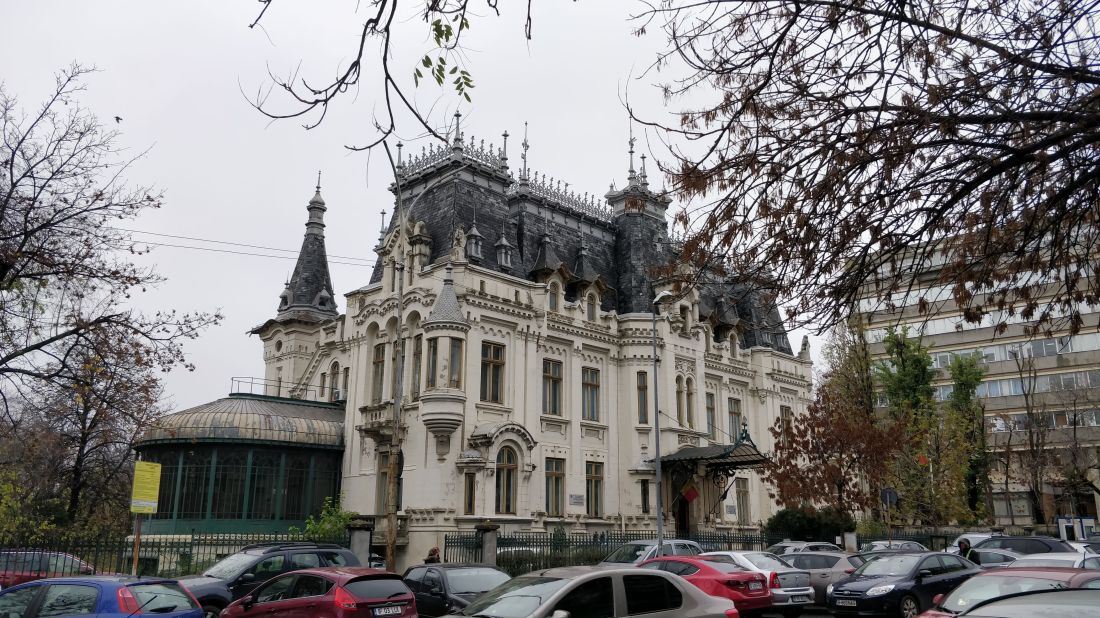
This has to be one of the craziest buildings I’ve ever seen and it simply screams 1800s haunted mansion doesn’t it?
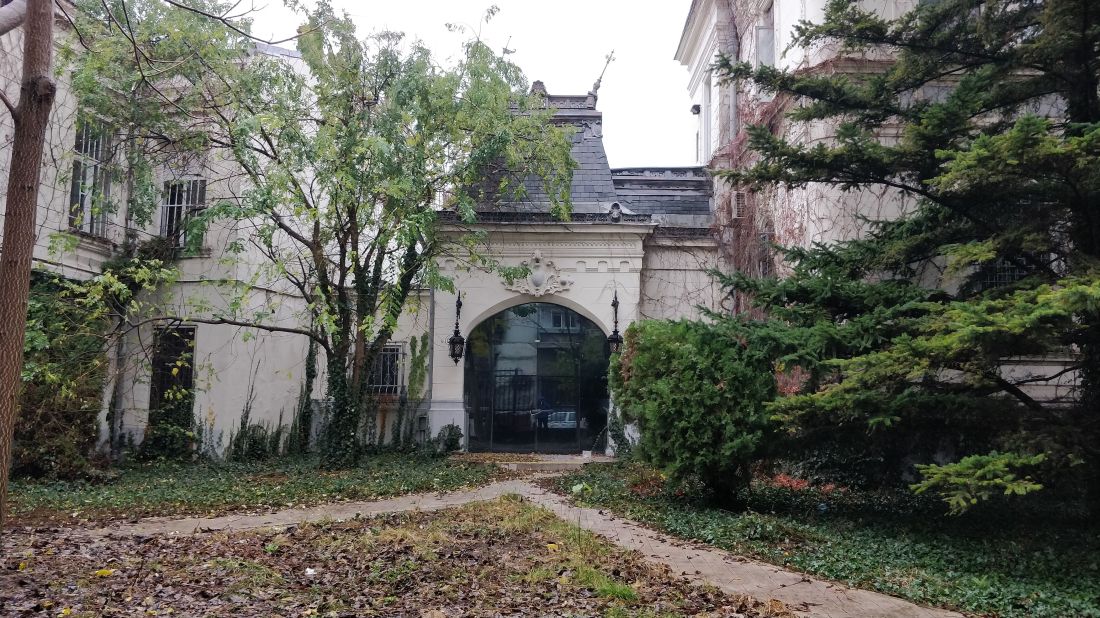
And there is no way I’d step foot in this yard after dark.
One thing that really surprised me, although if I knew anything about Romania it shouldn’t have surprised me at all, is that Romanian is a romance language and extremely close to Italian.
All of south east Europe was controlled by the Romans at one point and so Latin became the official language of Romania but unlike every other Balkan country Romania managed to hold onto its language. Other countries like Bulgaria, Serbia, and Croatia saw an influx of Slavic people moving from the north and their language replaced the local Latin languages during the middle ages.
Additionally, Romania was surrounded by Slavic speaking nations and the language was being infiltrated by Slavic words as time went on. In the late 1800s the Romanian government decided to “re-romanticize” the language and they put French, Spanish, and Italian words directly into the language. It was really surprising how many French words you could find and informal way of saying Thank You was Mersi, almost exactly the same as the French Merci.
We booked 4 days in Bucharest to give Joan some time to get over her jet lag and so that we weren’t rushed trying to squeeze everything in a short time. I think Bucharest would be an interesting (if chaotic) place to live but from a tourist perspective I think 2 days is plenty.
One of the big issues with the city is that the traffic is horrendous making above ground transportation very painful. We sat on a bus one day for over 2 hours when the drive should take about 30 minutes without traffic and there wasn’t even an accident, it was simply normal congestion. Bucharest does have an underground metro system but it doesn’t reach many parts of the city.
Oh and don’t get me started on the parking, cars were on sidewalks, parked in intersections, and every crosswalk had a car in it. Do not attempt to drive a car to downtown Bucharest, you’ve been warned.
Eating Our Way Through Bucharest
For our first activity we signed up for a walking food tour. We saw a YouTube video of a couple who went on this same tour and it looked so amazing that we had to sign up. It wasn’t cheap at 50€ per person but we ate a ton of food and our guide was so much fun. The tours are kept to a small size but since it was the off season we ended up being the only people on the tour.
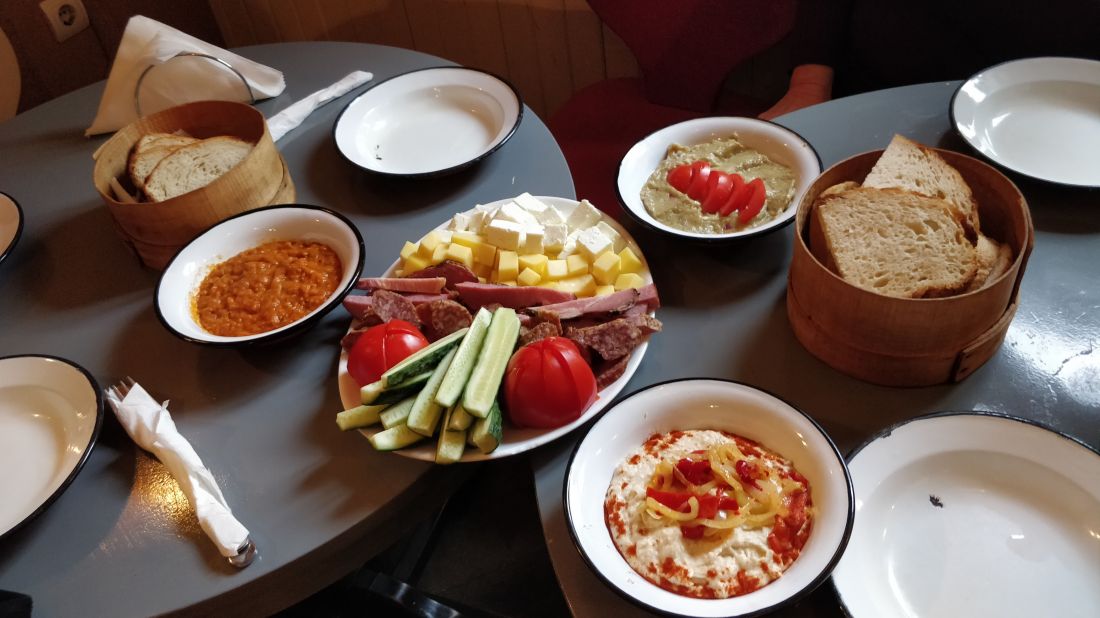
The hardest part of food tours is remembering to take a picture of the food before you’ve scarfed it all down. Our first stop was a large assortment of Romanian meats, cheese, dips, and bread to sample. Eggplant is a big thing in this part of the World and I think the eggplant dip was my favourite.
The great part of this tour is we got a few freebie stops that weren’t food related. After the first stop you always eat so much food that our guide takes the time to show us 2 stops along the way to give you time to disgust for the 2nd stop.
One was the house of a famous person open to the public. It was very beautiful inside and super interesting to see how these crazy mansions look on the inside.
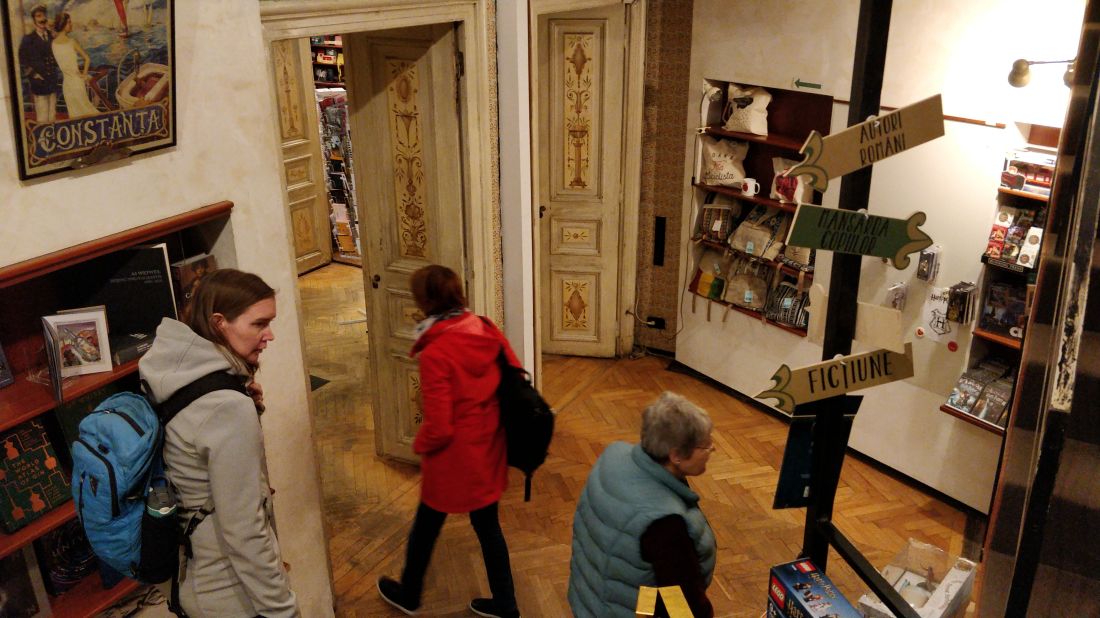
The 2nd stop was this huge Victorian house converted into a bookstore. We had roughly 20 minutes inside each place and the bookstore was super cool allowing you to wander through every room of this crazy old house.
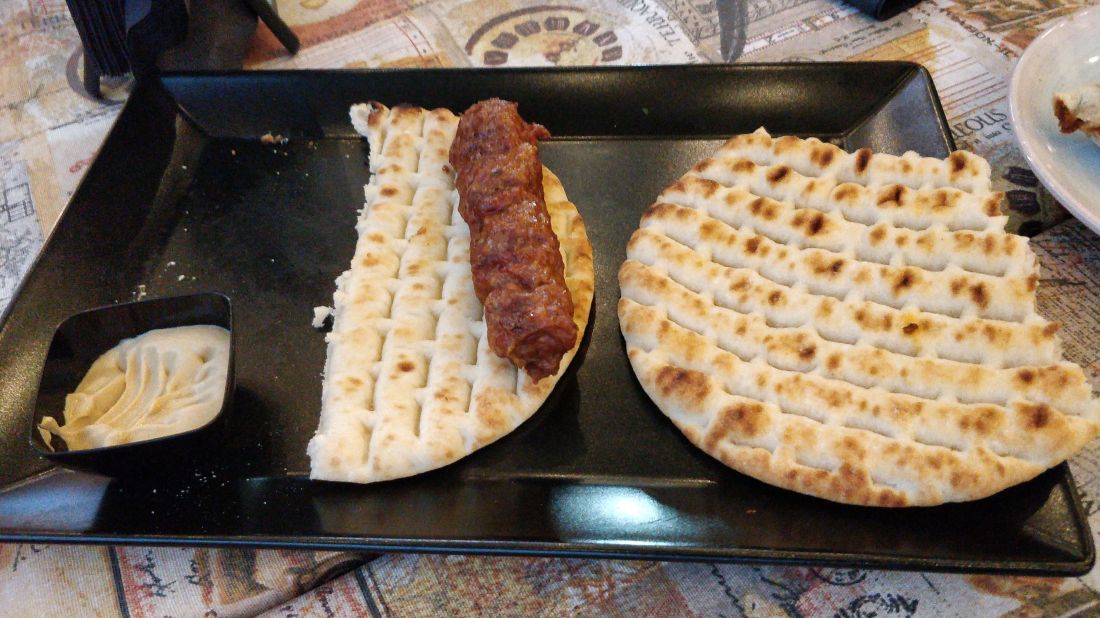
At our 2nd food stop I almost forgot to get a picture before eating it all. It was some super flavourful grilled sausage on a flat bread.
This was one of the most relaxed food tours I’ve ever done. We started at Noon and by the 3rd stop you can see it was already getting dark outside. Our guide was very sociable, easy to talk with, and we sat at each stop just chatting like we were old friends.
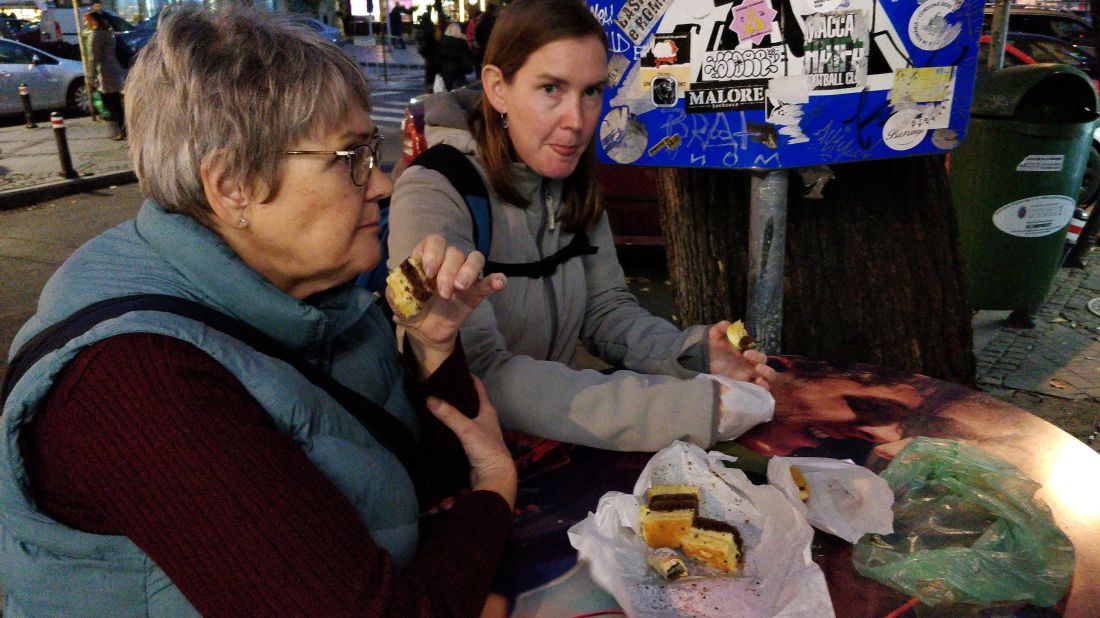
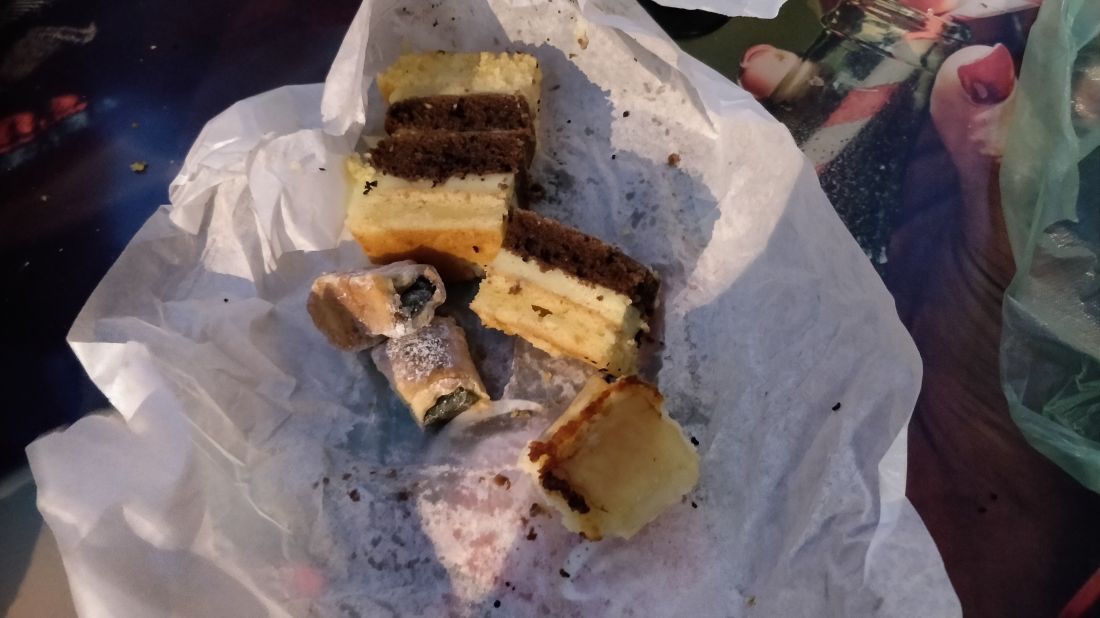
We stopped at a local bakery and were able to pick out a few local treats for desert.
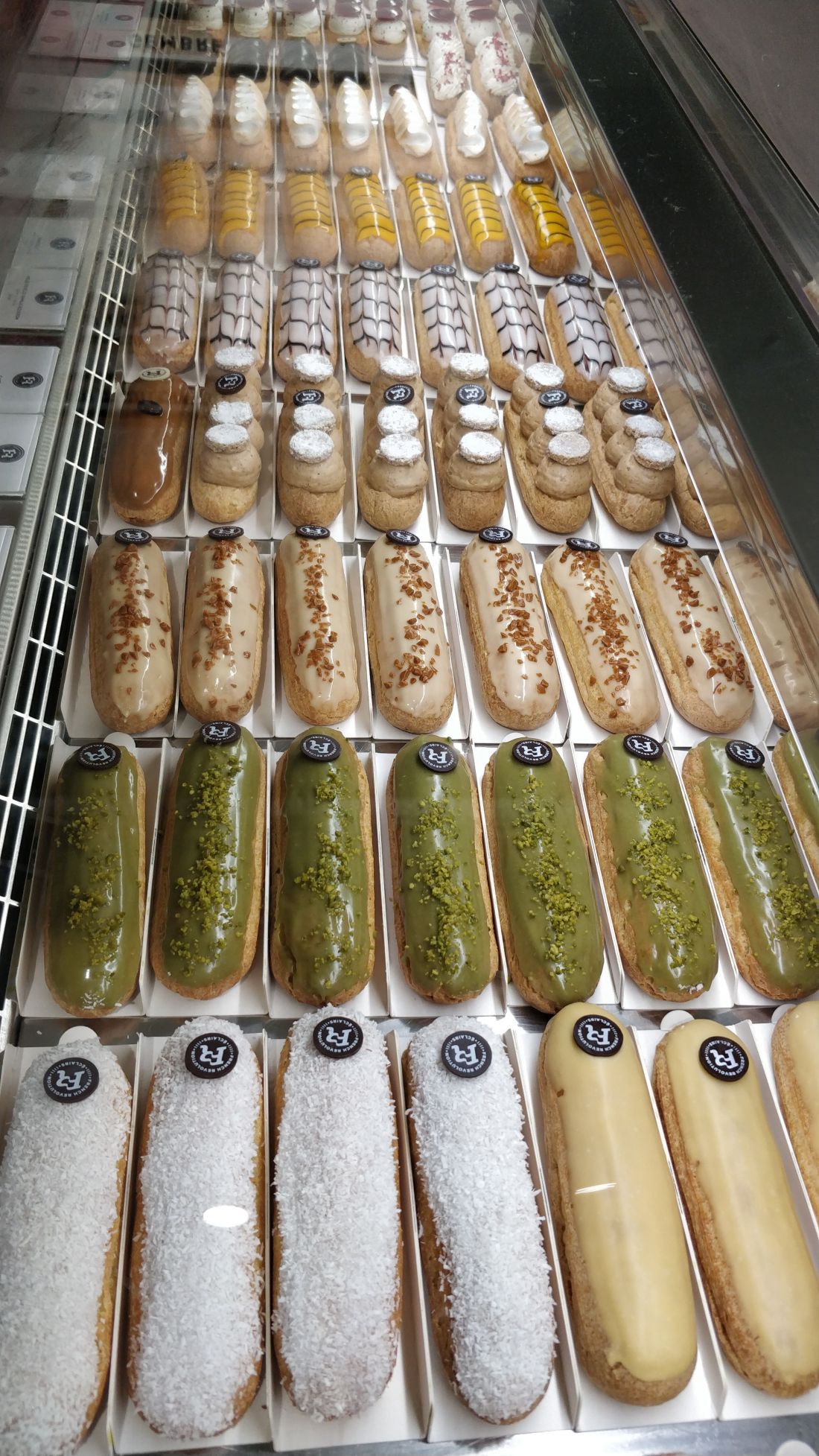
And the final stop was at an eclair shop. We were able to each pick 2 from the huge selection and all of them ended up being delicious.
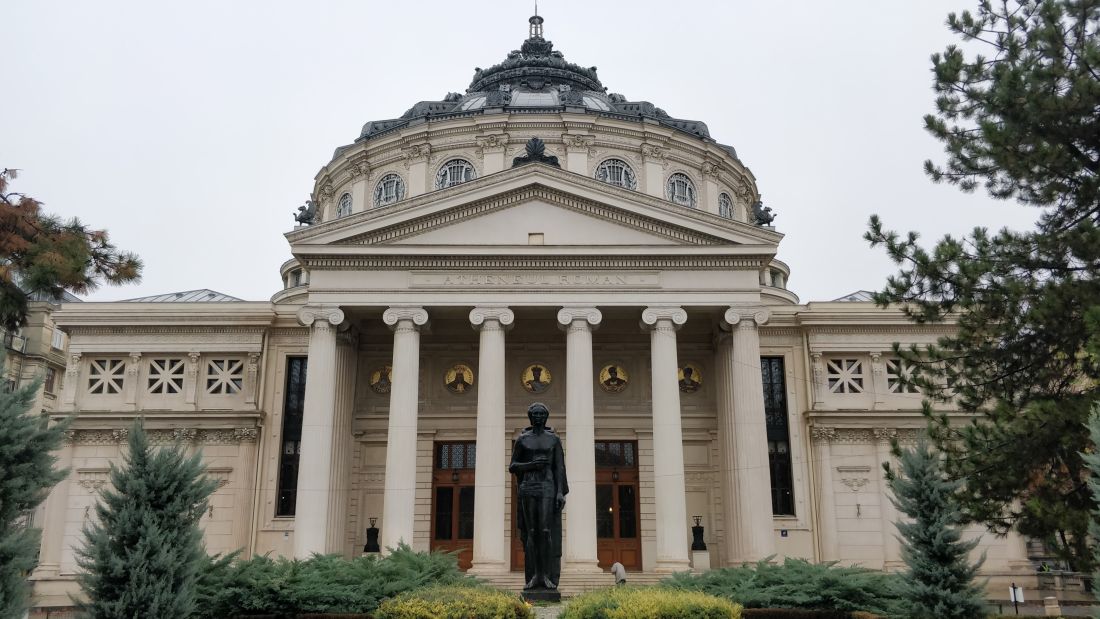
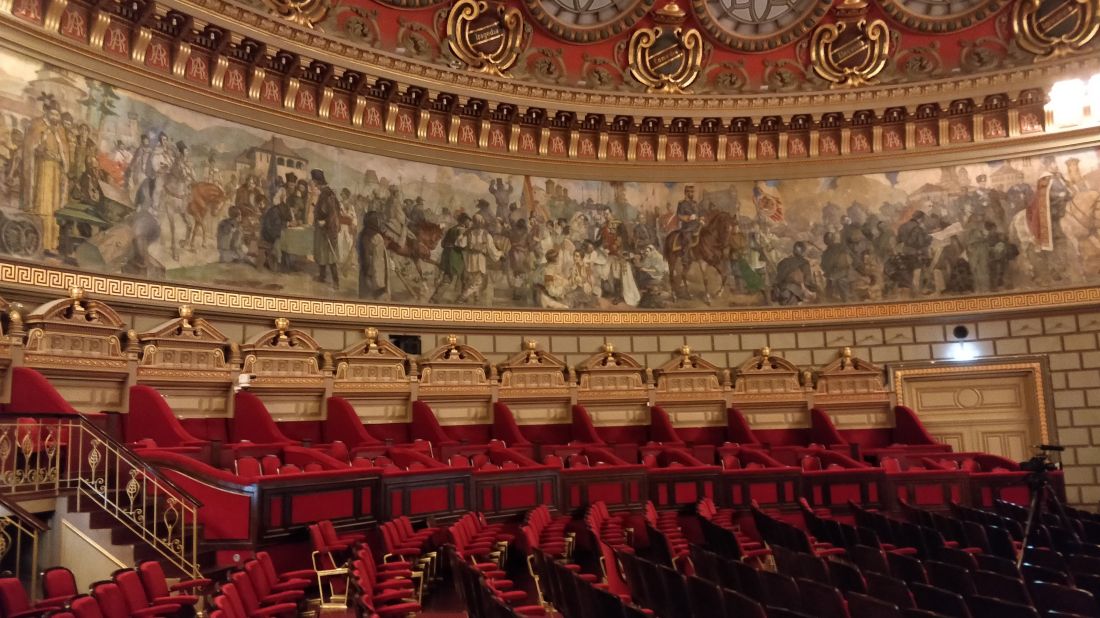
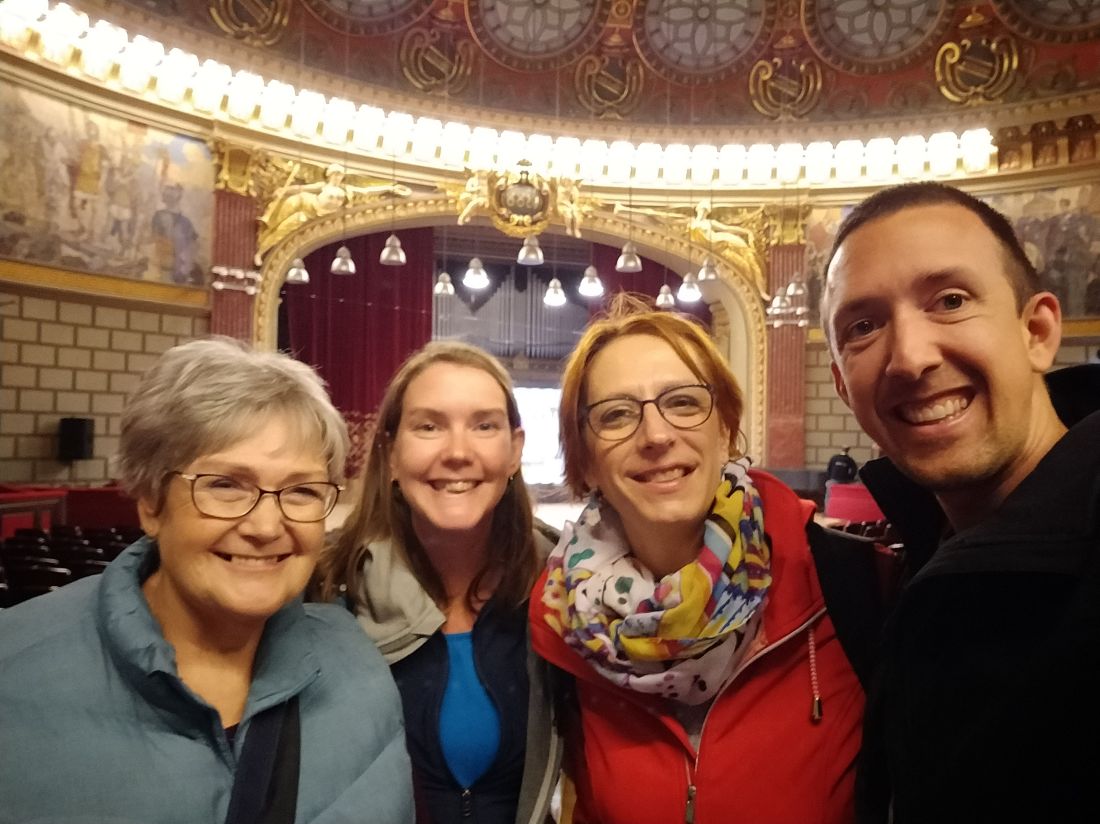
After our last food stop the tour wasn’t quite finished. As a last bonus we were able enter the largest concert hall in Romania, the Romanian Athenaeum. If you can plan ahead enough try to see a show here as it would be absolutely amazing. The gorgeous building (picture taken the next day in the day time) will take you back in time and put you in the shoes of an 1800s aristocrat. If you can’t get a show then you can pay a small fee to enter and tour on your own when a show isn’t playing.
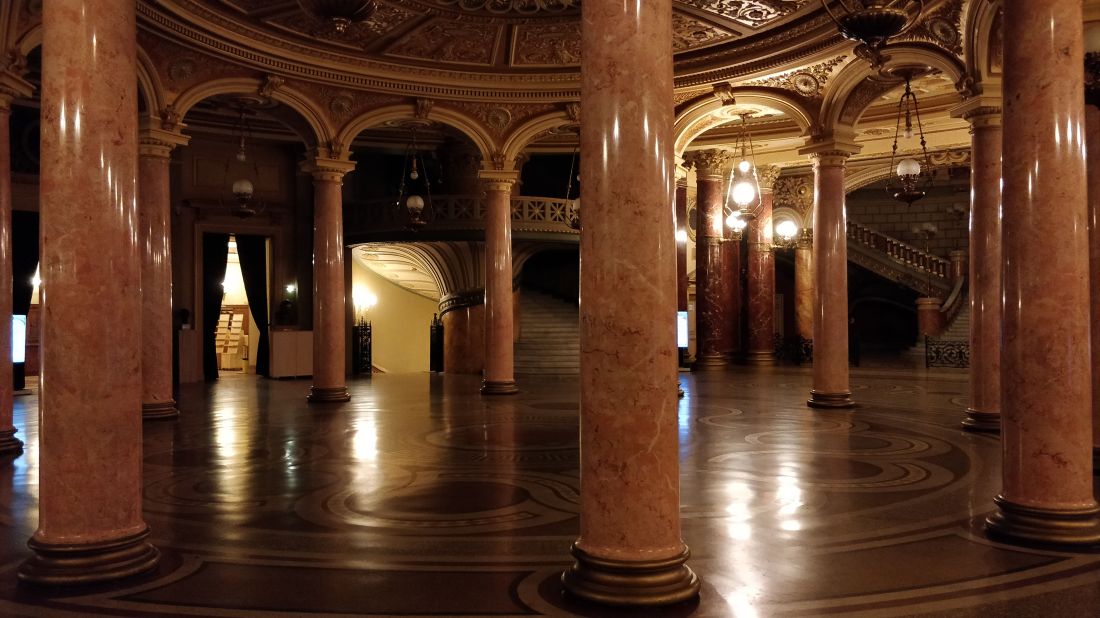
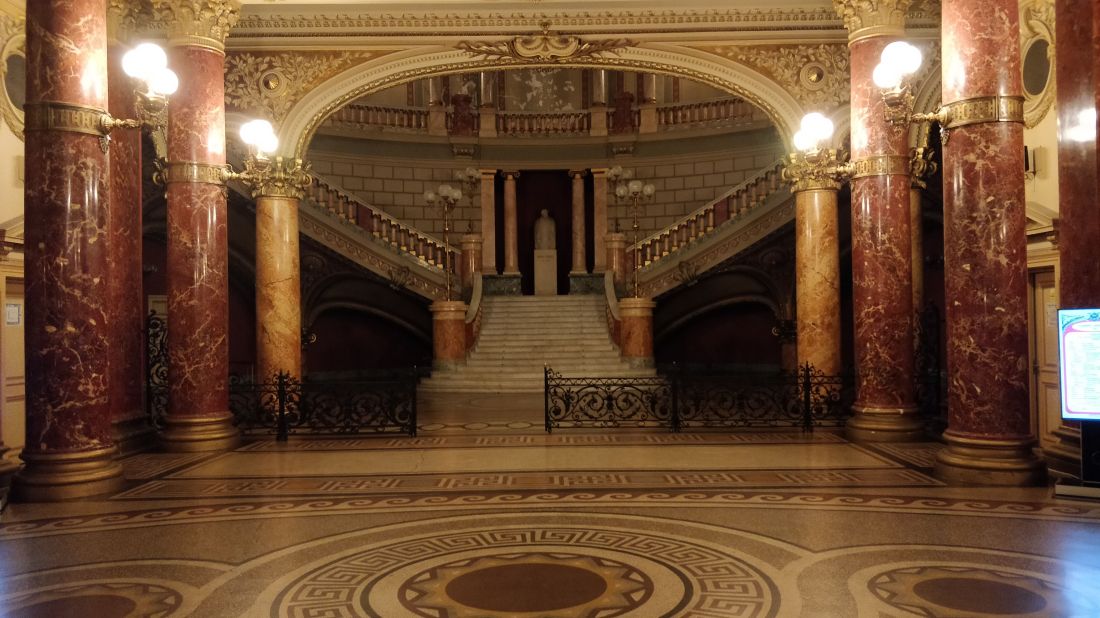
The entrance hall is stunning.
The theater is small and makes for an intimate show.
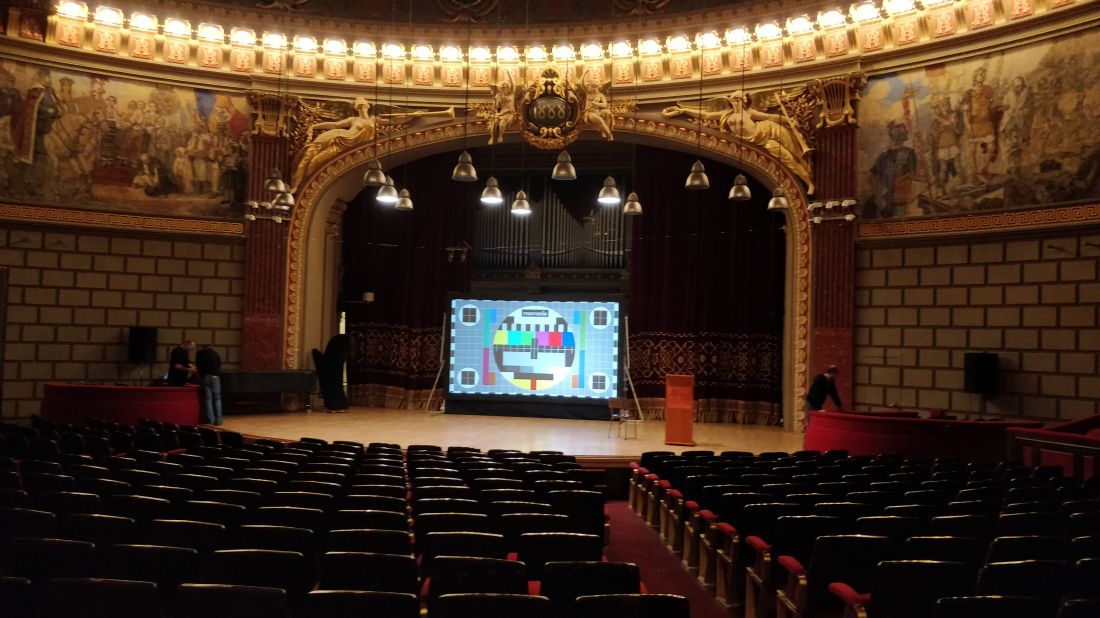
The detail inside is absolutely jaw dropping.
A Visit Back In Time
I think it would be a mistake to visit Eastern Europe and not take the time to understand its history of Soviet occupation. In Latvia we visited a couple of museums and watched some YouTube videos and in Poland and Slovakia we learned a bit about the occupation on walking tours but it was in Romania that we got the best information.
After a bunch of research looking for tours regarding communism in Romania Candice settled on Ferestroika, a 1980s communist era apartment set up as a living museum – https://ferestroika.com. It shouldn’t come as a surprise that the museum is located on the outskirts of Bucharest in one of the communist apartment blocks.
The apartment was basic but in better condition than you might think it would be. We were told this specific apartment was one of the larger ones with 2 bedrooms and the family was able to get it because the husband was in the military and had connections. Many apartments were only a single bedroom and the children had to sleep in the living room.
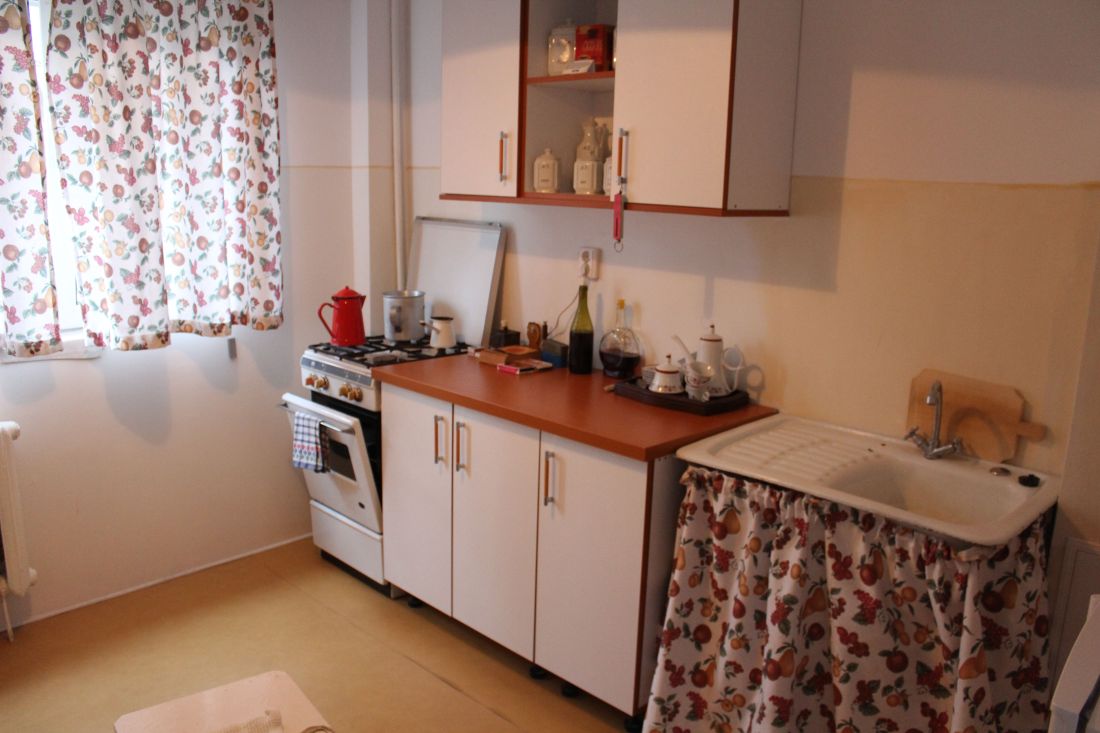
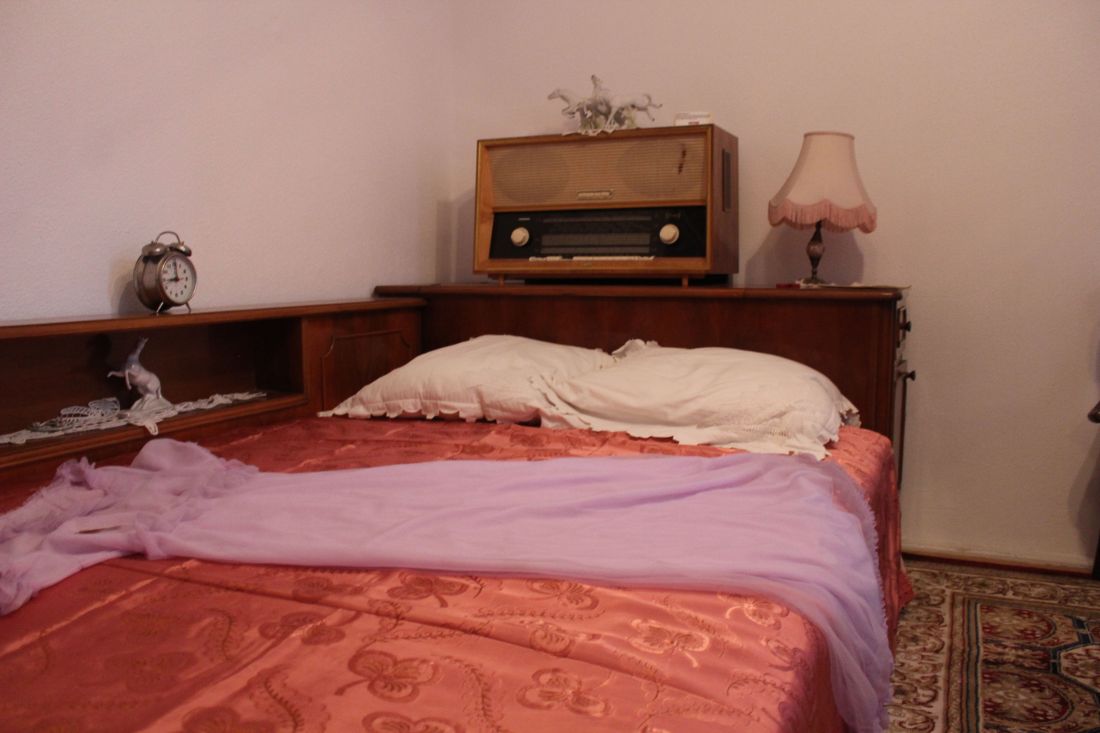
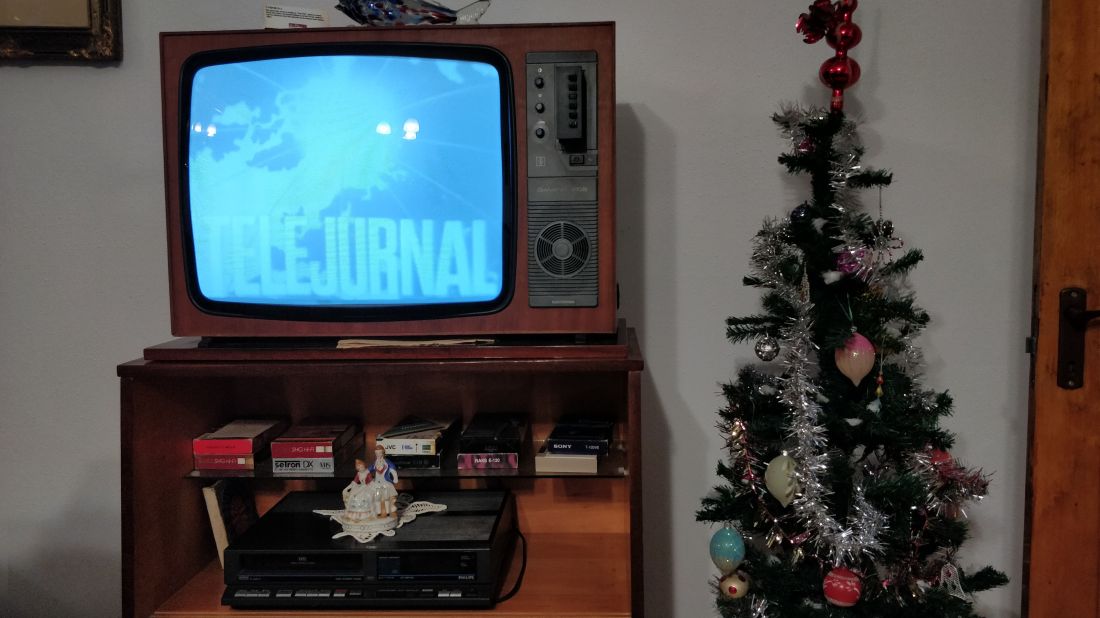
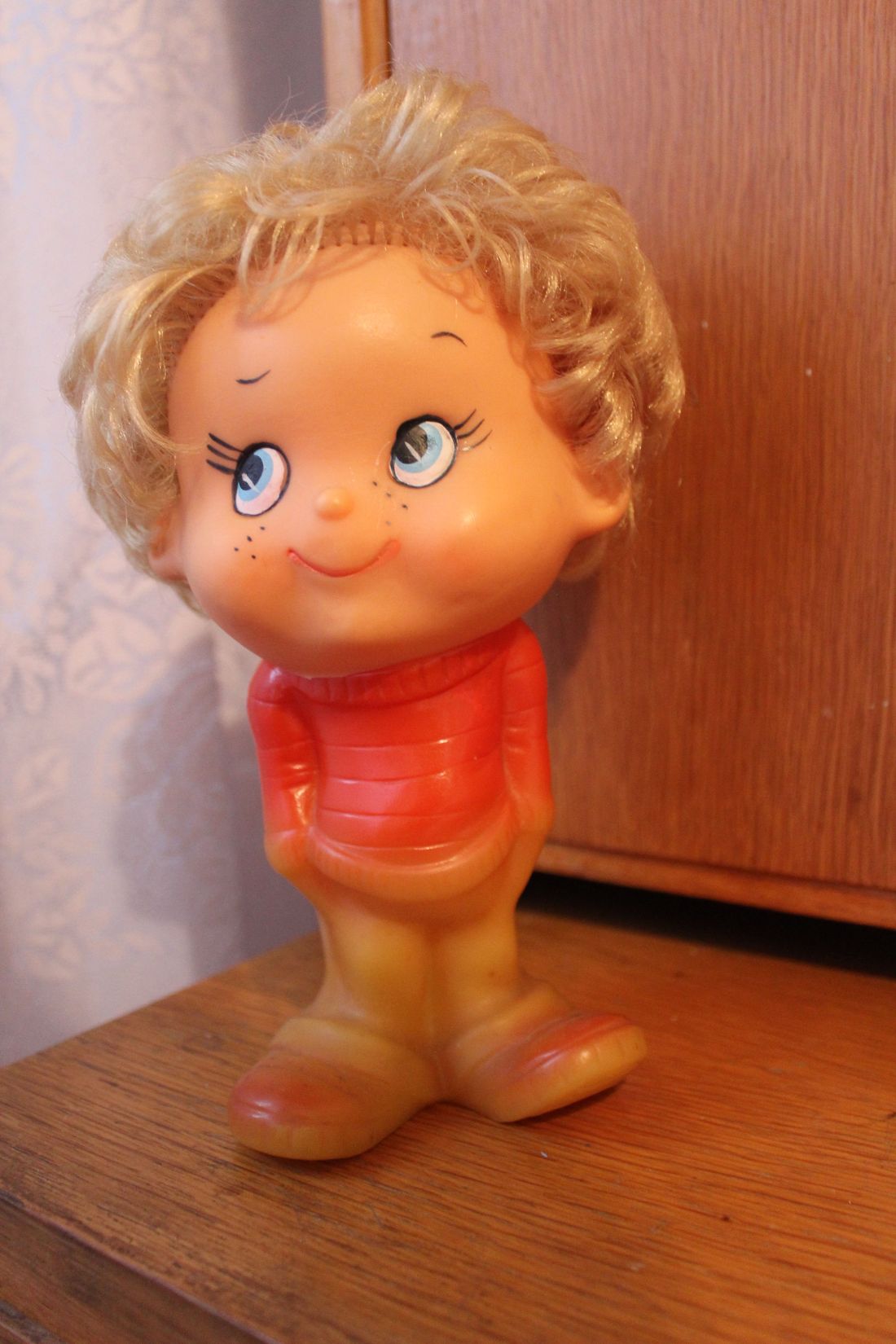
Items of the time are still left on display. I’m having a hard time remembering when the family moved out but I want to say it was in 2010 but I could be wrong on that.
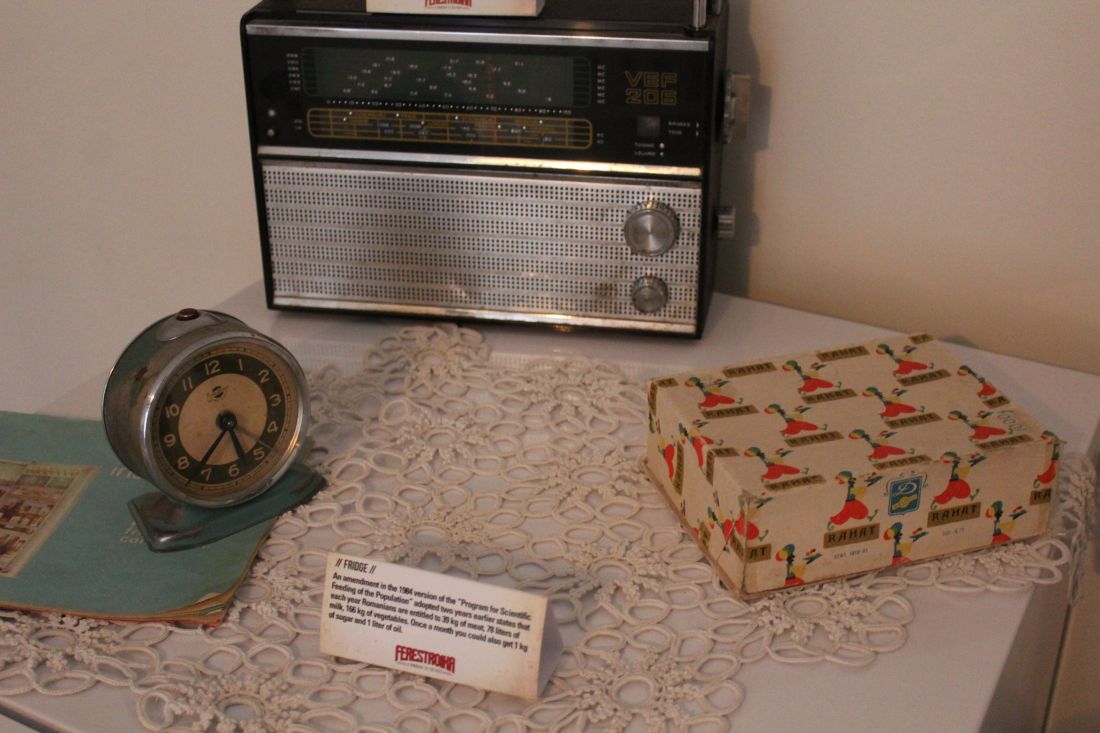
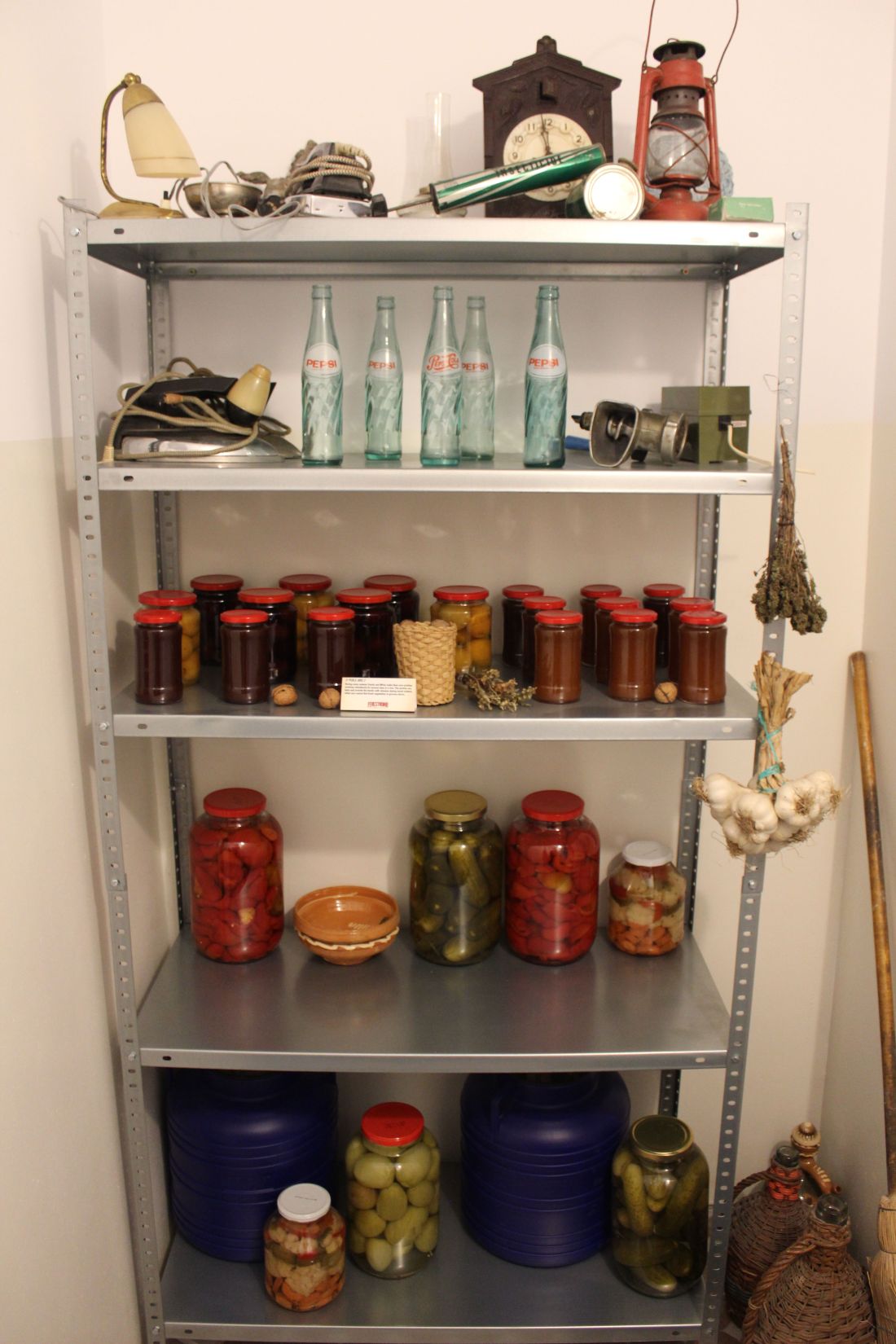
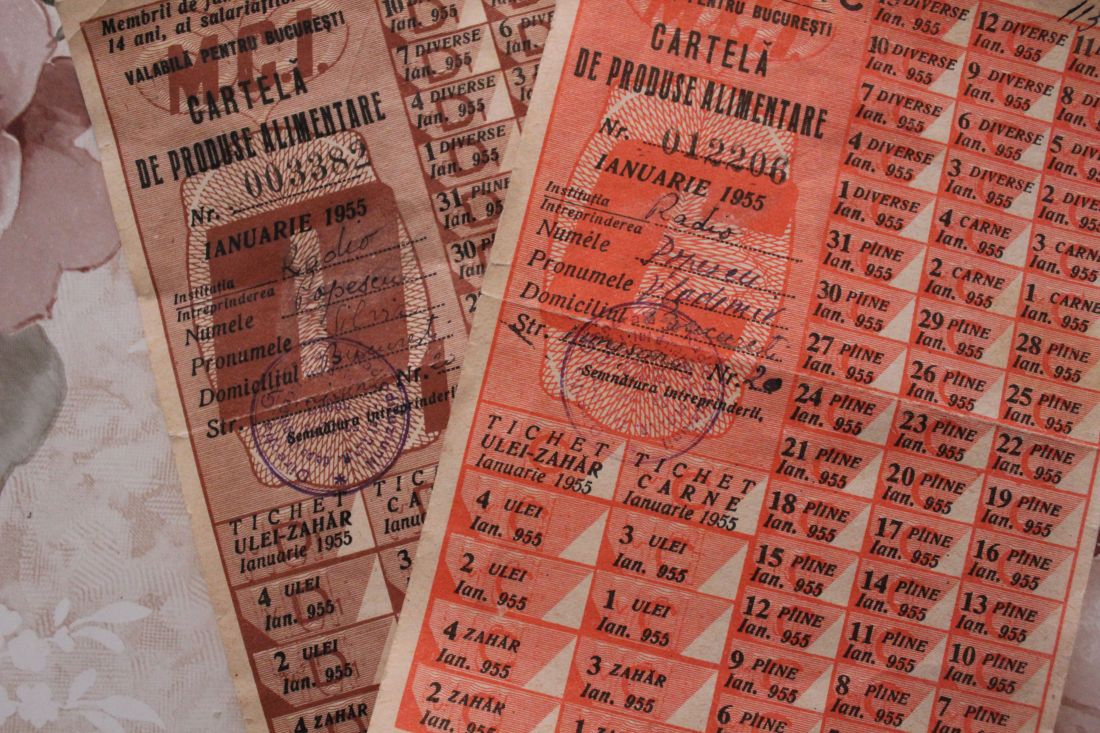
Food stamps. Each card is for an item that can be used only on the day specified on the stamp. People could wait over 2 hours just to get some milk and bread.
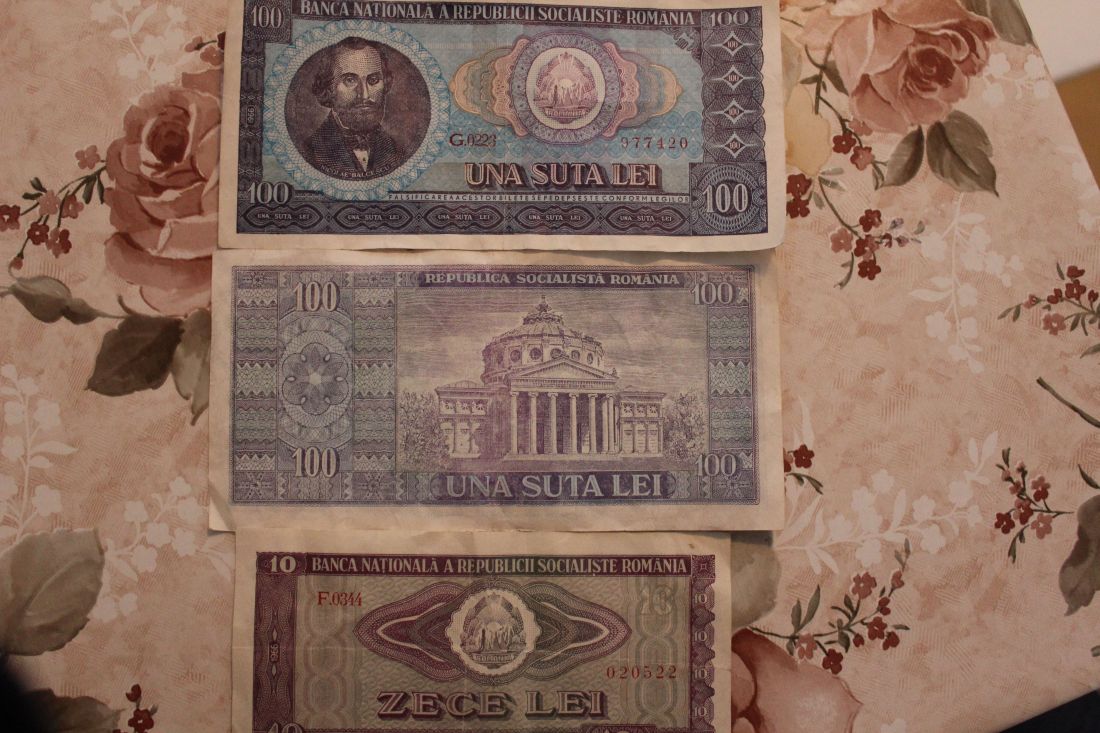
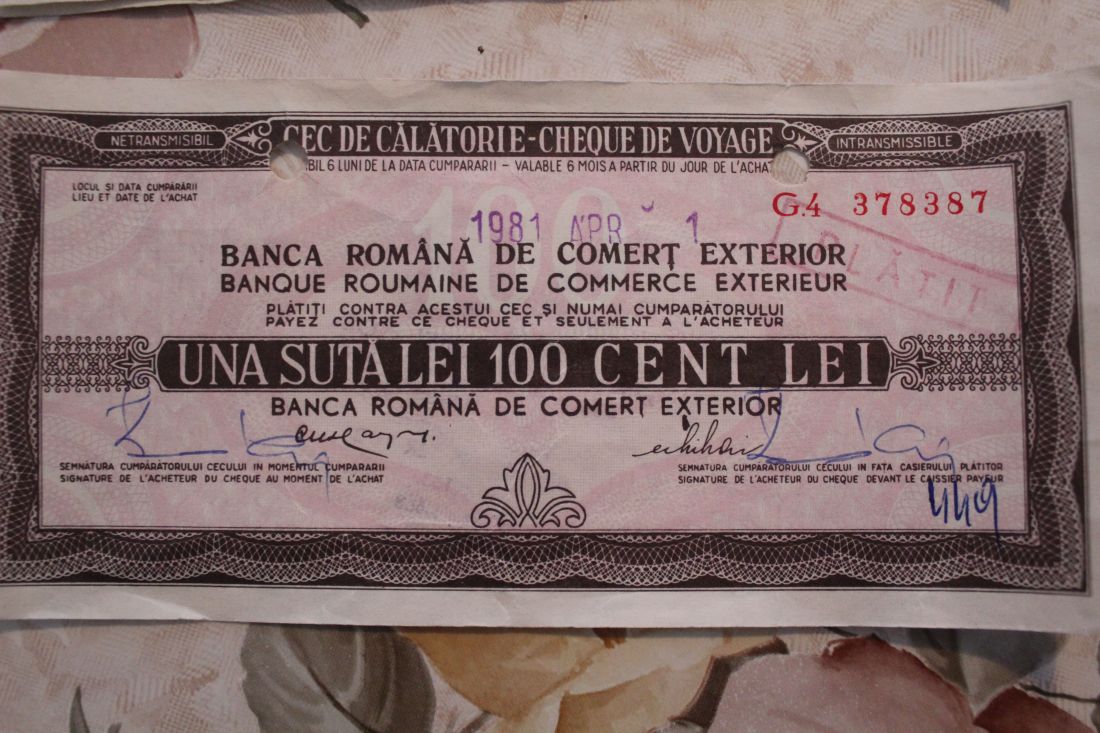
Communist era Romanian money.
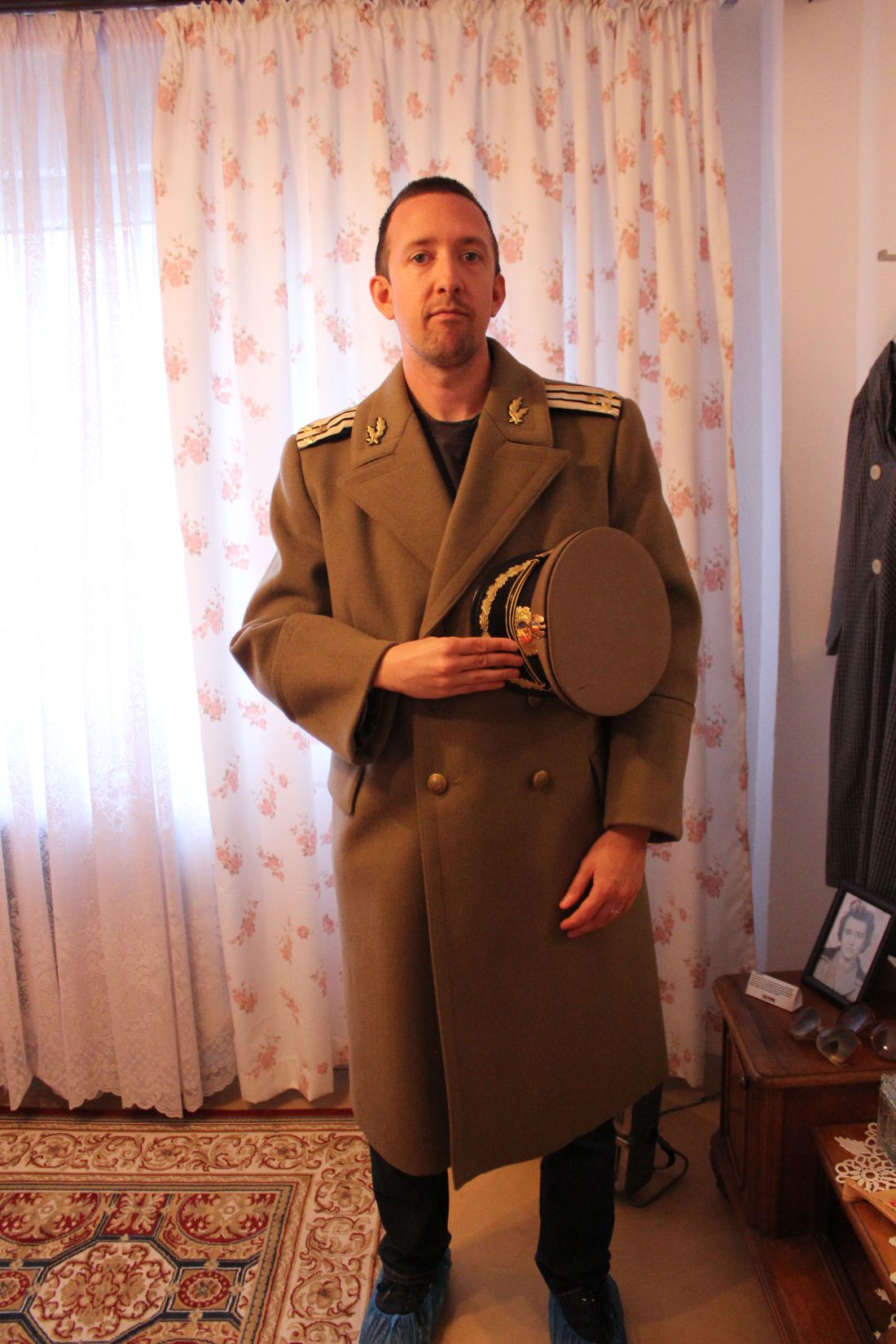
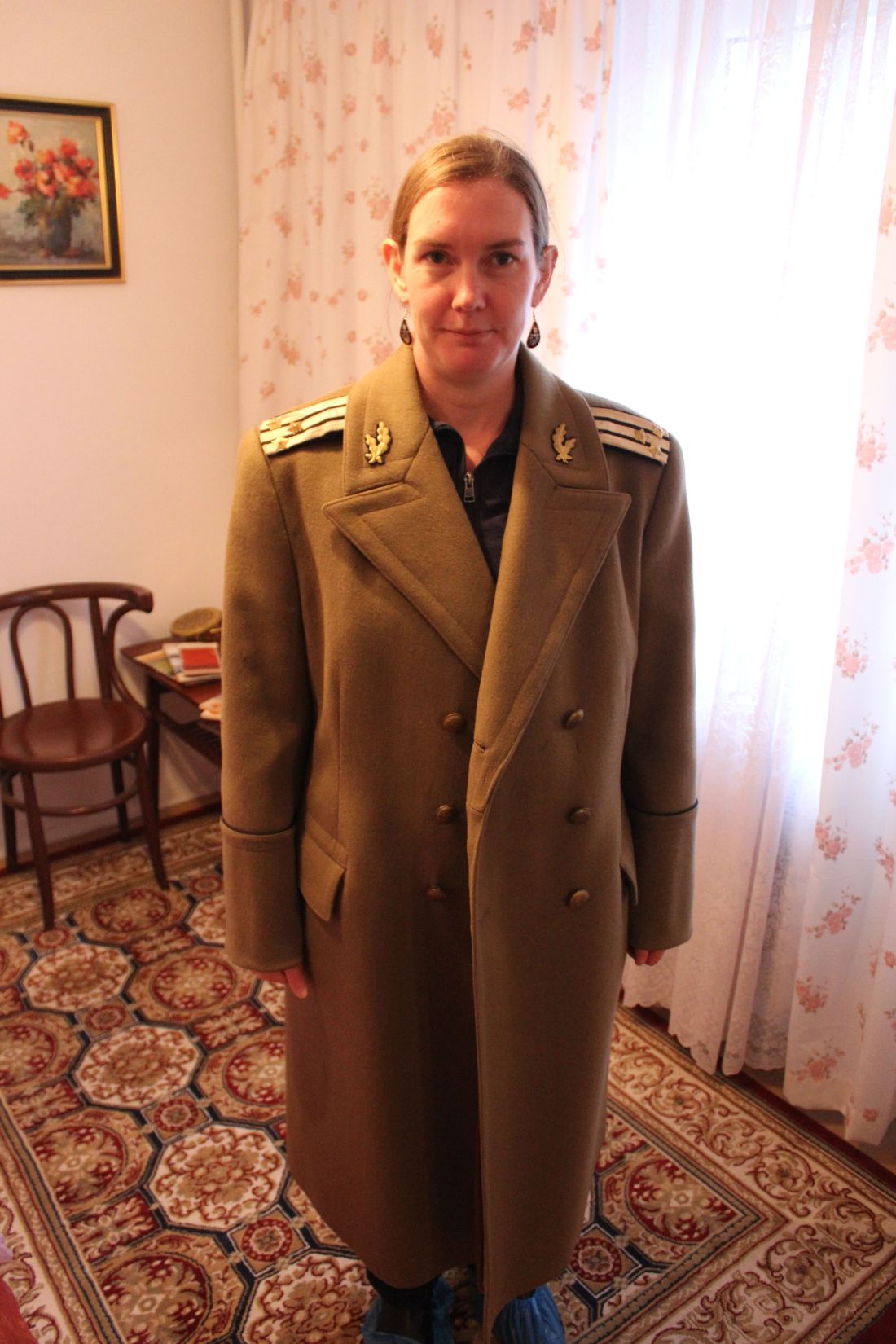
The uniform of the husband.
Heading North
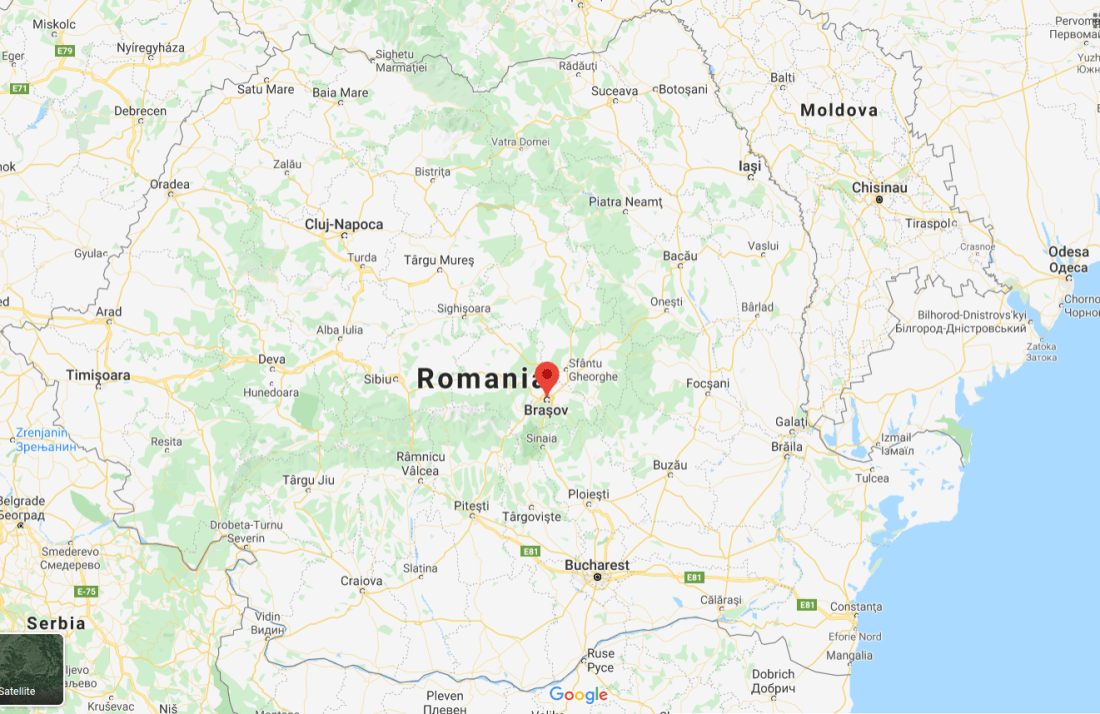
Romania is separated into 3 main regions, in the picture below you can see a line of green running from north to south and bending west into Serbia. These are the Carpathian mountains and the territory south of the mountains is called Wallachia, the area to the east is called Moldavia (don’t confuse it with the country Moldova), and the most famous part of Romania is located west of the Carpathians, Transylvania and was our next destination.
Before Romania was unified each region was its own kingdom and each struggled with its own issues. Wallachia and Moldavia were constantly under pressure from the Ottoman empire who was trying to push into Europe from today’s Middle East. They fought numerous bloody wars and were eventually occupied by the Turks. In the early 1800s Russia fought numerous wars against the Turks capturing Moldavia adding it to the Russian empire but Wallachia would stay under Ottoman rule for another 50 years.
Transylvania fared the best as it was part of the powerful Austro-Hungarian empire and had the Carpathian mountains to protect it. From what I can tell the Austro-Hungarian empire never tried to directly occupy it and it stayed a semi autonomous state for most of its history.
During the 1800s, combined attacks from Russia and the Austrians drove the Ottomans out of Wallachia restoring its independence and eventually Transylvania would be granted its independence to join with Wallachia to form Romania. Russia went even further with its wars and eventually helped free most of the Balkan state.
Russia continued to occupy the Moldavia region all the way up to the end of World War I where after Russia’s devastating defeat in the war Moldavia (along with many other Russian occupied regions) demanded independence but only the south western part was granted it joining with the newly created Romania. The eastern part stayed with Russia all the way until the collapse of the Soviet Union and finally got its independence as the Republic of Moldova.
OK sorry if I bored you with that history lesson but I find this stuff so fascinating and I had no idea about any of it before travelling to South East Europe but let’s get back to the trip now. The most popular city to visit in Transylvania is Brasov, located just on the western side of the Carpathian mountains.
Here we had a small hiccup in our travel plans. We had reserved a car to explore the Transylvania area because trains and buses are not very convenient but we found you are required to have an International Driving Permit to rent a car in Romania. It’s not a big deal to get but you can only get it in Canada, in person, so no car rental for us.
With a last minute change we booked some train tickets to Brasov and caught a taxi. Luckily the trains, while slow and not convenient, are at least cheap. On the plus side, though, crossing the Carpathians by train was beautiful. If you have the time riding the trains in Romania is perfectly fine and economical but if your time is limited or you want to get to some remote areas you’re best to rent a car.
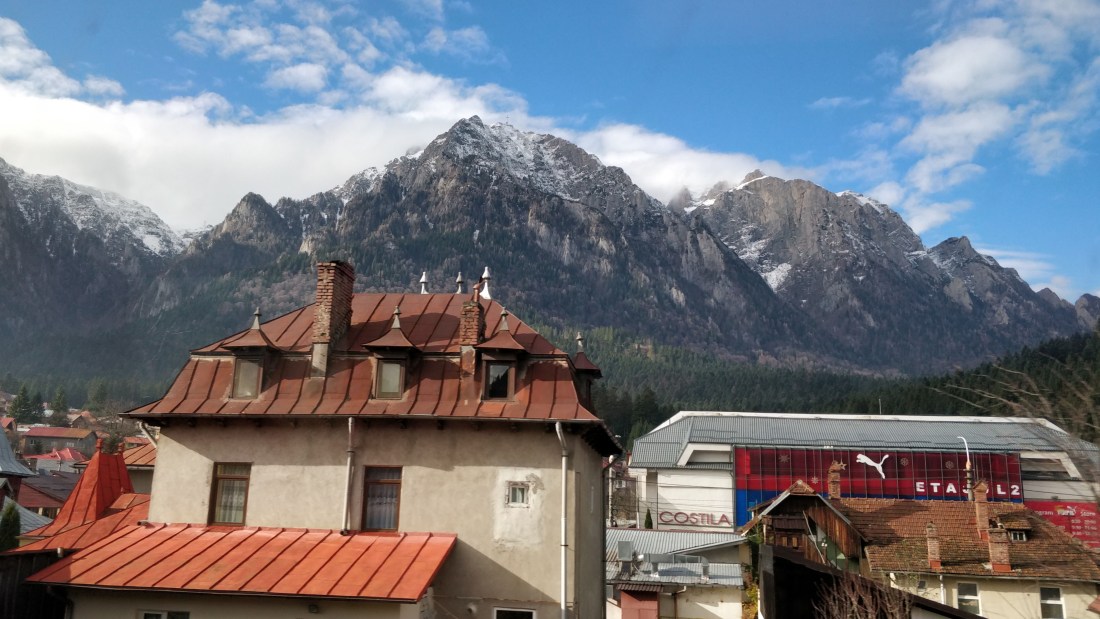
Arriving in Brasov was in stark contrast to Bucharest as the city is much smaller, calmer, and better maintained – I don’t recall seeing any beautiful 200 year old buildings left to crumble like we did in Bucharest. The new part of the city wasn’t anything to talk about but the old town at the center was really nice to wander around.
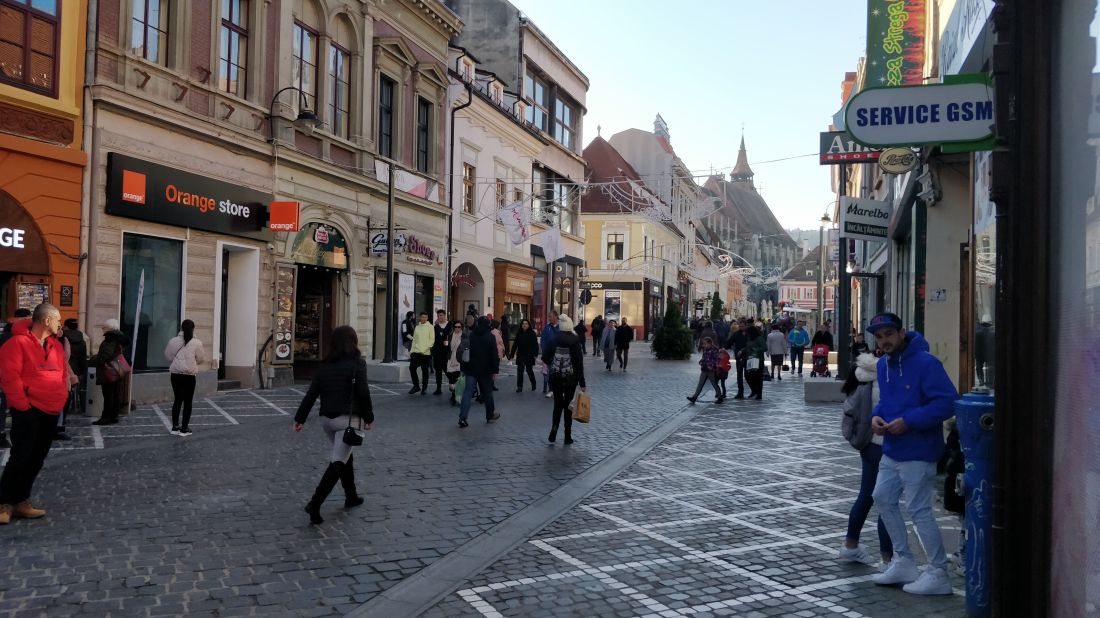
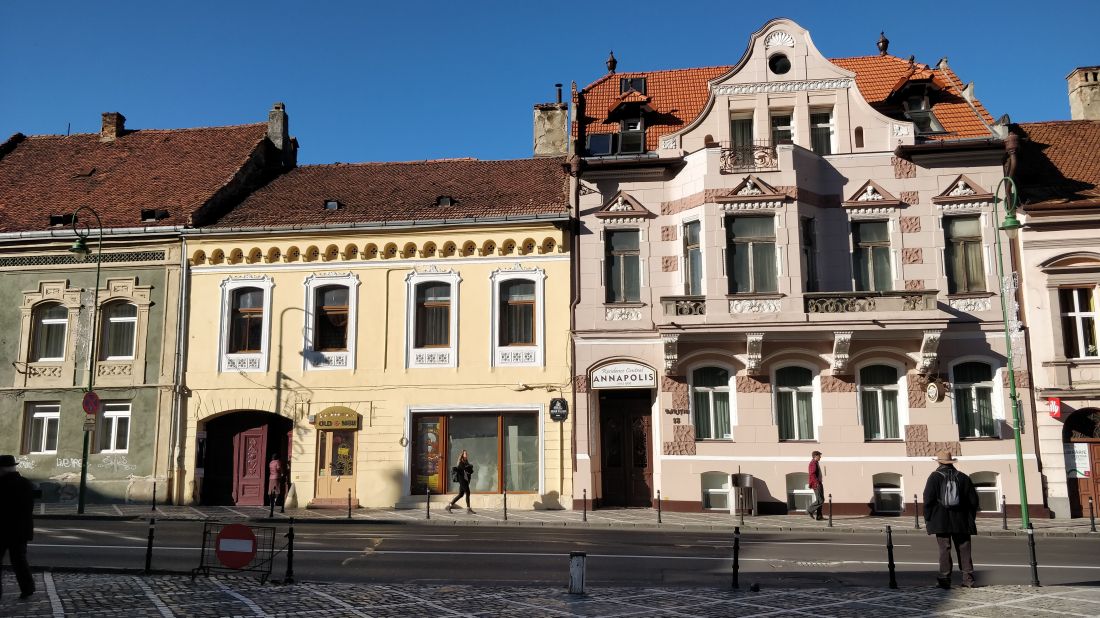
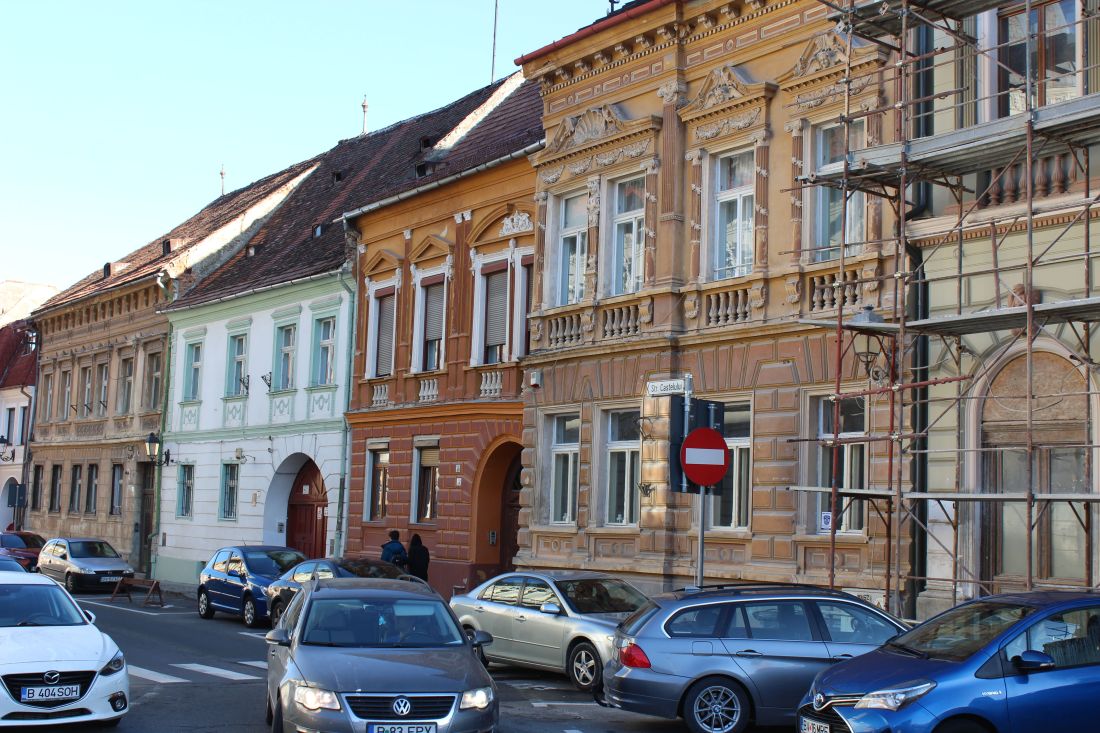
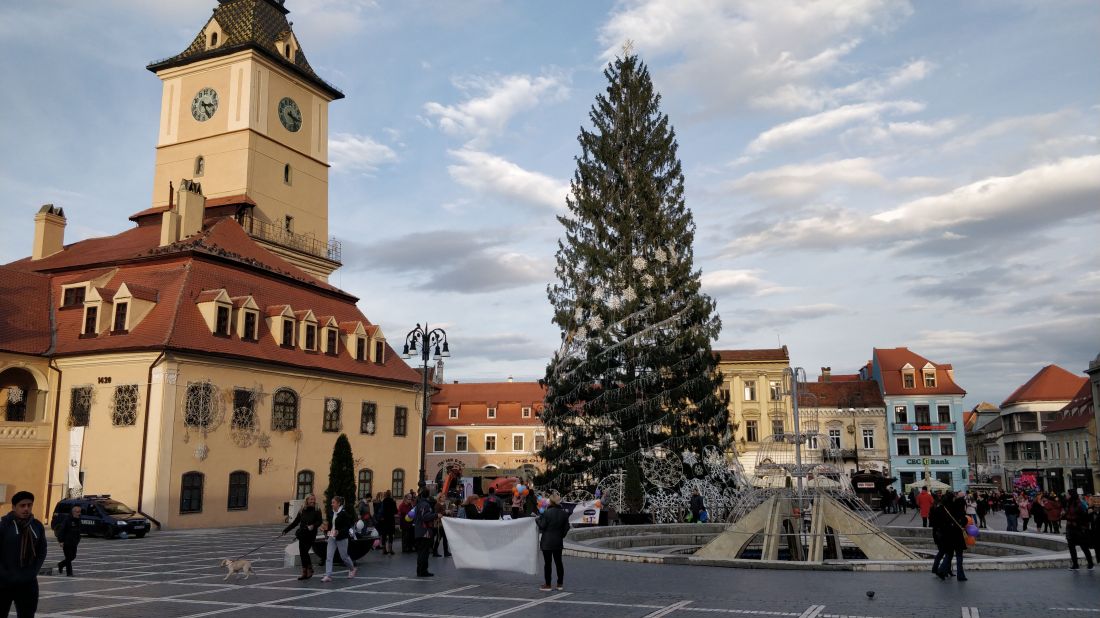
We started off our first day in Brasov with, you guessed it, a free walking tour. The tour began at the city’s town square and in late November the town Christmas tree was already up although we were a week early for the start of the Christmas market.
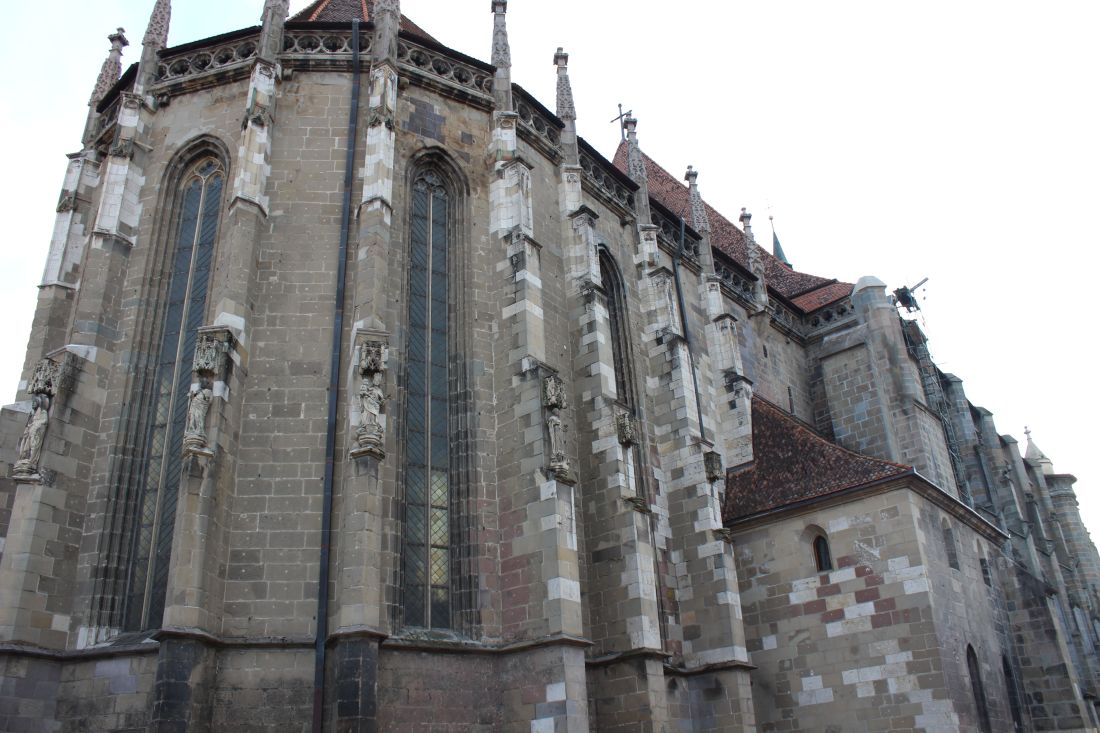
Just off the town square is the most iconic building in Brasov, the Black Church. The church is over 600 years old, is the largest Medieval church in Eastern Europe, and got its name after a devastating fire which destroyed most of the city and blackened the outside stones.
The church is absolutely enormous and able to hold up to 5000 worshipers but it still pales comparison to many churches found in Western Europe so depending on what churches you’ve visited previously will determine how impressed you are here. There were some Europeans on our tour that called this a small church.
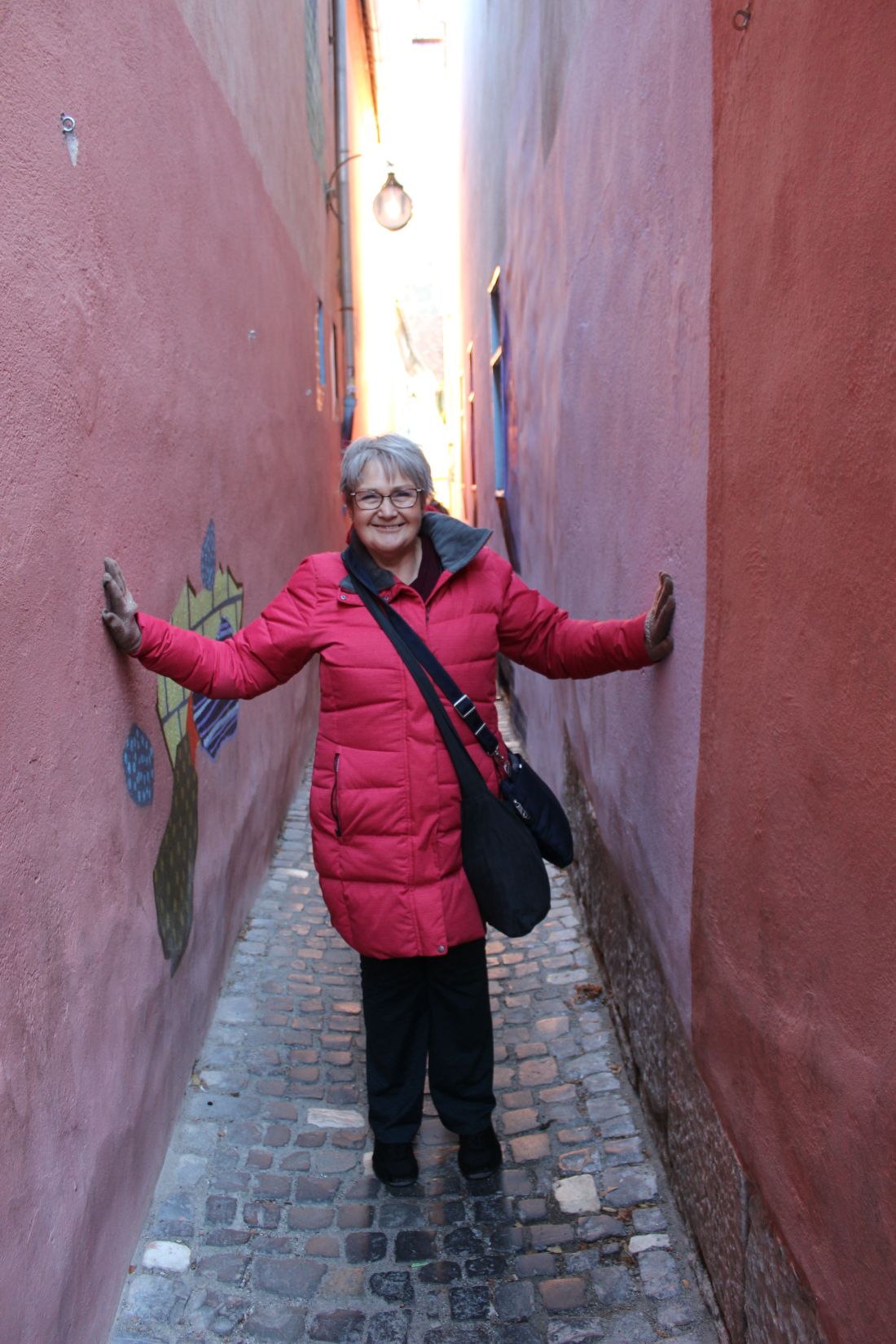
Another site seeing stop is what Brasov residents like to claim is Europe’s smallest alley way. Split in Croatia also claims to have the smallest alley in Europe and having the smallest alley seems to be a popular achievement for reasons I don’t quite understand. After the fire of 1689, that blackened the Black Church, the city cut through the many rows of medieval houses to open up alley ways for fire fighters. This is one of the few fire alleys that is still in place today.
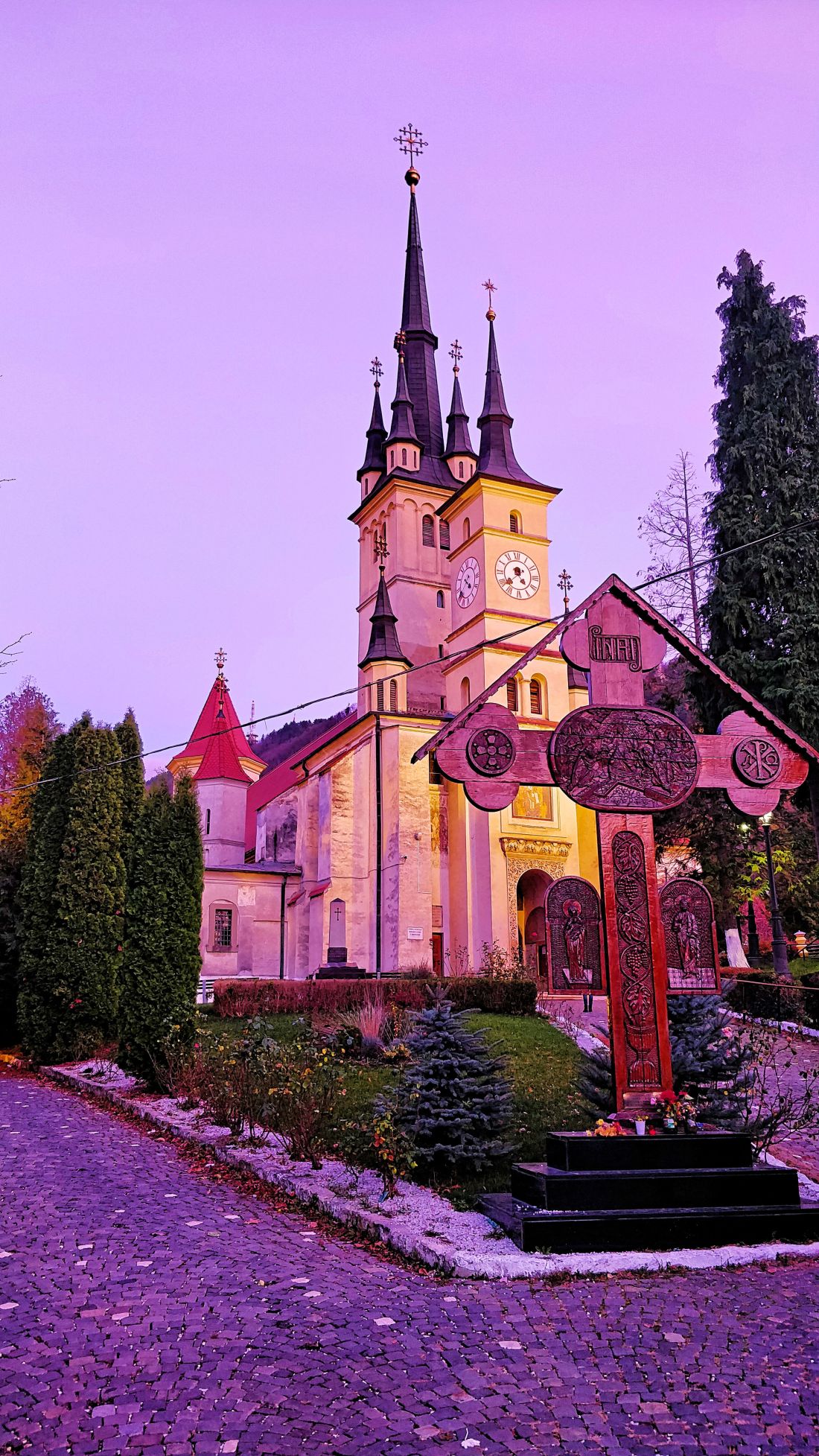
The walking tour ended at this church just before sunset. The church wasn’t anything special but the lighting hit it just right for a cool picture.
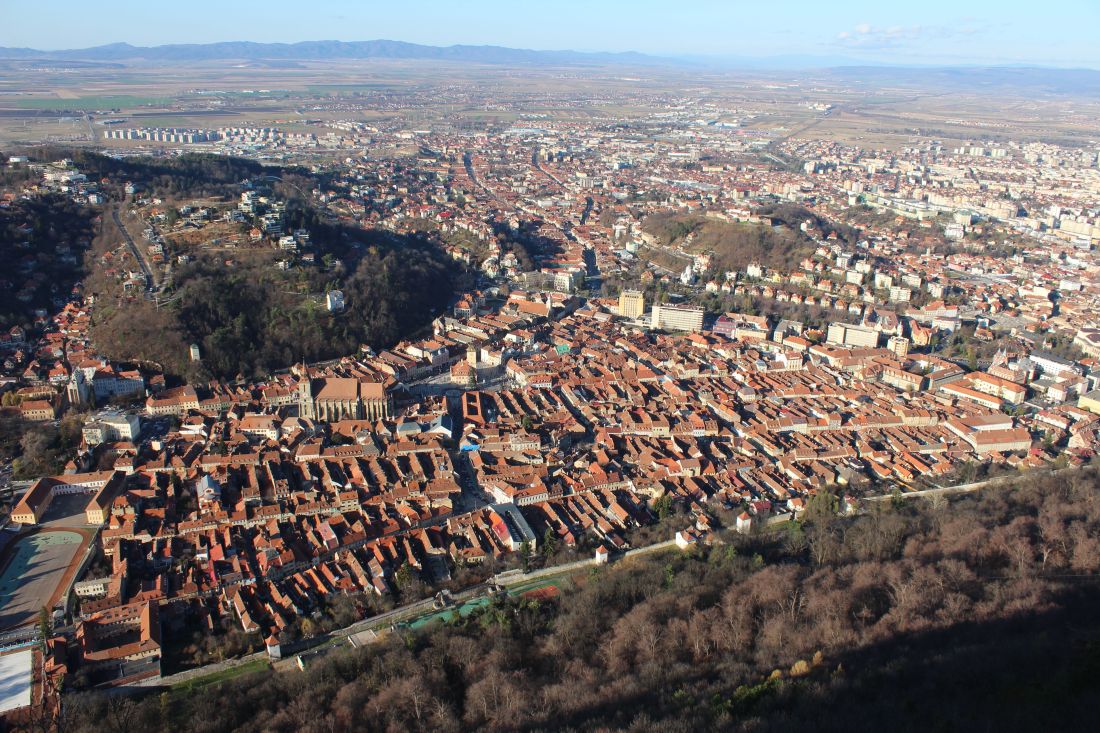
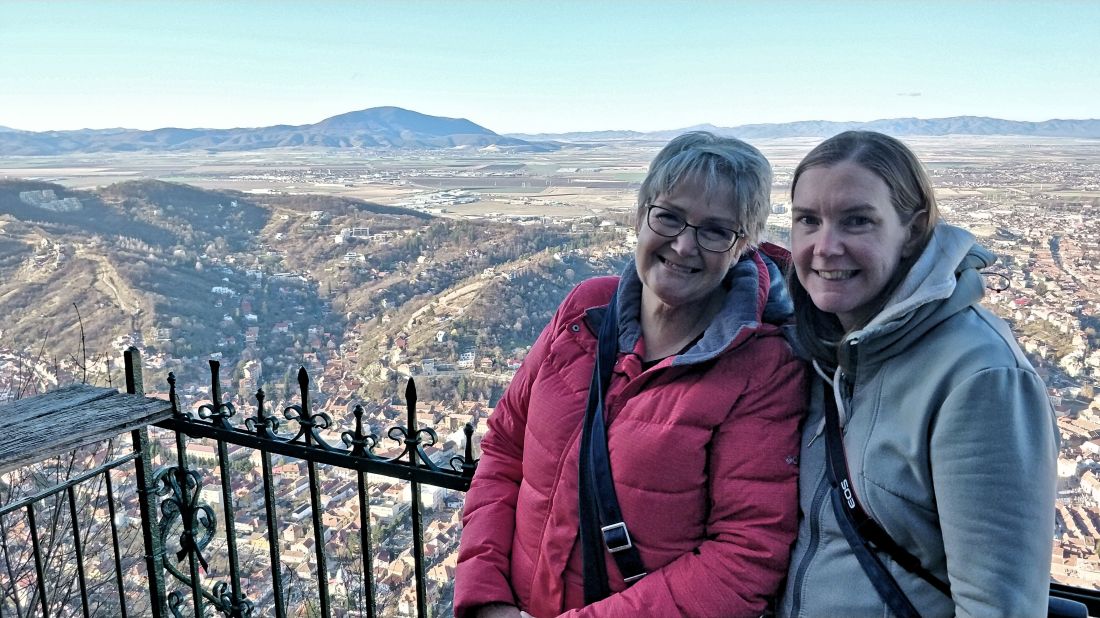
On a following day where we decided to stay in Brasov we rode the cable car up Brasov Hill to check out the look out point. At a cost of 5€ per person it was a pretty good bargain as far as cable cars go. In the below picture you can spot the Black Church giving a good sense of the immensity of the building.
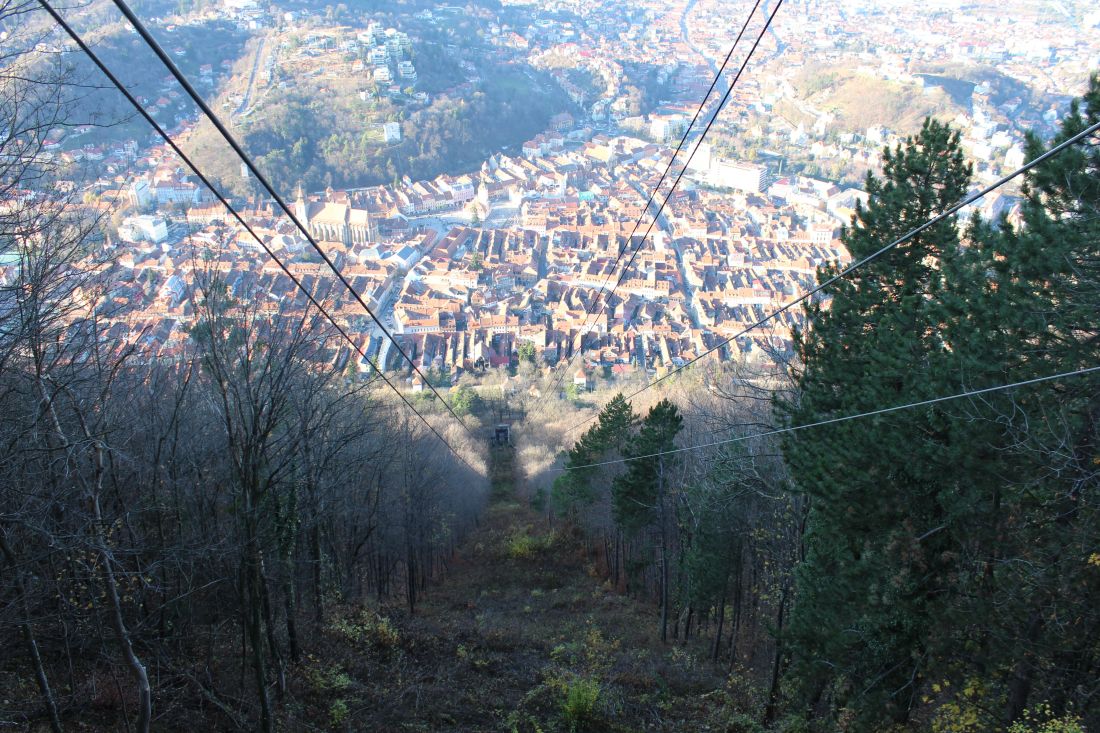
We had fairly good visibility this day with only a bit of haze far off in the distance.
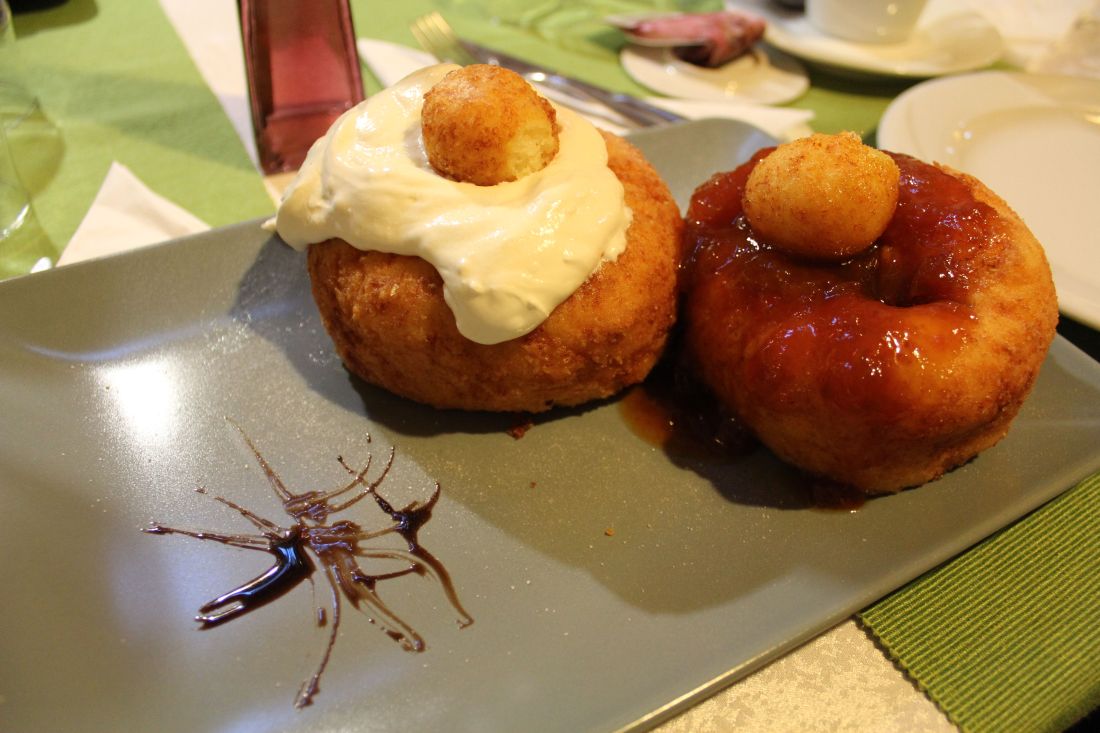
Hot Tip: If you’re ever in Romania look up a place that serves Romanian cheese donuts. We found the best reviewed place in Brasov and ordered a sweet jelly and a sour cream one to share. They were extremely filling and oh so very yummy making for a great late afternoon snack after a day of adventuring.
A Day Of Casteling
One of the main attractions of Transylvania is visiting Count Dracula’s castle and yes it is that Count Dracula. I found a reasonably priced private driver to hire for the day and he took us on the most popular route visiting 3 different castles.
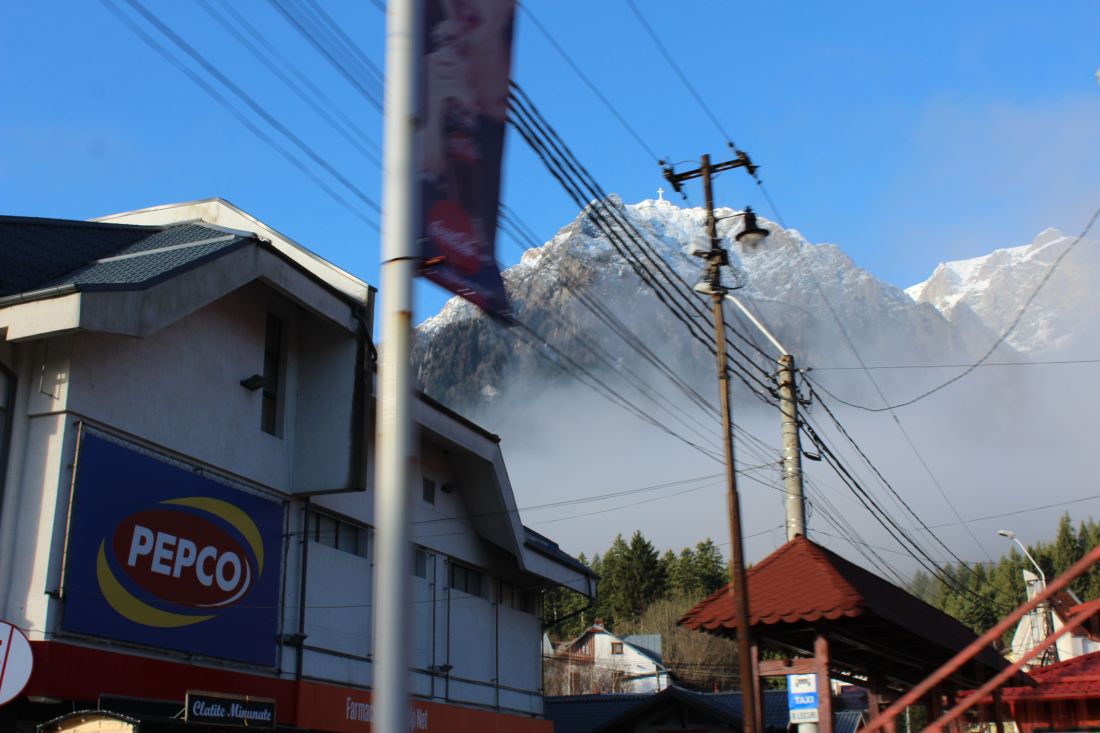
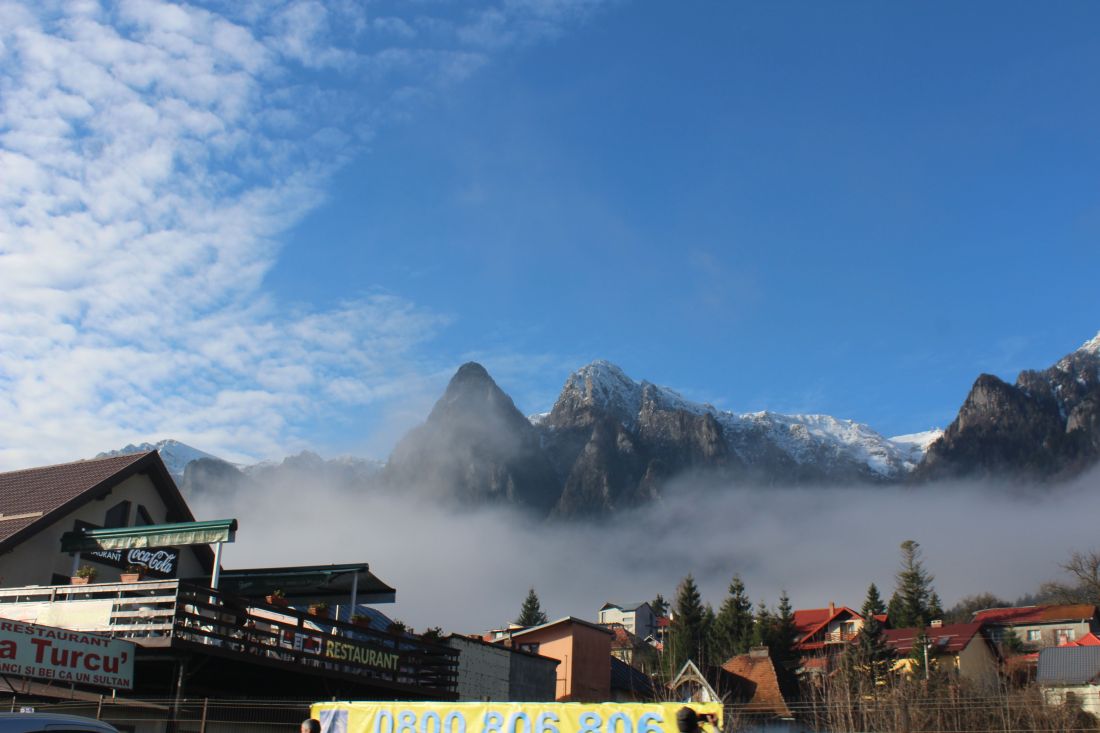
We had an early start at 7 am since there was to be a lot of driving. On our way to the first stop Candice snapped a couple of good pictures showing the villages at the base of the Carpathians.
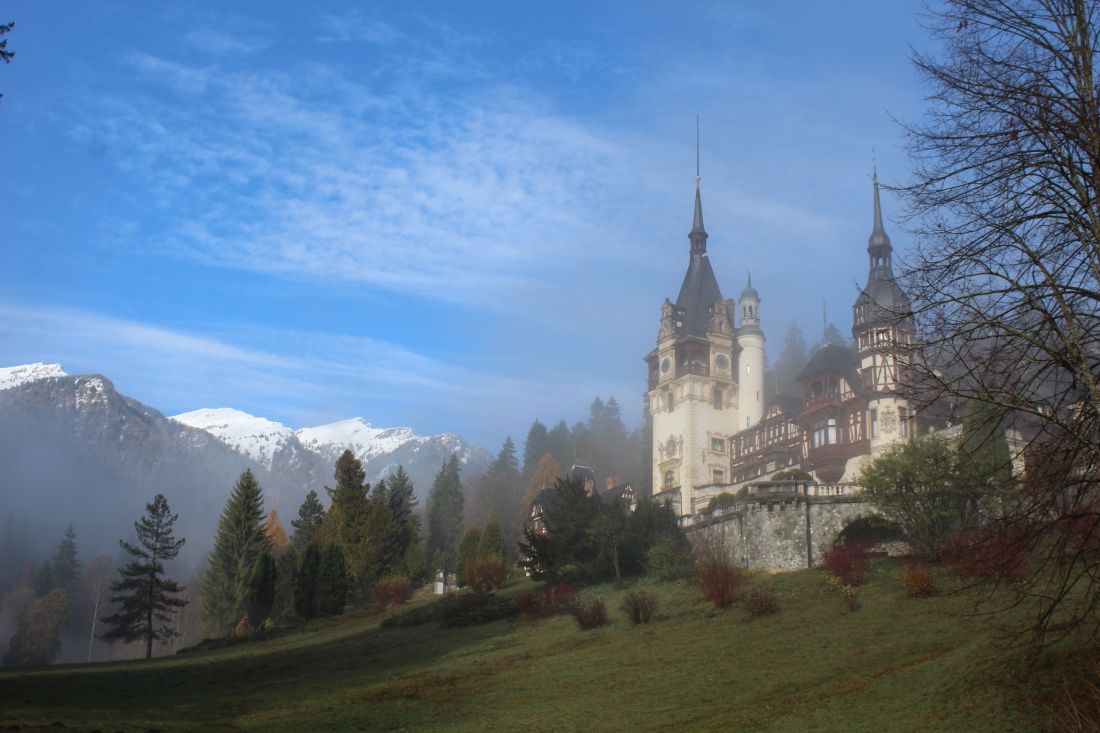
Apparently Peles castle is the most visited castle in Transylvania. It’s a very elaborate 1700s designed castle with a picturesque landscape so it makes sense that it’s a popular stop.
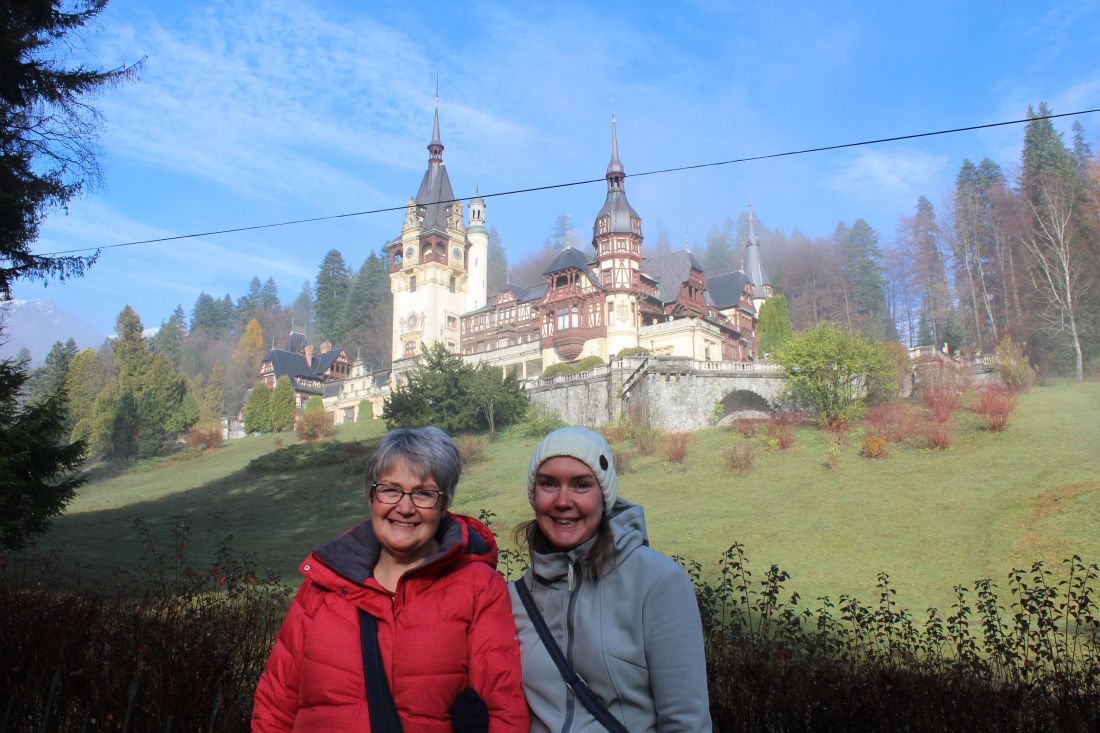
From what I remember this “castle” was never a true defensive fortification but instead a very wealthy noble built his estate and he went all out on the design to make it look like a castle. His descendants who inherited the castle then decided to open it up to the public as a source of revenue.
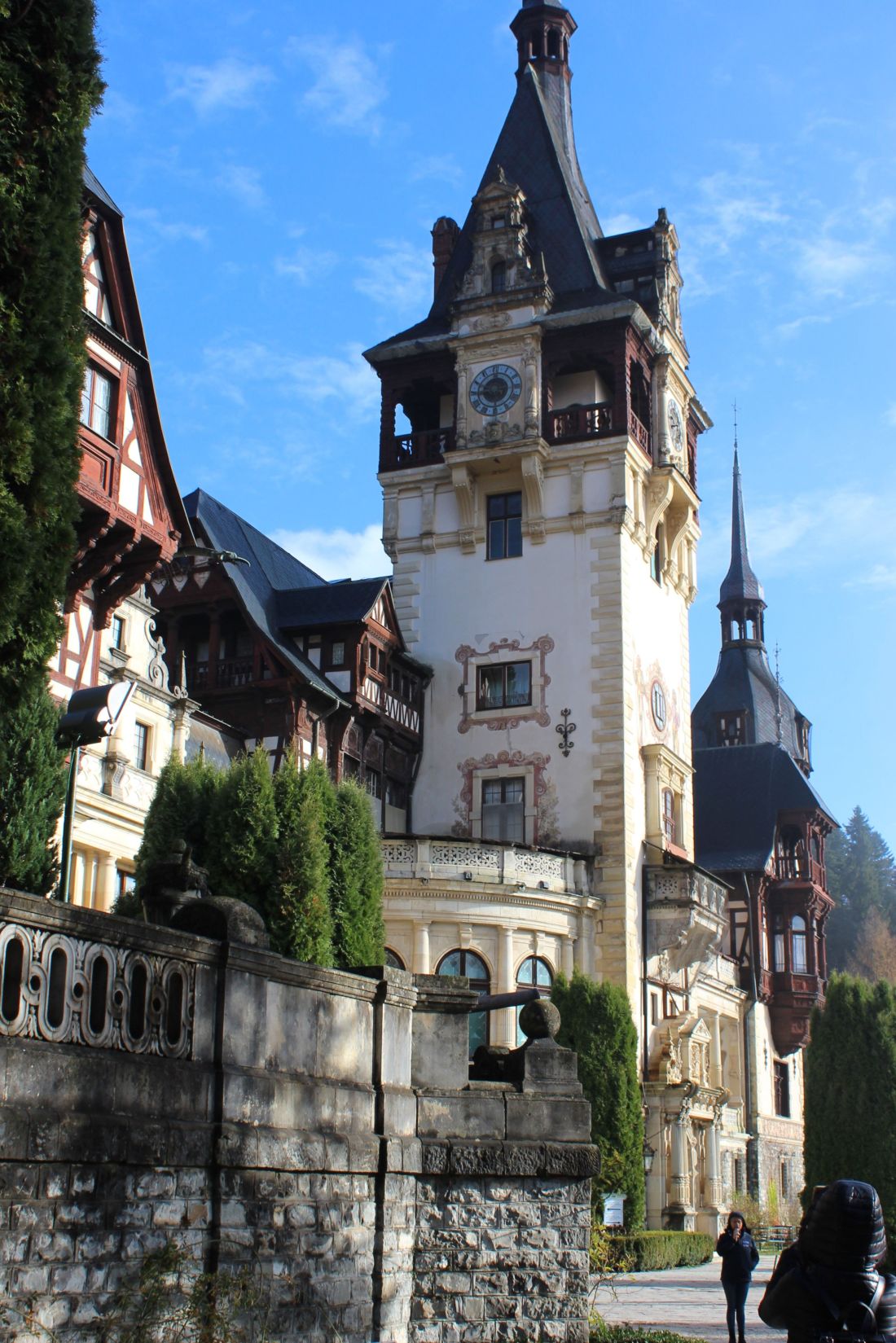
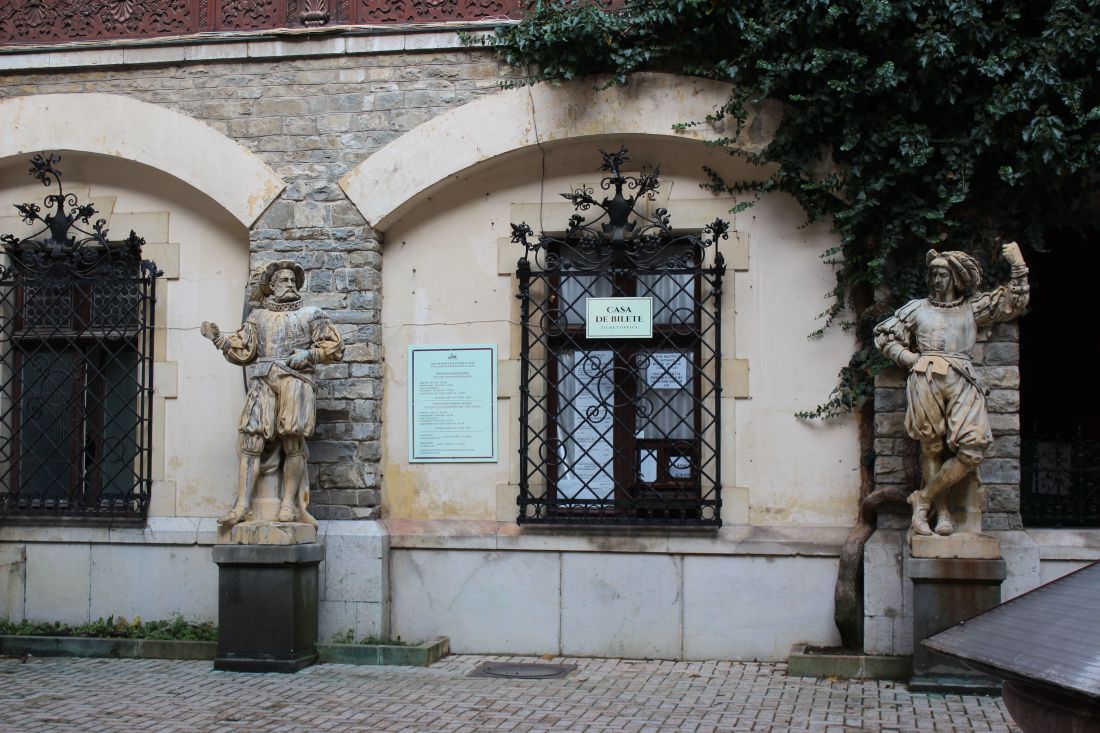
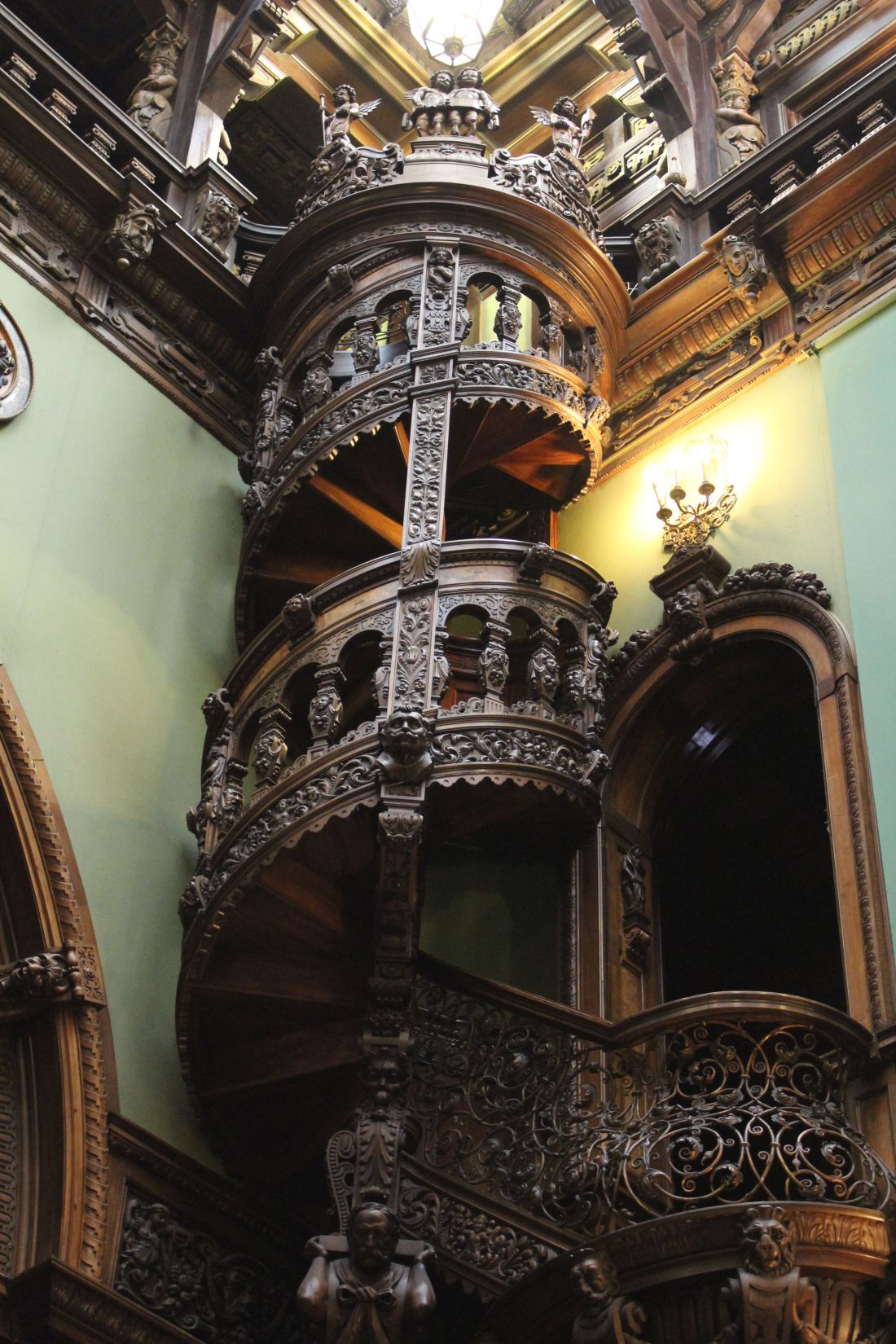
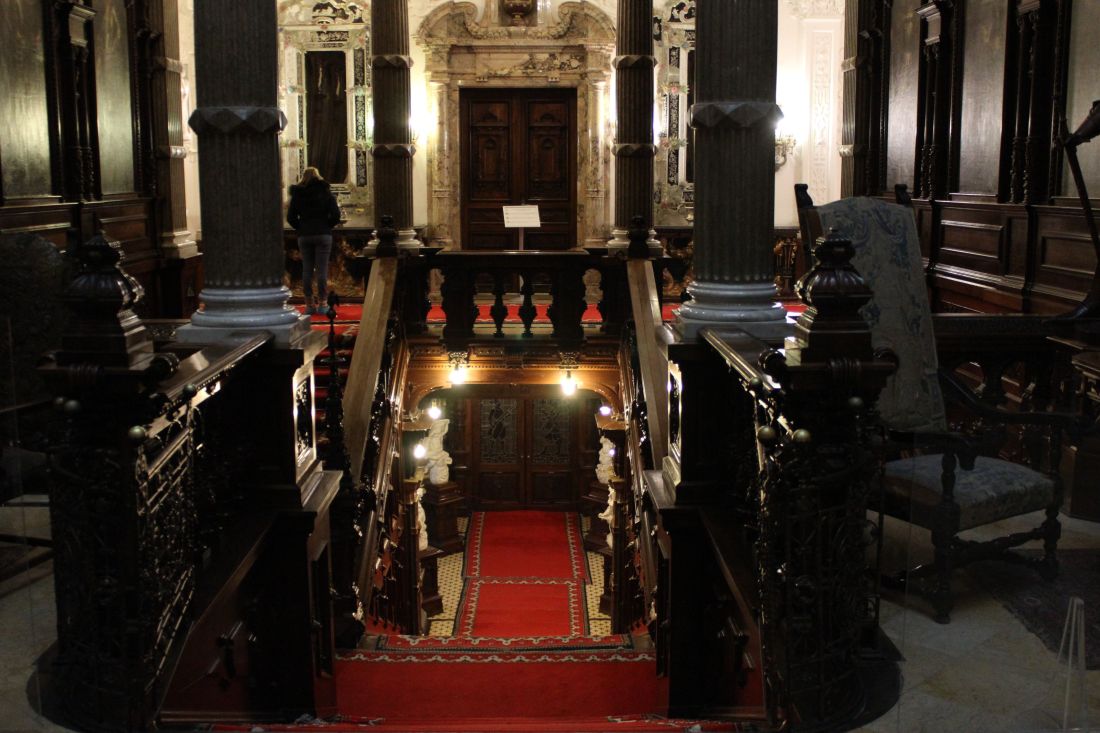
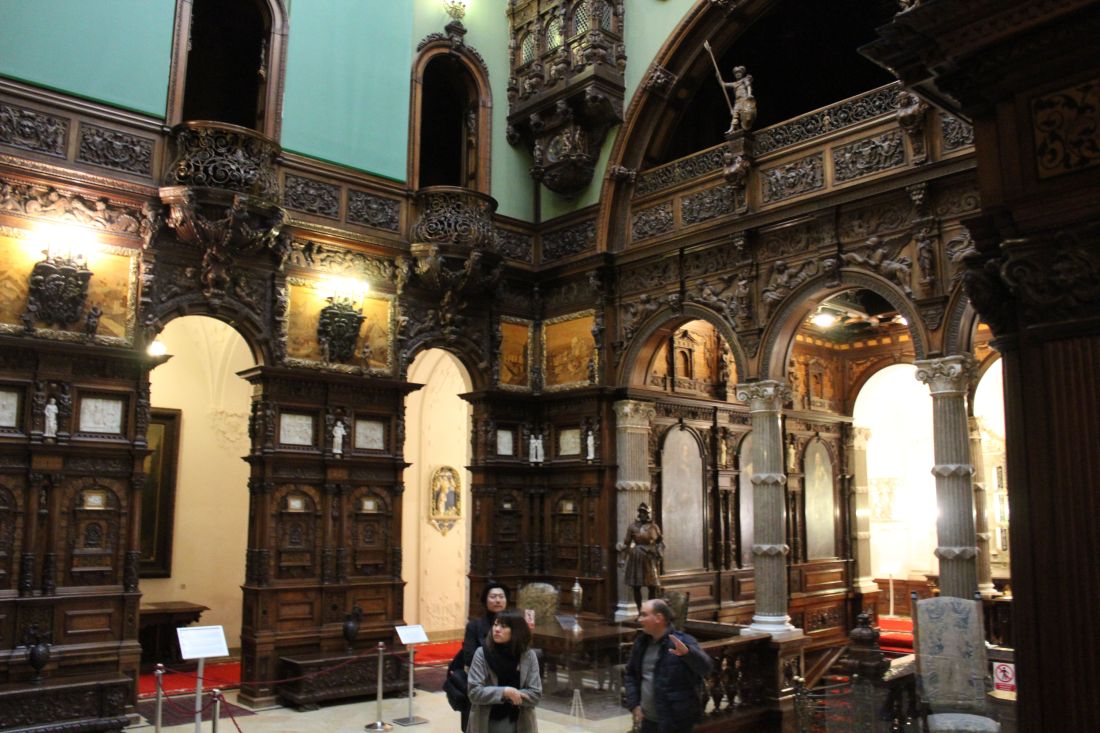
Every room we saw was elaborately decorated and you could tell they spared no penny in building it.
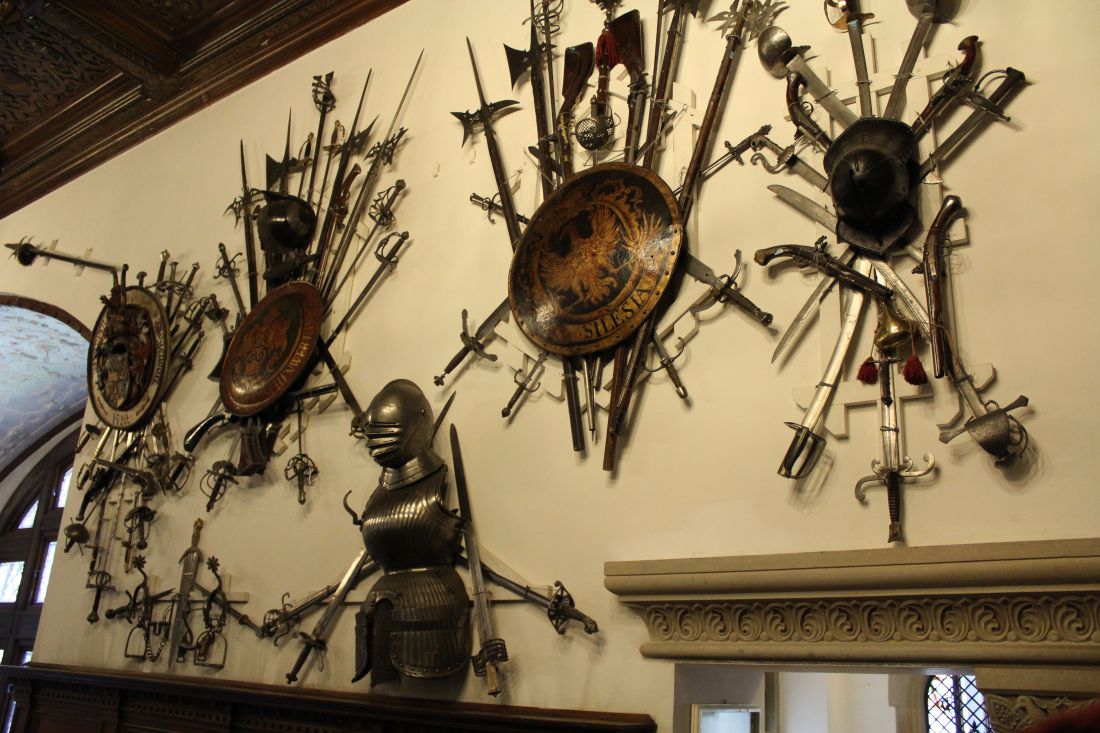
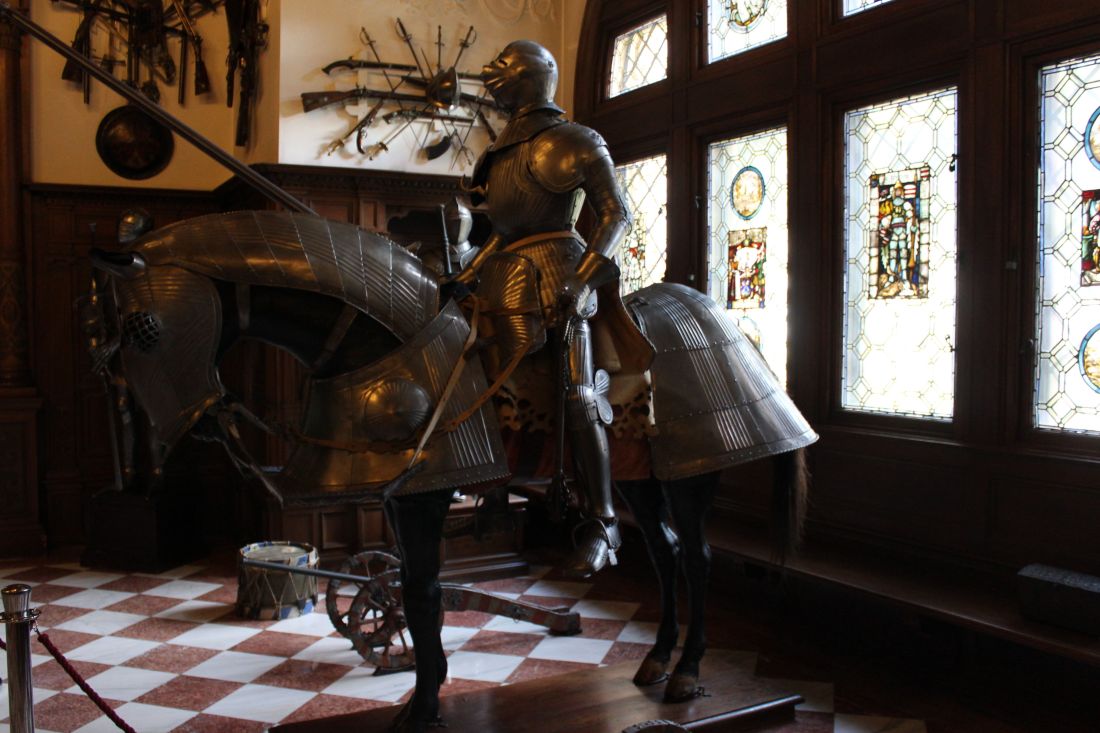
One of the rooms even has an extensive collection of medieval and renaissance warfare items.
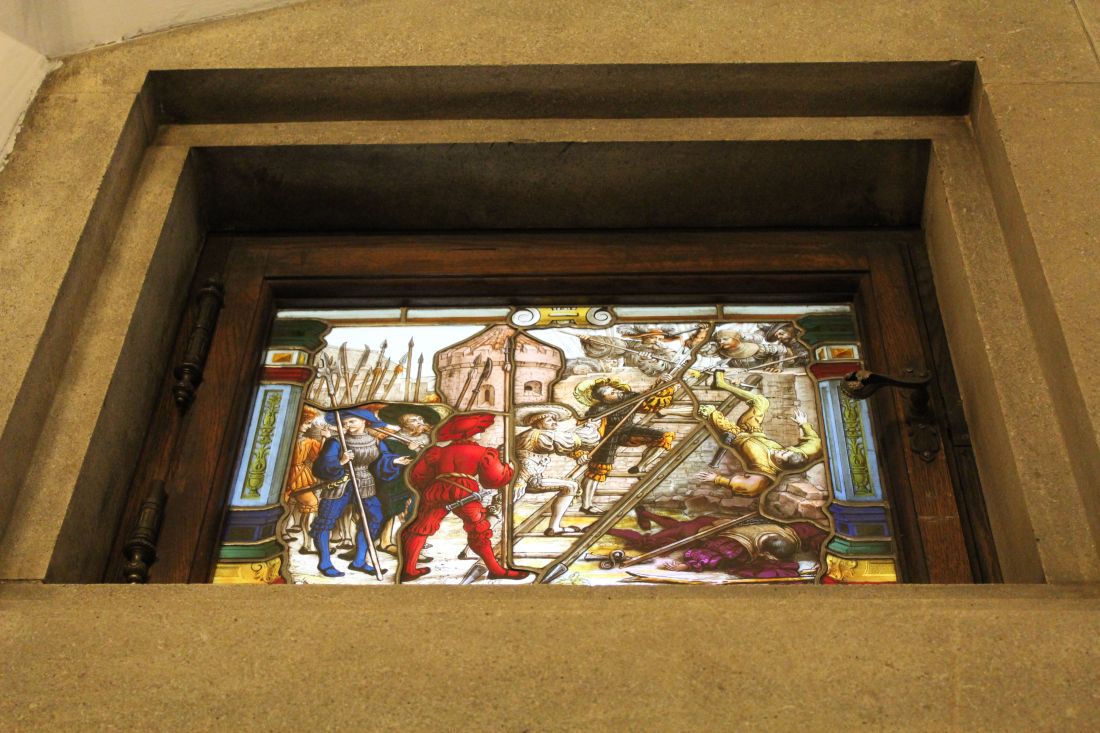
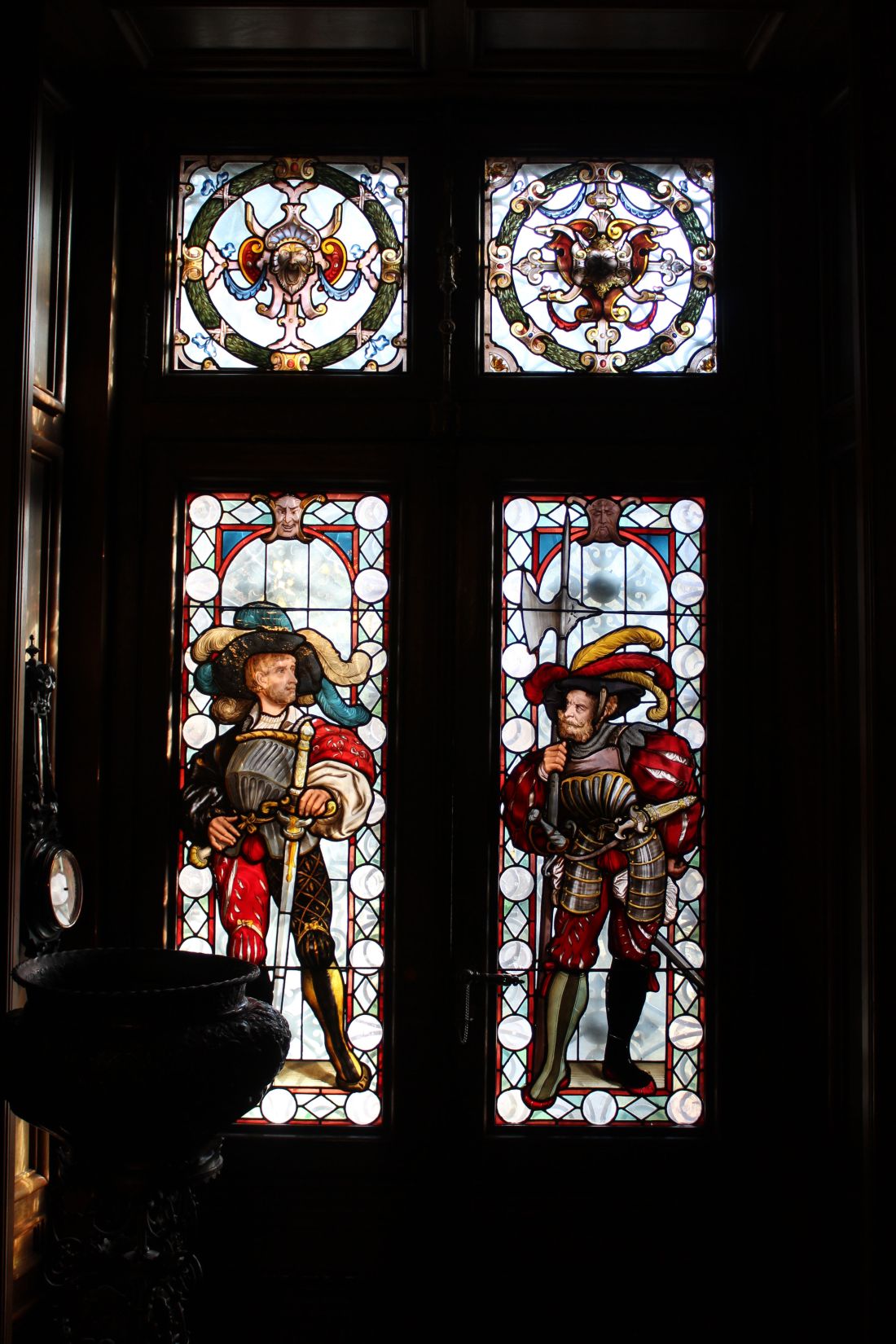
And the stain glass paintings are amazing.
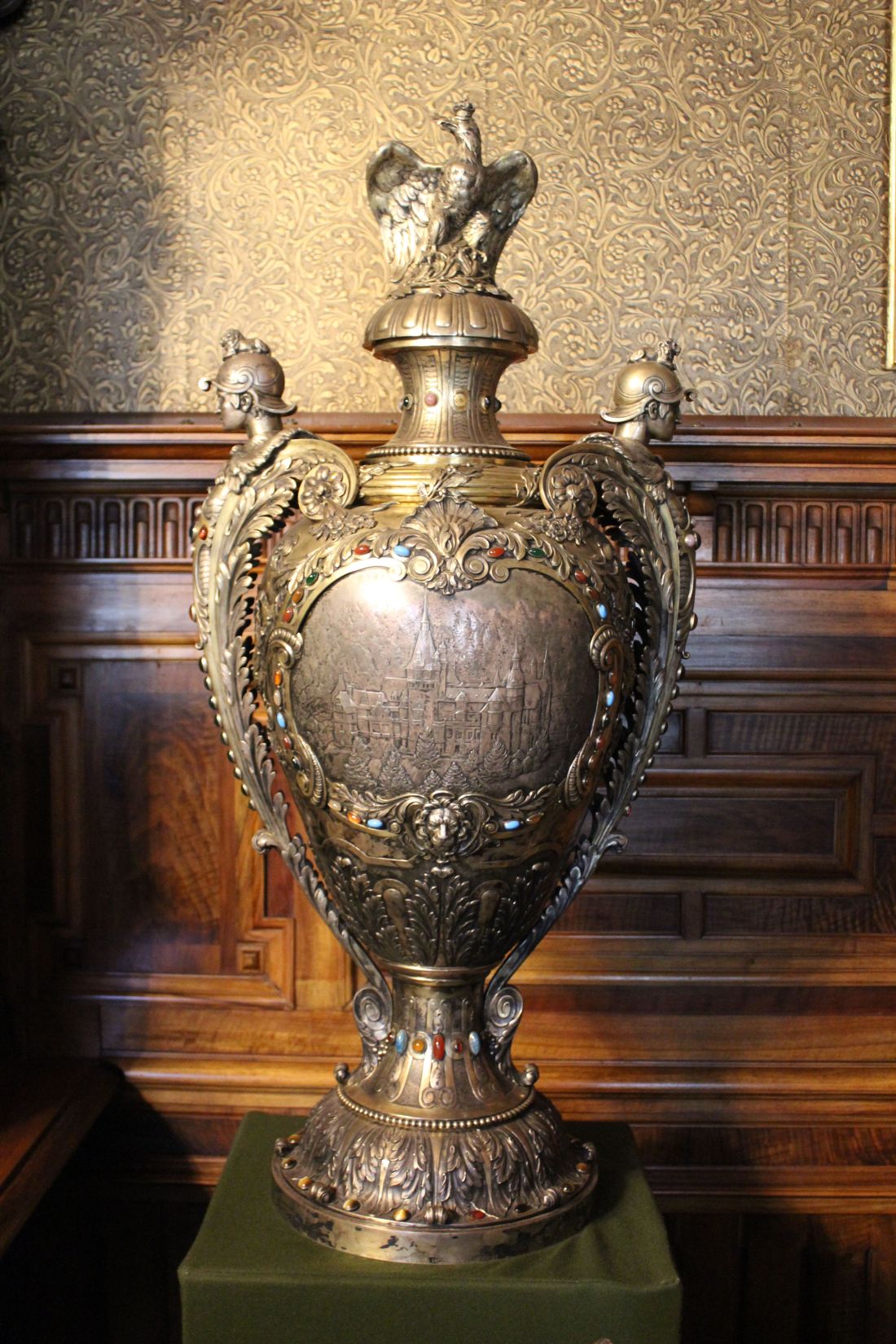
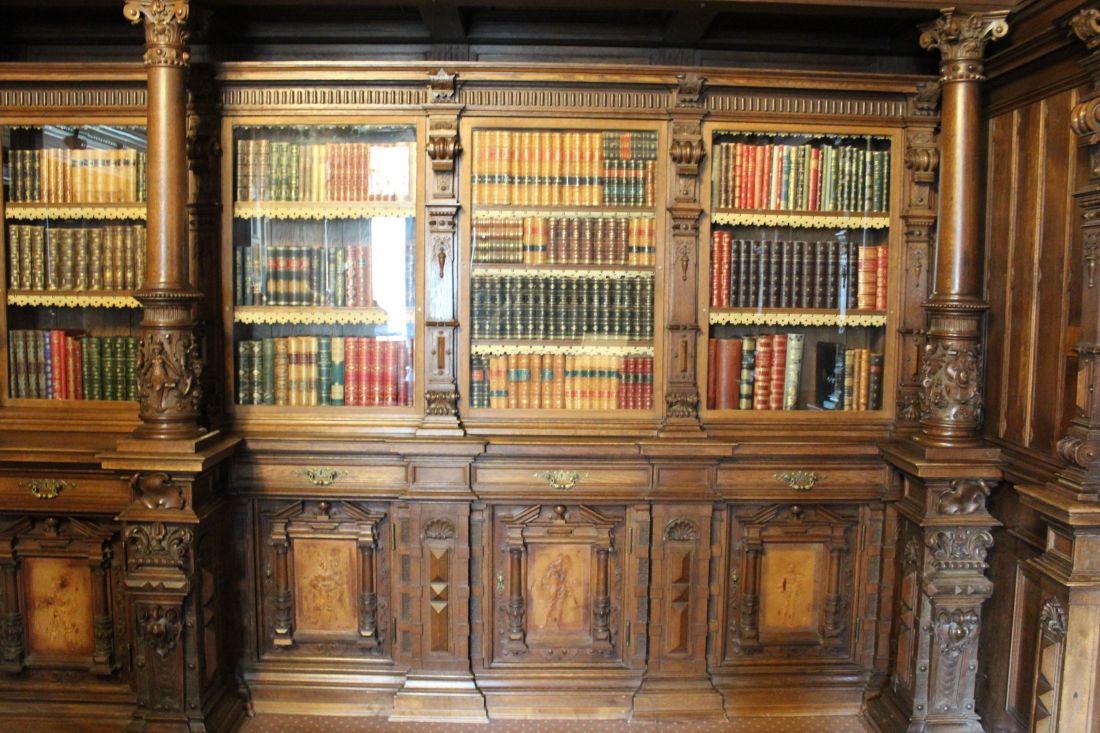
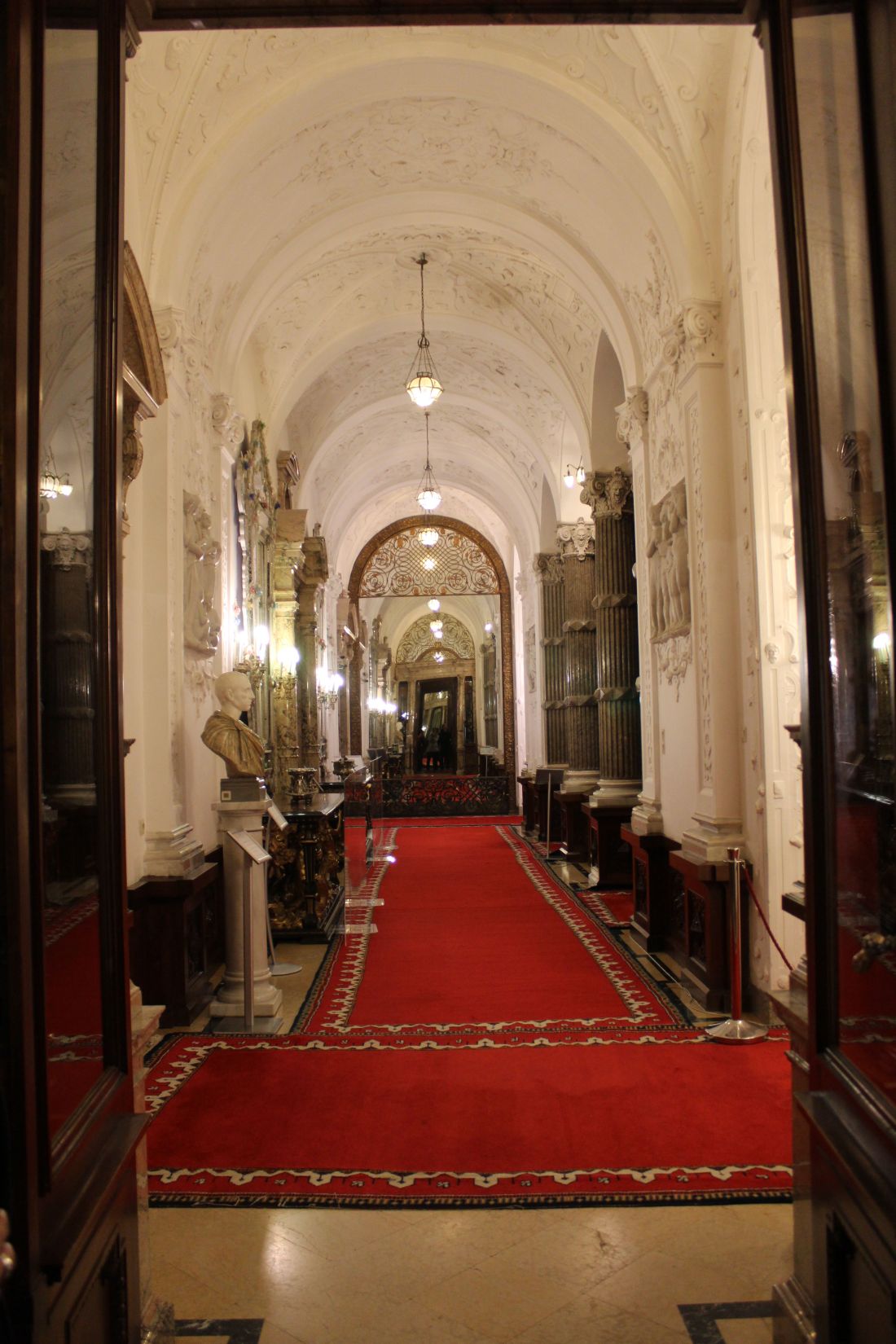
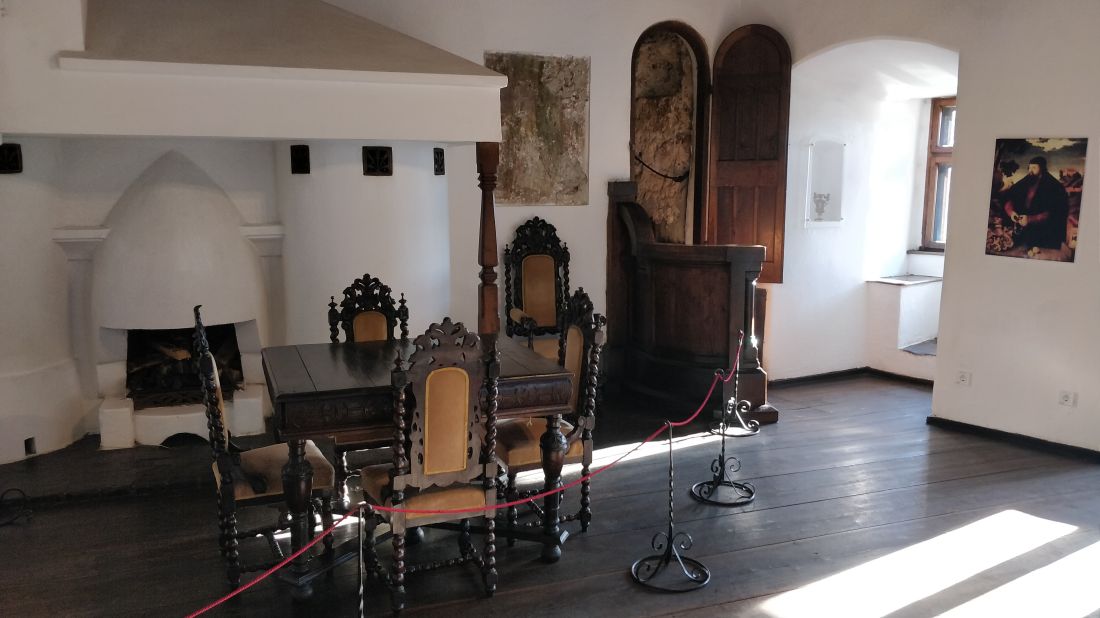
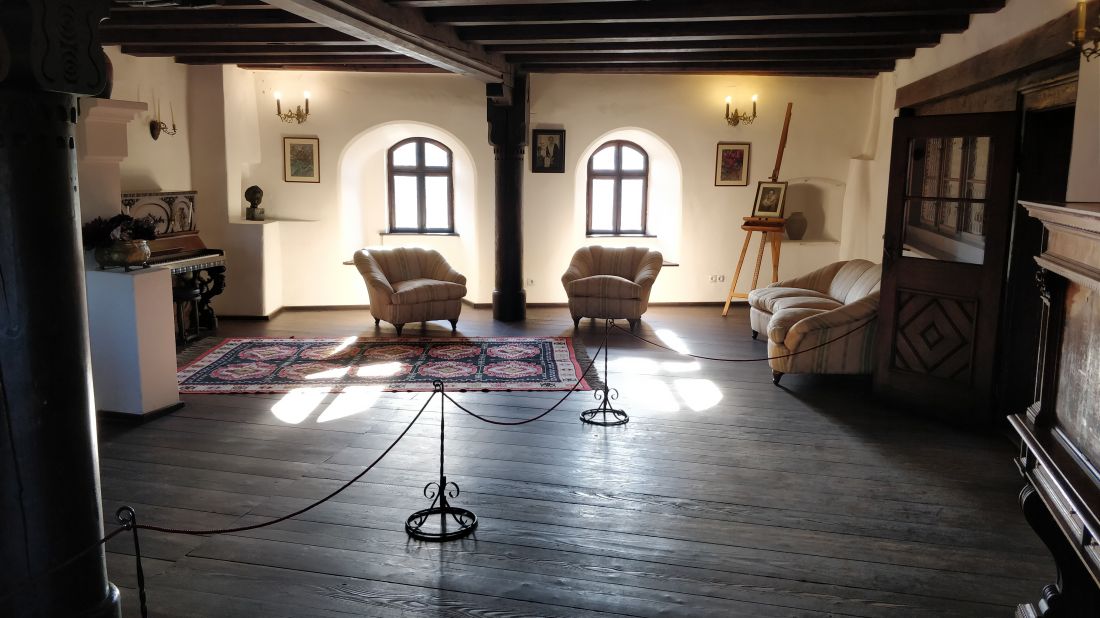
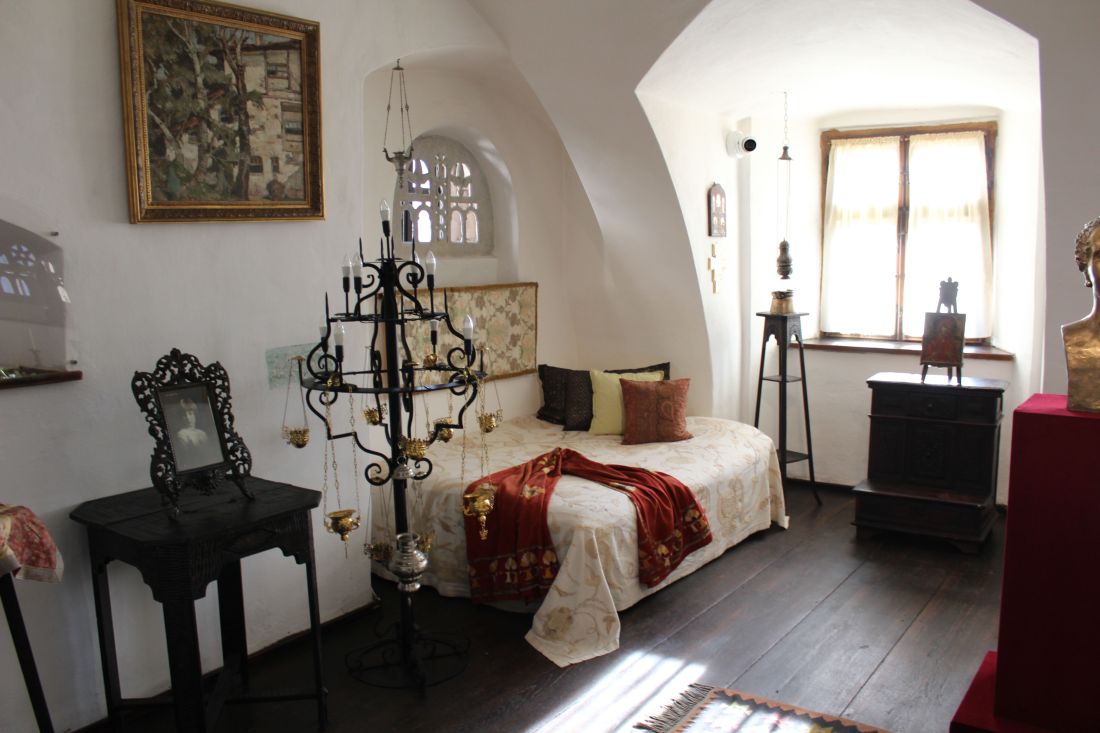
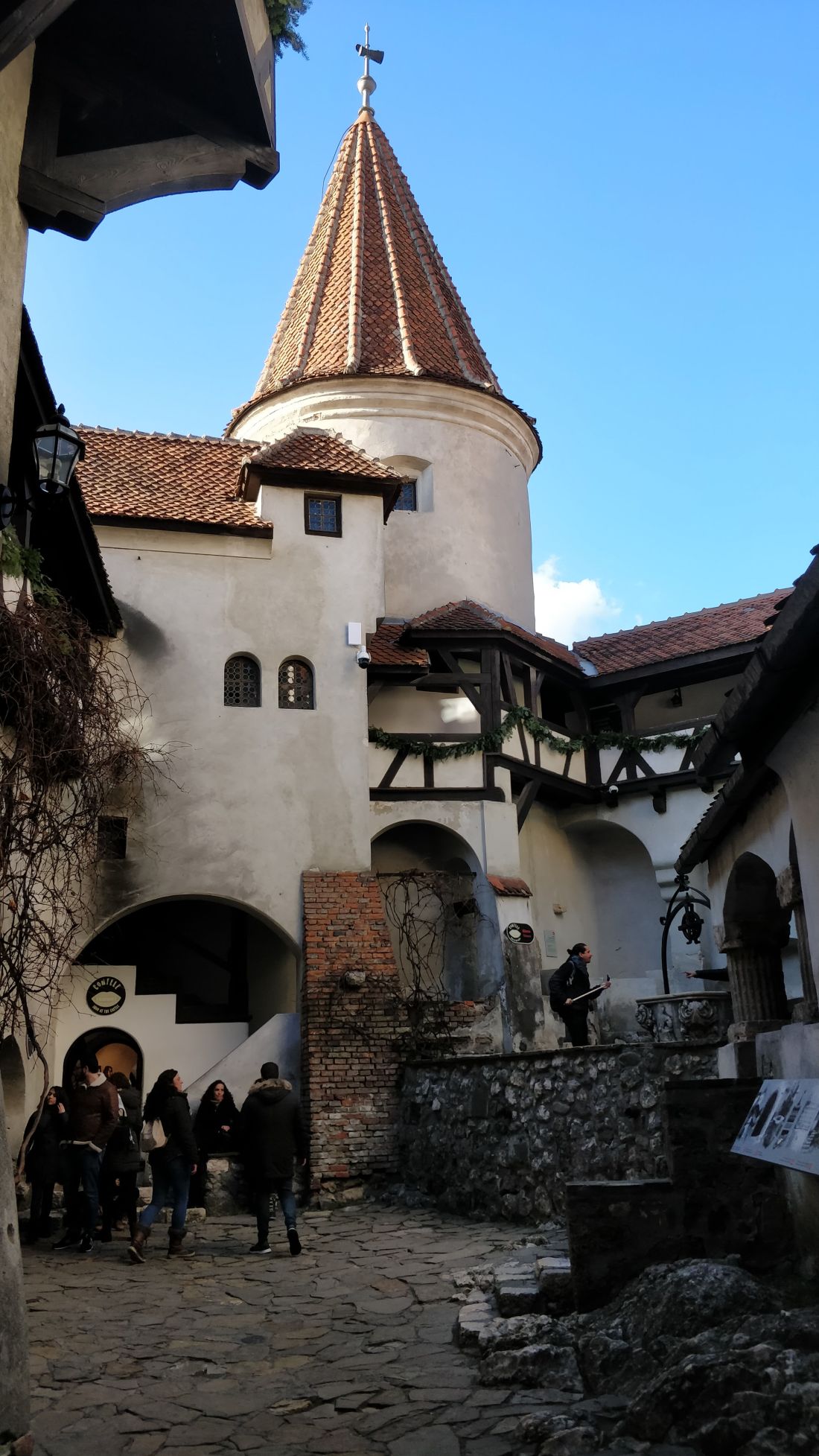
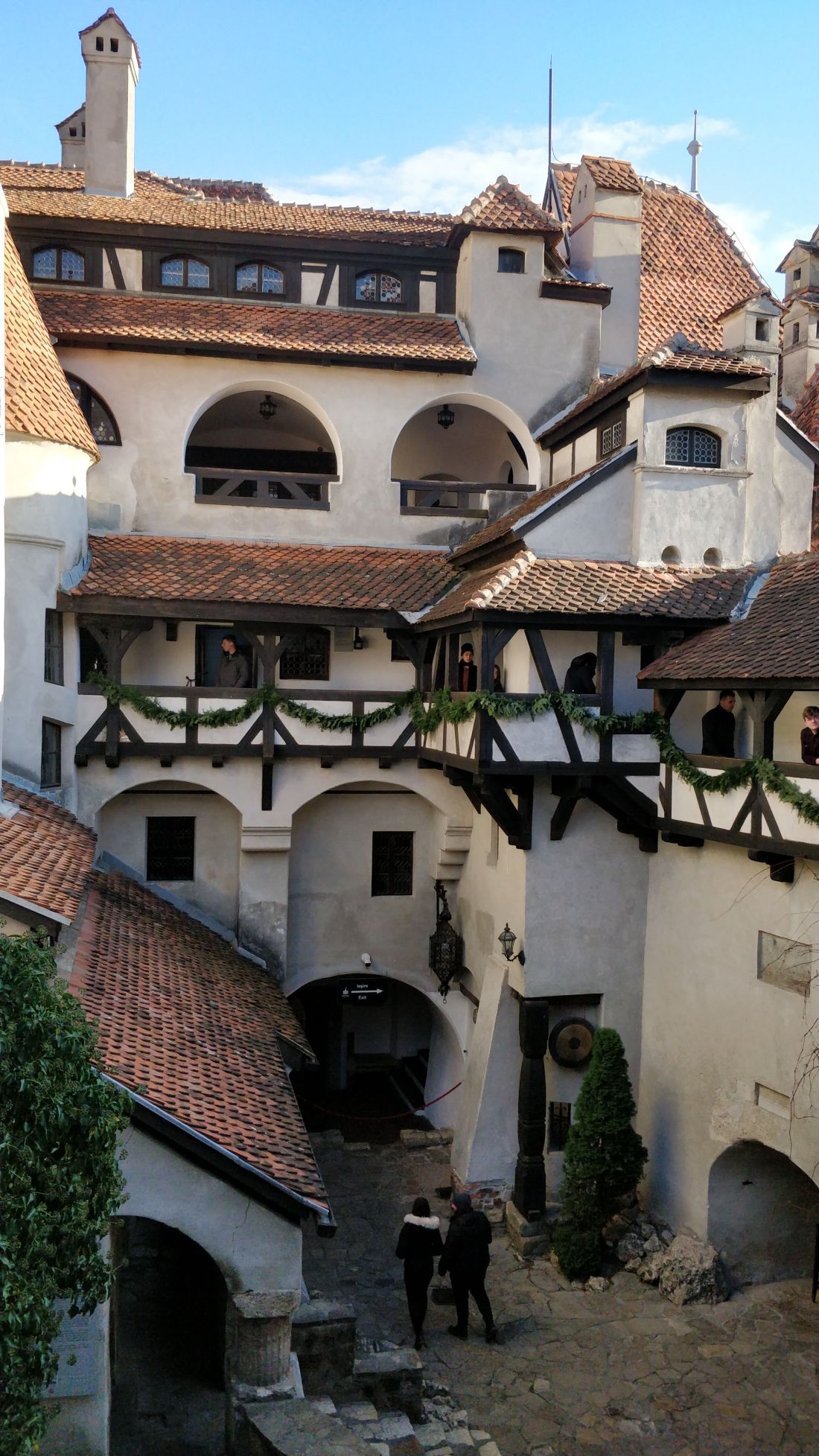
2nd stop was Dracula’s castle officially known as Bran castle. Now a disclaimer here: When Abraham Stoker wrote his horror novel he never actually named this castle as the place where Dracula lived. Dracula was loosely based on the real life person Vlad the Impaler, Prince of Wallachia (not Transylvania) but Vlad never lived in Bran castle. It’s speculated that Bran’s castle become associated with Dracula’s castle simply because it’s a spooky castle set in a forest in Transylvania.
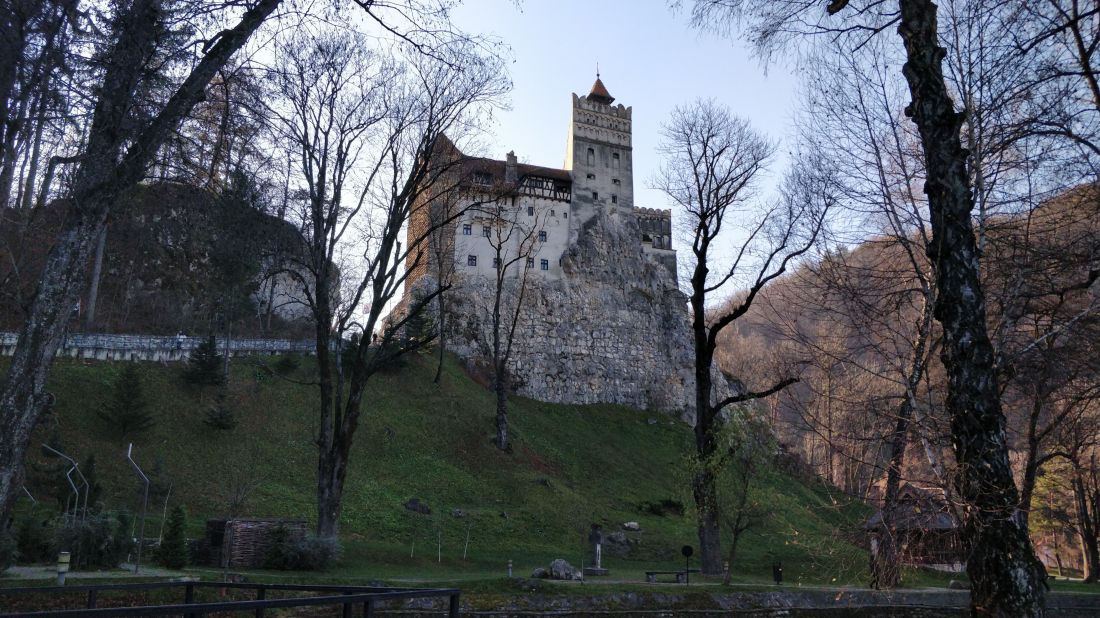
Even though there isn’t a real Dracula’s castle (although there is a castle in Turkey where Vlad is thought to have lived for a few years) it was still a fun attraction to see. It is a much more modest castle then Peles castle but it made for a more authentic visit. This was a real castle in the medieval ages when the border of Transylvania was under threat of the Ottoman empire but once Romania’s borders become more secure in the 1700s it become the residence of local nobility.
We were also free to wander the castle at our own leisure which I always prefer over an organized tour that keeps pushing you along without the proper time to look around.
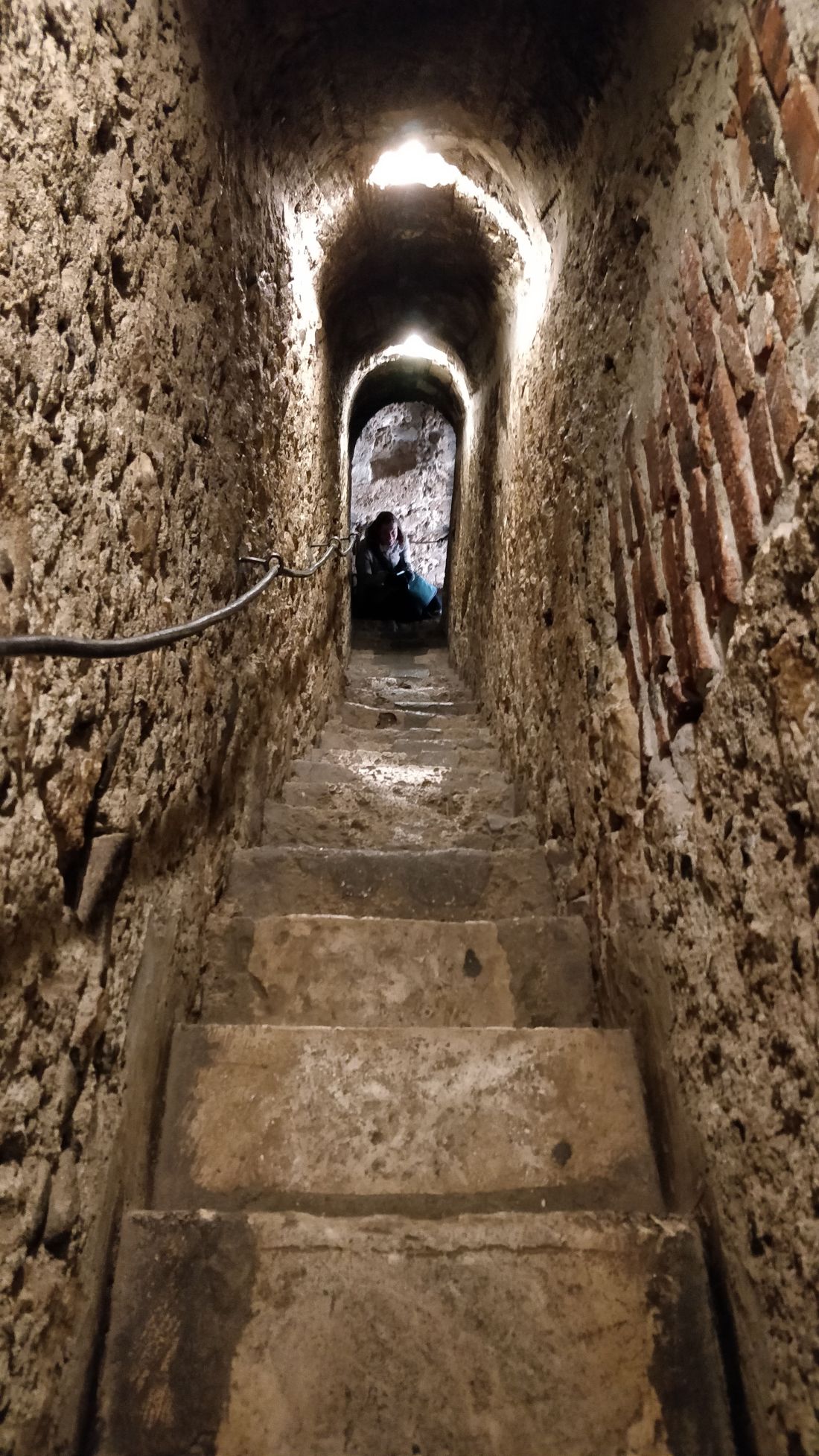
There was even a secret staircase from the ground level to the 3rd floor
As is typical with most castles this one had an open courtyard in the center.
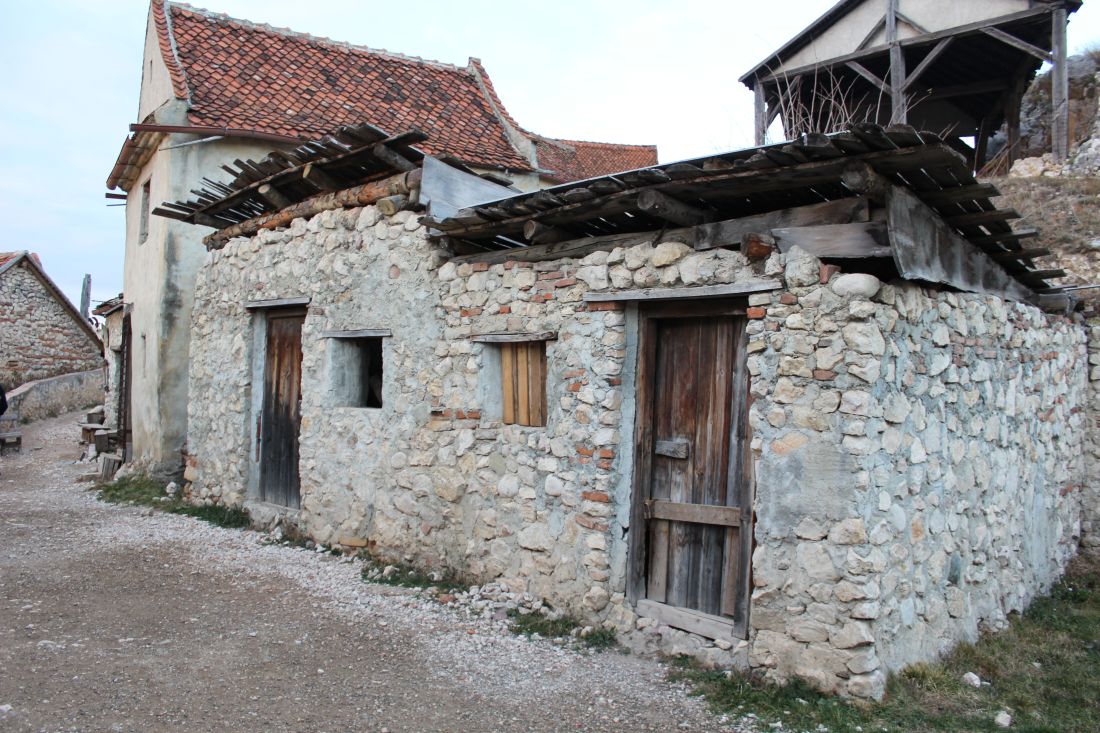
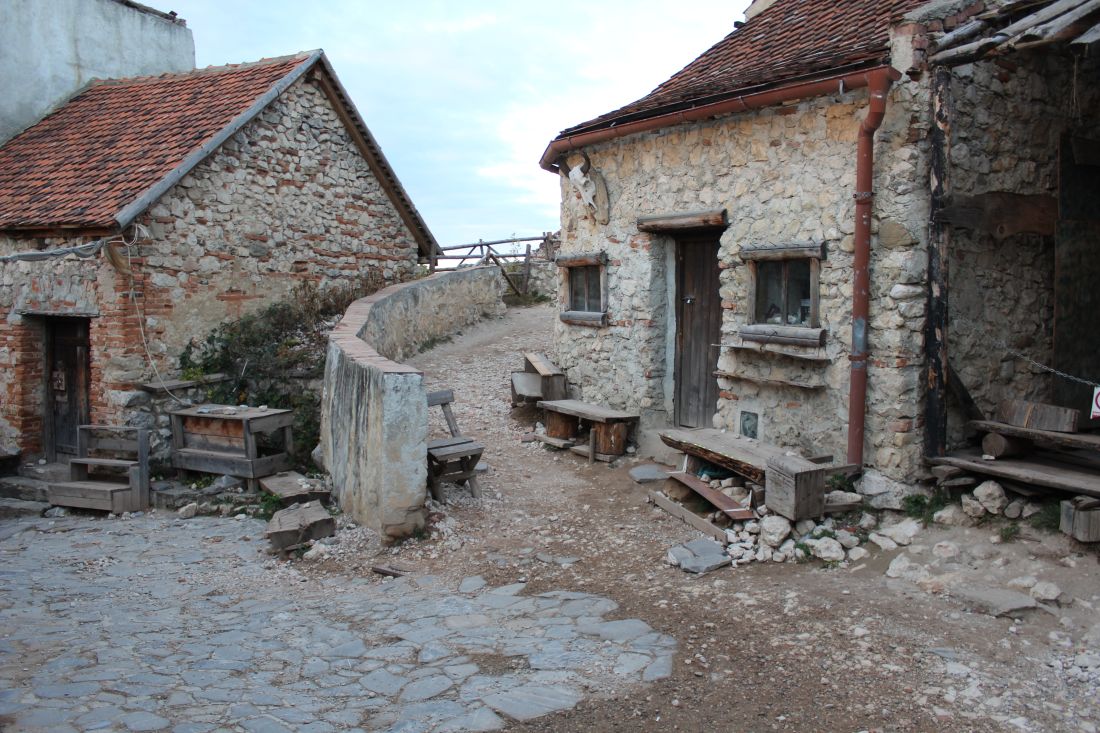
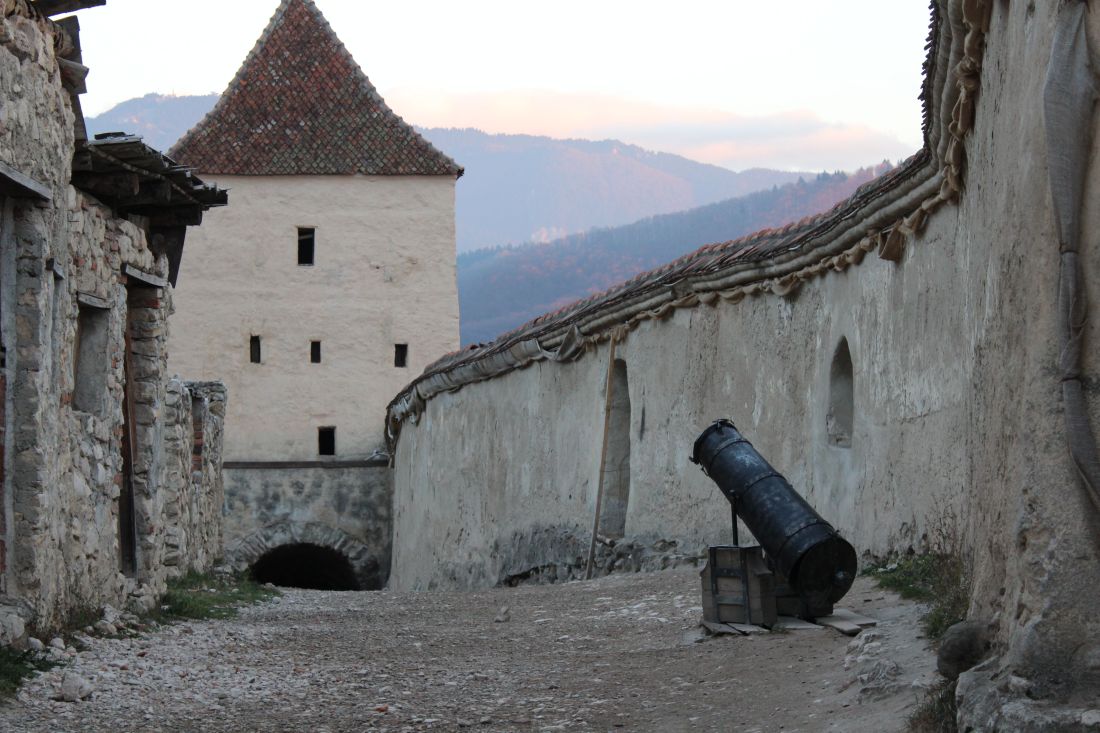
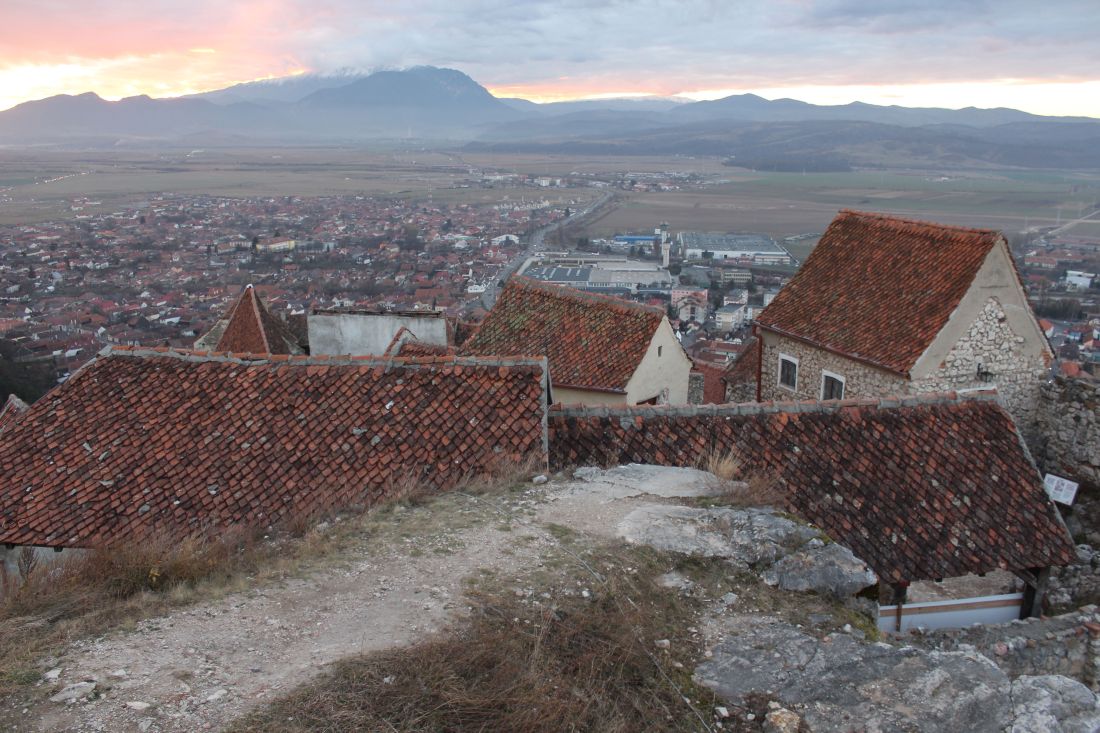
The last stop wasn’t a castle but a, now abandoned, fortified city on a hill.
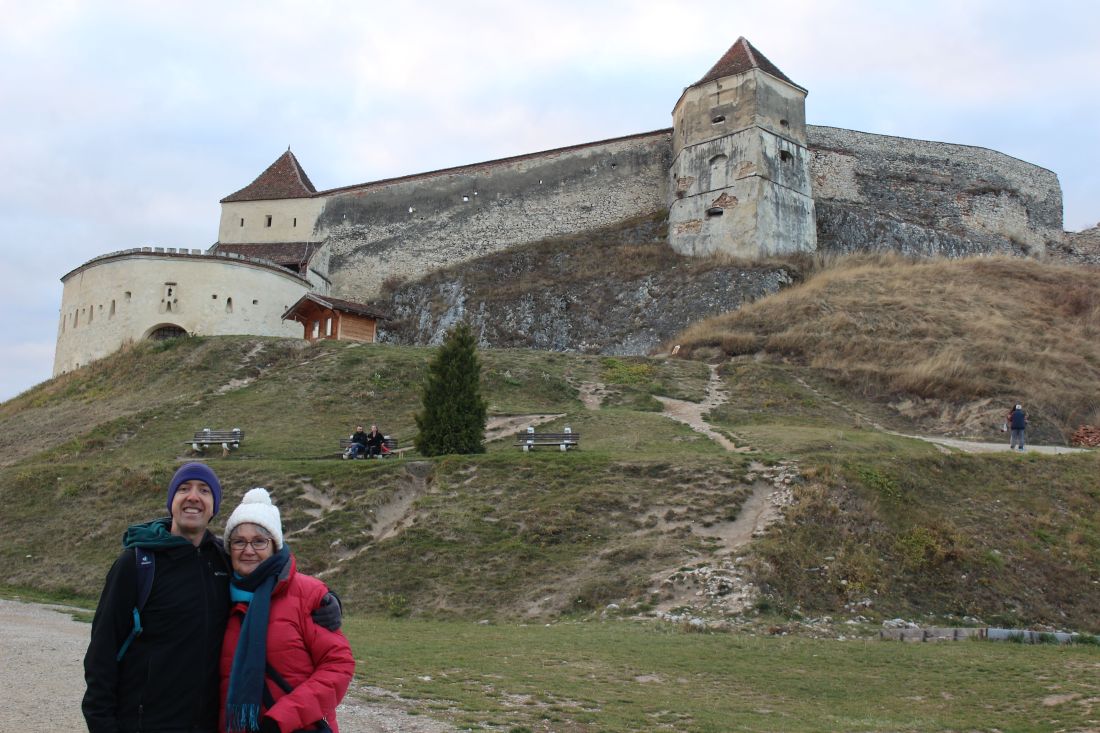
This area was on the wrong side of the mountains and the low flat land was impossible to defend from attackers, bandits, and raiders. The local people moved their town to the top of this hill and constructed a decent sized wall to protect themselves. There are remnants a church, school, and dozens of houses left.
Again, once Romania secured its borders in the 1800s the city no longer needed to protect itself and it was abandoned and the people moved back to the fertile low lands. Very little has been maintained or restored in the old city so you can see how it looked 300 years ago. If you come in the summer, though, some vendors are setup in the buildings selling ice cream and souvenirs but for us everything was closed up.
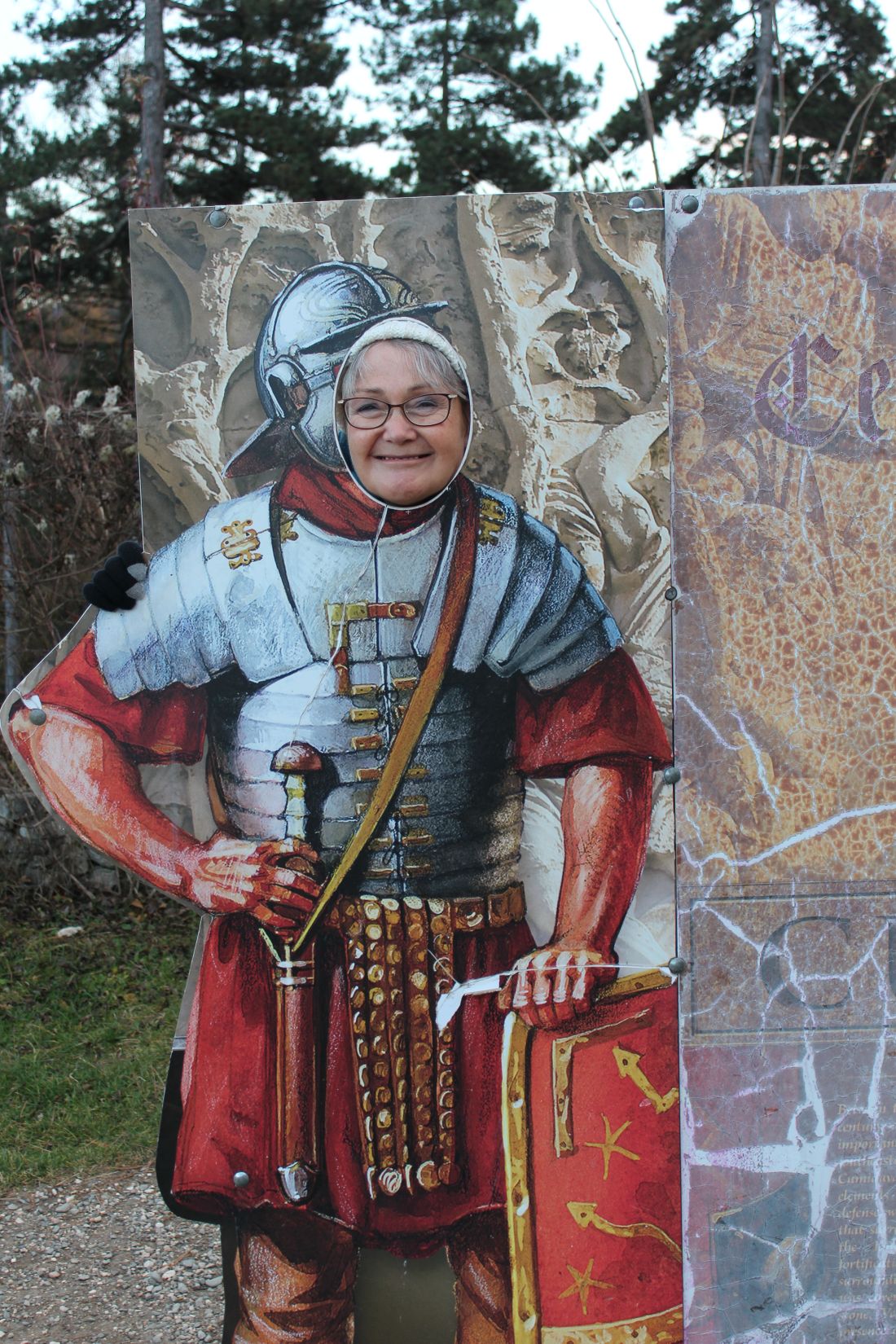
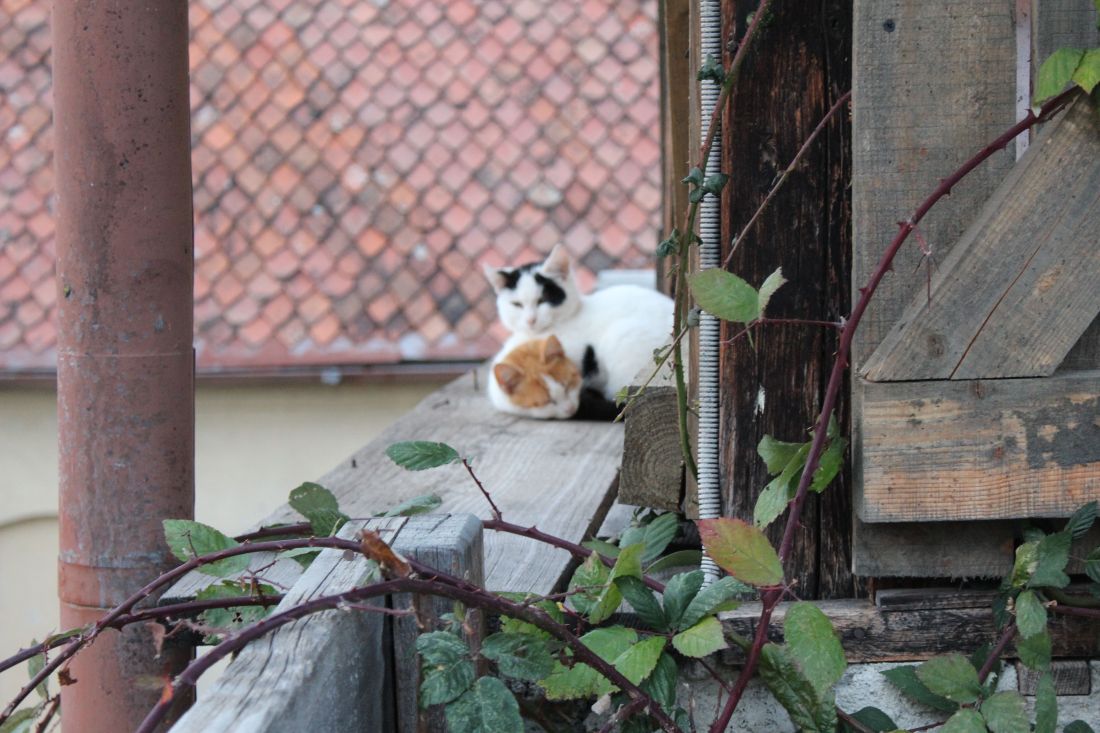
Ok it’s not completely abandoned.
Christmas Shopping and Markets
Because of the time of our trip, Candice’s Mom had asked for one thing, that we go to a European Christmas market. The best markets are found further west in Austria and Germany but Romania boasts a few good ones.
The internet told us the best Christmas market was in Sibiu, a small town west of Brasov, and just our luck the market was open for us. So for our last day trip we jumped on a slow train to Sibiu.
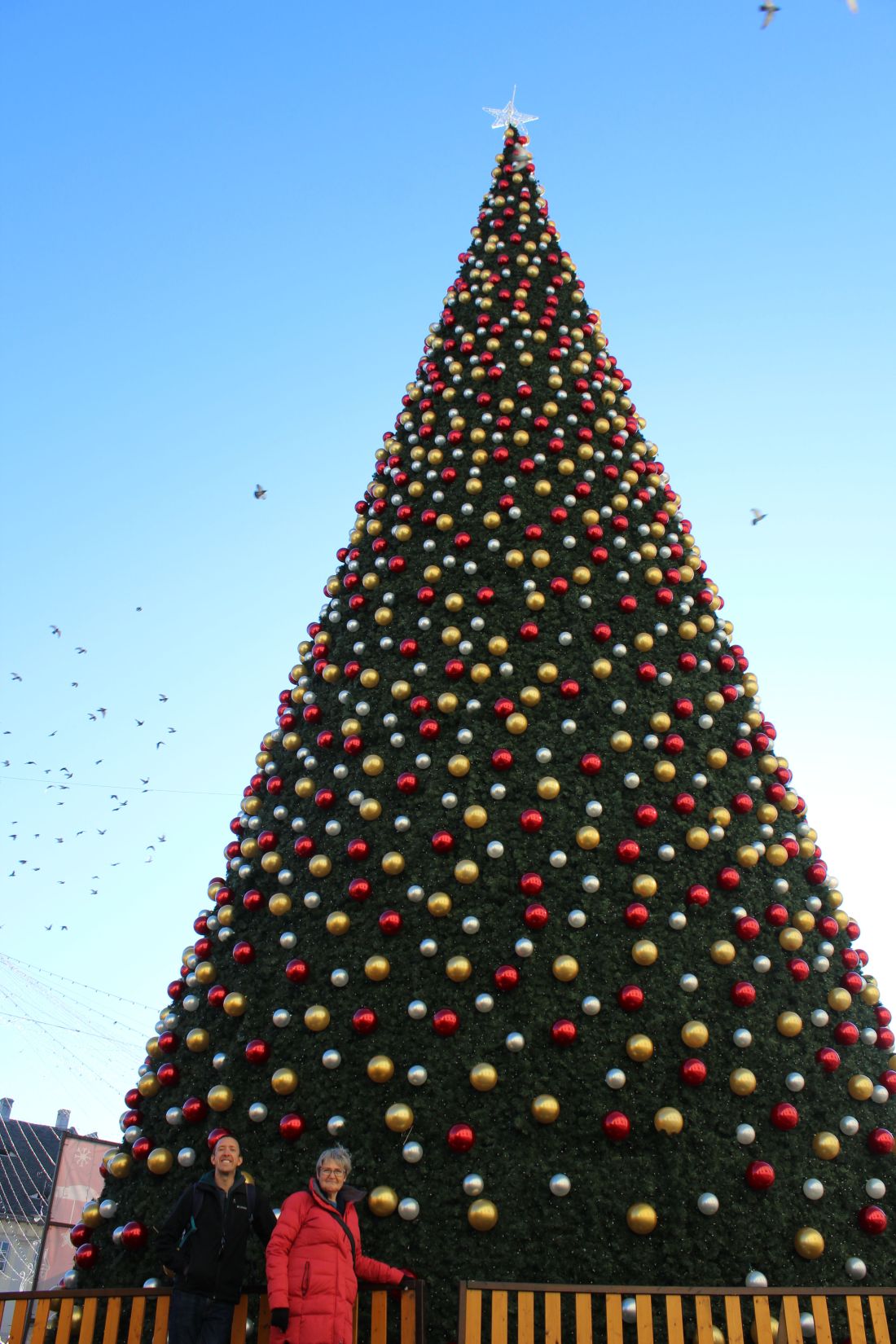
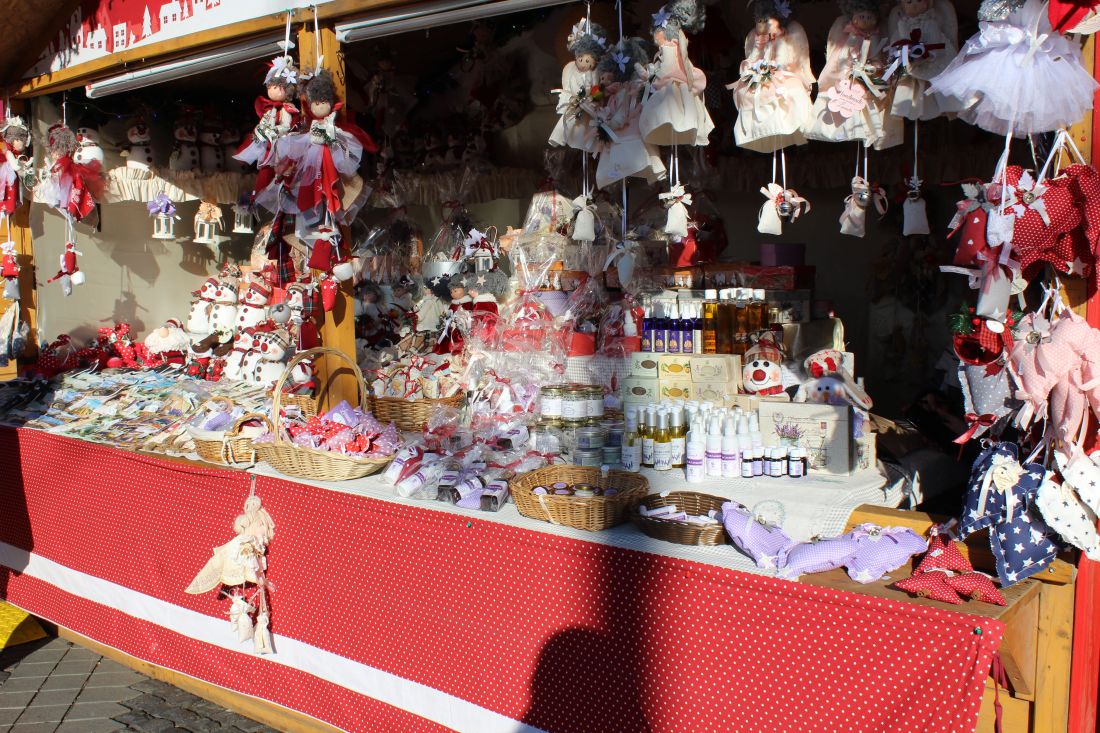
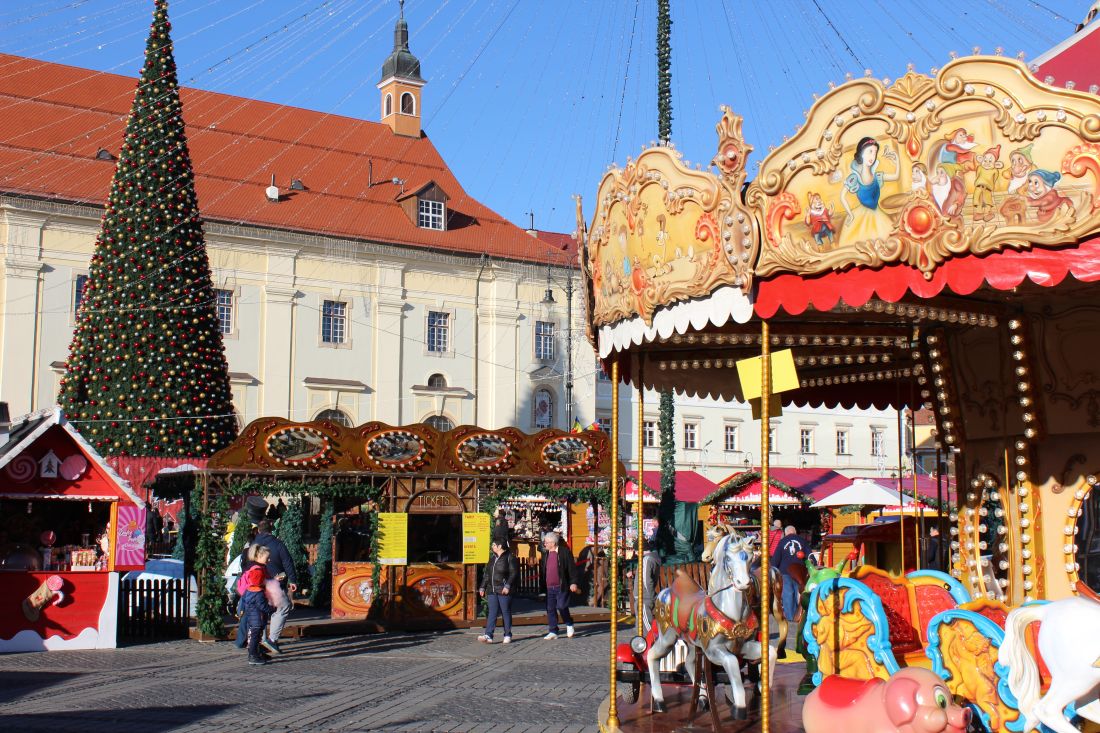
If you’ve been to the large Christmas markets in Vienna or Germany this one wouldn’t impress you very much. The market at Sibiu had around 60 stalls with only a handful selling Christmas drinks and treats but we had amazing weather and it made for a great day out. Oh and they had an absolutely enormous Christmas tree setup.
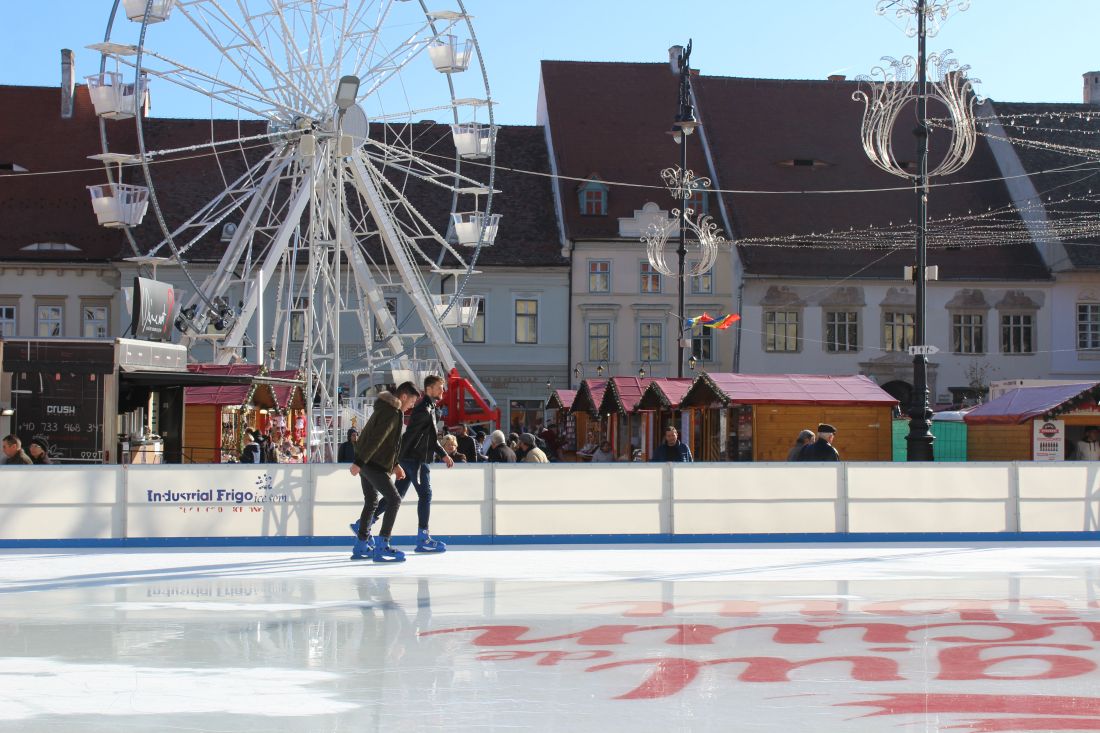
There was a small fair and a skating rink as well though we didn’t take advantage of either.
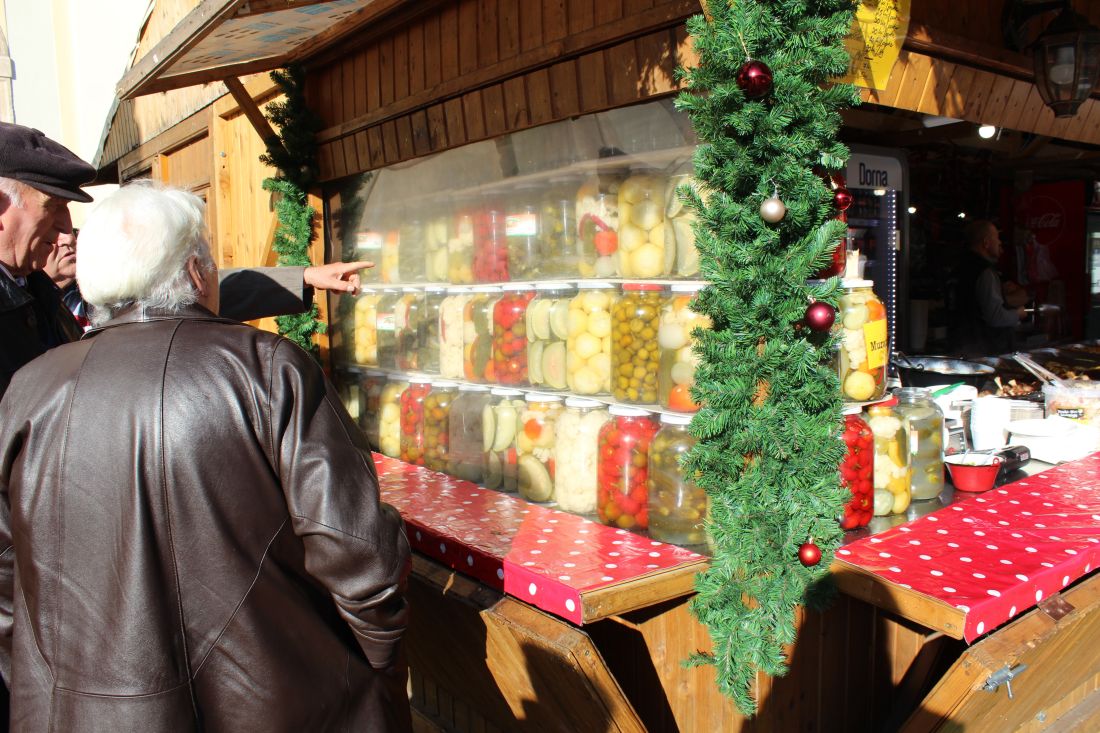
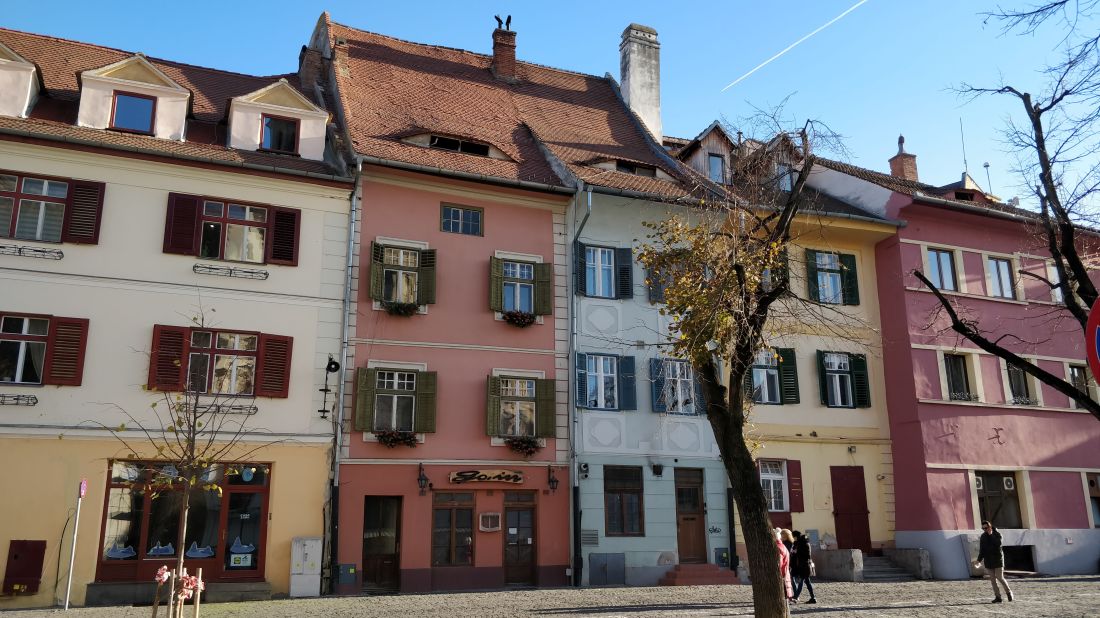
We spent an hour or 2 perusing the market before wandering the rest of town and eventually grabbing a late lunch / early dinner.
After the Christmas market shopping in Sibiu we were finished our time in Brasov. The following day we caught a train back to Bucharest for an overnight stay and then we were on a train bound for the Bulgarian border. This trip with Joan wasn’t over yet but we had to say goodbye to Romania for now.
Romania isn’t the flashiest European country but if you can look past the scars communism has left on the country you can find the same charm and beauty in this country as we did. I only wish we could have rented a vehicle as we had plans to explore more of the area but I suppose it’s OK to leave some things for the next time we come back.
As I write this Candice and I have finished our Europe travels and we are safe back in Canada at my parents place getting settled back in. There are 4 more countries left to blog about and we left the best countries for last.
Thanks for reading,
 A Romping European Time